For concrete, you need to multiply the length by the width by the height or L x W x H to find the volume. If you are measuring concrete in cubic feet, this formula will provide you with its volume in cubic feet.
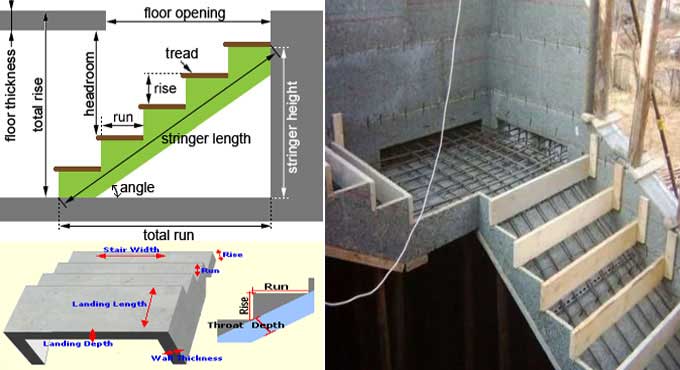
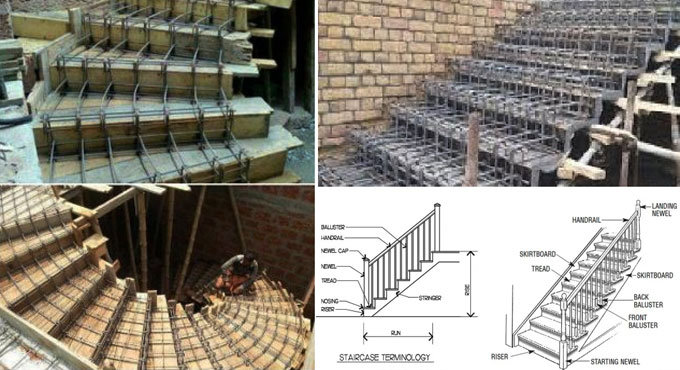
For estimating and calculating the concrete quantity for each component of the staircase, it is vital to understand the different components. You must learn about the staircase’s basic components before getting into the details.
Staircase and its various parts
Concrete volume is for a staircase, the number of risers, treads, and flights.
Staircase: From the ground level to the upper floor, a staircase is used in buildings. It is important to know that staircases are made up of many parts, such as riser treads, flight landings, and so on.
Tread: You apply your foot to the tread of the staircase for walking up to the upper floor first when you reach it from the ground floor.
Riser: Staircases have a vertical component called a riser.
Step: There are two kinds of Step, tread and riser, where tread is a vertical part and riser is a horizontal part.
Flight: Generally there are two flights of steps and a landing on each level of a building. You turn to reach the upper floor when you reach the landing.
Calculation of Concrete Staircase
1. Steps Concrete Volume
The volume of each step is equal to 1/2 x Base x Height x Depth.
In terms of concrete volume, 1/2 x b x h x d = 0.45 x 0.15 x 0.33 = 0.00238.
The number of steps is 20.
Using the formula 20 times 0.0225 equals 0.54m3 of concrete for the steps.
2. Landing Concrete Volume
Taking into account the length of the rectangle and depth, the amount of concrete required for the Landing would be:
Dimensions: length x breadth x depth
The volume of 2.50 x 1.20 x 0.15 is 0.45 m3.
3. Waist Slab Concrete Volume
An inclined waist slab is a waist slab. Pythagorean formula is used to determine the length of the waist slab.
A waist slab’s concrete volume equals the area times the depth of the rectangle. Dimensions: length x breadth x depth.
For a waist slab, the concrete volume is equal to 3.35 x 1.20 x 0.15 = 0.603 m3.
The number of waist slabs is 2.
2×0.603 = 1.206 m3 of concrete in waist slab of staircase.
4. Handrail Concrete Volume
For a handrail, the required concrete volume is the area x the depth of the rectangle.
Dimensions: length x breadth x depth.
This results in 0.268 m3 = 3.35 times 0.10 times 0.8.
The number of handrails is four.
The total volume of concrete required for the handrail is 4 * 0.2680 = 1.07m3.
For staircase, you will need to mix 1.206m3 of concrete plus 0.54m3, 0.45m3, and 1.07m3 of concrete, totaling 3.26m3.
]]>
A staircase provides easy access from floor to floor. A staircase is a room or space that contains stairs. Stairway Design Calculation is necessary before constructing stairs to determine their risers and tread positions.
Buildings with multiple floors have staircases for access and communication. Fires spread from floor to floor with the help of these paths.
As a result, the structure must be protected by fire-resistant walls, floors, and ceilings. In the same way that floors are designed to carry specific loads, the frame will have to carry certain loads. Stairs can be built from a variety of materials such as timber, bricks, stone, steel, or reinforced cement concrete.
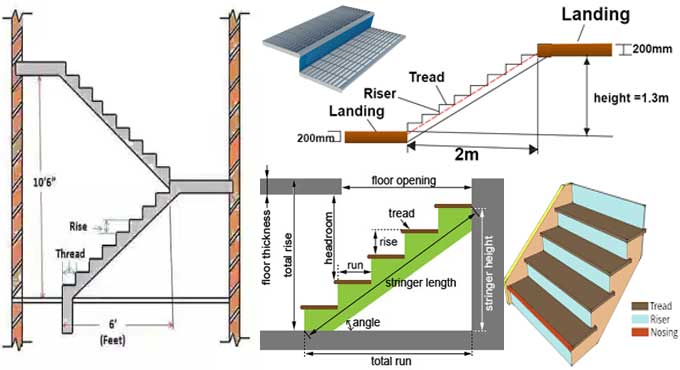
Tread: As you go up or down stairs, you place your foot on the top portion of the step is called Tread.
Riser: Step treads are supported by this vertical portion is known as Riser.
Points to Consider When Calculating Tread and Riser
The reason for 10 inches of tread is that everyone wears slippers that may be up to 10 inches in length for an average adult person, so you want to make sure the treads are no shorter than 10 inches in length.
A 5-inch rise may be considered normal in construction buildings where stairs are mostly used by the ill or elderly where they have to climb without using the full amount of energy. That will make it easier to access the riser. It is also important that the tread is wide enough.
Calculation of Riser and Treads of Staircase
There must be equality between every tread and riser. It is better to adjust with a calculator than to adjust one or two stair dimensions. You calculate the rise and treads of stairs by measuring the distance between the landing, where the bottom step rests, and the upper finished floor.
A total rise calculated by dividing it by the desired riser height. Round up or down if the result is a fraction. The height of the riser is determined by dividing the total rise by that number. A dimension to determine first before planning any stair is the rise and tread of the steps and their number.
The following points need to be considered before learning about rise and thread fix:
Two-floor clear distance (A) is 3.20 meters.
Distance between first and last riser on one flight (B) = 1.80m.
Staircase Riser Calculation
Decide the size of the riser first,
The riser size is 7 inch & range is 6-8 inch.
Risers = Clear Distance between Two Floors (A) / Risers Size
= 10foot 6 inches= 126 inches/ 7
= 18 nos.
It’s 9 for the first flight and 9 for the second flight.
Staircase Tread Calculation
The next step is to calculate the tread size. Obviously, there is a difference in treads between a single flight and several rises for any stair. Depending on the type of stair, this dimension can be changed.
Formula for Riser Tread
Number of threads per flight = No. of risers per flight – 1
= 9 – 1
= 8 nos.
Thus, Tread Size = Total Stair Width / No. of Threads
= 6 foot = 72 inches/ 8
Tread size = 9 inch
Precautions: When calculating the design of staircases, here are some things to keep in mind:
- All parallel steps in a building should have the same tread and riser sizes on each floor.
- Any stair or step should have a minimum of 2 m of vertical space.
- For general safety reasons, a flight should usually not have more than 12 risers.
- 850 mm is the minimum width for the staircase. There may be three standard widths for stairs: 1.1 m, 1.6 m, and 1.9 m.
- Buildings used by the public, such as malls, cinemas, and shopping centers, may require wider stairways.
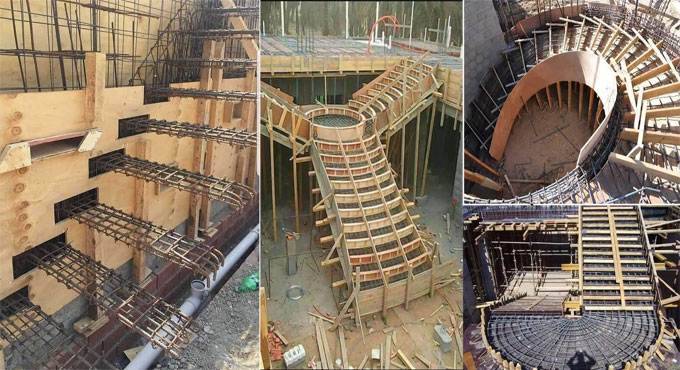
Stairs are utilized to form a walking path amid various upright points through separating the elevation amid the points into convenient steps. Quite often, the term “stairs” pertains to a staircase, while the term “step” applies to the specific steps that form the staircase.
Furthermore, the major parts of the stairs are described underneath:
Stairs, mainly in internal space, could even comprise protecting to single, or two sides, in the shape of a bannister, i.e., a collection of uprights as well as a guardrail.
Furthermore, stairs could be straight as well as could comprise a landing as well as turn, or could be curved. Moreover, an incessant set of steps amid landings is known as a flight.
Moreover, curved stairs possess tapered treads, as well as could be not easy to utilize. Furthermore, a helical stair possesses a space in the midst, while a spiral stair possesses a column in the midst.
In certain instances, stairs can possess alternating treads, i.e., the large component of the tread is at alternating sides on successive treads. Furthermore, stairs could be built by means of an extensive range of materials, comprising; brick, timber, concrete, stone, glass, metal and so forth.
One can find out in what way to conclude the design with regard to flat slab, waist slab, treads and risers which are imperative components of a staircase.
Furthermore, there are several parts in a staircase which go from riser, tread, stringers, headroom, flight, winders, going or run, hand rail, landing, balusters, slope or pitch, line of nosing, nosing and so forth.
Specified underneath, several imperative elements of staircase:
- Landing: Landing width must not be lower than the stairs’ width.
- Width of stairs: Residential: – 220 – 250 mm; Public: – 250 – 300 mm; not lower than 200 mm whatever the case may be.
- Tread: Residential: 220 – 250 mm; Public: 250 – 300 mm; not below 200 mm whatever the case may be.
- Riser: Residential: 150 – 180 mm; Public: 120 – 150 mm; not more than 200 mm whatever the case may be.
- Head Room Clearance: must not be below 2.1 mm
- Pitch: must not be more than 380
- Measurement of Flight: Number of steps must be no less than 3 and maximum 12
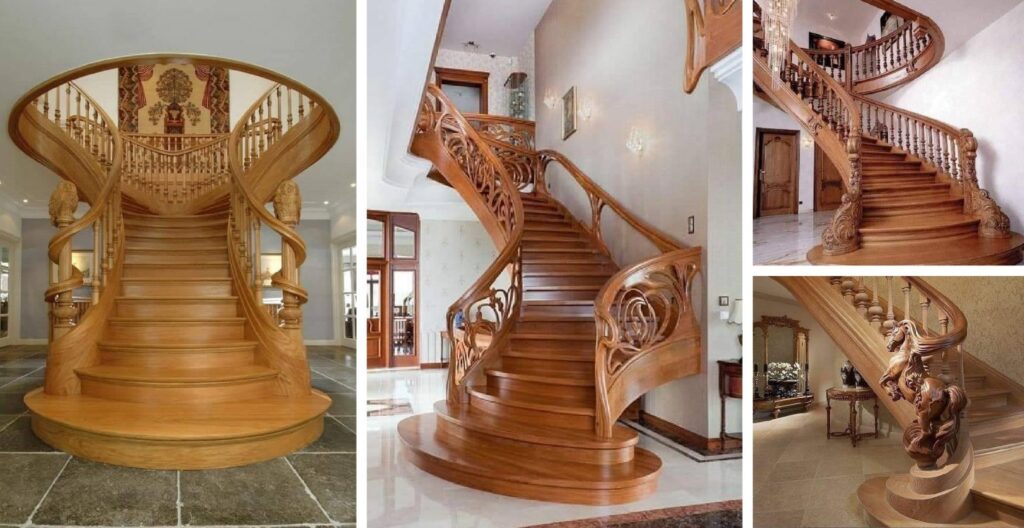
In case you are constructing a house and have to determine on the kind of stairs you wish to use then this text provides you with your choices.
There are three stair varieties:
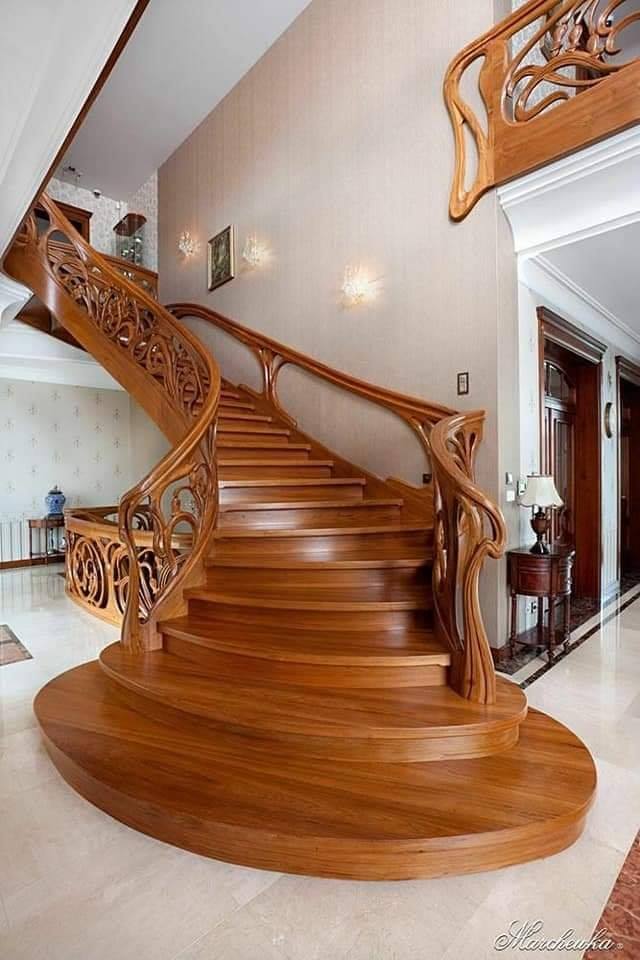
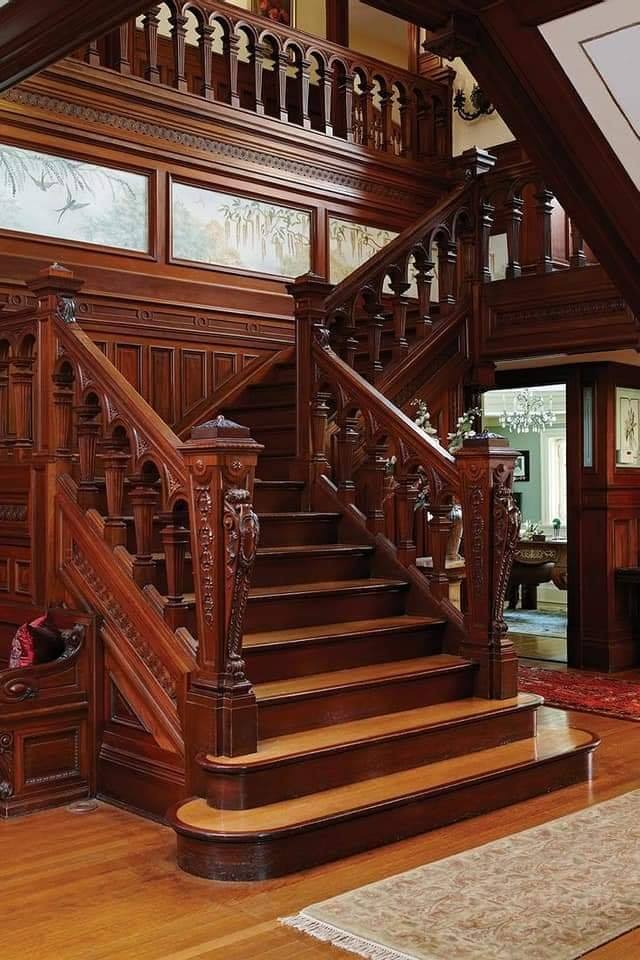
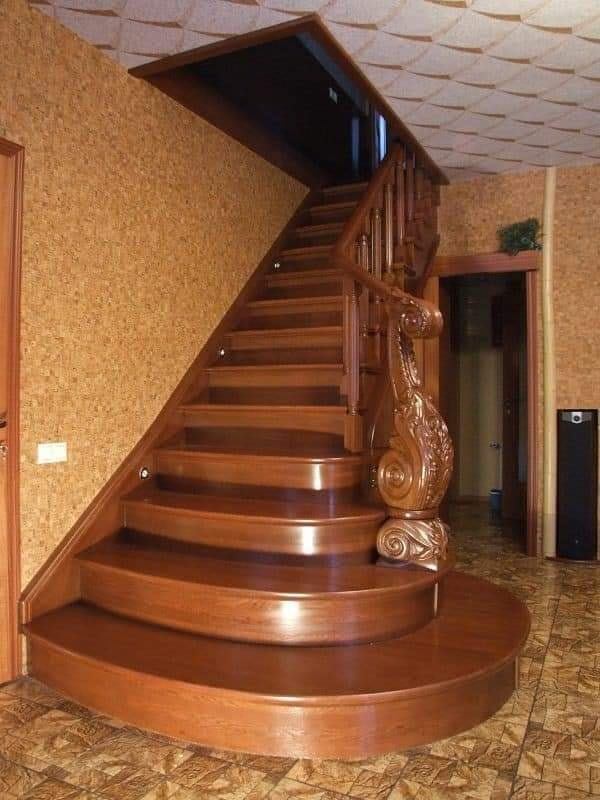
- Wooden
- Concrete
- Steel
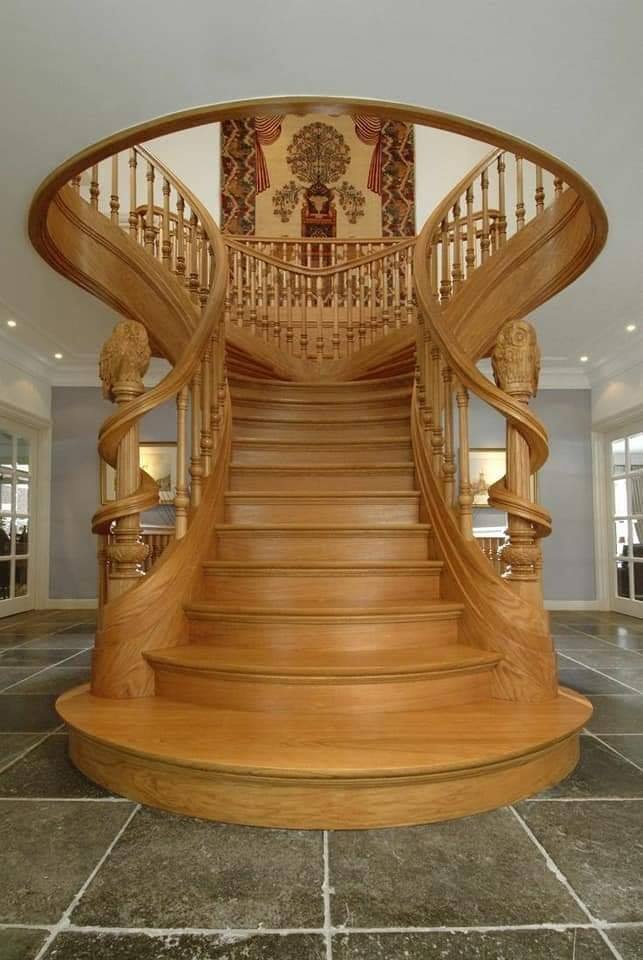
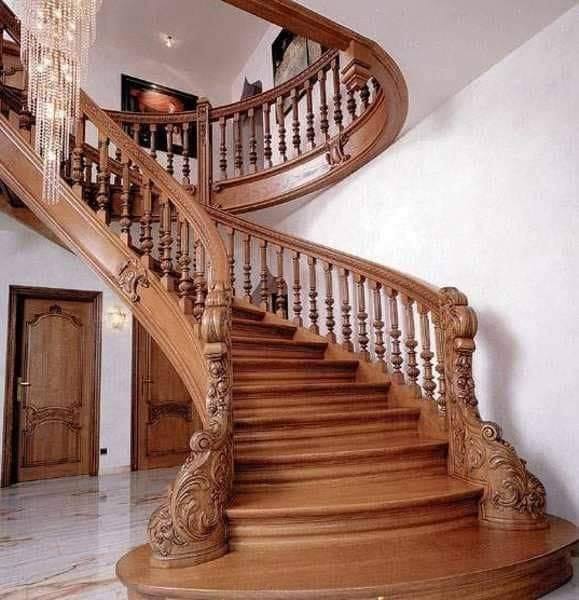
Wooden staircases are the commonest and price efficient. They will both be produced from framing lumber and coated in carpet, or the stair treads and risers are produced from higher-quality hardwood. Stable top quality wooden contains oak, maple, and walnut. Stairs produced from framing lumber are essentially the most price efficient sort. In case you are coping with a better finish dwelling, then you’ll possible have the choice of onerous wooden stairs. These stairs can even incorporate wrought iron balusters for the handrail. The largest draw back to wood staircases is that they make a little bit of noise because of the wooden altering dimension (relying on the season and humidity).
Concrete stairs are an important choice for outside stairs or industrial model houses and areas. Concrete could be very robust, stable and quiet. It may have a mess of textures added to it, and a wide range of shade to offer much more design choices.
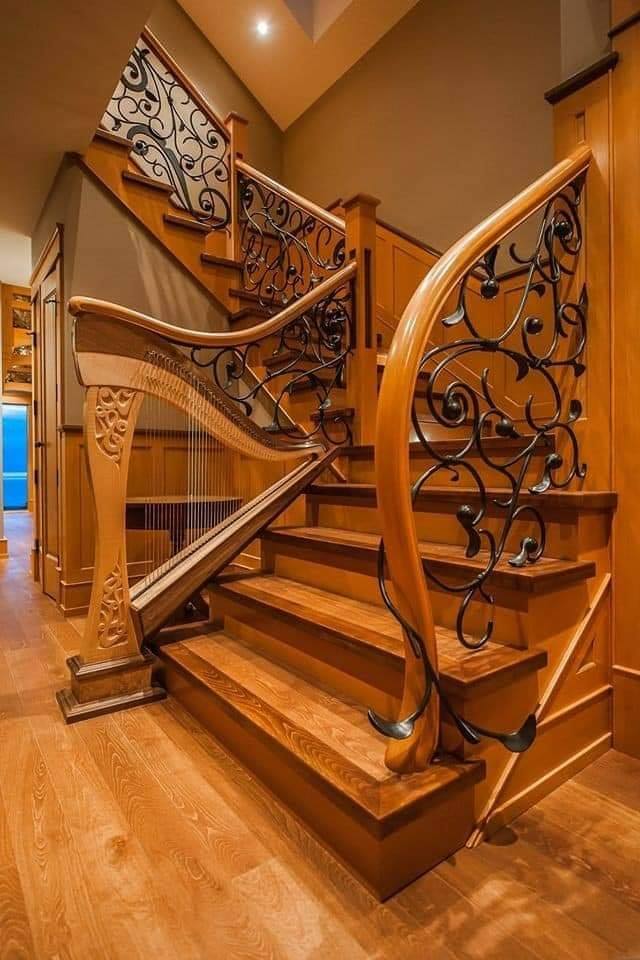
Lastly, steel stairs are the most secure, strongest and essentially the most versatile from a design level. There are two forms of steel staircases, metal-only, and steel with accent supplies. Steel-only stairs are what most individuals suppose after they hear of steel stairs. Steel-only stairs are quite common for outside purposes, industrial catwalks and parking heaps. The accent supplies are what make steel stairs extra interesting in an inside setting.
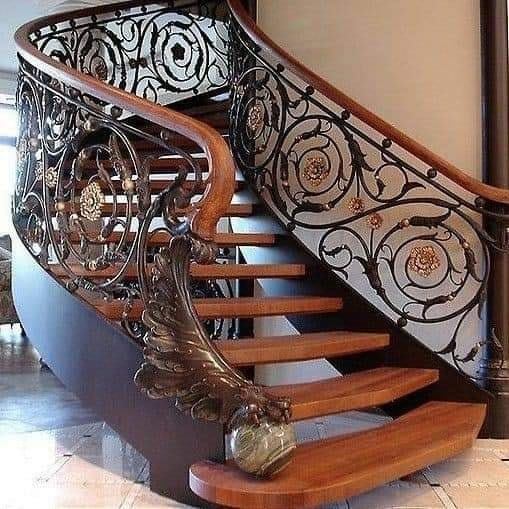
Steel stairs with accents are very robust and versatile in design. Typically, steel is the core materials that provides unmatched security and energy, after which an accent materials reminiscent of wooden, stone, or glass is used. This permits for limitless creativity in design choices. In fashionable and modern designs, it is extremely frequent to make use of steel buildings with accented steps. Some examples are:
- Steel construction with wooden treads and handrail caps (treads could be butcher-block model with a mixture of unique woods)
- Steel construction with stone steps and caps (granite, marble, quartz, and different commercially-available stones)
- Steel construction with glass steps and/ or aspect partitions (glass steps and aspect partitions are very robust and supply fairly a singular function for essentially the most refined palates)
Not solely do you get the energy and security of the steel construction, however you additionally profit from the model and fantastic thing about accent supplies.
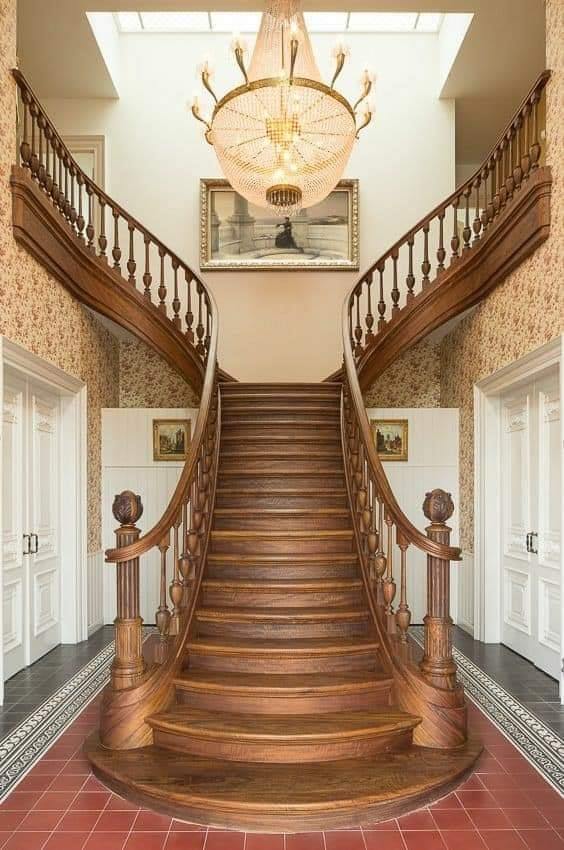
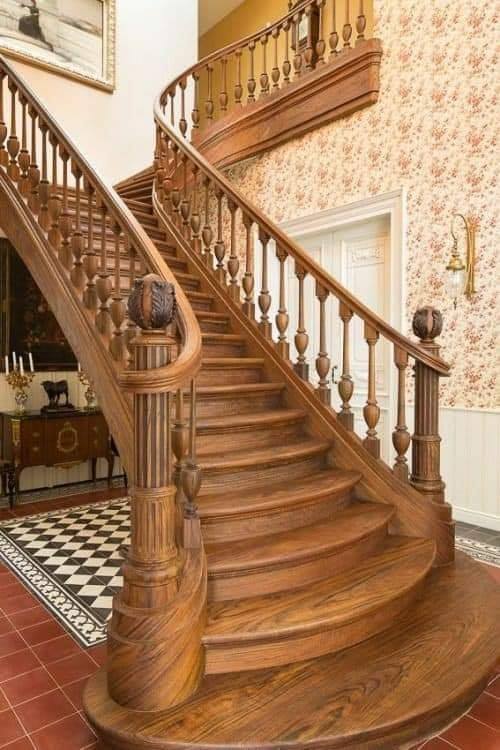
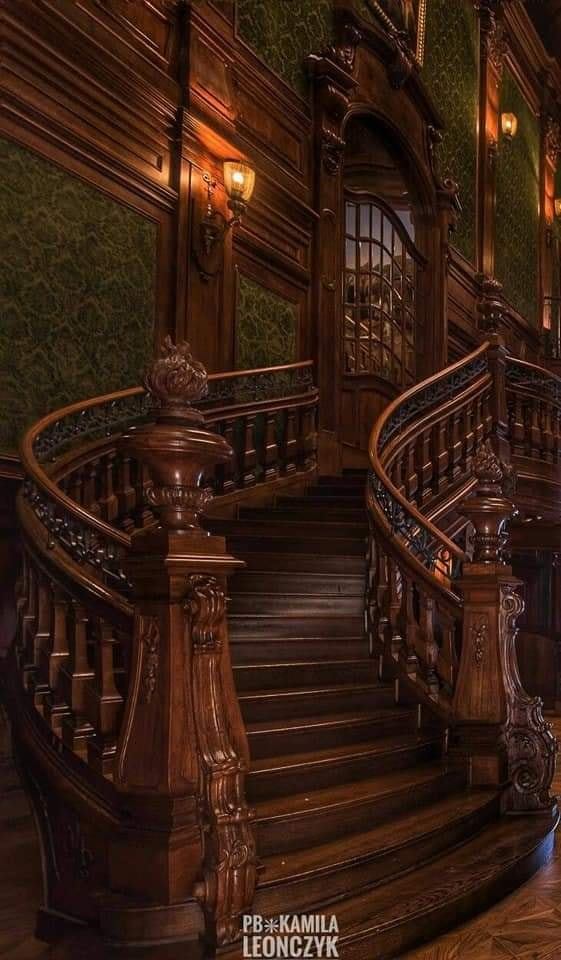
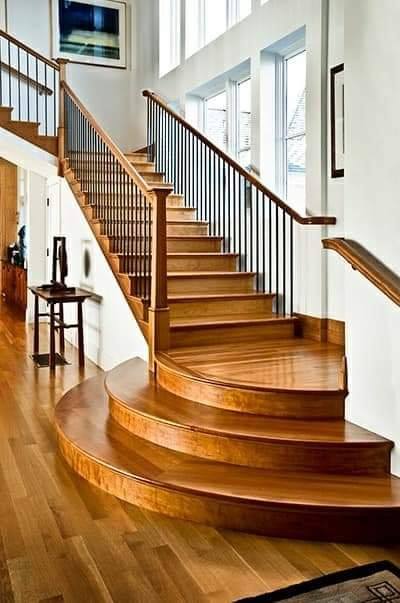
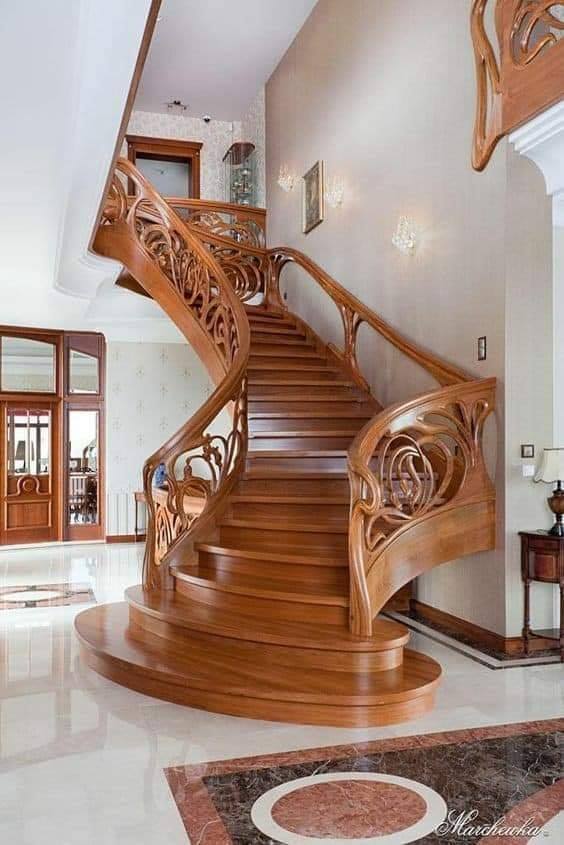
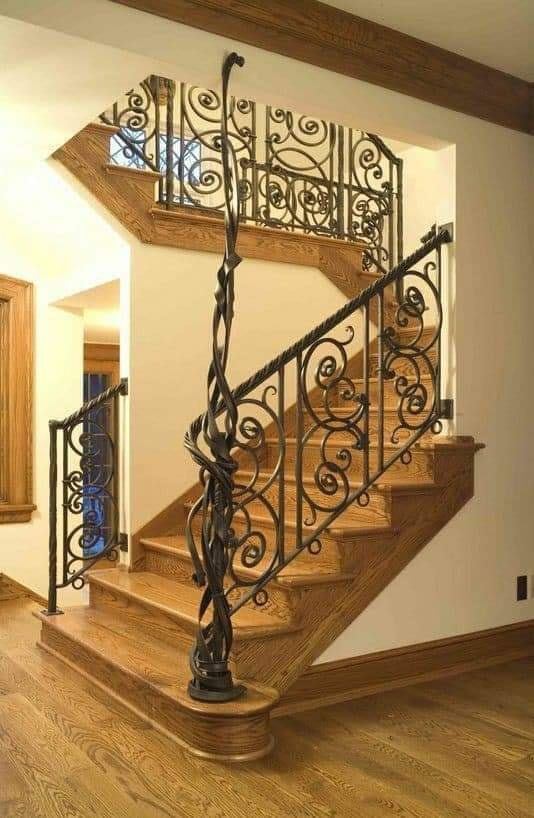
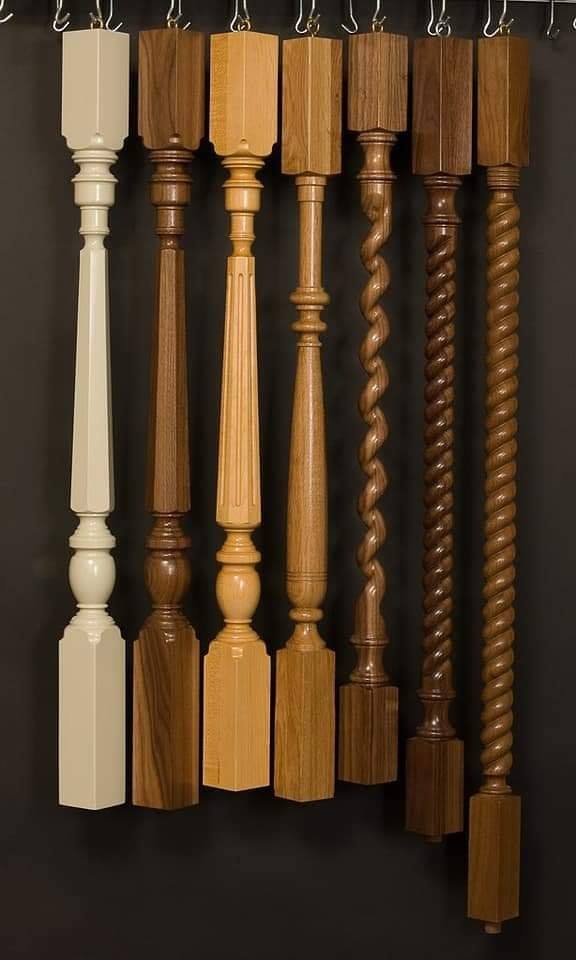
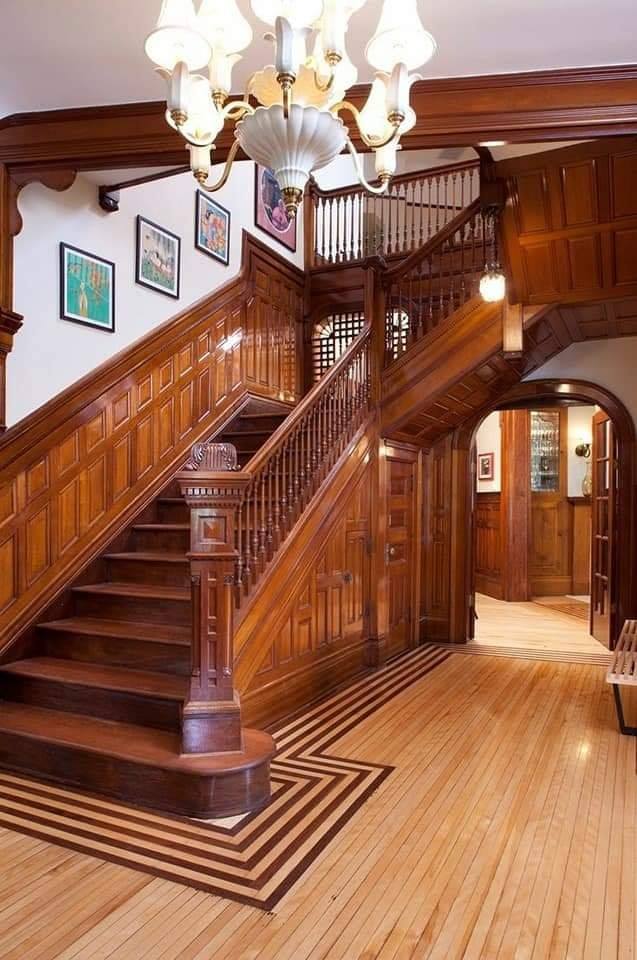
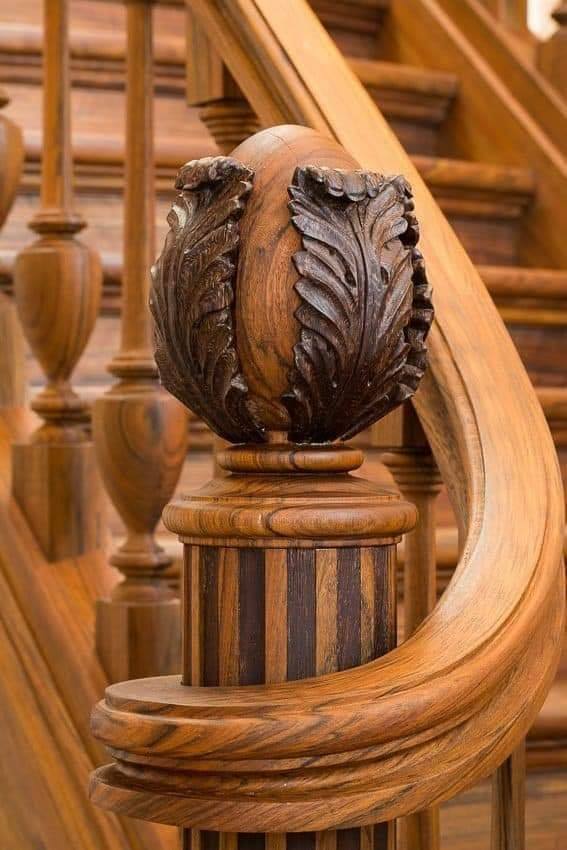
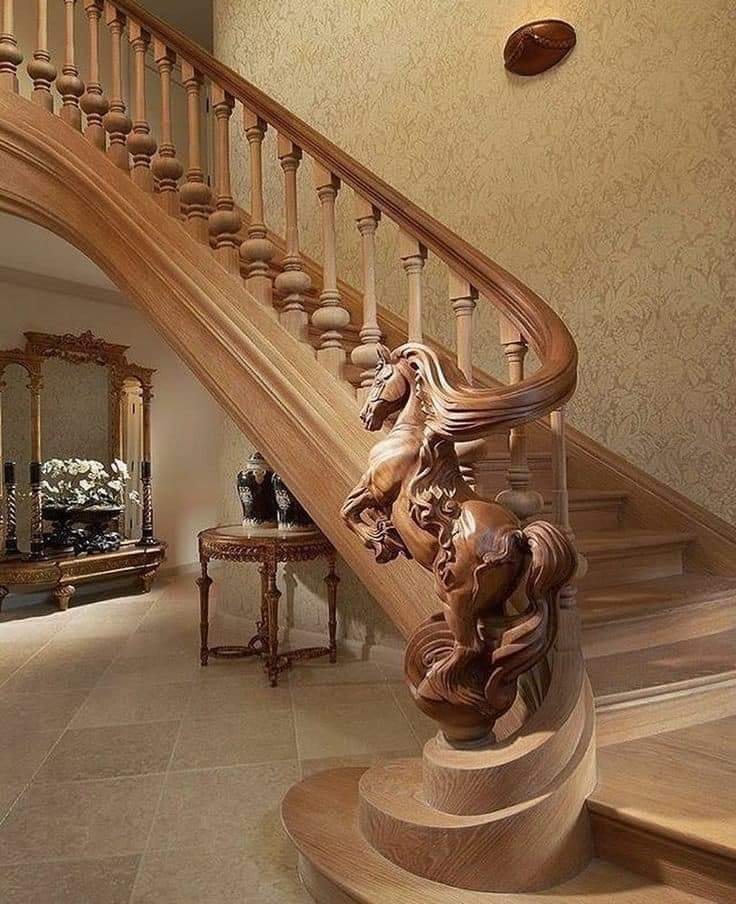
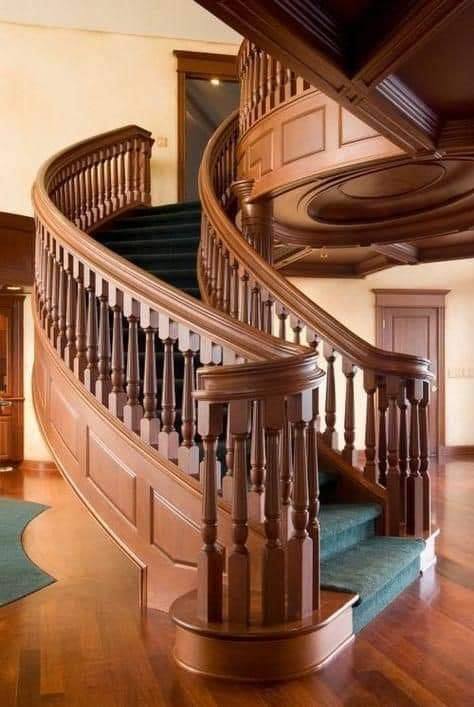
Good staircase must offer a comfortable, swift and secure means of travel connecting the different floors of the building. Common prerequisites for good staircase are listed subsequently:
Stairs must be placed in a way that they’re simply reachable from the various rooms of the structure.
Proper lighting and ventilation must be there.
It must have adequate stair width in order to serve several individuals in rush hours or during events. Usually, for internal stairs, the stair width has got to be no less than 50 cm in houses, while 90 cm in motels, inns, flat, & industrial structures and 1.1 m for different types.
The no. of steps in a flight of stairs must be set and at least three.
Sufficient headroom must be offered. Vertical clearance must not be below 2.15 m.
Dimension of stair treads and risers must usually be uniform from the convenience viewpoint. Treads must be 25 to 325 cm wide, besides nosing. Stair treads below 25 cm width must have a nosing of approximately 25 cm. The most convenient riser’s height is 17.5 to 18.5 cm. In general, the subsequent formula must be utilized:
a. The product of tread and riser should be within 400 and 410.
b. Sum of riser and tread should be between 42.5 and 43.5 cm.
d. Addition of the tread and two times the riser should be within 60 and 64 cm.
Stair width relies on the design and significance of the building. For residential buildings, it must be set as 1 m.
The no. of stairs needed must be depending on the utmost floor area. The no. of individuals that could be accommodated by stairs for each floor for each 55 cm stair width unit must be 15 for clinics and hospitals, while 30 for housing & institutional structures, while 45 for storehouses, while 60 for commercial & industrial buildings as well as cafés & theaters, while 80 for galleries & auditoriums, and while 320 for sports grounds.
The minimal landing width must be equal to the stairs width.
The utmost and least pitch must be 40’ and 25’ correspondingly in all stairs.
Winders must be offered at the flight lower end, unless it is necessary. Usually, the utilization of winders in a staircase must be prevented.
In open-well stairs, with the objective to prevent the chance of mishaps, balustrade should be offered.
The consideration of live loads on stairs has been specified by IS: 875-1964. The landings and stairs must be set for a live load of 300 kg/m in structures wherein there’re no chances of congestion. For storehouse and halls, where congestion is possible, the live load could be assumed as 500 kg/m2.