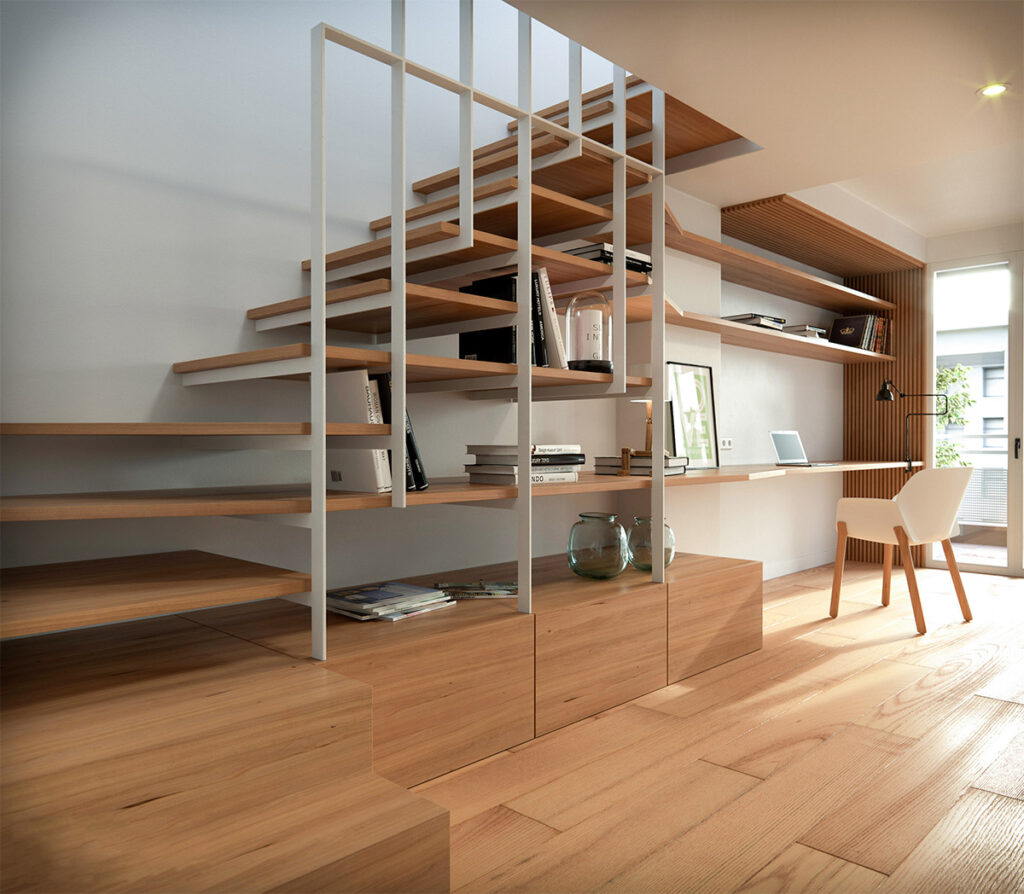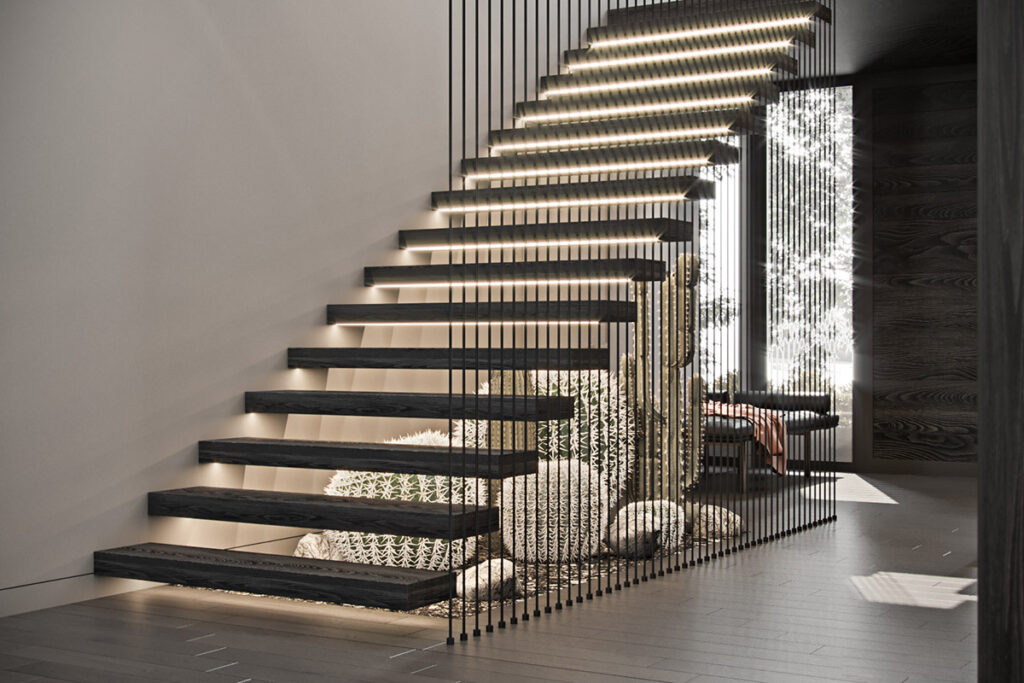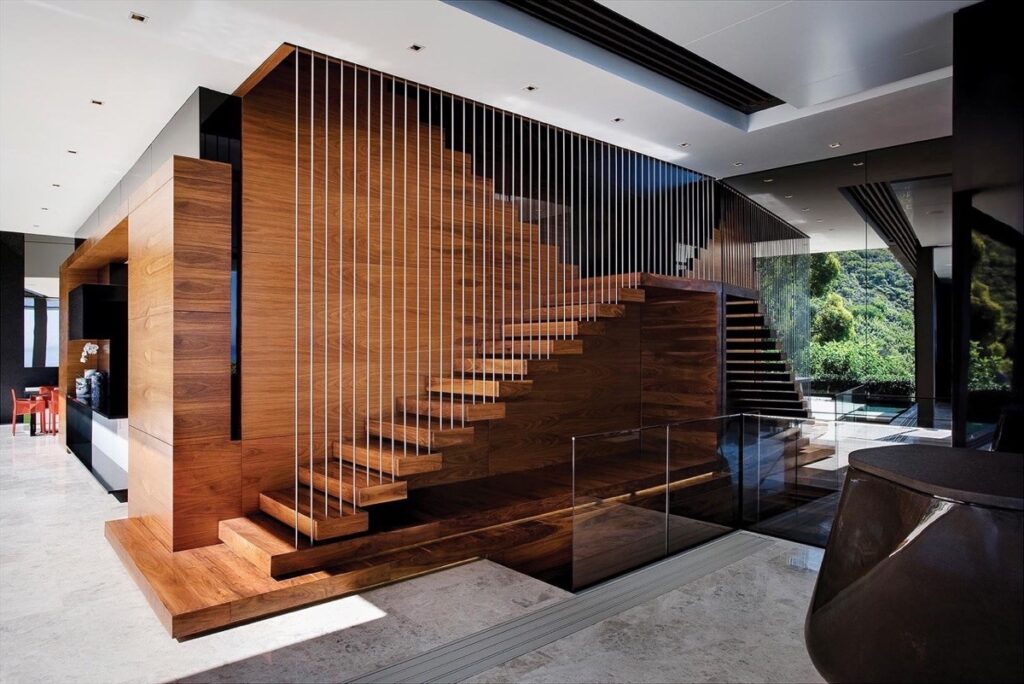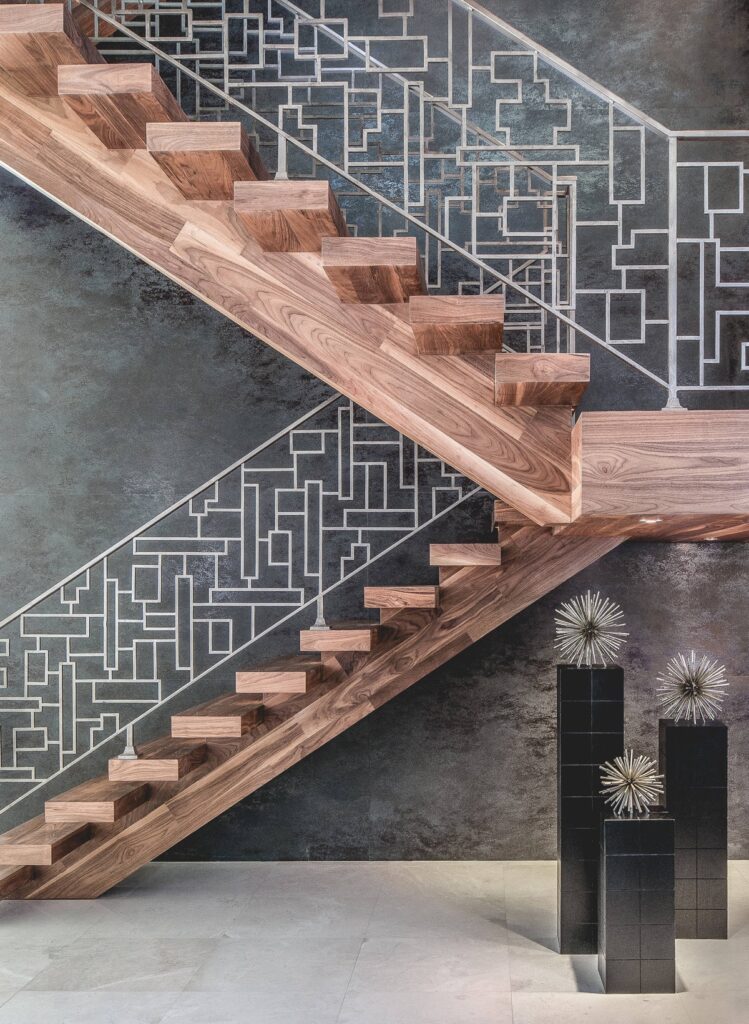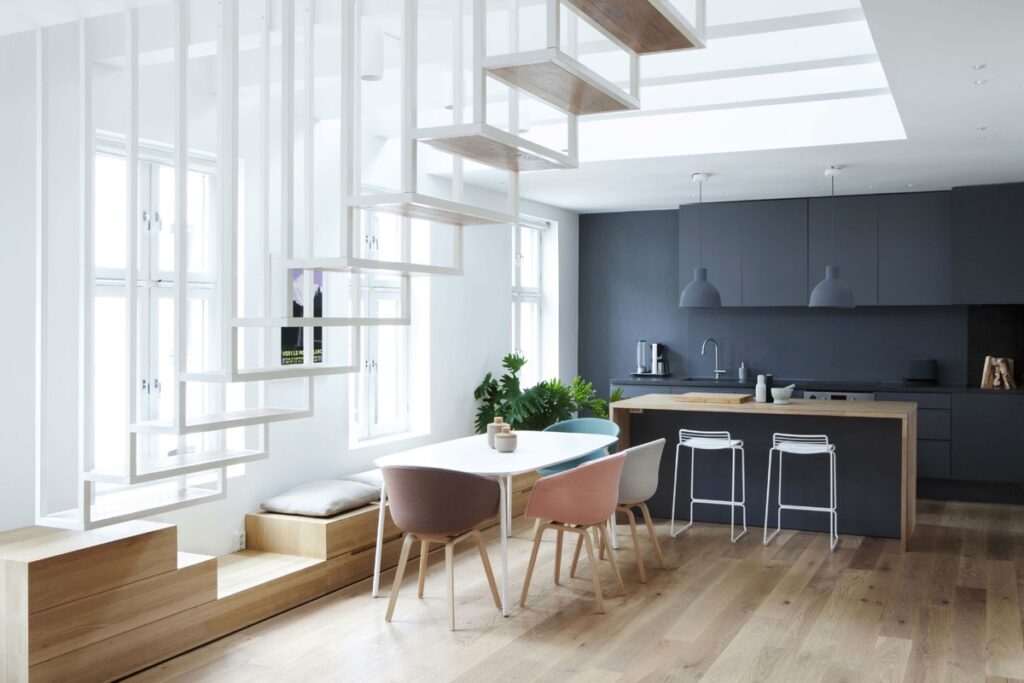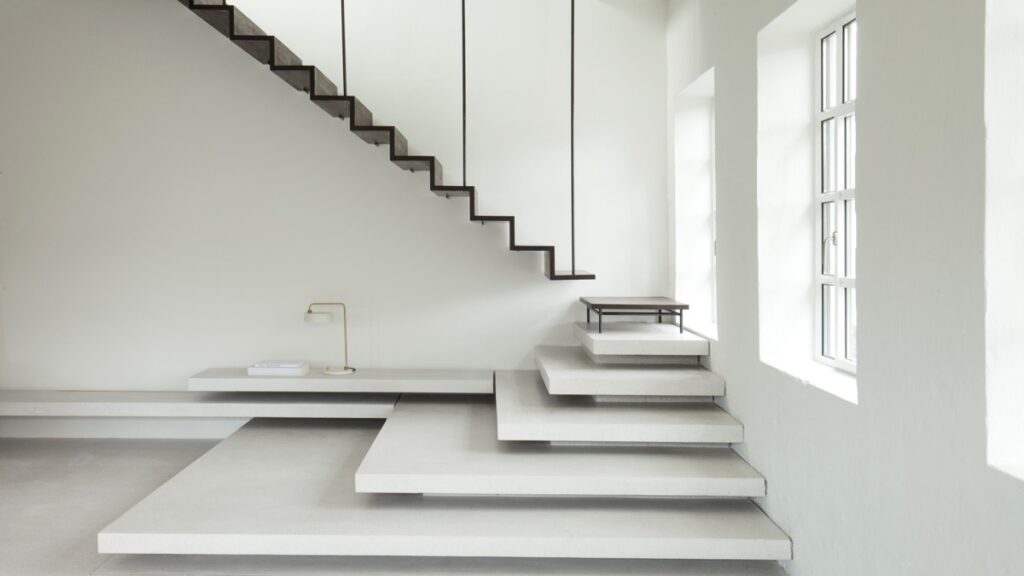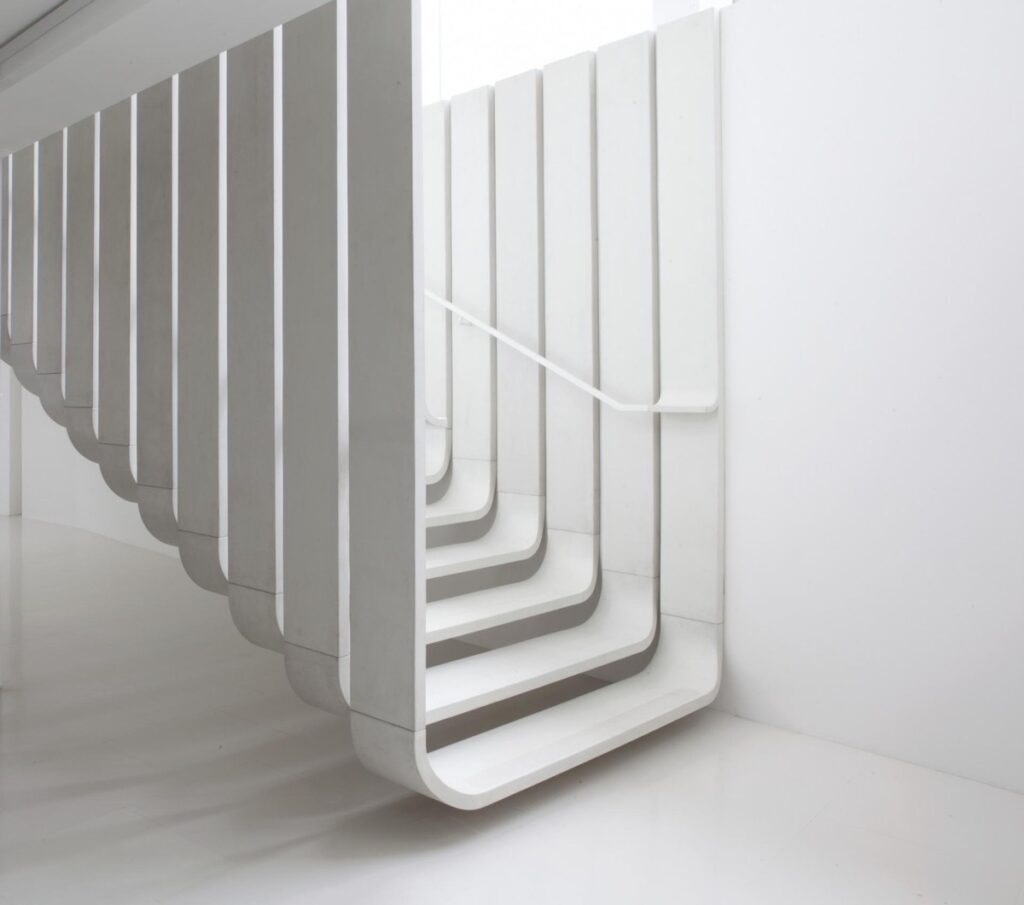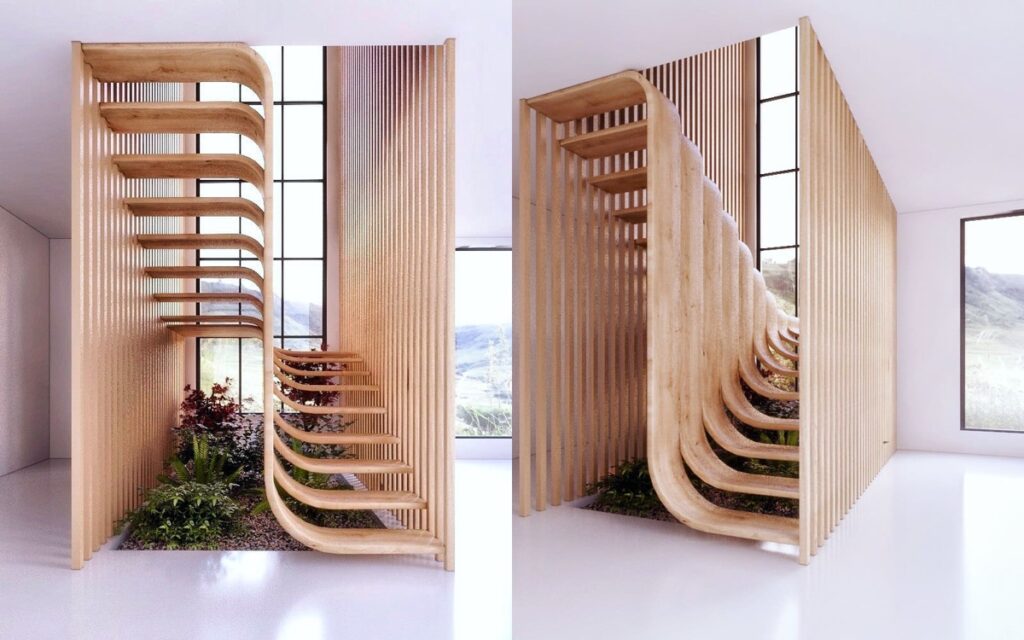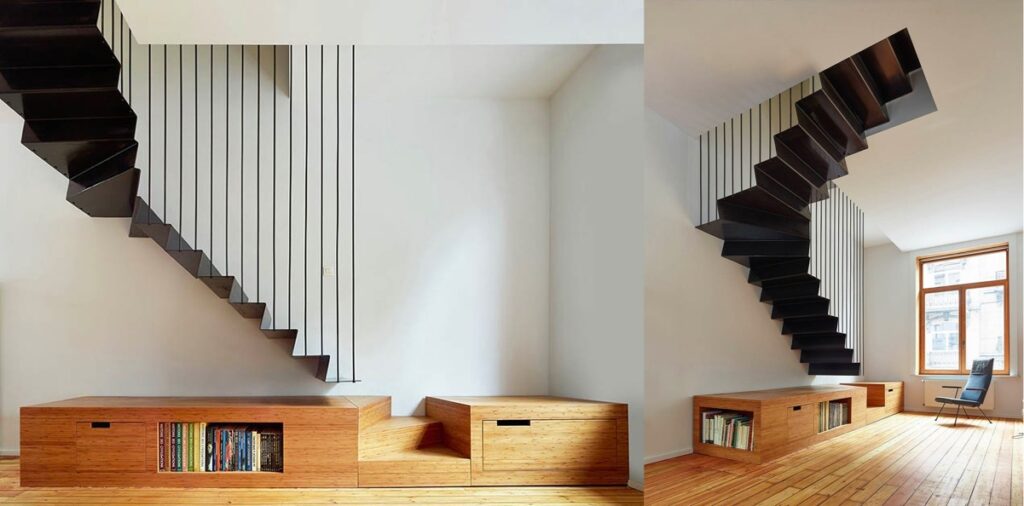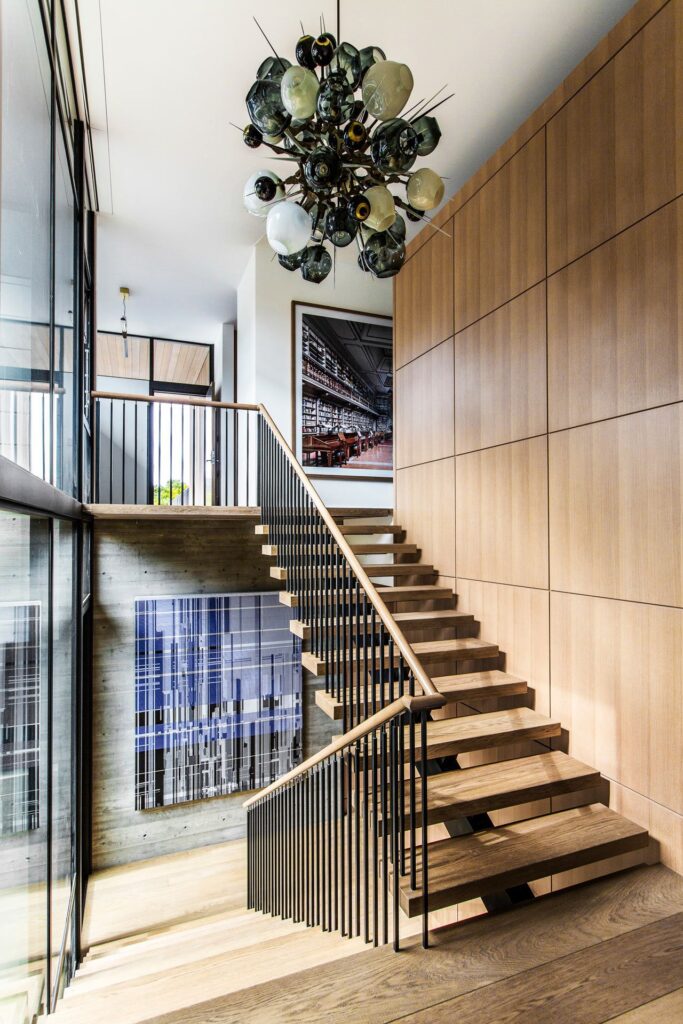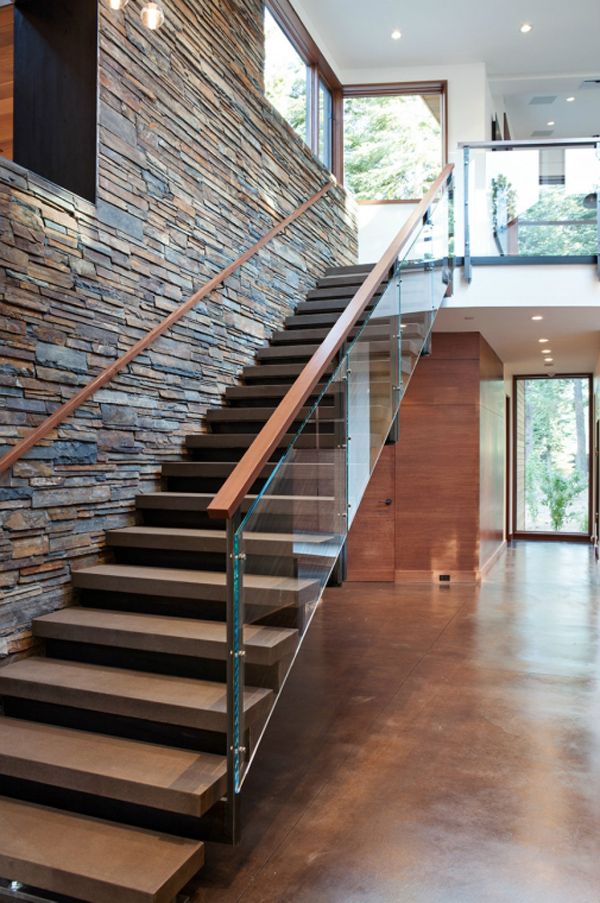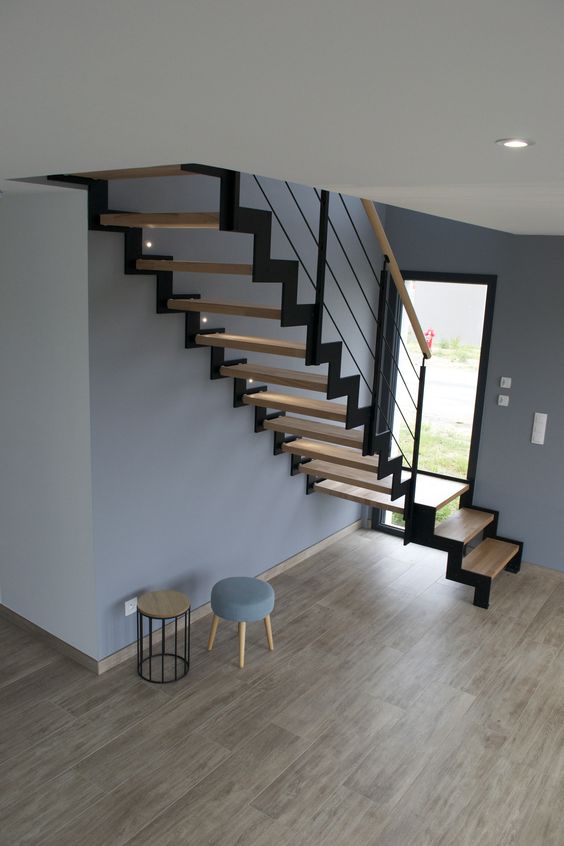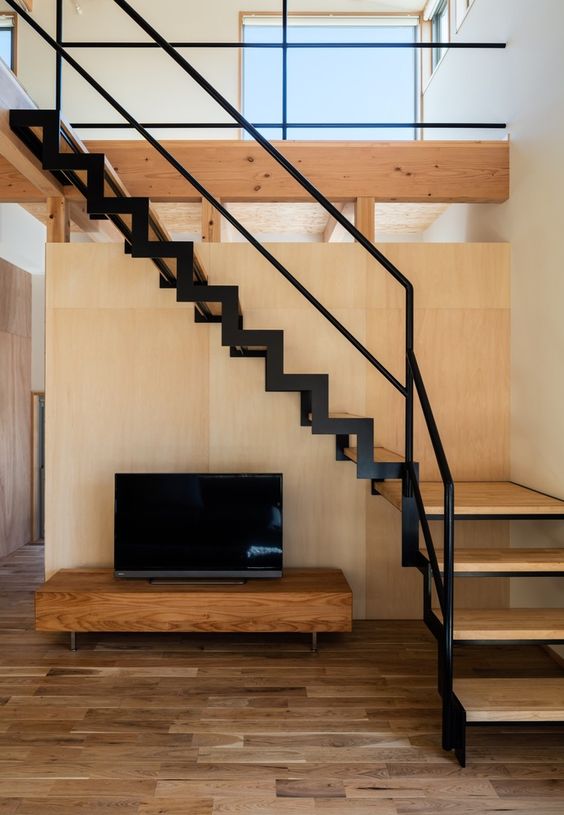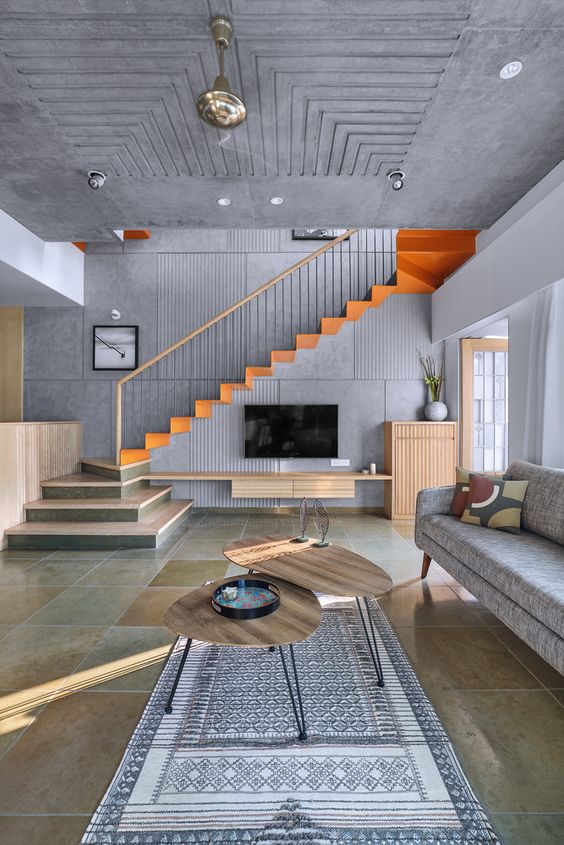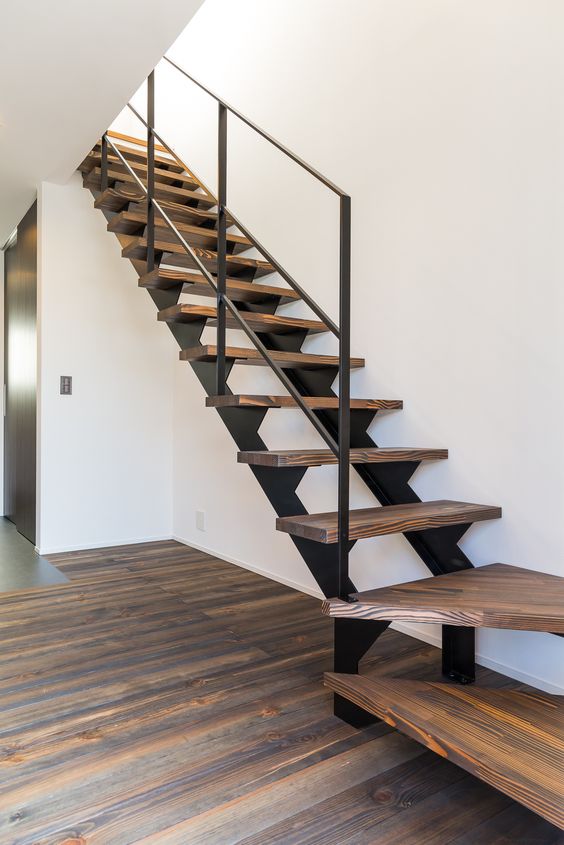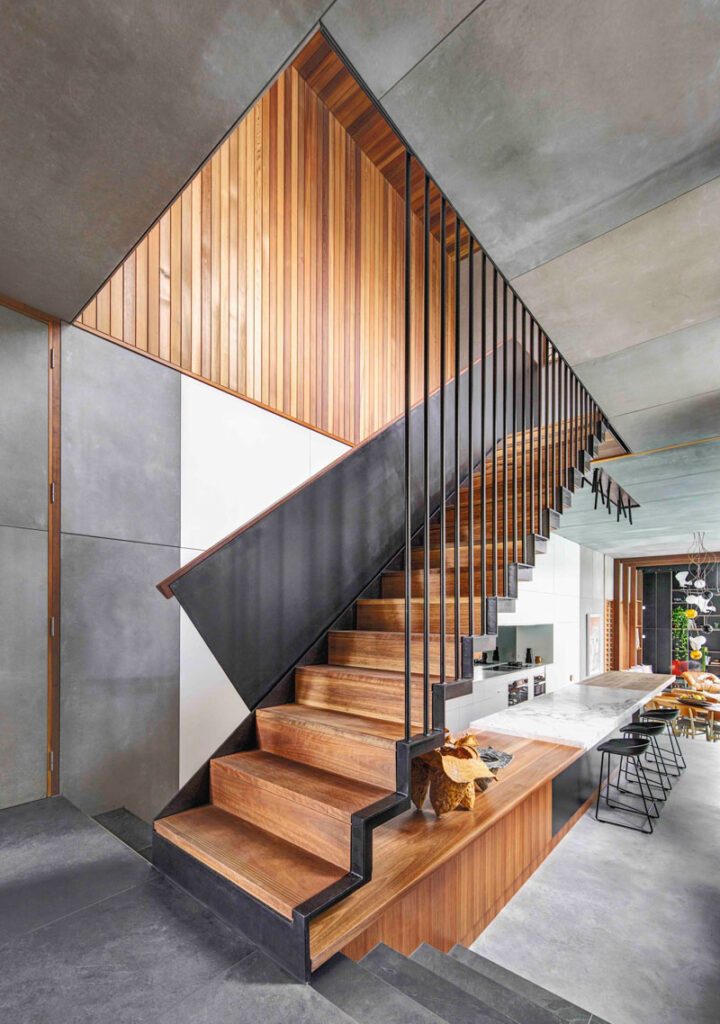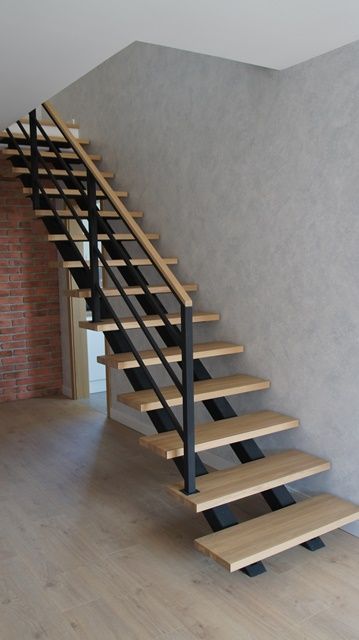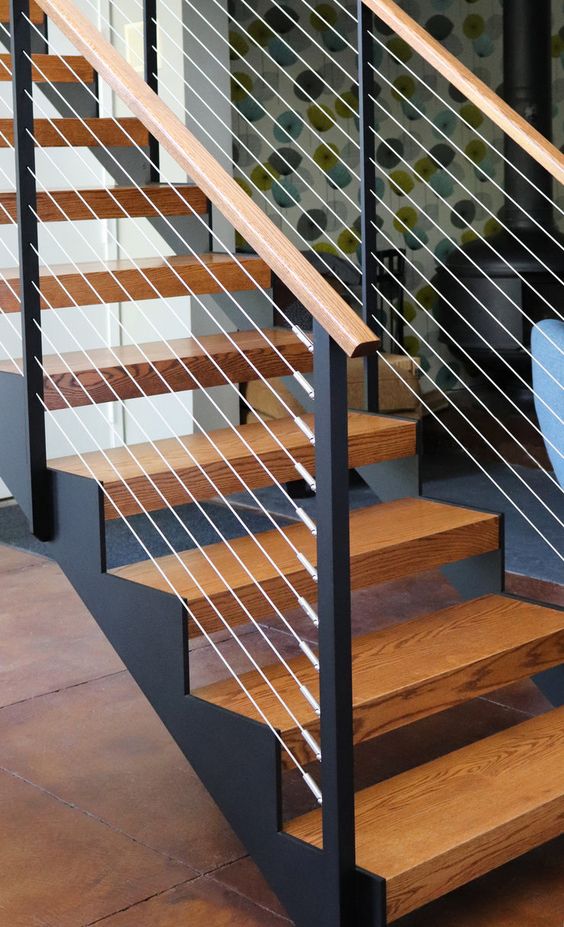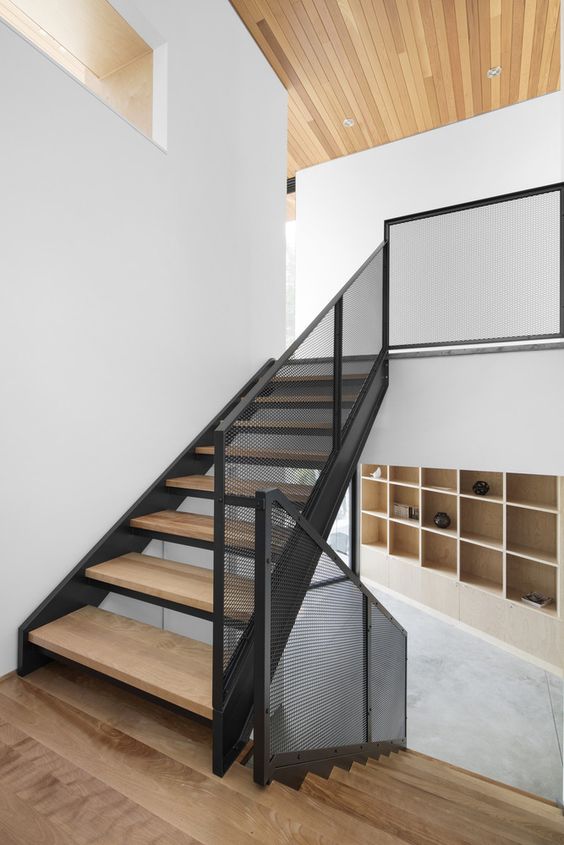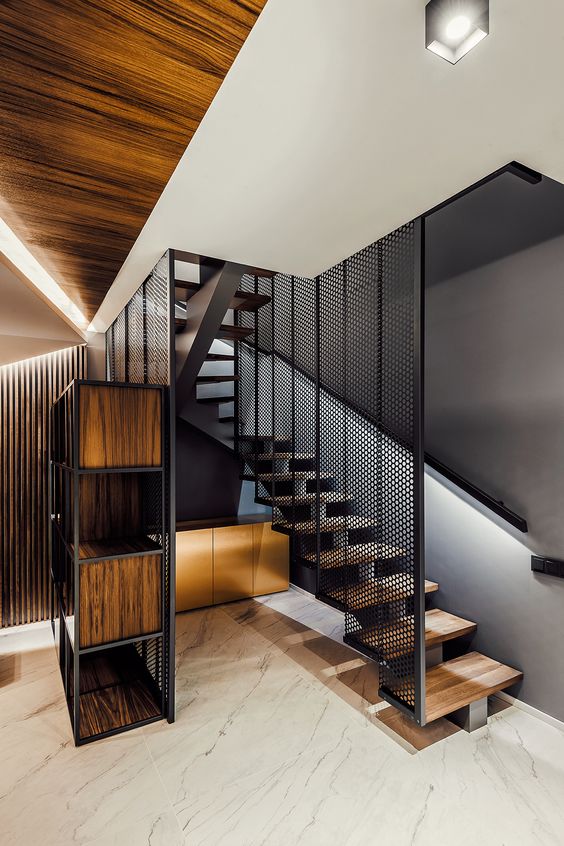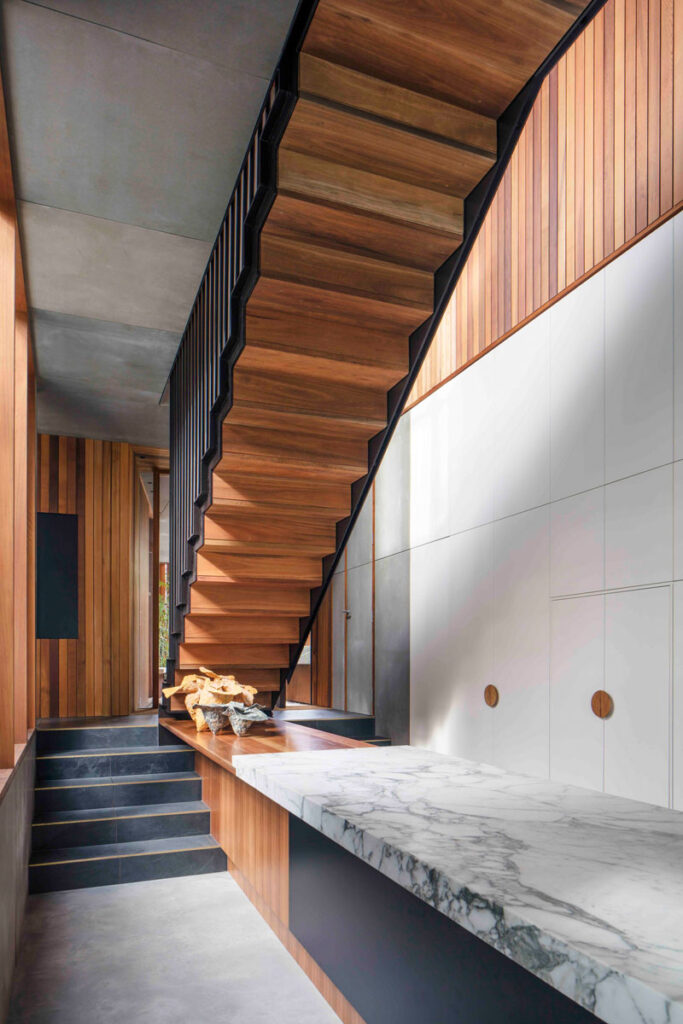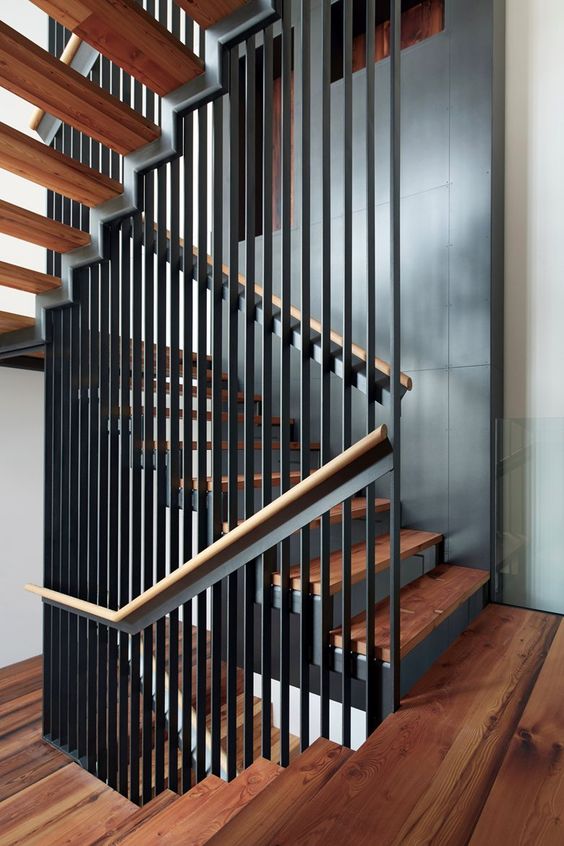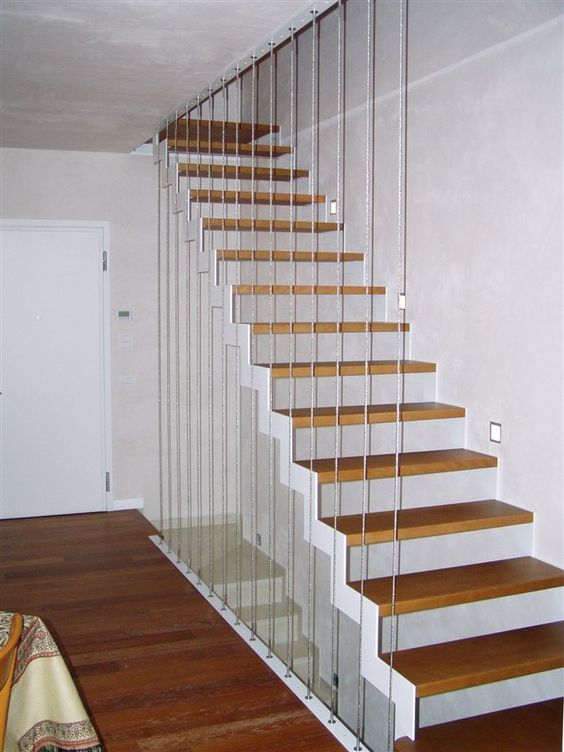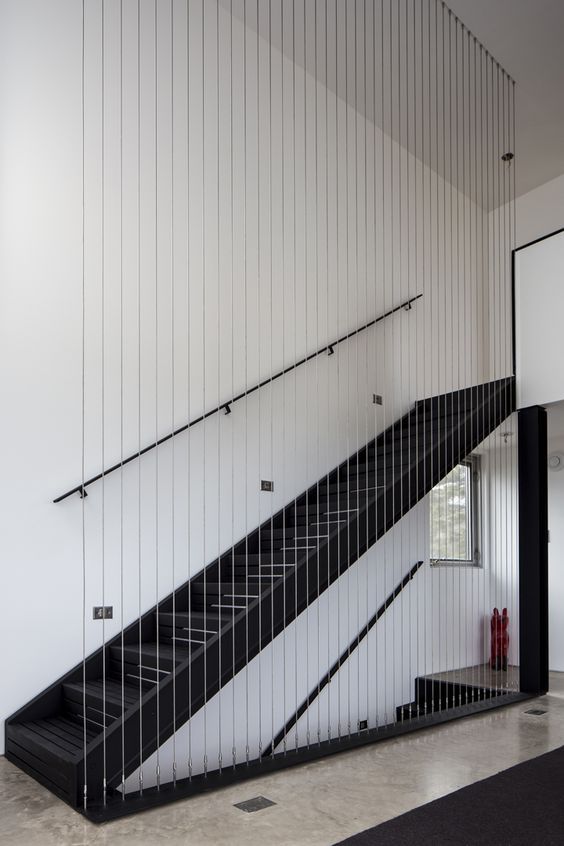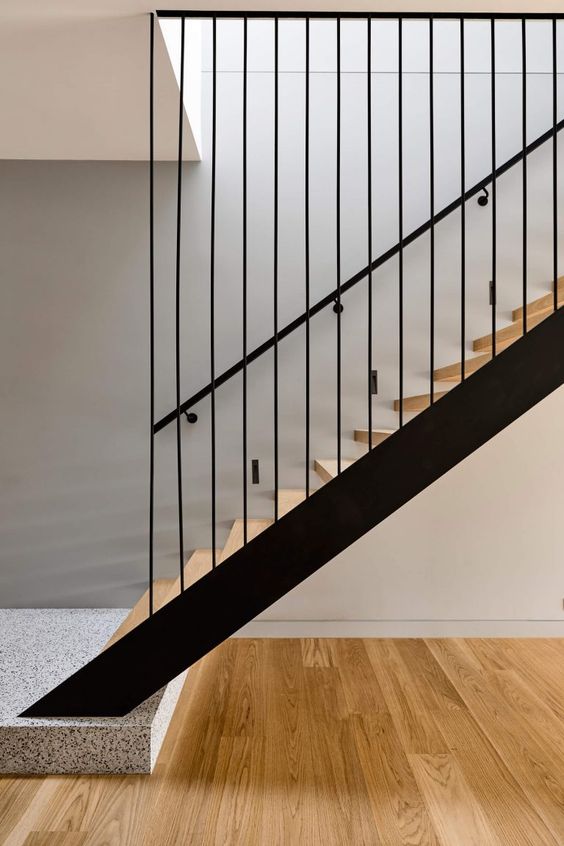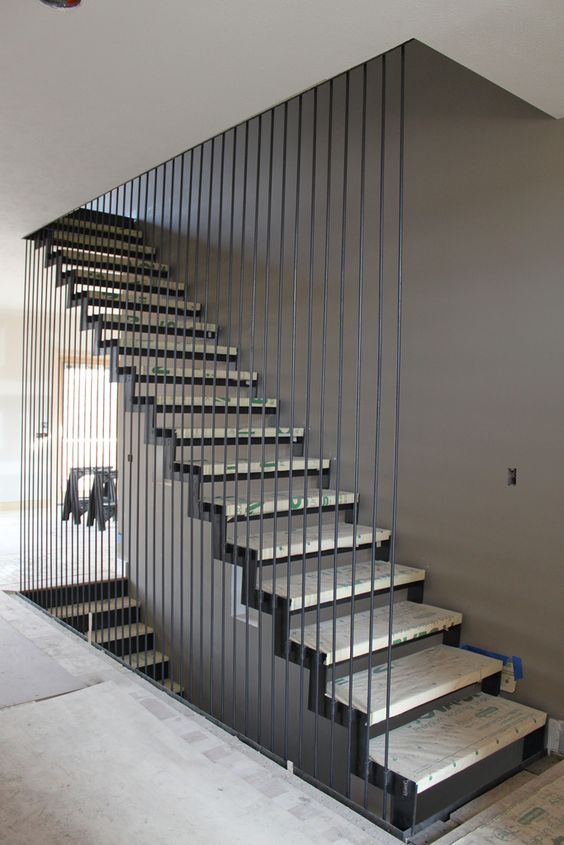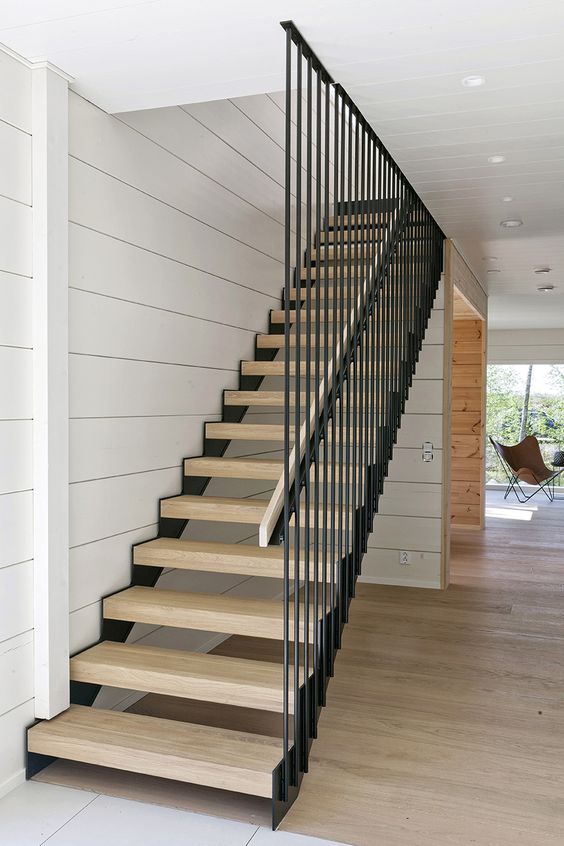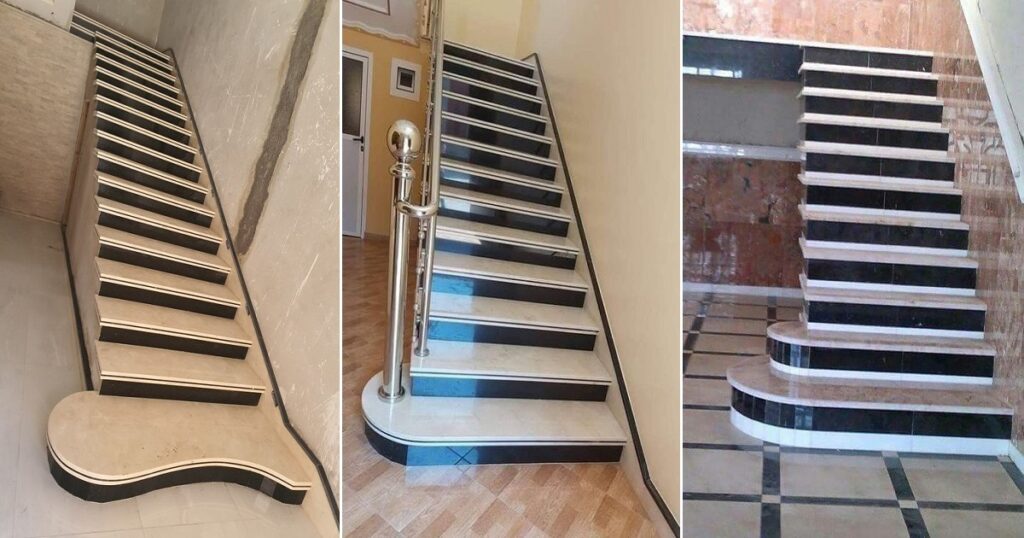
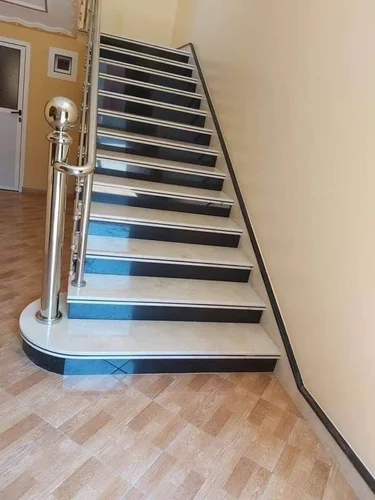
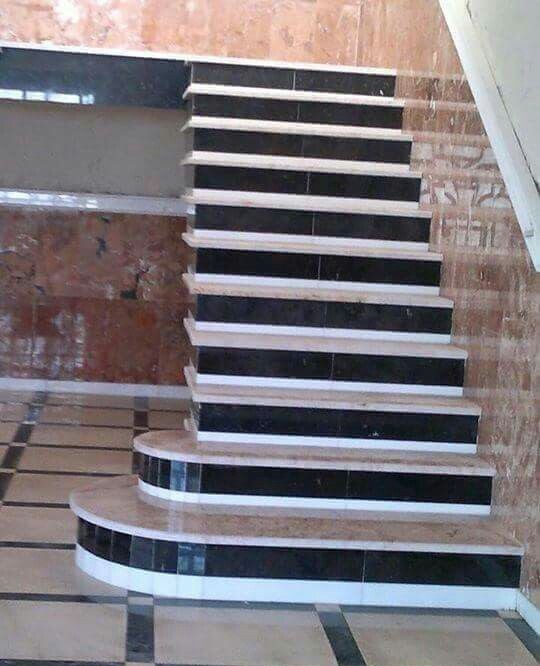
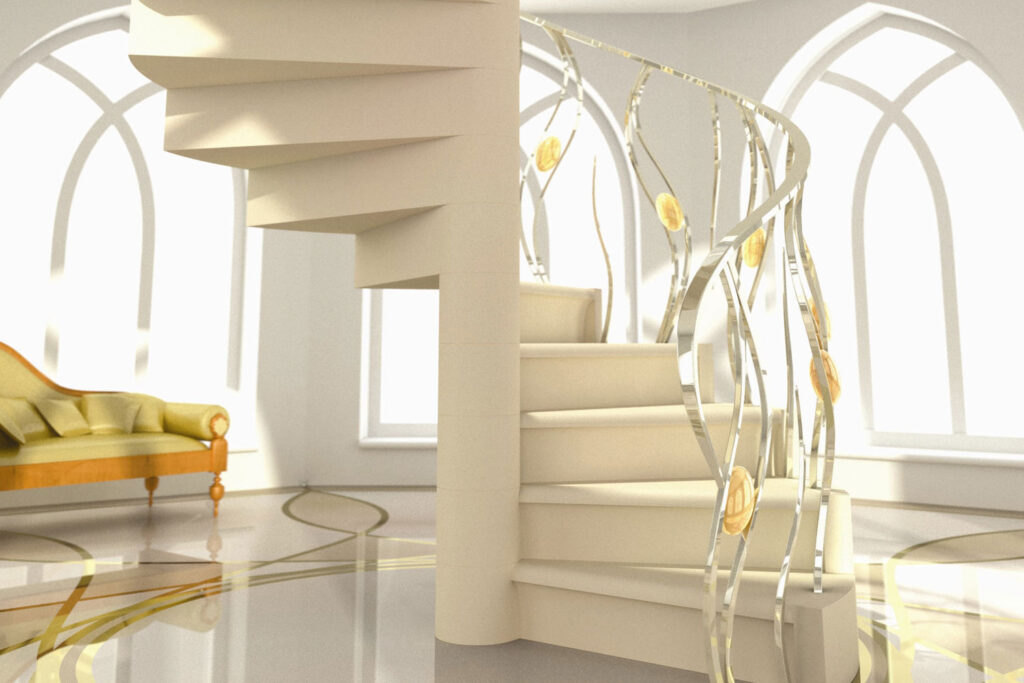
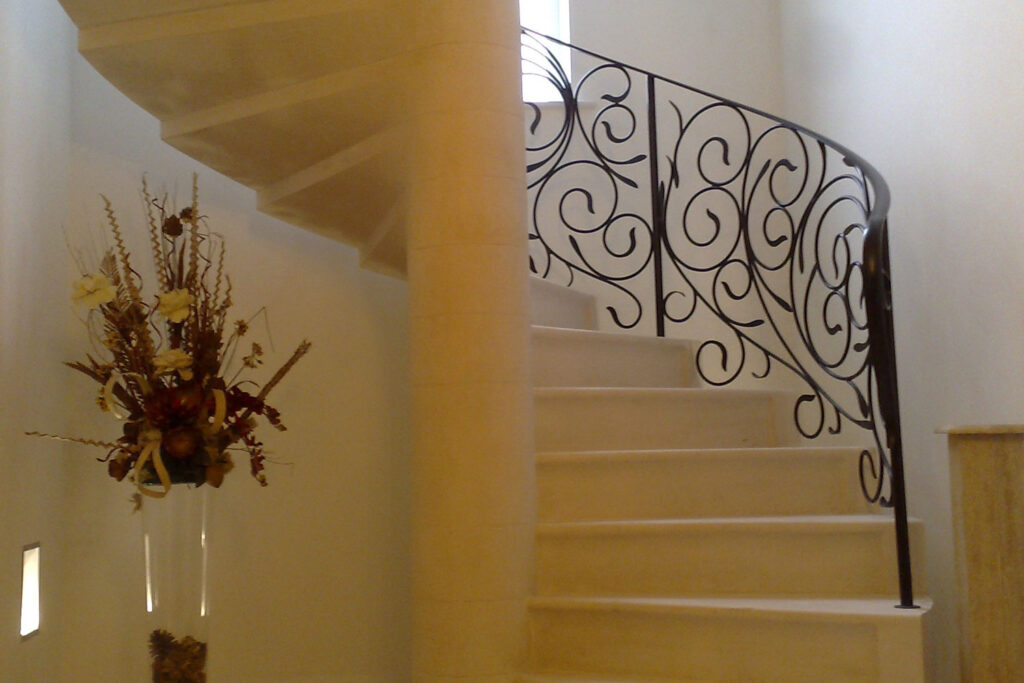
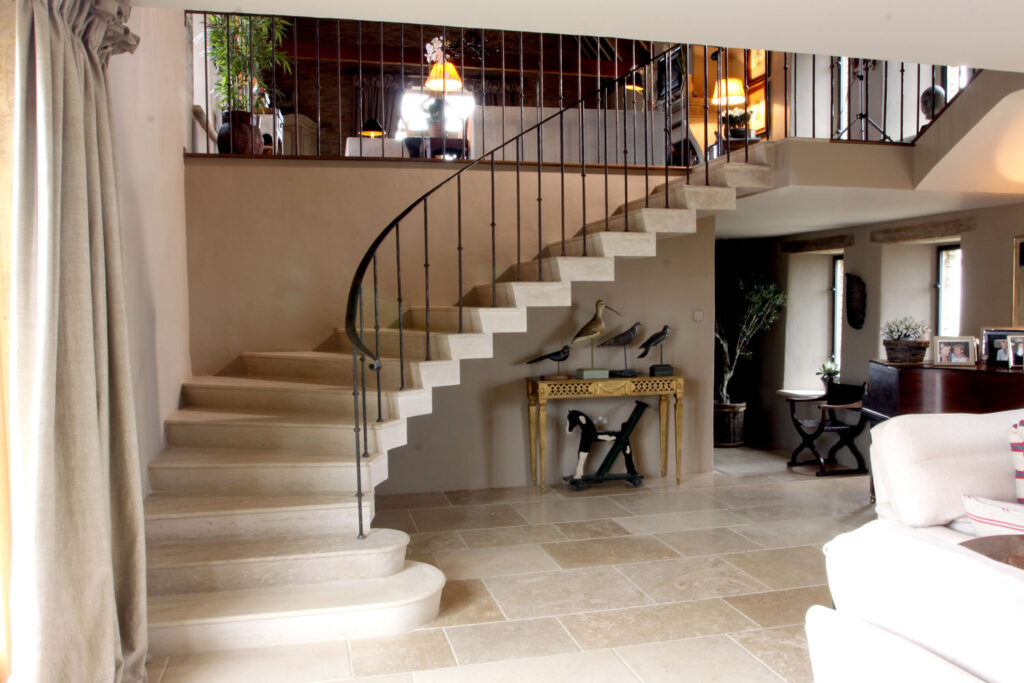
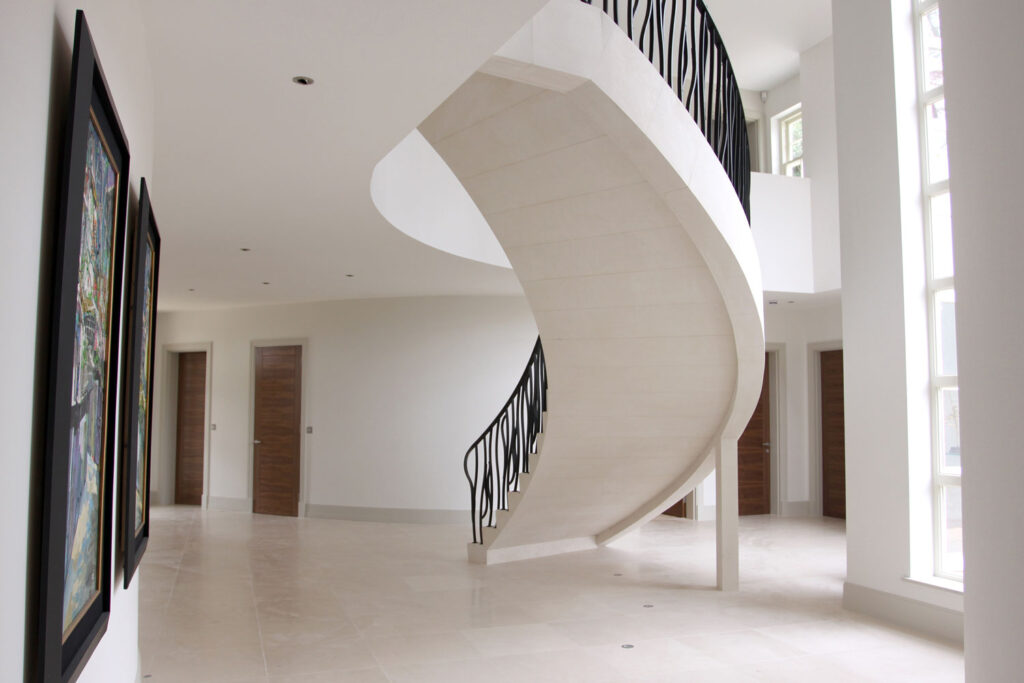
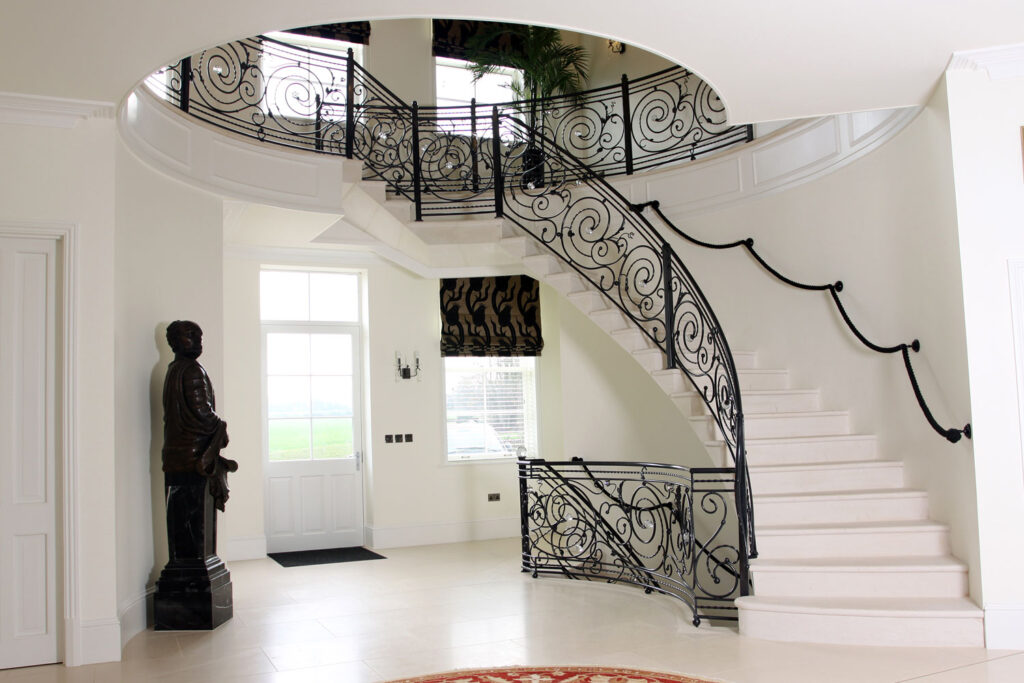
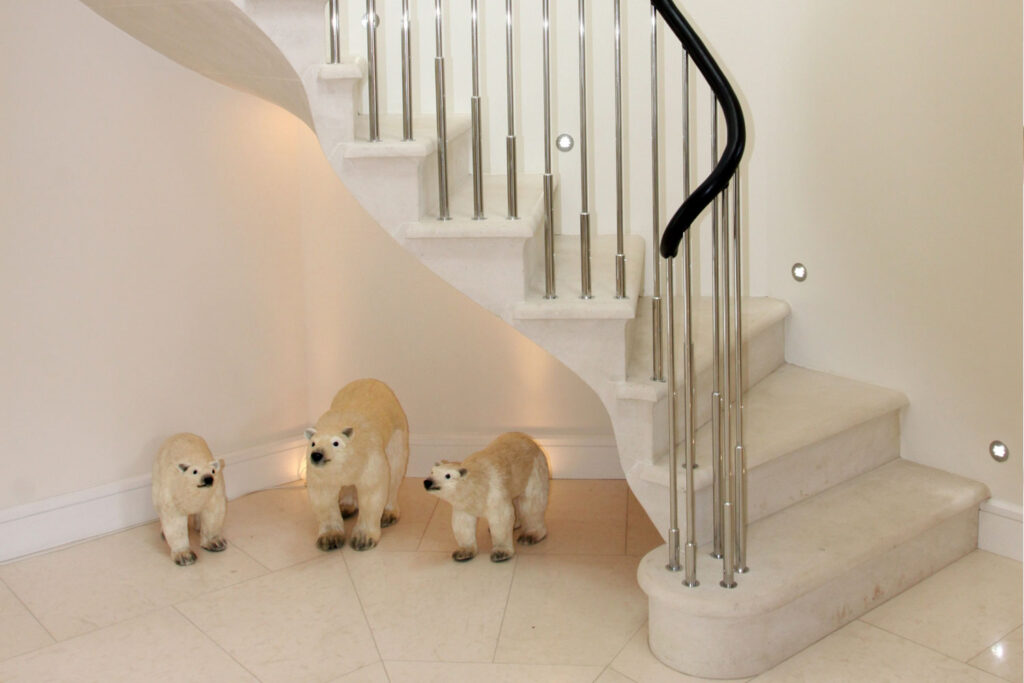
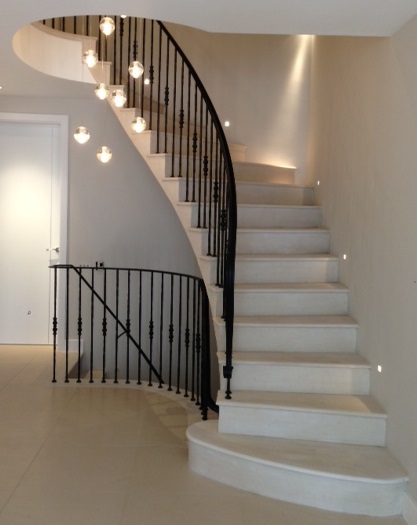
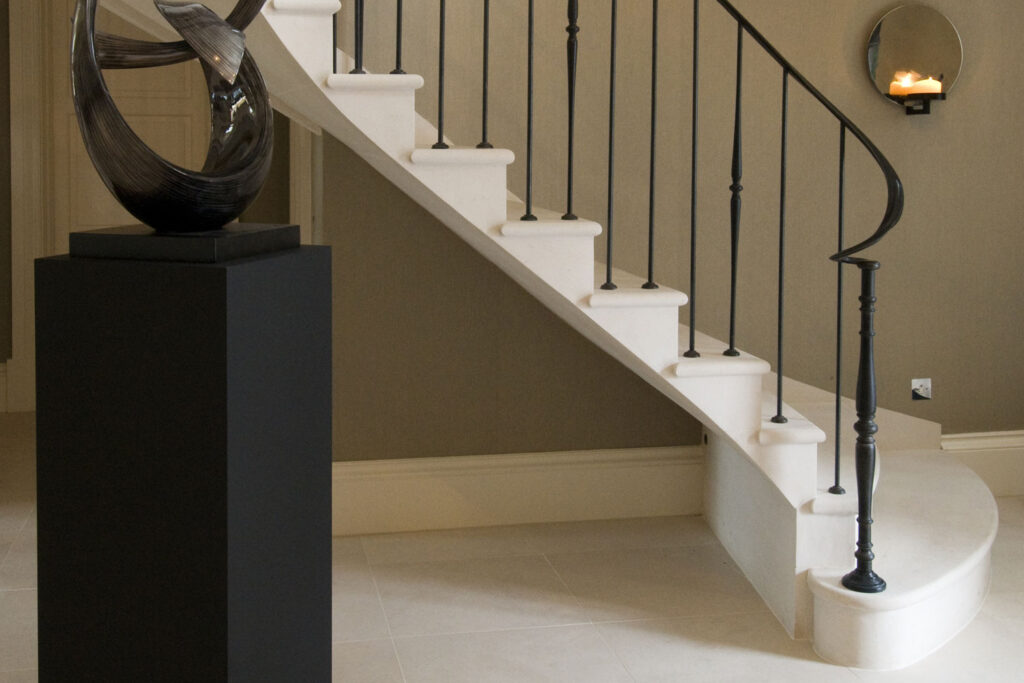
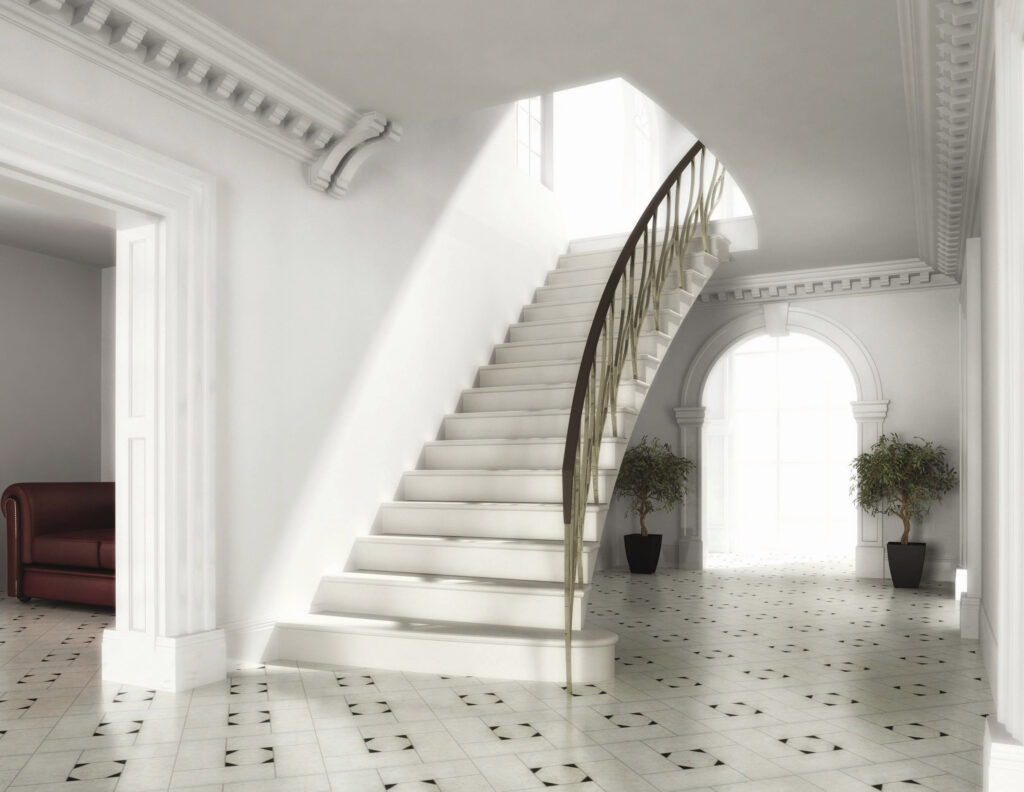
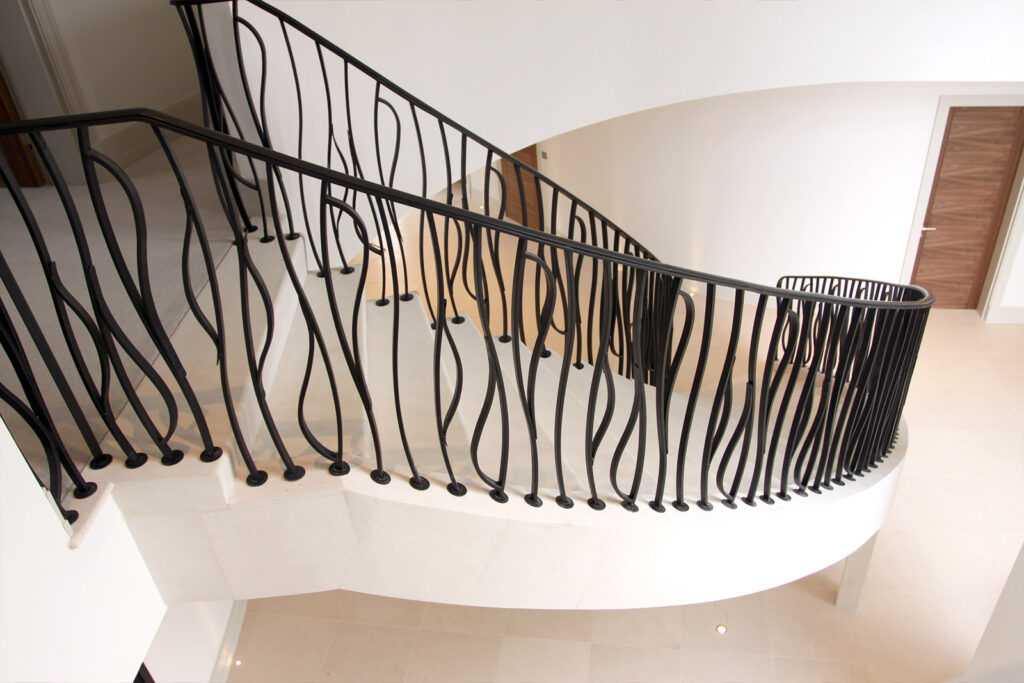
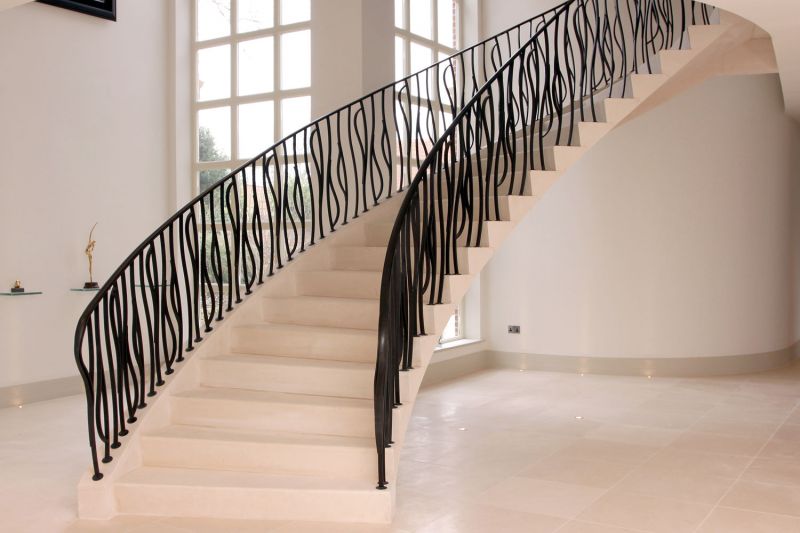
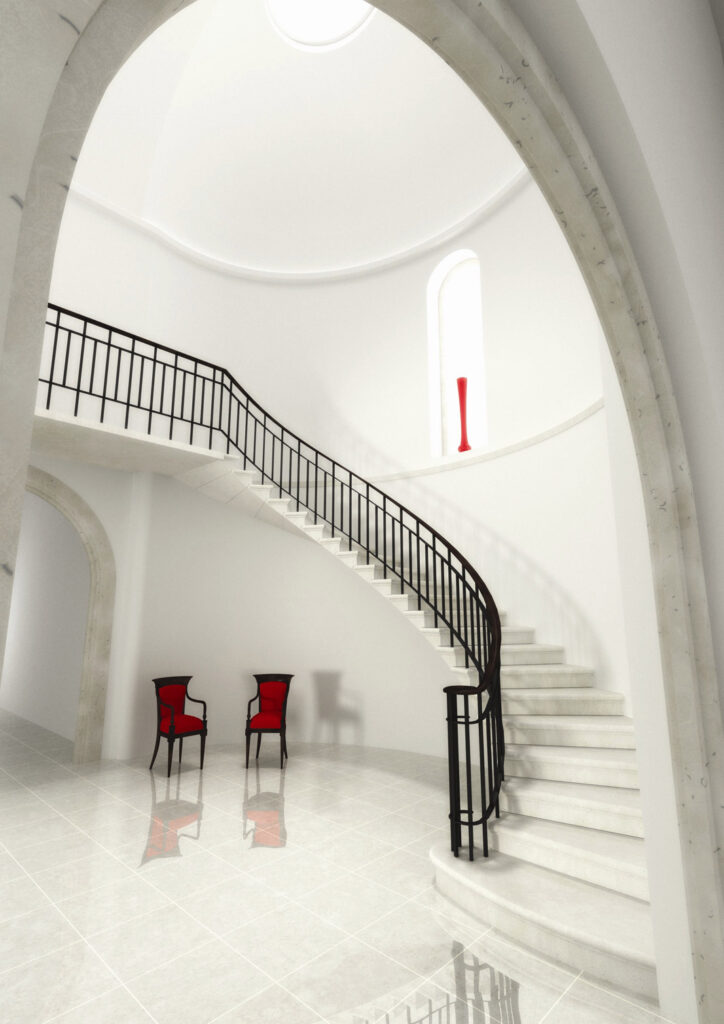
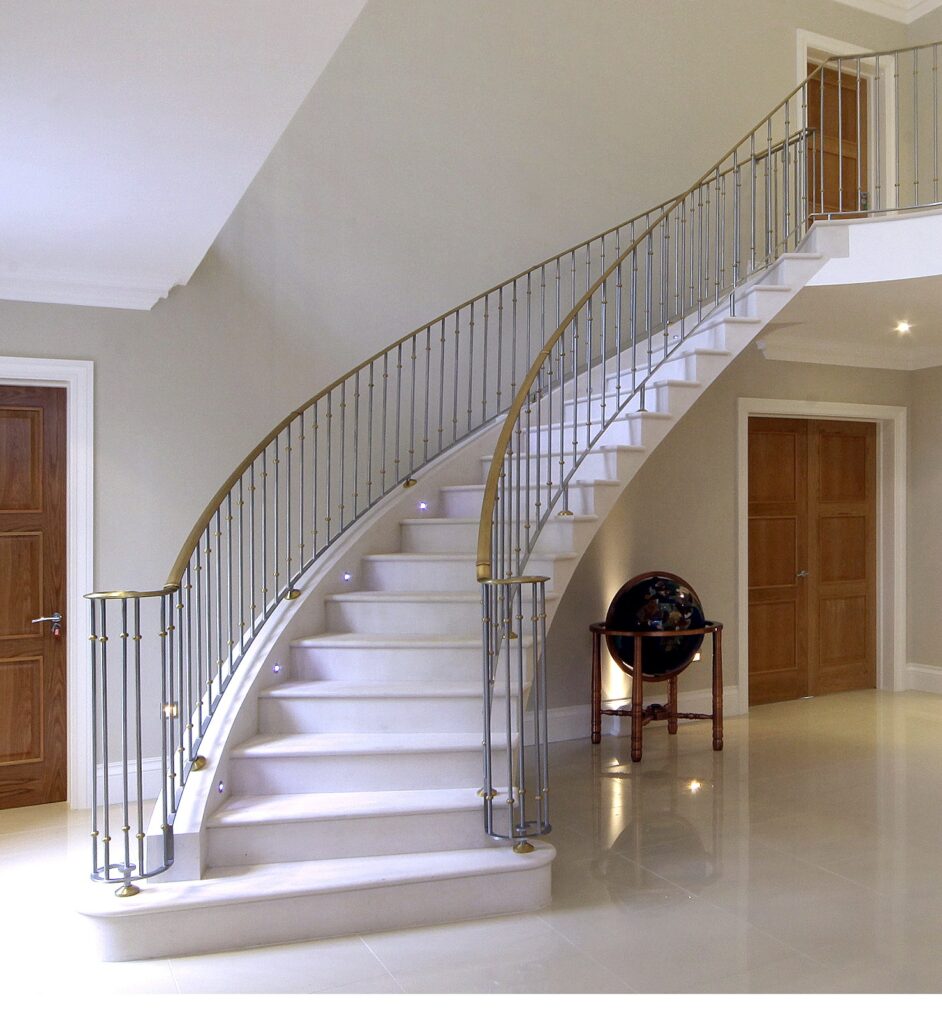
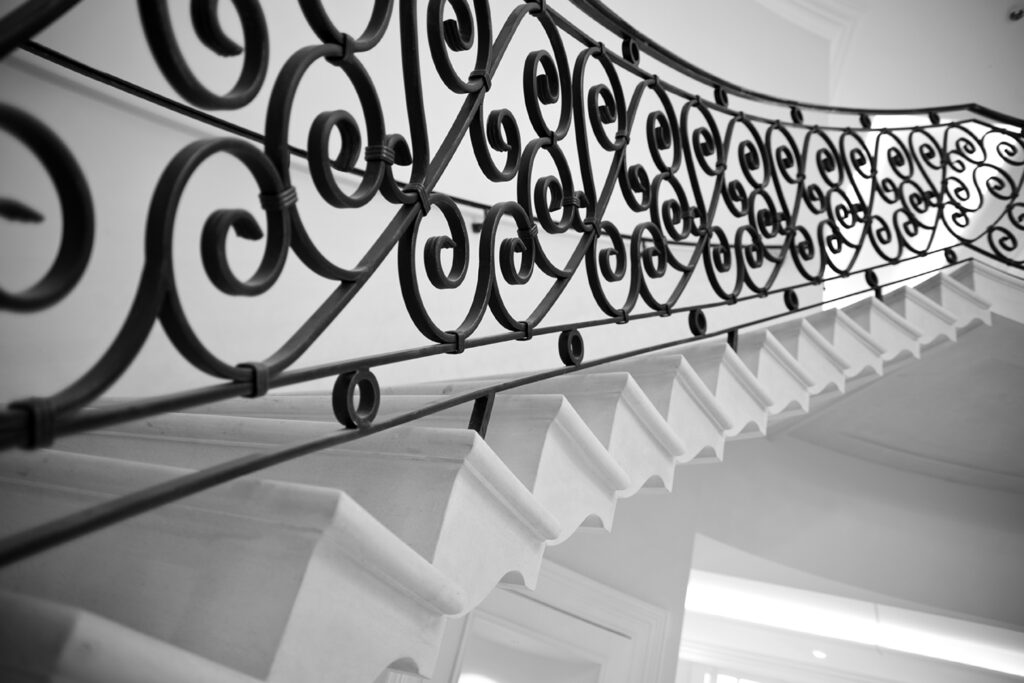
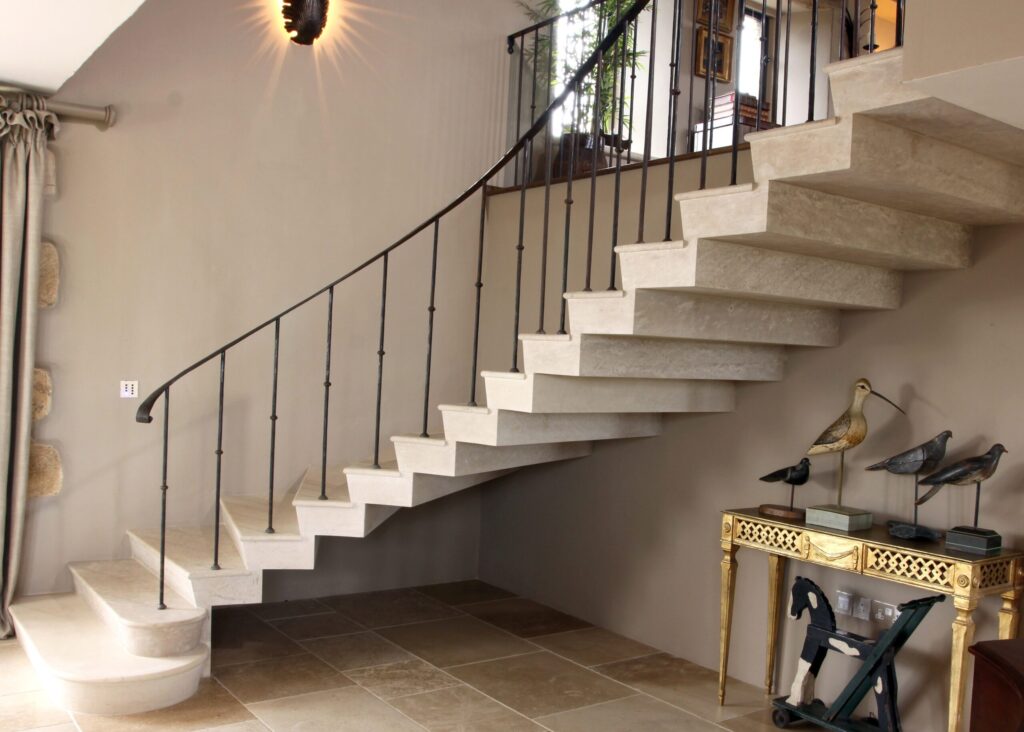
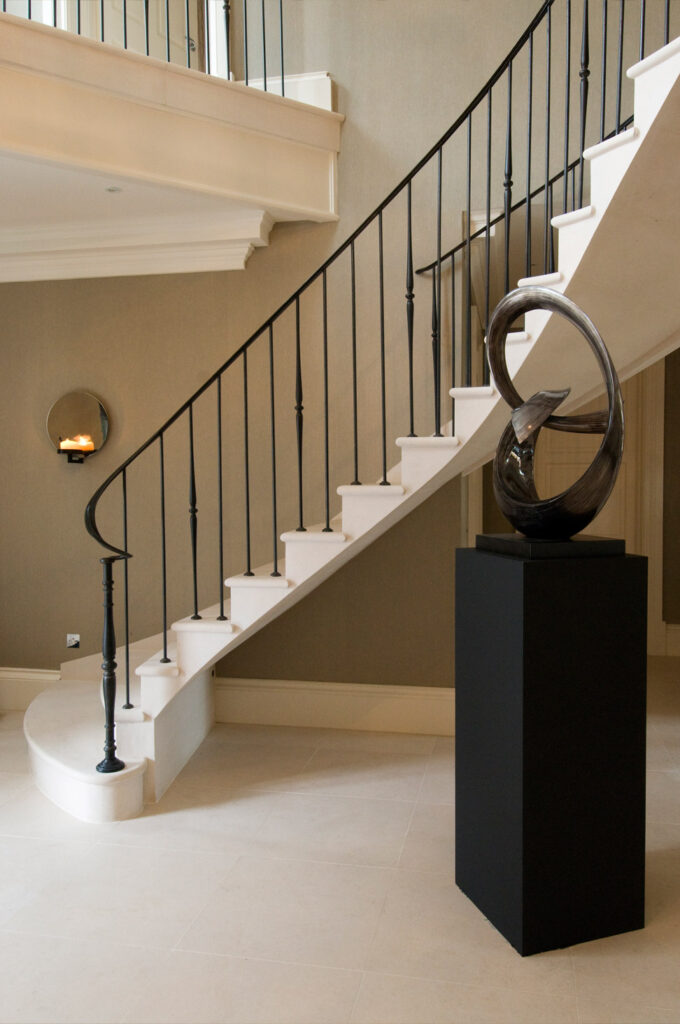
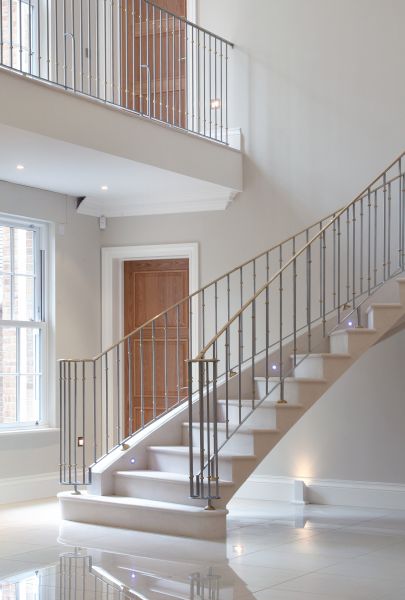
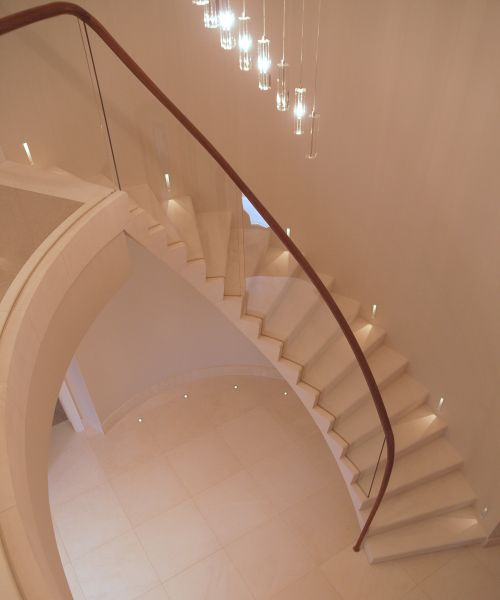
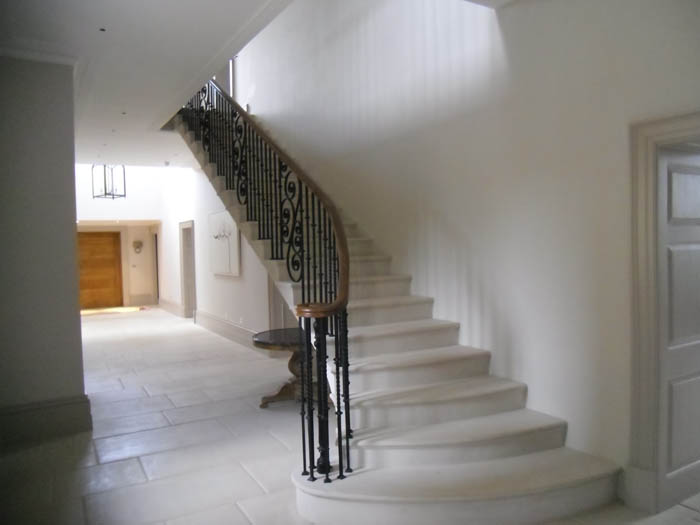
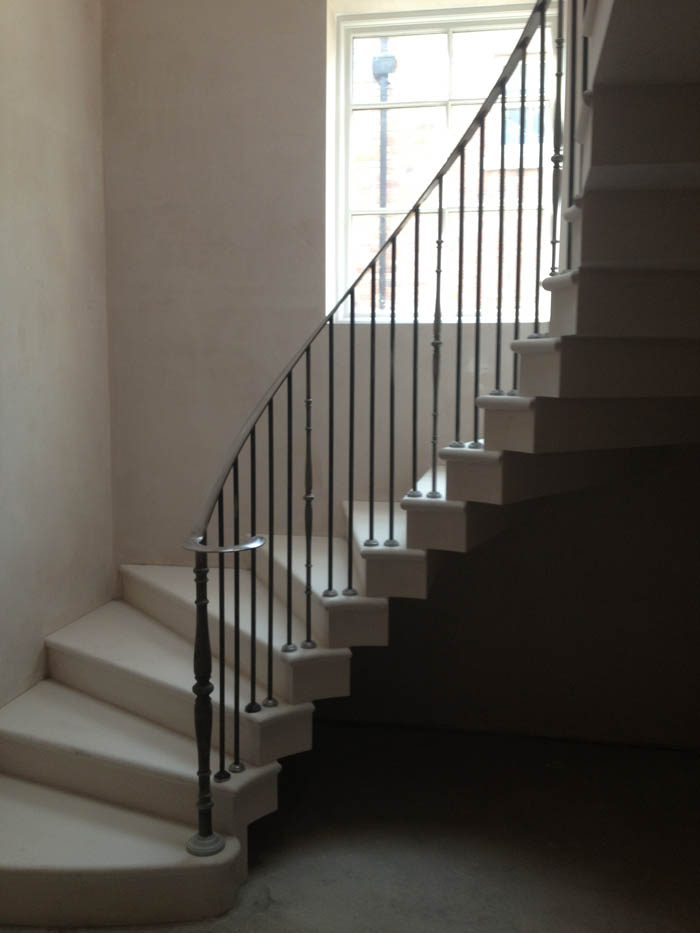
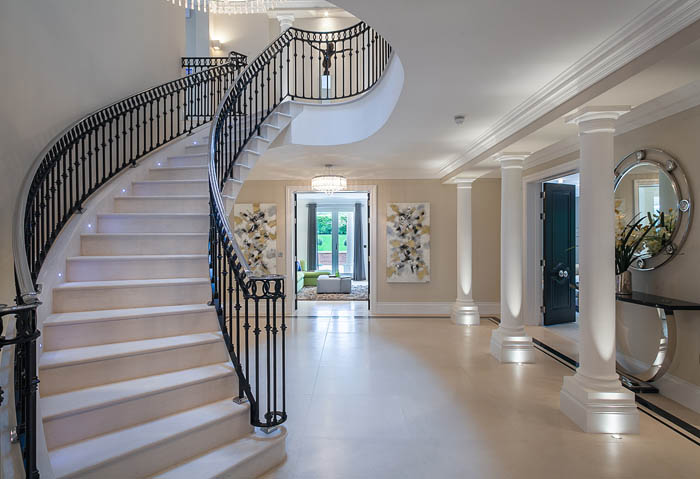
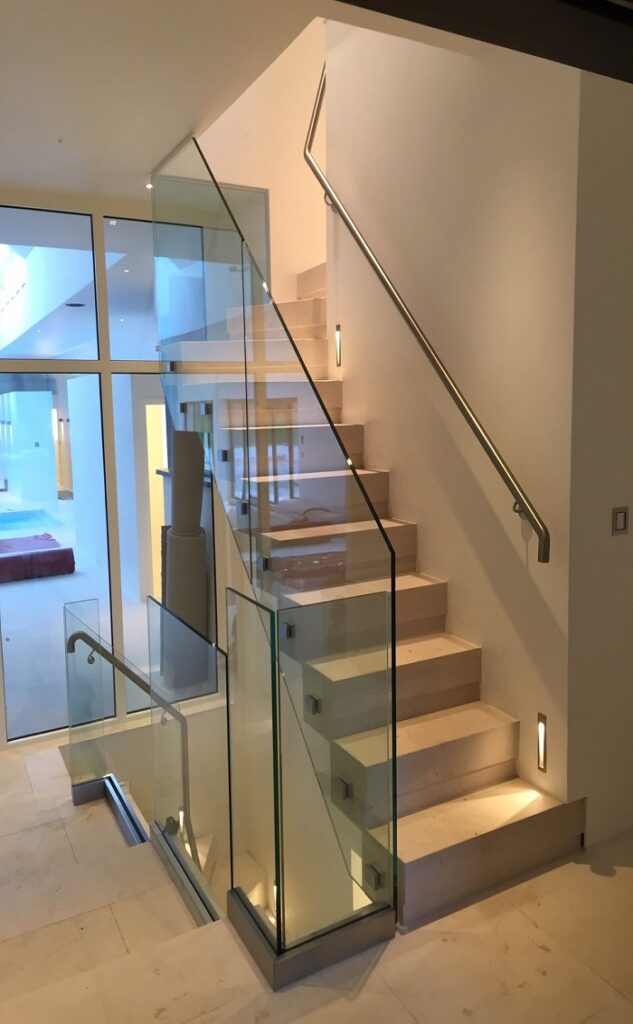
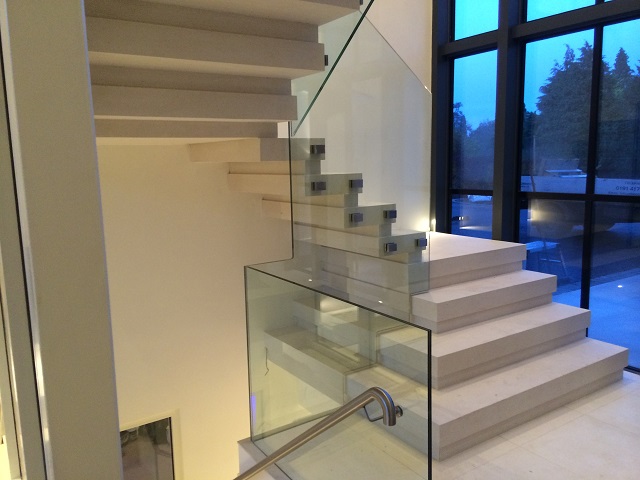
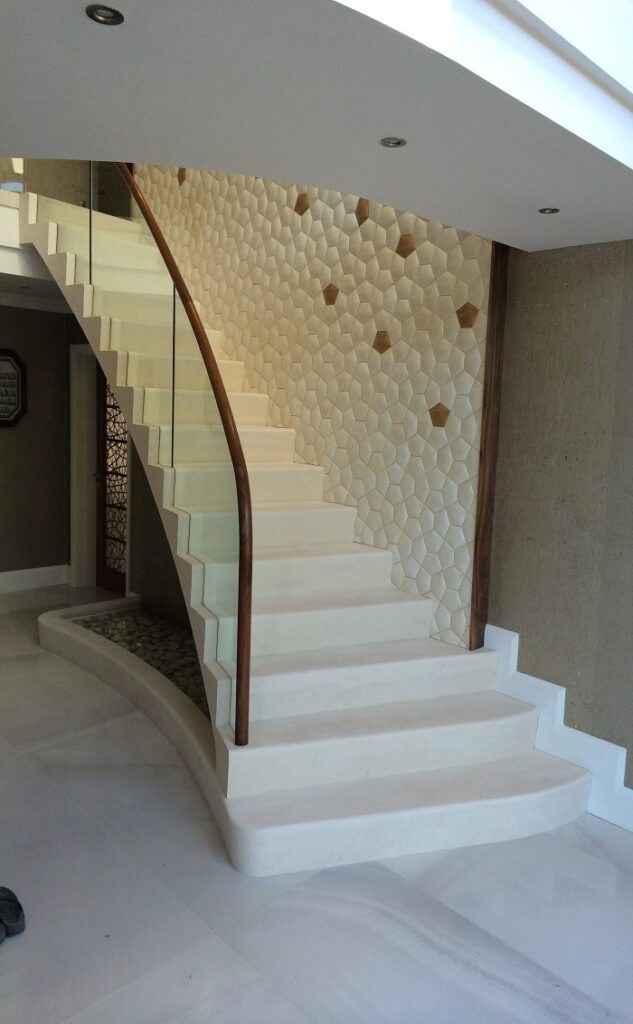
Stone staircases are an extremely popular choice of staircase design due its rich history and the amazing aesthetics the materials produce. Stone has long been regarded as one of the strongest and most beautiful natural building materials in the world, and many varieties are especially prized for their attractive colouration and texture. Despite being a relatively heavy material, it lends itself perfectly to the carefully planned and elegant stone staircase designs.
Creating stone staircases requires an in depth understanding of the way stone behaves, This knowledge allows us to work with the natural character of the astonishing stone stair designs to create designer stone staircases which are truly timeless, and enhance your interiors beautifully.
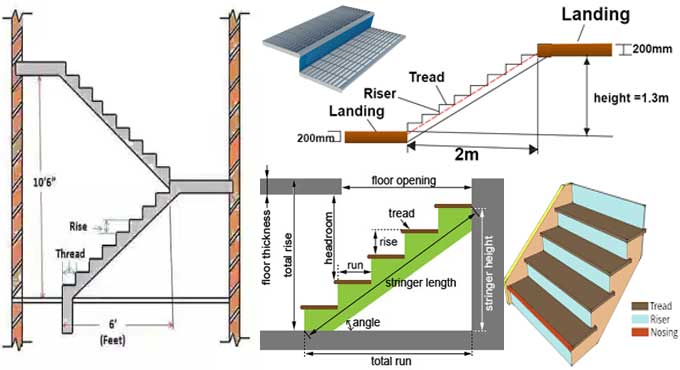
A staircase provides easy access from floor to floor. A staircase is a room or space that contains stairs. Stairway Design Calculation is necessary before constructing stairs to determine their risers and tread positions.
Buildings with multiple floors have staircases for access and communication. Fires spread from floor to floor with the help of these paths.
As a result, the structure must be protected by fire-resistant walls, floors, and ceilings. In the same way that floors are designed to carry specific loads, the frame will have to carry certain loads. Stairs can be built from a variety of materials such as timber, bricks, stone, steel, or reinforced cement concrete.
Tread: As you go up or down stairs, you place your foot on the top portion of the step is called Tread.
Riser: Step treads are supported by this vertical portion is known as Riser.
Points to Consider When Calculating Tread and Riser
The reason for 10 inches of tread is that everyone wears slippers that may be up to 10 inches in length for an average adult person, so you want to make sure the treads are no shorter than 10 inches in length.
A 5-inch rise may be considered normal in construction buildings where stairs are mostly used by the ill or elderly where they have to climb without using the full amount of energy. That will make it easier to access the riser. It is also important that the tread is wide enough.
Calculation of Riser and Treads of Staircase
There must be equality between every tread and riser. It is better to adjust with a calculator than to adjust one or two stair dimensions. You calculate the rise and treads of stairs by measuring the distance between the landing, where the bottom step rests, and the upper finished floor.
A total rise calculated by dividing it by the desired riser height. Round up or down if the result is a fraction. The height of the riser is determined by dividing the total rise by that number. A dimension to determine first before planning any stair is the rise and tread of the steps and their number.
The following points need to be considered before learning about rise and thread fix:
Two-floor clear distance (A) is 3.20 meters.
Distance between first and last riser on one flight (B) = 1.80m.
Staircase Riser Calculation
Decide the size of the riser first,
The riser size is 7 inch & range is 6-8 inch.
Risers = Clear Distance between Two Floors (A) / Risers Size
= 10foot 6 inches= 126 inches/ 7
= 18 nos.
It’s 9 for the first flight and 9 for the second flight.
Staircase Tread Calculation
The next step is to calculate the tread size. Obviously, there is a difference in treads between a single flight and several rises for any stair. Depending on the type of stair, this dimension can be changed.
Formula for Riser Tread
Number of threads per flight = No. of risers per flight – 1
= 9 – 1
= 8 nos.
Thus, Tread Size = Total Stair Width / No. of Threads
= 6 foot = 72 inches/ 8
Tread size = 9 inch
Precautions: When calculating the design of staircases, here are some things to keep in mind:
- All parallel steps in a building should have the same tread and riser sizes on each floor.
- Any stair or step should have a minimum of 2 m of vertical space.
- For general safety reasons, a flight should usually not have more than 12 risers.
- 850 mm is the minimum width for the staircase. There may be three standard widths for stairs: 1.1 m, 1.6 m, and 1.9 m.
- Buildings used by the public, such as malls, cinemas, and shopping centers, may require wider stairways.
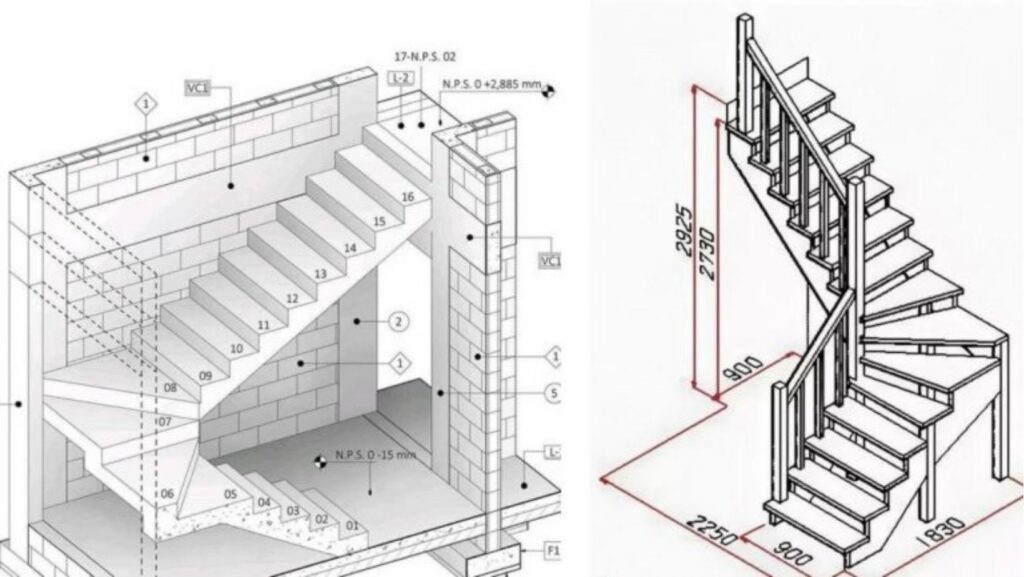
Creative Ideas For Stair to Design you Should Know
#1

#2

#3

#4

#5

#6

#7

#8

#9

#10

#11

#12

#13

#14

#15

#16

#17

#18

#19

#20

#21`

#22

#23

#24

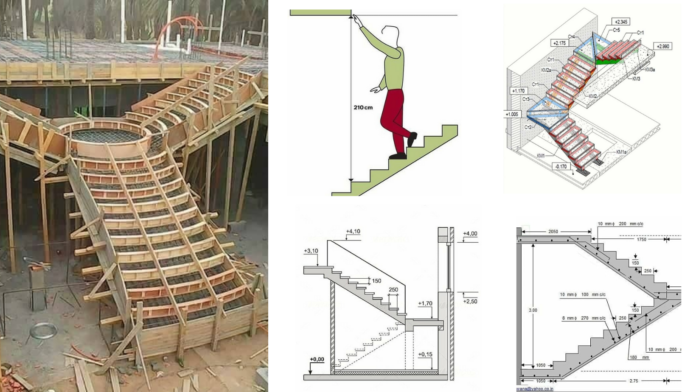
In this arrival I have described “Ways To Make Stairs The Right Way, According To Specifications” but before this, you should have a better understanding of their components and elements. So, to make you better understand I have described their elements at first just you have to read it carefully.
What is Stairs? – The stair may be defined as a sequence of steps which is provided to afford the means of ascent and descent between the floors or landings. The room or space of a building in which the stair is located is known as a staircase.
A stair consists of treads, risers, stringers, newel posts, handrails, and balusters, etc. Stair may be made from various materials like timbers, stone, bricks, steel, and reinforced or plain cement concrete.
The selection of the type of material depends upon the number of factors like aesthetically importance, the interior of the building, funds available, desired durability, and expected fire-resisting qualities, etc.
Different elements of the stairs
- Step: It is a part of the stair which permits ascent or descent from one floor to another floor. It is comprised of tread and riser. A stair is a combination of a number of steps.
- Tread: It is the uppermost (surface) horizontal portion of a step upon which the foot is placed while ascending or descending along the stair.
- Riser: It is the vertical part of a step providing support to the tread Tread and riser are the right angle to each other.
- Flight: This is defined as an unbroken series of steps between landing.
- Landing: It is the level platform at the top or bottom of a flight between the floors. A landing facilitates the change of direction and provides space-for taking rest during the use of stairs.
- Rise: It is the vertical distance between two successive-tread faces.
- Going: It is the horizontal distance between successive riser faces.
- Nosing: It is the projecting part of the tread beyond the face of the
- riser:- It is usually rounded off from architectural consideration.
- Scotia:- It is molding provided under nosing to provide additional strength to the nosing.
- String:- These are sloping members who support the steps in a stair. They run along the slope of the stair.
- Baluster:- It is the vertical member of wood or metal supporting the handrail.
- Nosing:- It is an imaginary line parallel to the strings and tangential to the nosing. connect the ends of a strings and handrail
- Winders:-These are a special type of step used in place of landings. The direction of the step can be changed with winders without introducing landings. These steps are the radial one, which is wider on the external side than the internal side.
- Waist:- The thickness of the structural slab in case of the overhead structure.
- Handrail:- It is the rounded member of wood or metal provided at the side of a stair for safety and is fixed bout waist height parallel to the line of nosing.
- Pitch:- Pitch or slope is the angle which the line of nosing makes with the horizontal.
- Headroom:- It is the minimum clear distance in the vertical direction between the tread and overhead structure.
- Newel post:- Newel post is the vertical member that is placed at the ends of the flight to connect the ends of strings and handrail.
Requirements of a good staircase
For safe communication between one floor to another floor, there should be provided a well planned and designed stair. Stairs should be provided such that it makes easy and quick for ascending and descending from one floor to another. The general requirement of good stair may be divided into different categories, described below,
1) Location
Stairs should be so located that the sufficient light and ventilation is ensured. If possible it should be located at the central part of the building so that It is easily accessible from every corner.
The width of stairs:- Width of stairs varies with the situation and purpose for which it is provided. In public building, where the flow of people is regular using the stairs, the width should be sufficient whereas in residential building it should be just minimum. The generally adopted average value of for width of stair in public building is 1.8 m and in residential building is 90 cm.
2) Pitch of stair
The pitch of long stair be made flatter by it introducing landing to make the ascent less tiresome and less dangerous. In general, it should not be more than 40 degrees and less than 25 degrees.
3) Length of flight
For the comfortable ascent of the stairway the number of steps in a flight should be restricted to a maximum 12 for residential and 9 for public and minimum of 3m.
4) Headroom
The headroom should not be less than 2.14m. If it is short then ones may get an injury by colliding on it.
5) Materials
The stairs should preferably be constructed of materials which possess fire-resisting qualities. It must be strong enough to carry the load without deflection.
6) Landings
The width of the landing should not be less than the width of the stairs.
7) Riser
The minimum length should be 102 mm and maximum rise should not be greater than 190 mm.
8) Treader
The minimum tread should not be less than 250mm while maximum should not exceed 305 mm.
9) Winder
The introduction of winders in the stairs should be avoided as far as possible. They are dangerous, difficult to the carpet, involve extra expense and unsuitable for a public building. If it is unavoidable, it should be provided at the lower end of the flight. For turning stair by 90° , three winder steps and for turning stair by 180°, six winder steps should be provided.
10) Steps
The minimum steps in stair should be 3 and maximum up to 15.
11) Handrail
The safe and attractive height of handrail should be around 75 cm.
#1

#2
#3
#4
#5
#6
#7
#8
#9
#10
#11
#12
#13
#14
#15
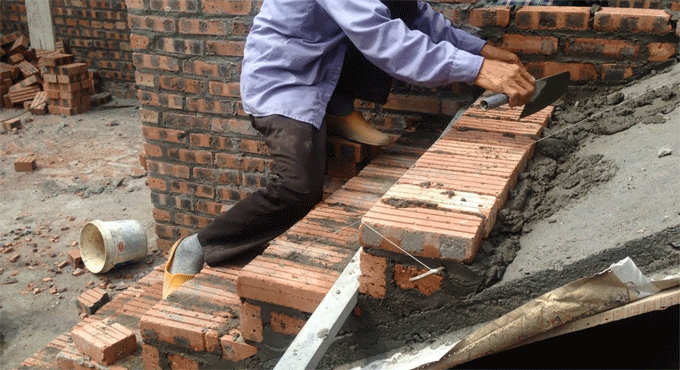
A brick stairway is a stable preference in the courtyard or at the doorway of the accommodation. Such brick steps provide a time-honored appearance to the accommodation. Even though, they are graceful, there is plenty of expertise and awareness needed in constructing them.
Constructing a fine stairway that shall persist for a great amount of time is imperative. To build a brick stairway, appropriate building material and expertise are the 2 essential prerequisites.
Materials needed: Bricks, Mortar, Spade, Scoop, Cement Mix, Tape measure, Fine Sand, Hammer, Nails, Water, Level, Two” x six” stock (Base pad)
How to establish brick steps:
Measure 1: The primary thing to do is to set up an outline of the amount of steps that are needed to construct. That is going to provide the estimate for the number of bricks and quantity of cement and mortar mix that is going to be needed to construct the steps. An additional estimate that is required to be done is the measurements of the stairs.
Measure 2: By means of a level, even the soil beneath the base of the brick stairs. Put a 2” x 6” stock like a base pad. Furthermore, the cement is combined in accordance with the directions that are mentioned at the cement bag.
Measure 3: The subsequent measure is to construct a structure of the brick stairs. By means of a level, place cement of around 1 inch among 2 bricks.
It’s not required to utilize high-priced and lavish bricks for the initial sequence of the set of steps. Kindly make sure that the initial sequence is flattened appropriately. That fulfills the internal brick structure of the set of steps.
Measure 4: The subsequent measure is to combine the cement as indicated by the directions specified at the cement bag. It is suggested to utilize Portland cement for the creation. The cement endures adequately in opposition to the extreme climate, particularly rainfall.
Subsequent to blending the cement, put the face bricks on the initial sequence that is constructed. The face brick is observable at the step.
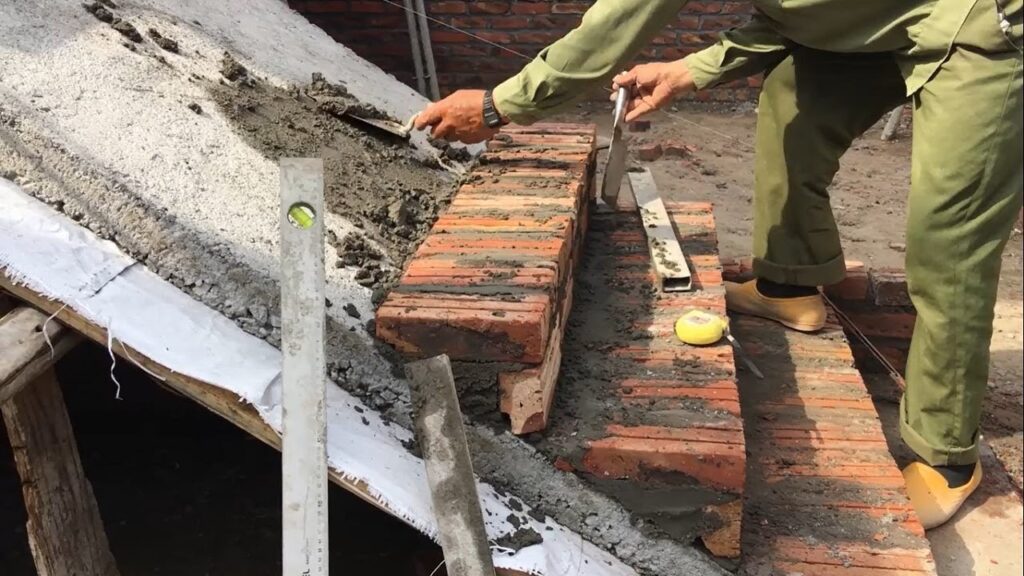
Measure 5: At the same time as putting the face brick, a tread has to be constructed. While constructing a stair horizontal part (tread) on the set of steps, it is essential that the horizontal part (tread) consists of a slant (pitch). Constructing a pitch is an essential measure in constructing the brick steps. The pitch lets water to overflow the steps.
Measure 6: Subsequent to the tread, (the vertical part in the set of stairs) riser bricks have to be positioned. There is a guideline while placing the bricks. The guideline is that area has to be offered among 2 bricks in order to occupy the area using mortar through a trowel. Finally, the surplus mortar is taken away and that completes the process. A handrail can be attached to the stairs. Obeying the above mentioned measures may be helpful while determining to construct brick steps in courtyard or doorway.
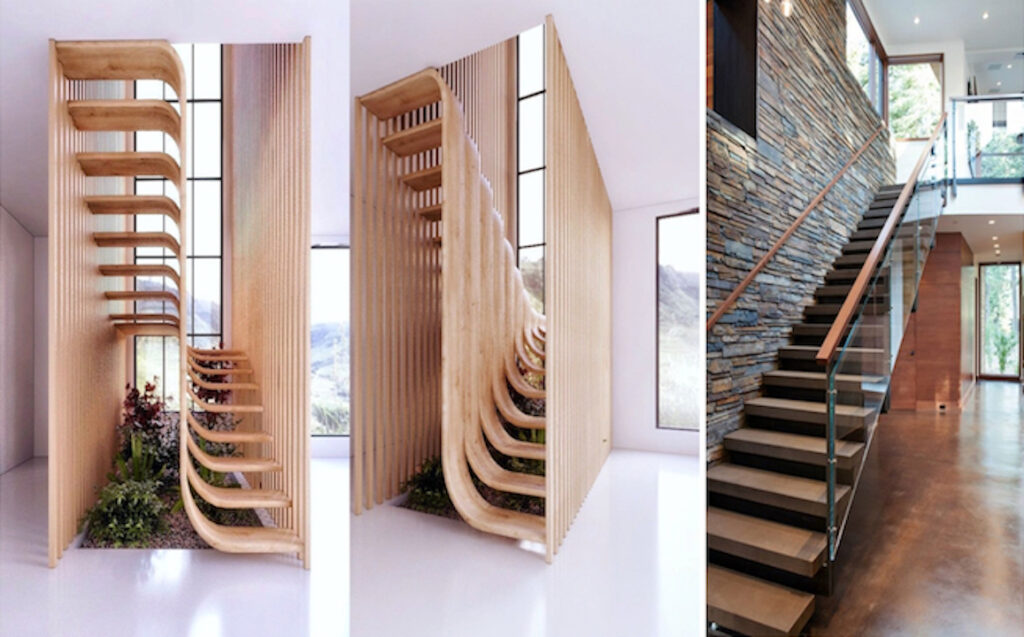
Up and down them several times a day, we don’t always see our useful staircases as a thing of beauty. However, this utilitarian part of the home can become the most show-stopping piece to an interior design, using imagination and calculation. Consider the sheer size of this installation, and how by making it more sculptural, more personally styled and unique to the space we can manifest something magnificent. If when visualizing a staircase you see straight treads and solid risers, compliant spindles and dutiful banisters, then this enlightening gallery of awesome staircase designs will open up you up to a whole new way of linking the levels.