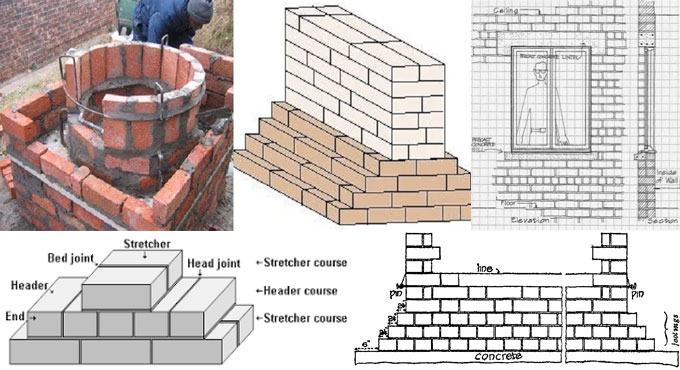
A brick masonry building is a structure made up of individual bricks, usually laid and tied together with mortar. The term masonry can also refer to the unit itself.
Brick masonry is a common type of construction. It is highly durable. In this article, we are going to discuss,
- What is brick masonry?
2. Terminology
3. Classes of bricks
4. Mortars
5. Bonds
6. Tools
7. Procedure
8. Defects
9. Advantages and Disadvantages
1. What is brick masonry?
It is constructed by systematically placing bricks in mortar to construct a solid that can withstand applied loads. Bricks are laid repeatedly in a specific bonding method using mortar called brickwork or brick masonry.
2. Definitions of different terms used in brick masonry
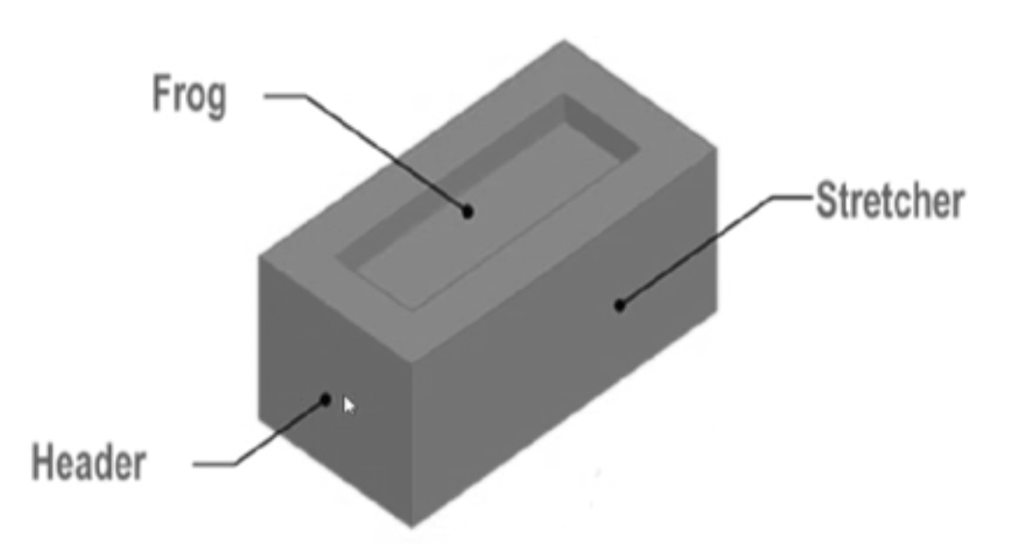
1. Stretcher.
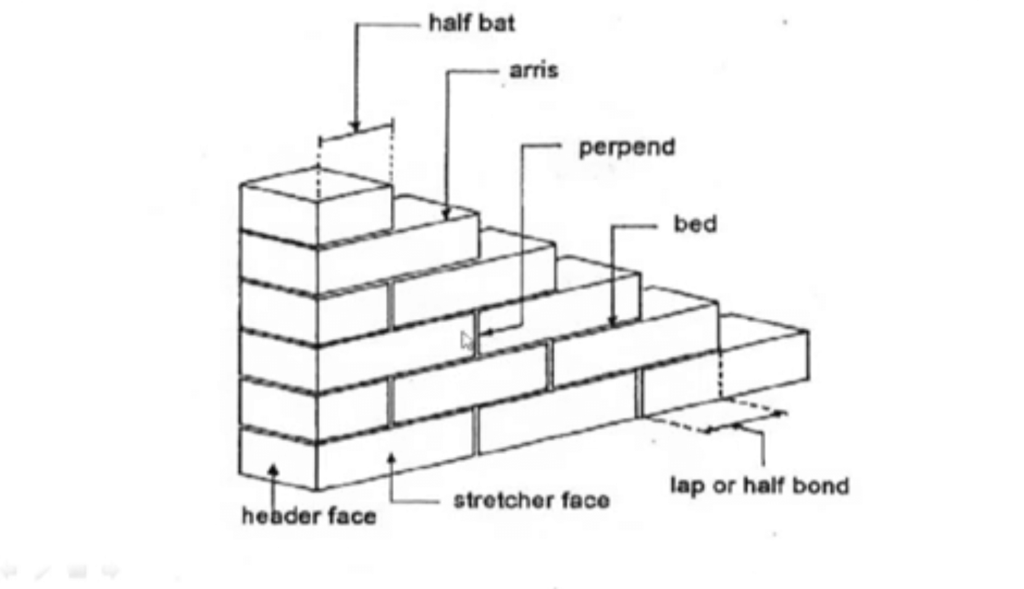
The stretcher is a brick whose length is parallel to the face or front or direction of the wall.
Courses that include stretchers are called stretcher courses. In this image, we can see that all these routes are compressed and extended, so this is called the “stranger route”.
2. Header
The header is brick, which is laid with its width parallel to the front or direction of the wall.
Width or face or front or direction parallel to the wall. A course that has headers in the layer is called a header course.
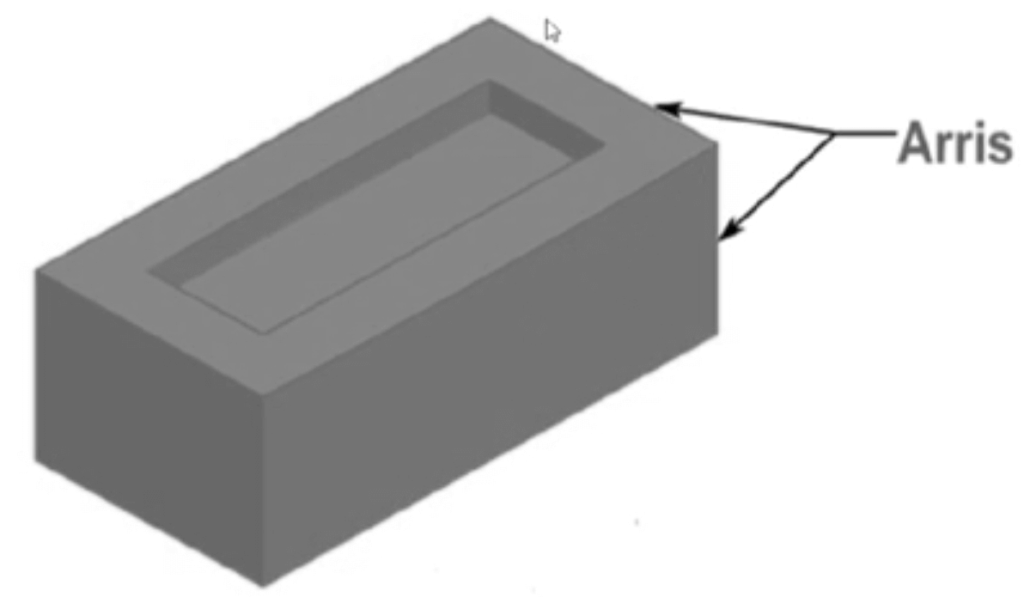
3. Arises
The edges formed by the intersection of the planes of the bricks are called arises.
4. Frog
A frog is a mark of depth about 10 mm to 20 mm which is placed on the face of a brick to form a key for holding the mortar.
5. Bed
The bottom surface of the brick when lying flat, it is called a bed.
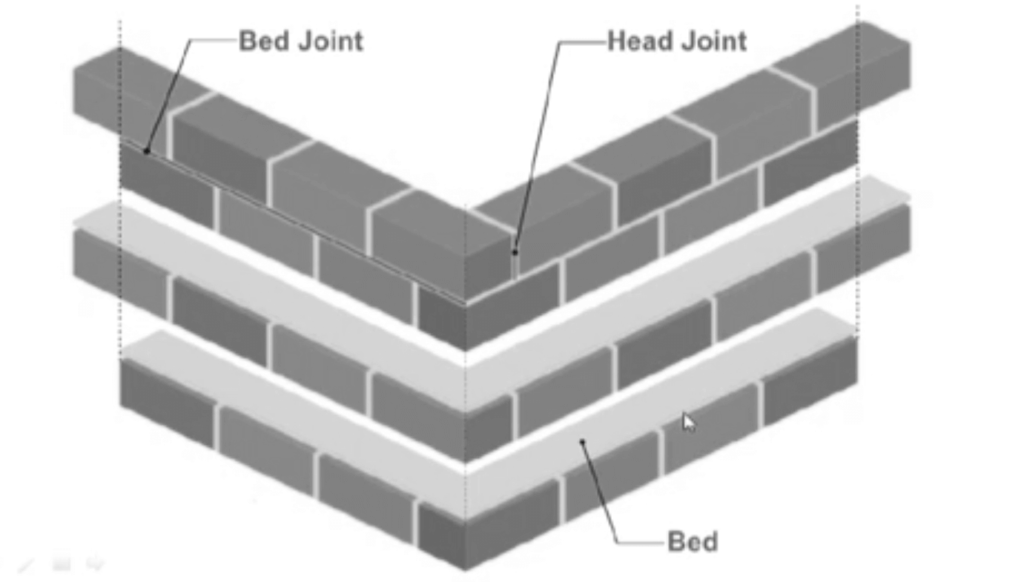
6. Bed Joint
The horizontal layer of mortar upon which the bricks are laid is known as a bare joint.
7. Perpend
The vertical joints which are separating the bricks in either length or cross directions are known as perpends.
8. Lap
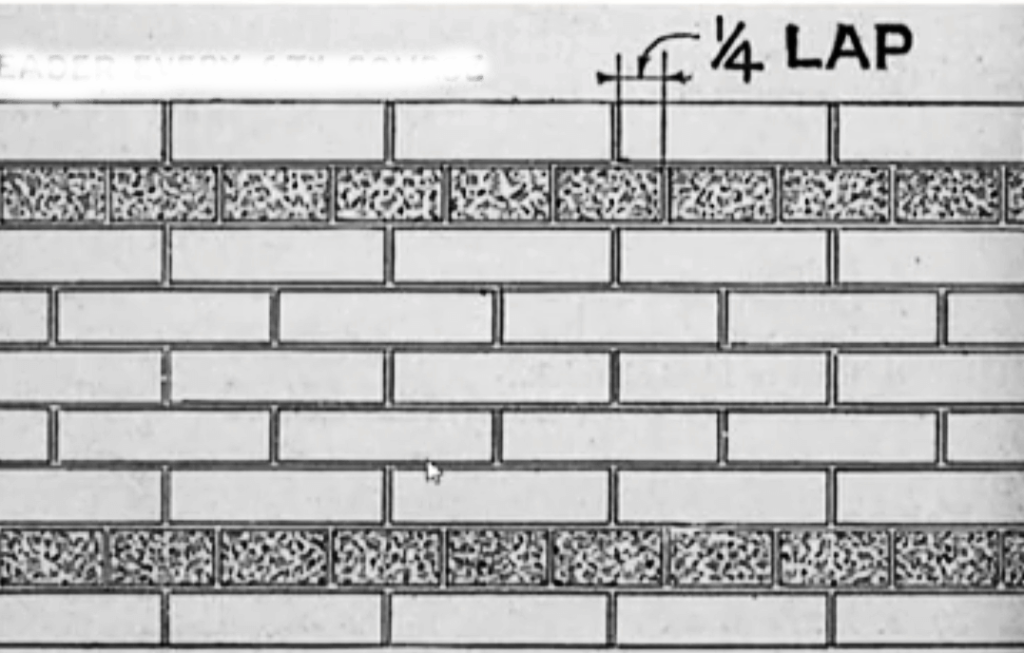
In successive courses, the horizontal distance between the vertical joints has termed a lap.
9. Closer
A piece of brick that is used to close up the bond at the end of recourses is known as a closer. It helps in preventing the joints of successive courses to come in a vertical line.
10. Bat
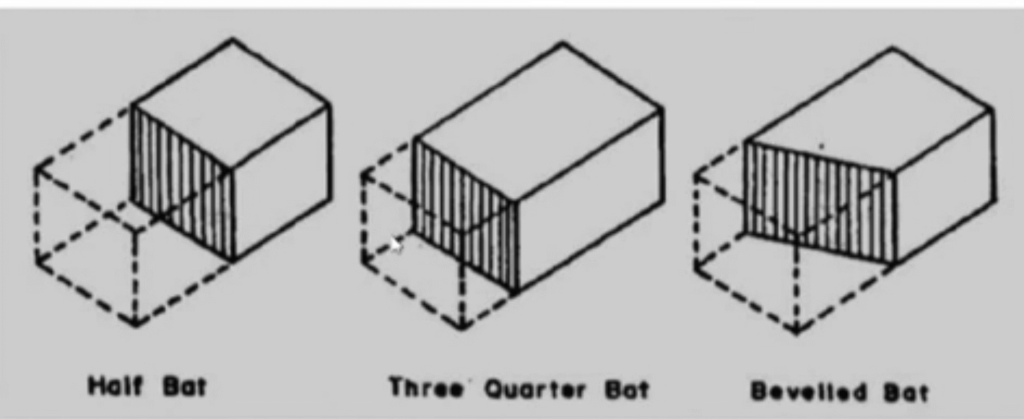
A piece of brick, usually considered about the length of a brick is called bat, and accordingly known as half-bat or three-quarter bat.
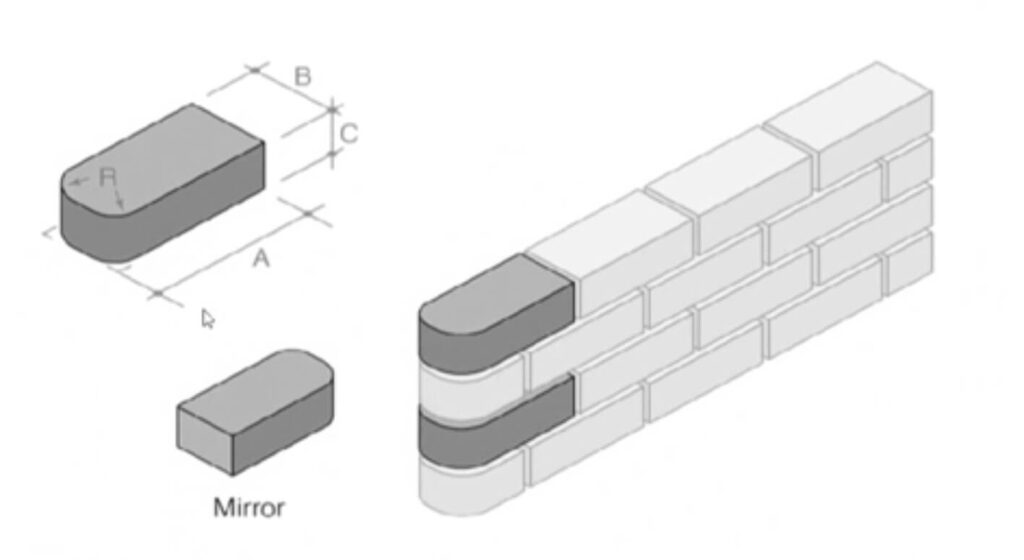
11. Bull-nose
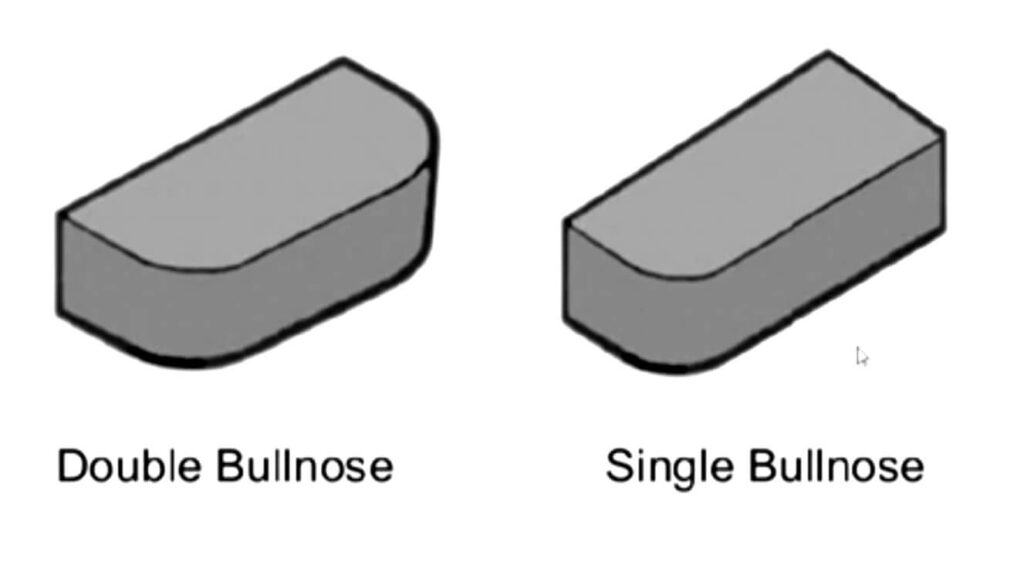
Bullnose a brick molded with a rounded angle it is known as Bullnose.
12. Cow nose
Cow noses are brick molded with a double bullnose on end, which is known as cow noses.
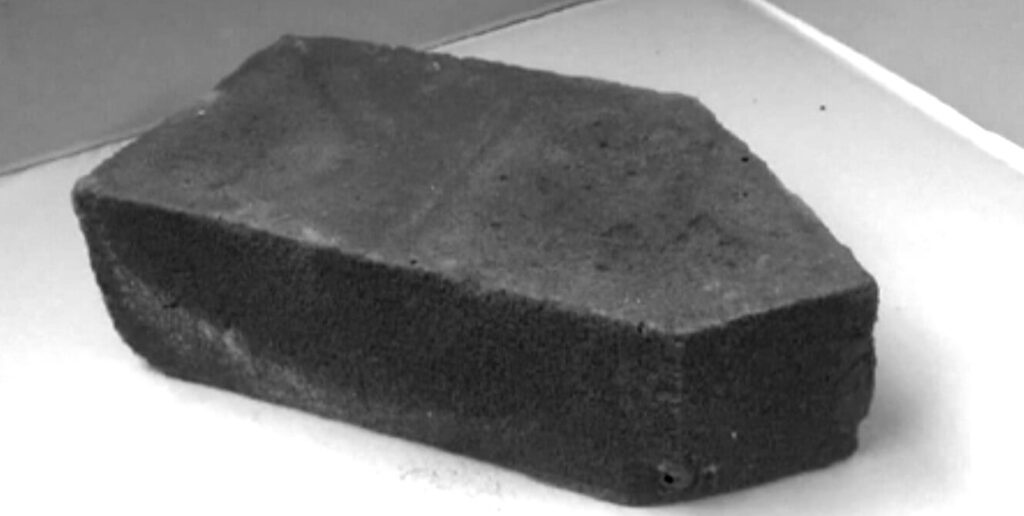
13. Squint Quoin
A brick that is cut or molded such that an angle other than a right angle is formed in the plan as is known as squint Quoin.
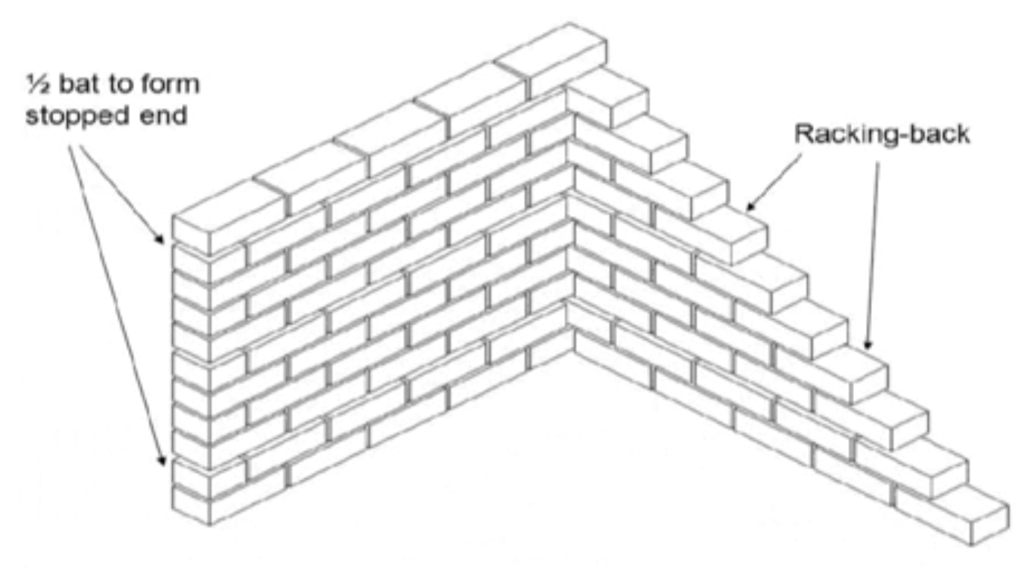
14. Racking back
The termination of the wall in a stepped fashion is known as the racking back.
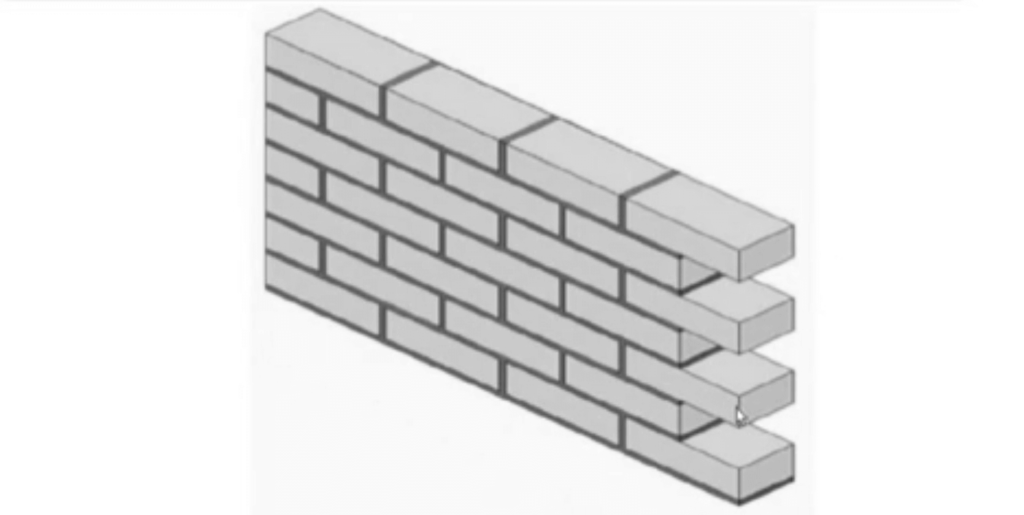
15. Toothing
The termination of the wall in such a fashion that each alternate course at the end projects is known as toothing.
3. Different classes of brick masonry used in brickwork
Classes of Bricks
| 1 | First-class | These are completely burned and are dark red, cherry or copper. The surface and edges of the brick are sharp. Cement mortar for laying bricks. |
| 2 | Second class | Small cracks and deformation are allowed. Allow a slightly higher water absorption rate of about 16-20% of its dry weight. The crushing strength should not be less than 7.0 N/mm2 |
| 3 | Third Class | The brick is not hard, The surface is rough and deformed, For temporary structures, Used in places with little rainfall. |
Types of mortars used in brick masonry.
Commonly, these two types of mortars are used in bricklaying.
- Cement mortar
- Mud
Types of bonds in brick masonry
- Stretcher bond
- English bond
- Header Bond
- Flemish bond
- Dutch bond
- Raking bond
- Diagonal bond
- Herringbone bond
- Garden wall bond
- Facing Bond
Mortar layer thickness in brickwork as per ASTM standards.
As per ASTM standards, In most masonry buildings, the gap is usually 3/8 inch (10 mm) wide, which requires the existing mortar to be removed from the masonry surface to a depth of at least 3/4 inch (20 mm).
Tools used in brick Masonry
These tools are used in bricklaying,
- Tape measure
- hammer
- Hose, level, or theodolite
- Trowel Level
- Wheelbarrow
- Goggles
- Jointer
- Shovel
- Pan/ bucket
- And other equipment according to the project.
Materials for brickwork
- Cement
- Sand
- Bricks
The procedure of Brick Masonry
These steps are involved in the brickwork.
- Mix the mortar with water, and then stir until a smooth plastic mortar is produced.
- Use a trowel to evenly place the mortar on the ground baseline (the thickness is 25mm, it is recommended to lay the mortar one brick wide).
- Put the first layer of stretcher bricks in the mortar. Starting with the second brick, apply mortar to the head joints of each brick, and then push the bricks firmly into place to extrude the mortar from all sides of the joints.
- Use a spirit level to check the correct height of the route. Make sure the bricks are vertical and level.
- Place another mortar line next to the first route and start laying the second route.
- Use two and a half bricks to start the second brick to ensure that the first two routes are staggered for structural purposes.
- To complete the second clue, place three header tiles and make sure they are vertical and horizontal.
- The third and fifth courses are similar to the first course and consist of stretchers. The fourth course starts with a single header, then stretchers. Use levels to ensure that the clues for each course are correct. Finally, use this bricklaying mode until the target height is reached.
Defects in Brick Masonry
These are some defects in brick masonry,
1. Corrosion of embedded fixture
This defect is caused by the dampness of the brick wall. Iron or steel fixtures embedded in brickwork, such as pipes, frames, or fixtures, are corroded by moisture and expand with rust. This defect is solved by embedding a dense mortar covering 15 to 25 mm thick.
2. Inflorescence
This phenomenon is that when the brick is in contact with water, white soluble salt blocks are formed on the surface of the brick. This defect is caused by bricks containing excessive amounts of soluble salts. Regular cleaning and scrubbing of the affected surface can compensate for such defects.
3. Shrinkage cracks
Due to the absorption and evaporation of water, the bricks alternately expand and contract, respectively causing cracks near the joints. By using high-quality bricks and preventing the bricks from getting wet, such defects can be minimized.
4. Sulfate attack
This kind of defect is particularly prominent in places where brick walls are affected by moisture, such as unflustered external walls of boundary walls, retaining walls, manholes, retaining walls, etc.
Sulfate attack depends on multiple conditions occurring simultaneously. It requires a longer time of water saturation, a source of sulfate, and an appropriate amount of tricalcium aluminate.
Even if these factors exist at the same time, the attack will take a relatively long time. For brickwork, if it is in full contact with water, the sulfate and cement mortar present in the brick will react with the alumina of the cement, and for lime mortar, it will react with hydraulic lime.
This reaction increases the volume of the mortar and causes the bricks to crack and peel off. Sulfate attacks can be checked by any technique that restricts water from entering the brickwork.
Key points to gain a high quality of brickwork
These factors can be helping to increase the quality of brickwork.
- Elaborate high-quality bricks
- Correctly matched mortar
- Level Brick Course
- When the work is stopped for a period of time, the brickwork should have tooth ends.
- Brickbats should not be used.
- Bricklaying takes 2 weeks to cure properly.
- The size of the mortar joint in the vertical and horizontal directions should be 10 mm.
Advantages of Bricks using in Brick masonry
- Economical (easy to obtain raw materials)
- Strong and sturdy
- Compressive strength is sufficient to cope with ordinary buildings
- Different directions and sizes will produce different surface textures
- Need very low maintenance costs
- Demolition of the brick structure is very easy, less time-consuming, and therefore economical
- Reusable
- Highly fireproof
- Produce less environmental pollution during the production process
Disadvantages of Bricks using in Brick masonry
- Time-consuming construction
- Cannot be used in a high seismic zone
- Since bricks easily absorb water, they will cause fluorescence when they are not exposed to the air
- Very low tensile strength
- If not cleaned properly, the rough surface of the brick can cause mold to grow
- Cleaning the surface of the brick is a difficult task
- The color of inferior bricks will change when exposed to the sun for a long time
]]>