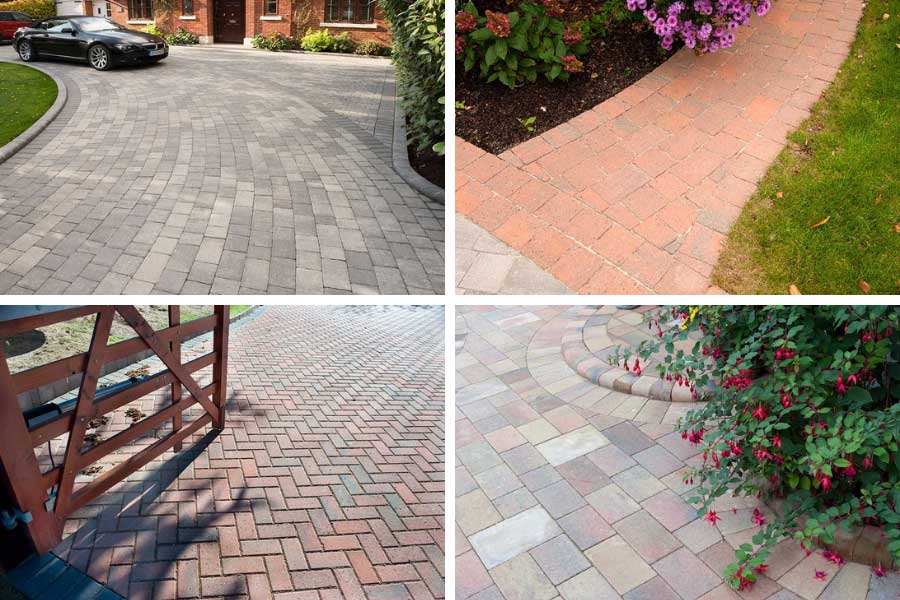
Pavers are widely used in driveways, patio, and many other outdoor places. This article will discuss different types of pavers used in homes.
What Are Pavers?
Pavers are blocks used to pave the driveways, patio, walkways, pool decks, etc. It is a flexible paving system that provides an alternative to concrete flooring for the outdoor parts of the house.
The pavers are a popular choice worldwide due to the ease of installation, replacement, maintenance, and cost-effectiveness.
The pavers are available in many textures and shades. So you can choose from various colors. The colored pavers add more beauty to the house.

The main differentiating factor for pavers is their construction material. You can choose the paver material based on the availability in the local market, aesthetics, and cost-efficiency.
Different Types Of Pavers Based on Material
Following nine types of material are commonly used across the US and Europe as paver blocks.
- Concrete
- Brick
- Flagstone
- Marble
- Travertine
- Porcelain
- Cobblestone
- Rubber
- Plastic
1. Concrete Paver
Concrete is the most commonly used when it comes to outdoor flooring. However, it comes with many problems like cracking under heavy load, cracks due to heat, curing period after construction, etc. We can avoid all of these problems using concrete blocks.
Concrete blocks are available in various shapes and sizes. It is made of molded cement concrete, and it is easy to install as they have a shape that easily interlocks with the adjacent blocks.
Due to its durability, the concrete paver is a prevalent flooring choice for driveways and roadways. It is cheaper than clay brick, and there is a wide range of colors, sizes, textures, and thicknesses.
Also, the manufacturer can customize the color your way for bulk orders by adding the color imparting metallic oxides. However, the artificial colors may fade after prolonged use.

2. Brick Paver
A rectangular red brick is an eco-friendly choice for walkways and fireplaces with low traffic. The red bricks are made of clay burnt in a kiln and use no artificial material; hence they are environment friendly. Also, bricks are among the oldest paving materials and have been extensively used worldwide.
The shape is generally rectangular, but custom shapes are also available on-demand for specific projects. The brick paver is easy to install as it is placed adjacent to other pavers, and it has no interlocking design.
Also, it can be used from both sides. The color of the brick is due to iron oxide that imparts red color to the brick, and it is a permanent color and doesn’t fade with time.

3. Flagstone Paver
Flagstone is one of the most popular types of rock pavers. It is a naturally occurring sedimentary rock. Flagstone is used as a thin tile; therefore, it is not ideal for high-traffic areas because it can break under the load. It is suitable only for walkways, gardens, and patios.
The non-slip surface of the flagstone paver is another feature that makes it an ideal choice for outdoor paving. The aesthetics of the flagstone are outstanding. The flagstone pavers are placed in a non-uniform pattern giving it a classic and rich appeal.
The varied colors and textures available for the stone provide an excellent experience in choosing the perfect shape as per the house’s theme. However, hues of red and grey are the most common shades.
Due to the thin slab of the stone, it is necessary to keep the heavy loads off the paving. Also, it needs proper maintenance for durability.

4. Marble Paver
Marble is a metamorphic rock occurring from limestone under extreme heat and pressure. It is one of the most beautiful rocks and is available in white, grey, and other shades. It is used as a thin slab; therefore, it is not suitable for traffic.
Marble pavers come with a regal polish that enhances their surface. They are durable and provide great aesthetics to the house. Also, they increase the selling value of the house.
One of the drawbacks of the marble paver is that it gets very hot under the sunlight and gets stains on it when it comes into contact with acidic chemicals.

5. Travertine Paver
Travertine is a sedimentary rock that is durable and lasts a decade. The shape and texture of a travertine paver are very natural and provide an excellent finish to the surface.
One of the most desirable aspects of using a travertine paver is that it can withstand the weathering effect without cleaning. Also, it retains the original color and is ideal for the pool decks as it absorbs the water.

6. Porcelain Paver
Porcelain is a clay product produced by heating the clay to a very high temperature. It has a shiny surface that makes it look appealing. It is durable to last decades and also hard enough to resist scratches.
It is an excellent option to use in walkways, patios, and driveways. The porcelain pavers are also available in wooden, stone, and many other textures, making them a viable alternative to the natural rock pavers. Further, the porcelain pavers have thickness ranges one can choose from.
Porcelain pavers are typically much less absorbent than other bricks or travertine; therefore, they are unsuitable for wet areas like pool decks.
The cost-effectiveness of a porcelain paver is too high than any other type of paving material. Maintenance of a porcelain paver is lesser as it doesn’t chip, break, or crack easily.

7. Cobblestone Paver
Cobblestone has been a popular choice for old times. The main reason was that it is very strong, highly durable, and needs significantly less maintenance.
It was used to pave the roads. Granite, sandstone, basalt, or limestone are most commonly used as cobblestone material.
They can withstand extreme temperature conditions without facing much damage, thus an ideal choice for the fireplace too. The cobblestone’s designs, patterns, colors, and texture are abundantly available.

8. Rubber Paver
Rubber pavers are slip-resistant pavers. The material used in the rubber paver is eco-friendly, durable, cost-effective, and hard.
This non-slip paver is made of eco-friendly and tear-resistant raw materials. This type of paver is a good choice for parking areas, walkways, and driveways.
The rubber paver is lesser absorbent than concrete, brick, or flagstone. Rubber paver has many advantages, but one of the problems is that under sunlight, it has a thermal expansion that can disturb its installed arrangement.

9. Plastic Paver
Plastic pavers are made from old recycled plastic. The plastic paver is a world-saving idea that is customizable and serves the requirements of a good paver. The surface of the plastic paver is hard enough to resist scratches.
Different colors can be added to the paver, and different shapes can be achieved using dyes. However, more research is underway to make the plastic paver as durable as the stone paver.

Different Types Of Pavers Based On Shape
The pavers are available in various shapes and sizes: square, rectangle, hexagonal, octagonal, and H-shaped. The homeowner has a wide variety in choosing the paver based on the different shapes.
There are four basic types of pavers-
- Type A: has vertical faces and doesn’t interlock.
- Type B: has alternate plain and corrugated shape that helps interlocking
- Type C: all faces are corrugated and interlocked in all directions.
- Type D: L or X-shaped pavers that interlock in any direction.

Different Types Of Pavers Based On Installation
Interlocking Paver: Pavers that hold each other in place.
Slab Paver: Pavers don’t lock each other in place and don’t allow any relative movement.
Uses
Pavers are mostly used outdoors, including
- Driveways
- Patios
- Walkways
- Pool decks
- Fire pits
- Planters.
So, these were different types of pavers. I hope now have enough knowledge about it.
]]>
Innovation and creativity replace the strong, conventional process of the construction for the betterment of the society. The new-age engineers seem to be the flag bearer of this thought. Construction cost is climbing high with time, and to bring a downfall in the expenses, civil engineers are working hard to conceptualize their ideas. Using waste materials remain in the concentration of the engineers so that they can bring comprehensive solutions to the existing problems.
Amid this time of change, eight civil engineers from Adithya Institute of Technology, Coimbatore invent something unheard and unexpected. They turn plastic bottles into construction materials to bring down the construction costs.
Eight engineers – Siva Sankar, K.Ajith, G. Naveen Kumar, Gopi Krishnan, John Sebastian, V.Nachiyappan, S. Sarath Kumar and M. Naveen – take a step ahead of the time and think the way no one did before. They bring out a cheap way of construction with plastic bottles and other waste materials. They execute their thought in reality and earn appreciations from the engineering world.
The idea was so new and interesting that everyone accepted the process as soon as they came in news. K. Vijayakarthikeyan, city municipal commissioner of Coimbatore, crooned the effort of the engineers and offered space near Avinashilingam University to build a toilet which also supports the initiative Swacch Bharat Mission.
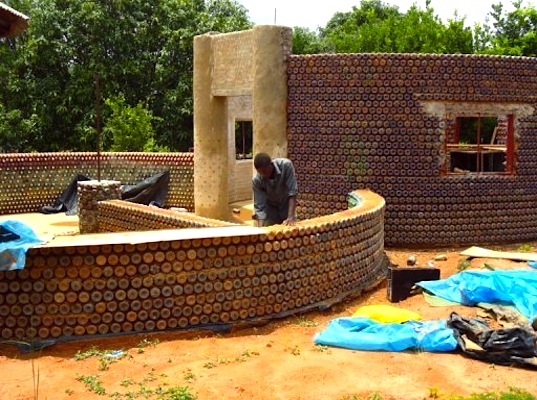
They were searching for the substitutes of the traditional build process to introduce an eco-friendly option for the society. They came across that African countries used plastic bottles for the construction. The thought inspired them to repeat the similar approach for their country with affordable options.
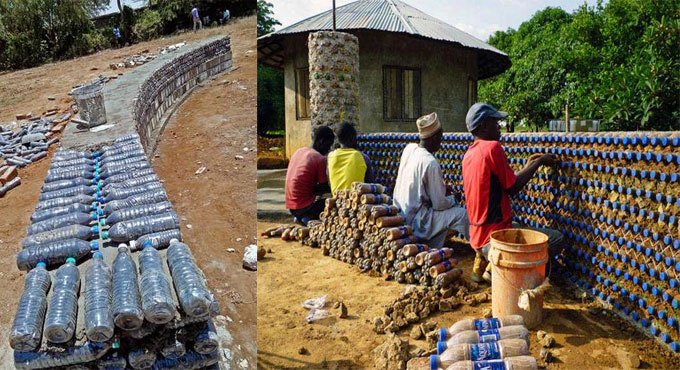
The process of making construction materials out of waste products was not easy, though. Like all innovations, it also went through errors and modifications and took time to reach the final stage. The engineers start collecting waste bottles from hostels, wedding reception halls and many other places from the city. Foundry sand has been used as the filler of the bottles to give them the required strength that can replace the use of bricks. The compression tests also qualify the bottles and reveal that they are even stronger than the traditional bricks we generally use for the construction.
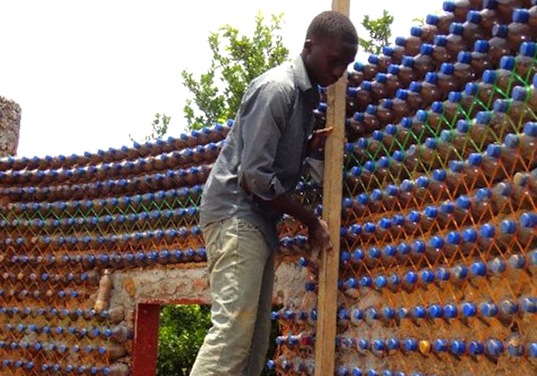
The process is still at its nascent stage and needs improvements like mechanized techniques for replacing the manual works. It saves will then saves the time and produces the desired result. Not only does it bring down the construction costs, it also offers an effective solution of recycling water bottles in an eco-friendly way. The idea is potential enough to be accepted by the people across the world.