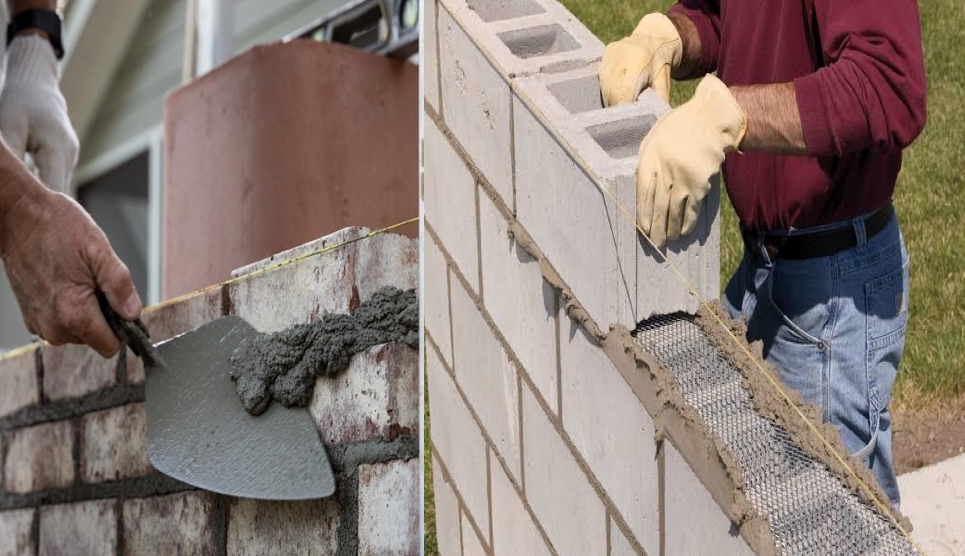
Building mortars are mixtures, used for the joining of bricks and stones.
Definition:- A paste obtained by adding water to a mixture of fine aggregates such as sand and binding material.
The pyramids of the have been built with clay-gypsum, gypsum-lime and lime mortar.
The safety, strength and durability of resulting wall or any structure depends upon quality of mortar used as a binding medium.
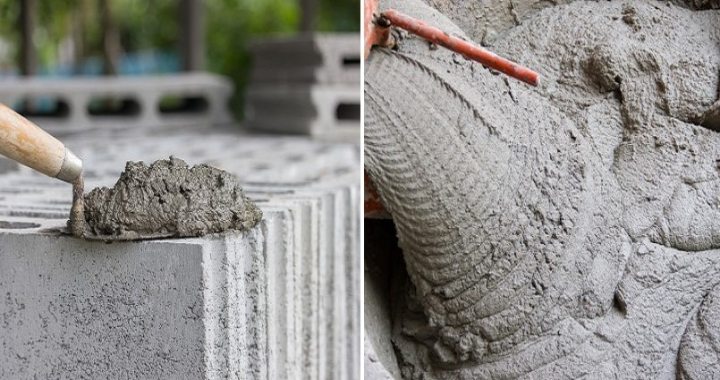
Functions of mortar:-
- It provides force or cohesion between the structural unit.
- It acts as a medium for distributing the forces throughout the structure uniformly.
- Additional strength and resistance against the rain penetration and other such weathering agencies.
- In stone or brick masonry, it fills up empty joints, a thin liquid mortar used for such purposes is termed as Grout.
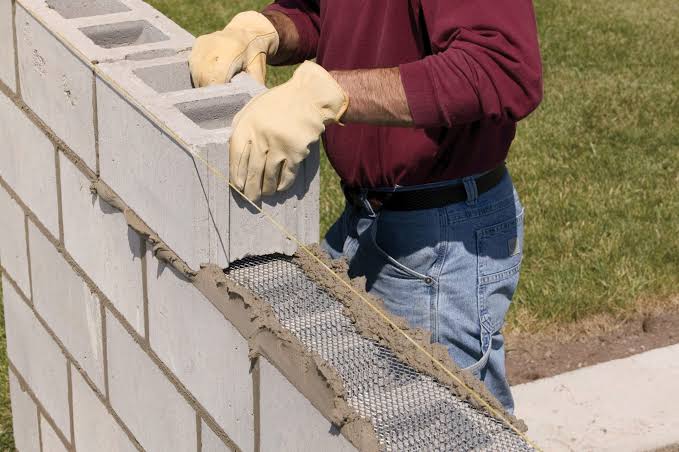
Qualities or properties of mortar:-
- The mortar mix should be workable- easily transported to the place of application.
- It should develop adequate strength in tension, compression and bond for the work for it is used.
- It should capable of retaining sufficient water during it’s application.
- It should be sufficiently plastic easily placed on the bed is construction in the form of thin, smooth and uniform layer.
- It should be durable and strong in itself on drying and hardening at the same time. It should not react in anyway with construction units.
- It should set and garden quickly construction could be done with speed.
- It should not develop any cracks on drying and should be able to maintain their appearance for quite long period.
- It should capable of developing the designed stresses.
- It should be economical to make without compromising on any of the qualities.
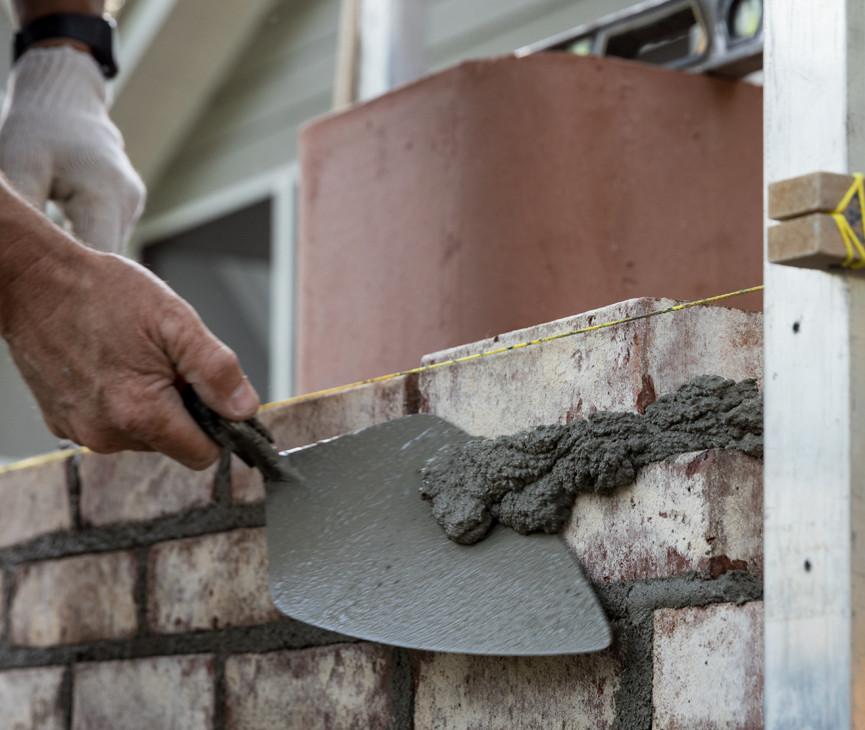
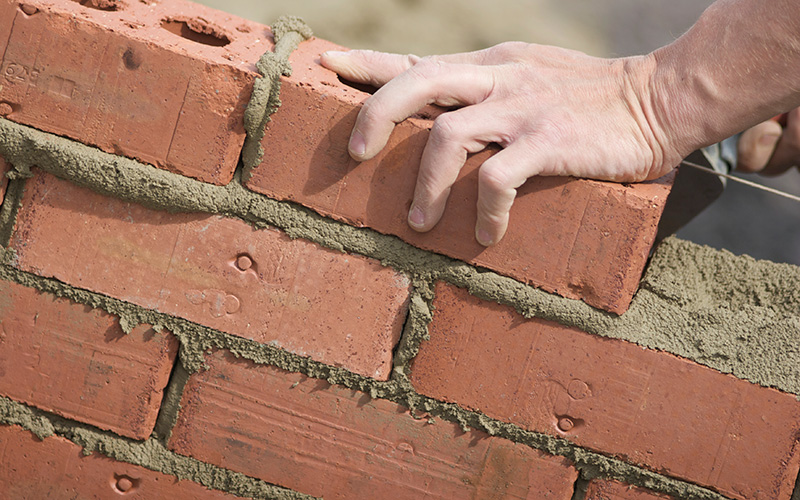
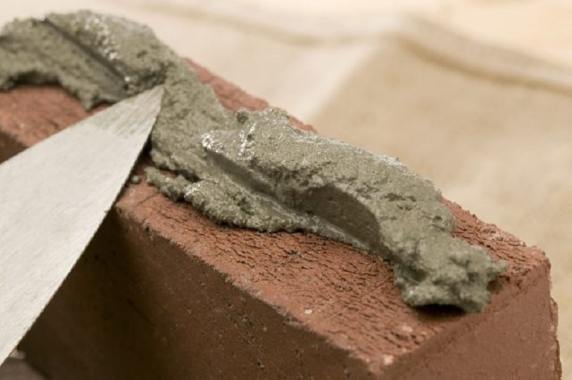
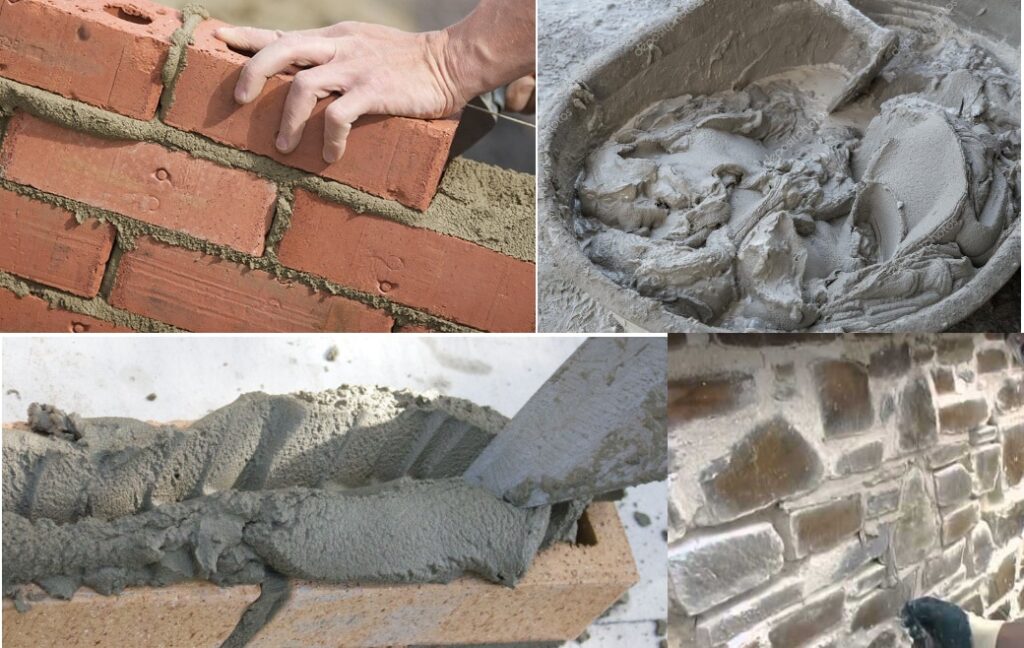
Different types of mortars used in masonry construction based on application, binding material, density and purposes. Mortar is a workable paste prepared by adding water to a mixture of binding material and fine aggregate. This plastic paste is useful to hold building materials such as stone or brick together.
What is Mortar:
Mortar is defined as a paste of cement or lime, sand and water prepared by mixing of its.
When the paste is prepared by mixing of cement or lime and sand without water is known as dry mortar.
When the mortar is prepared by mixing cement, sand and water is known as wet mortar.
Types of mortars:
Mortar can be classified into four groups.
- Based on bulk density
- Based on binding material
- Based on nature of application
- Special types of mortars
| Based on bulk density | Based on binding material | Based on application | Special types of mortar |
|---|---|---|---|
| 1. Heavy mortars | 1. Cement mortar | 1. Masonry mortar | 1. Fire resistant mortar |
| 2. Light weight mortars | 2. Lime mortar | 2. Finishing mortar | 2. Light weight mortar |
| 3. Mud mortar | 3. Sound absorbing mortar | ||
| 4. Surkhi mortar | 4. X-ray shielding mortar | ||
| 5. Gypsum mortar | |||
| 6. Cement – lime mortar |
1. Based on bulk density
There are two types of mortar based on bulk density.
- Heavy mortars
- Light weight mortars
a. Heavy mortars:
Mortar which has bulk density greater than 1500 kg/m3 is called heavy mortar. Generally, It uses heavy aggregates like quartz.
b. Light weight mortars:
If the bulk density of mortar is less than 1500 kg/m3 is called light weight mortars. It uses light aggregates like pumice. Lightweight mortar is prepared by mixing of light material like sawdust, rise husk, jute fibers, asbestos fibers, pumice with sand and cement.
Lightweight mortar is generally used in sound proof construction and heat proof construction. Cinder is a example of light weight mortar.
2. Based on binding material
- Cement mortar
- Lime mortar
- Mud mortar
- Surkhi mortar
- Gypsum mortar
- Cement – Lime mortar
i. Cement mortar:
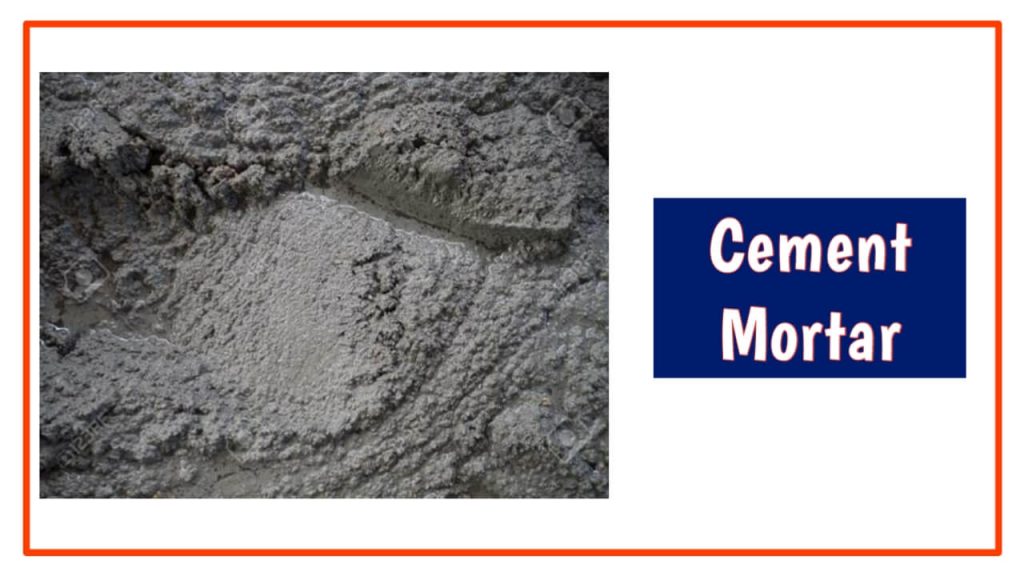
Cement mortar is a mixture of cement, sand and water where cement is used as binding material. The ratio of cement and sand is 1: 2 to 1: 6.
Cement mortar is used where high strength is required and water-insulation is required.
Cement mortar is mostly used in brick or stone masonry.
ii. Lime mortar:
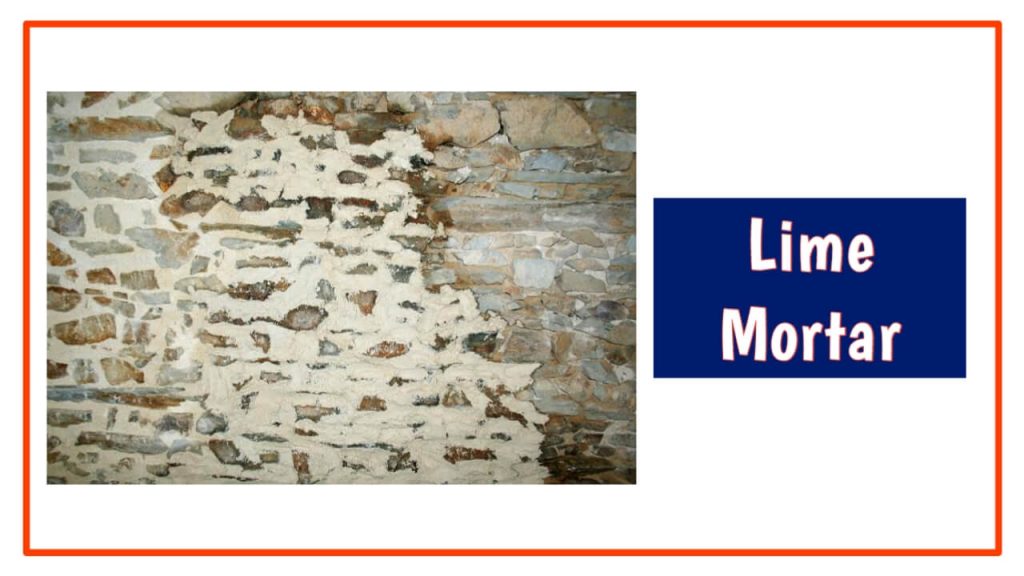
Fat lime or hydraulic lime is used in this types of mortar. Lime used as a binding material. The ratio of lime and sand is 1: 3 for fat lime and the ratio of lime and sand is 1:2 for hydraulic lime.
Hydraulic lime is more suitable for water logged area.
Its plasticity is high.
It is used in the construction of heavy loaded members. Fat lime should not be used in damp places.
iii. Mud mortar:
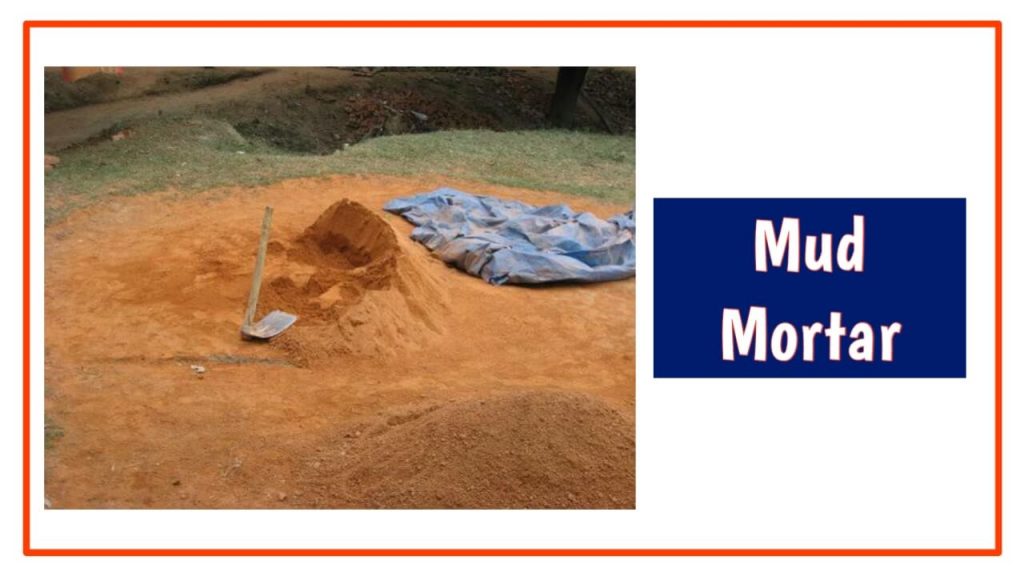
- Mud mortar is mixtures of mud or clay, saw dust, rice husk, water and cow dunk in which mud used as a binding material.
- It is also called Garo.
- It is used to build economical and low-cost buildings.
- It is not useful in damp places or in heavier buildings.
- This mortar is used to build small houses, especially in villages.
iv. Surkhi mortar:

- This types of mortar is made from a mixture of lime, water and Surkhi powder where lime is used as binding material.
- Surkhi is powdered of burnt clay which gives more strength compare to sand.
- It does not use sand.
- This type of mortar can be used in all types of general construction.
- It cannot be used in plaster or painting.
v. Gypsum mortar:

Gypsum mortar is a mixtures of gypsum, fine sand and water. Gypsum is used as a binding material. It has low durability in damp conditions.
vi. Cement-lime mortar:
This type of mortar is made by mixing cement and lime in a ratio of 1: 6 to 1: 8.
3. Based on Nature of application:
There are two types of mortar based on application.
i. Masonry mortar:

Used for brick or stone masonry. The proportion of ingredients like sand, cement and water is depend on binding material.
ii. Finishing mortar:
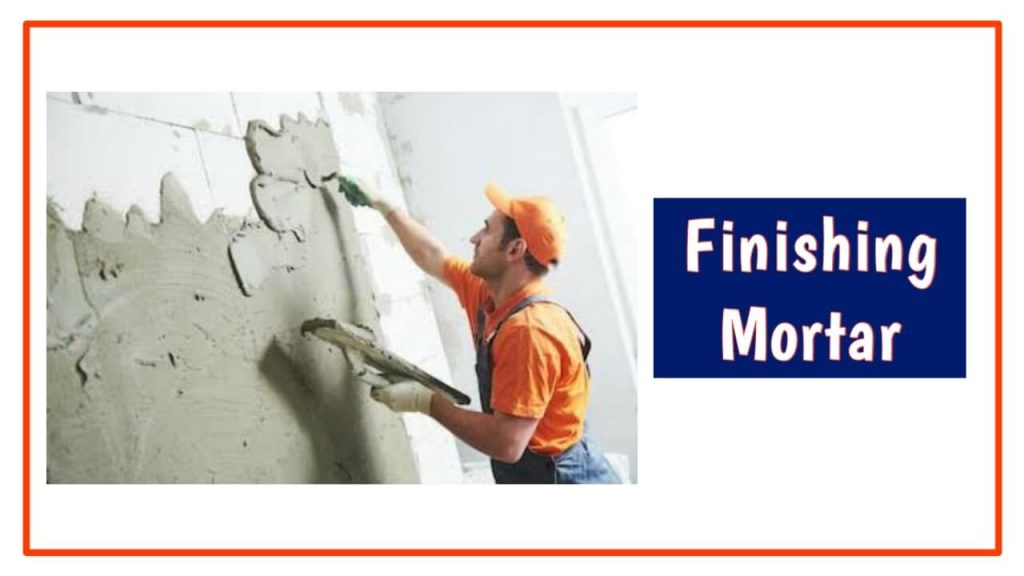
It is used in works like plaster, pointing. It is also used for good aesthetic view of construction as per architecture.
Finishing mortar should has good strength and resistant against atmospheric action.
4. Special types of mortars:
- Fire resistant mortar
- Light weight mortar
- Sound absorbing mortar
- X-ray shielding mortar
i. Fire resistant mortar
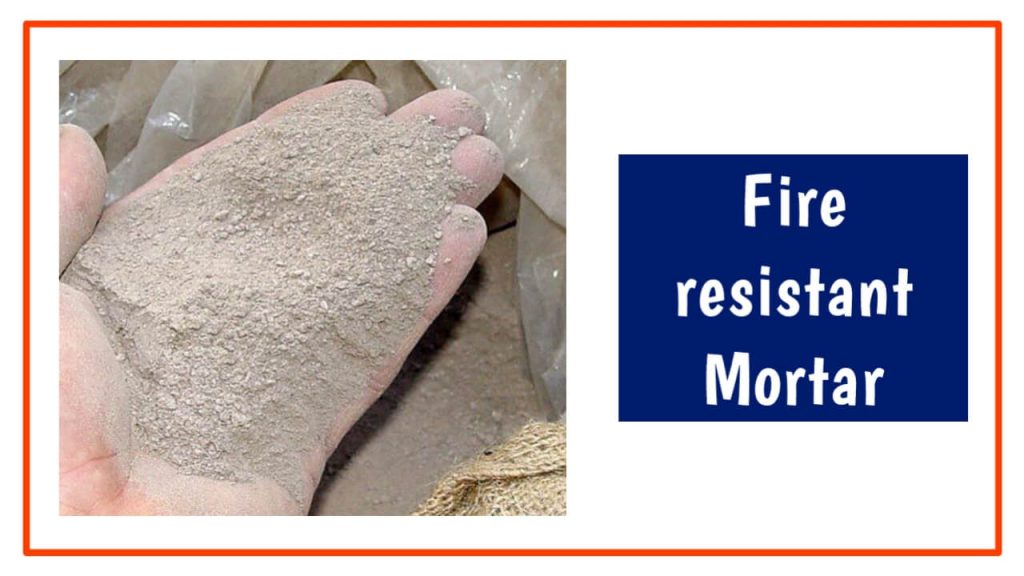
Fire resistant mortar is prepared by mixing of aluminum cement and powder of fire bricks. In this mortar proportion of aluminium cement and powder of fire bricks is 1:2. Fire resistant mortar is act as fire shield in building.
It is used in furnace lining, ovens.
ii. Light weight mortar:
Light weight mortar is prepared by mixing of light material like sawdust, rise husk, jute fibers, asbestos fibers, pumice with sand and cement.
Lightweight mortar is generally used in sound proof construction and heat proof construction.
iii. Sound absorbing mortar:
Sound absorbing mortar is prepared by mixing of light weight material like pumice, saw dust, cinder with binding material like cement, gypsum or lime.
The density of such mortar is 600 to 1200 kg/m3.
iv. X-ray shielding mortar:
- X-ray mortar is one type of heavy mortar. Its density is more than 2200 kg/m3.
- In this mortar, the heavy stone is used as aggregate.
- Such mortar is used for plaster walls and ceiling of X-ray cabinet to protect room against ill effects of X-ray.
Properties of Good mortar:
The characteristics of a good mortar are as follows:
- It should stick well with bricks or stones.
- It should be cheap.
- It should be durable.
- It should be easily workable.
- It should be set as soon as possible.
- It should be able to withstand against tensile and compressive stresses.
- It should not allow rainwater to enter.
- It should not affect the durability of the material when it comes in contact with the material.
Uses of mortar:
The uses of mortar are as follows.
- Attach bricks, stone.
- For plaster and pointing work.
- For pipe joints
- To obtain a level surface for the components of the building
- To improve the appearance of the structure.
- Use as an X-ray resistant material.
- Use as a sound-absorbing material.
Mortars used for different masonry work and its ratio:
Mortars used for different masonry work and its ratio are as below.
| Name of work | Types of mortar and its ratio |
|---|---|
| Stone masonry work in the foundation | Cement mortar 1:6 |
| Construction in water logged area | Cement mortar 1:3 |
| Masonry work in super-structure | Cement mortar 1:6 / cemrnt-lime mortar 1:1:6 |
| For the partition wall and Parapet wall | Cement mortar 1:3 / Lime mortar 1:1 |
| Plasterwork | Cement mortar 1:3 to 1:4 / Lime mortar 1:2 |
| Pointing work | Cement mortar 1:1 to 1:2 |
| Reinforced brickwork | Cement mortar 1:3 |
| Damp-proof Course | Cement mortar 1:2 |
| Mortar for laying fire bricks | 1:2 Aluminius cement and fire bricks powder |
| For the construction of the arch | Cement mortar 1:3 |
| Stonemasonry work | Lime mortar 1:2 / Cement mortar 1:6 |