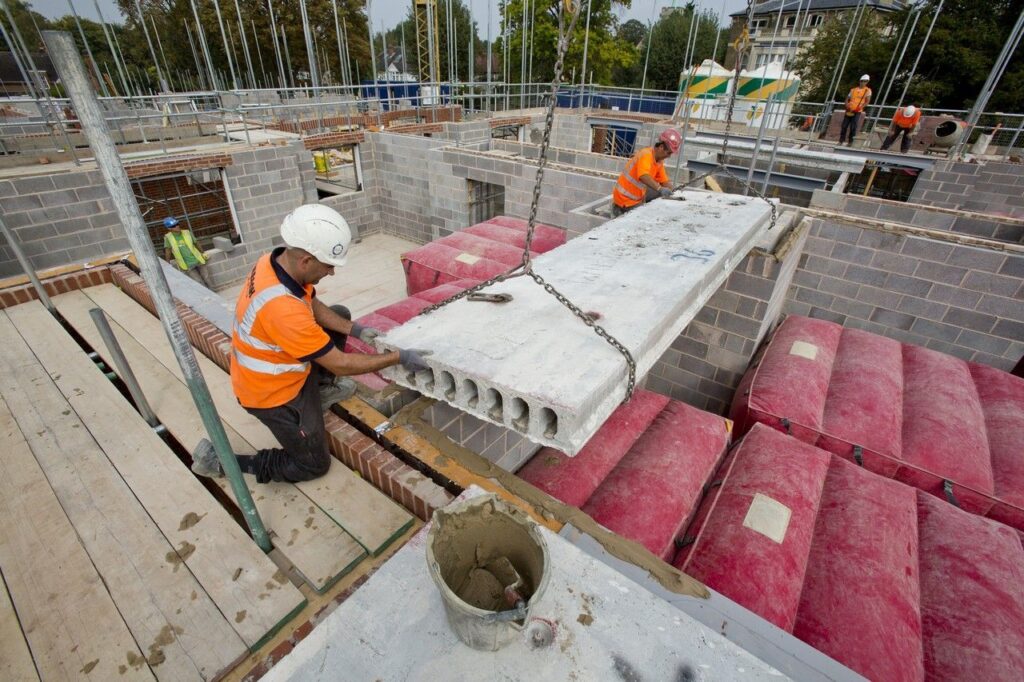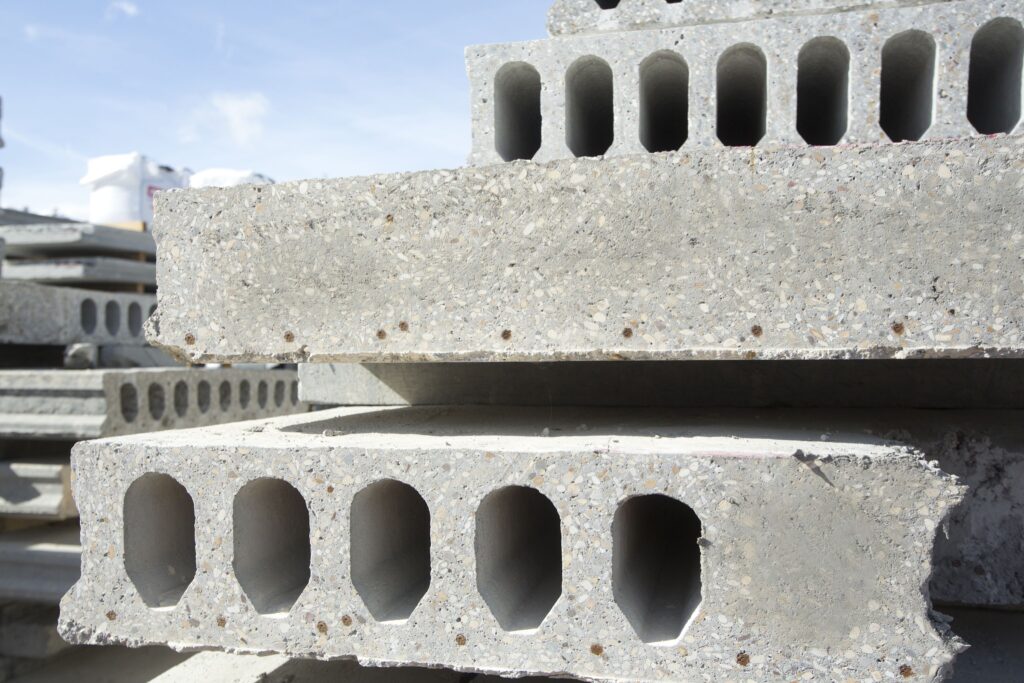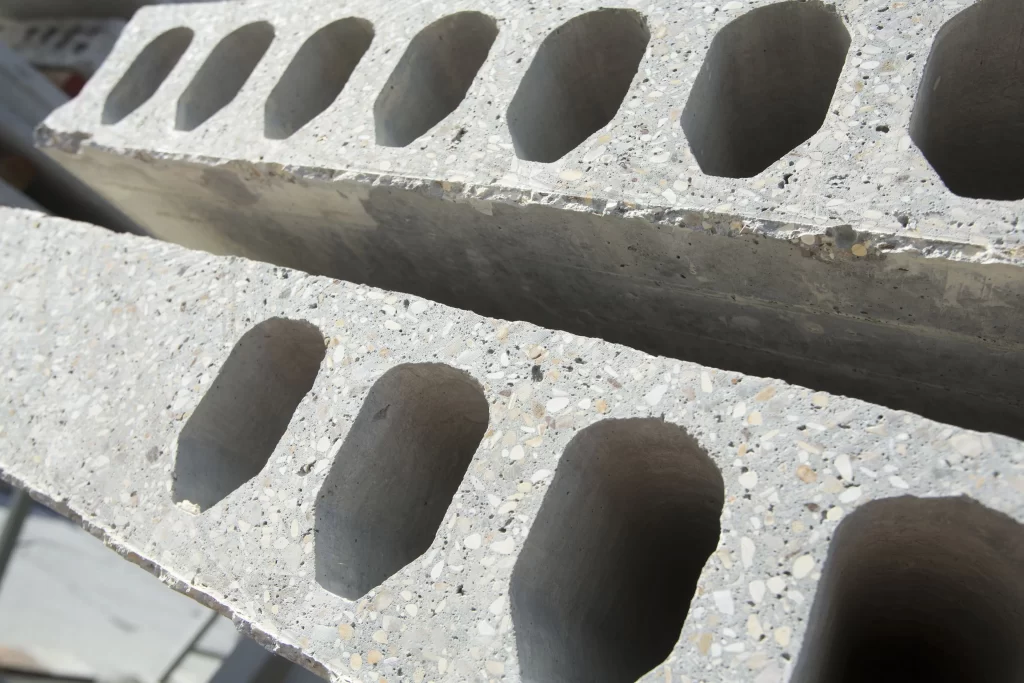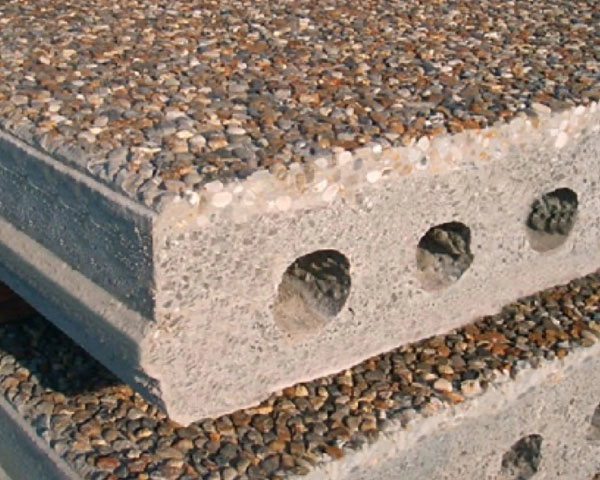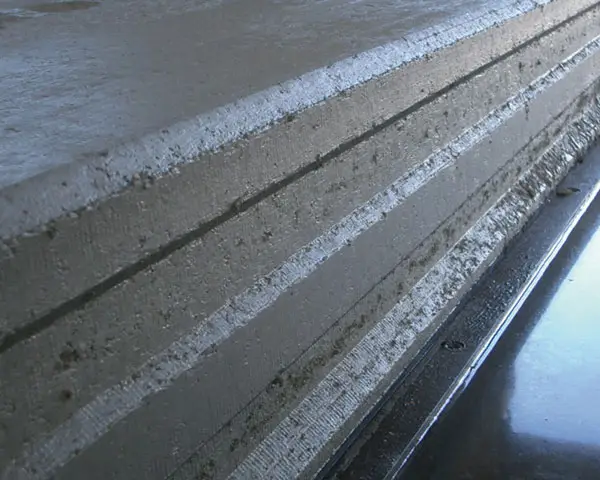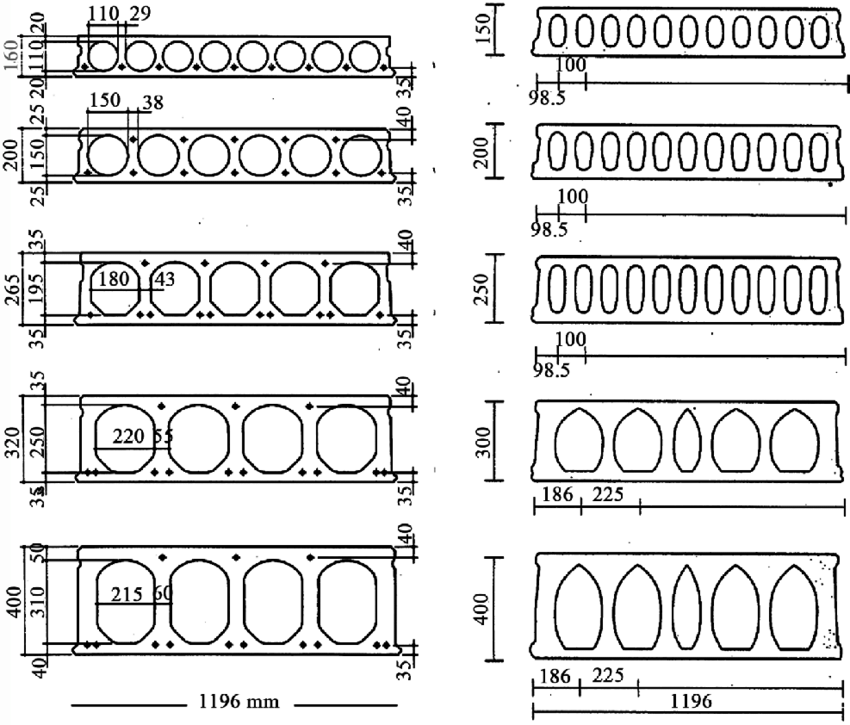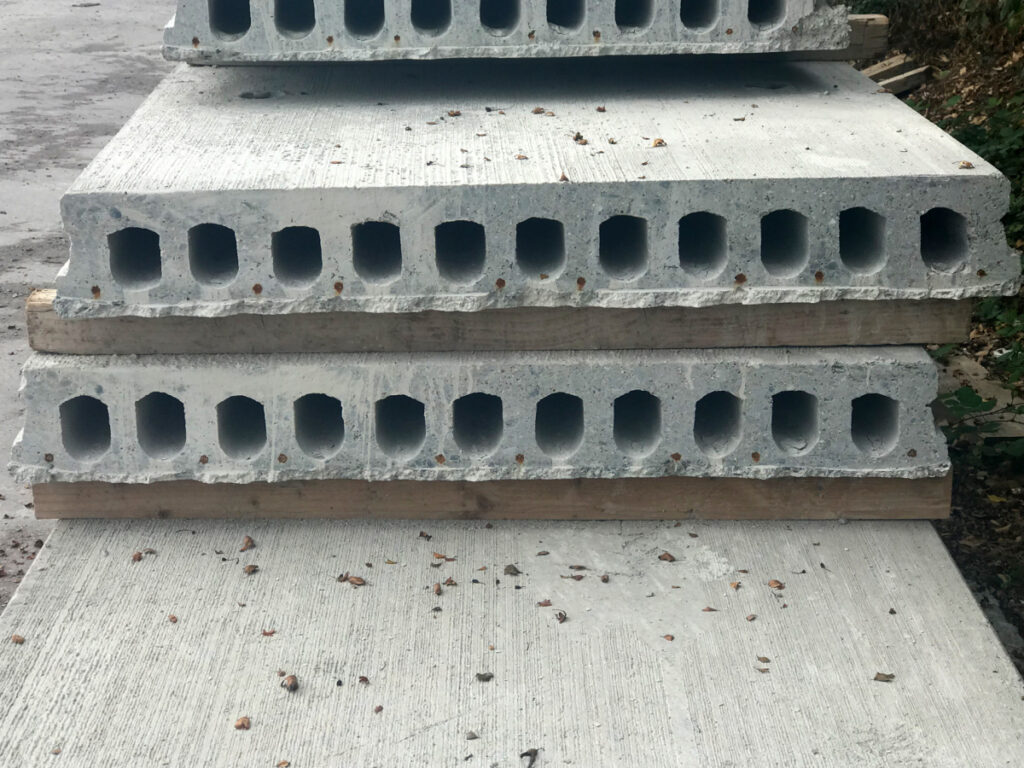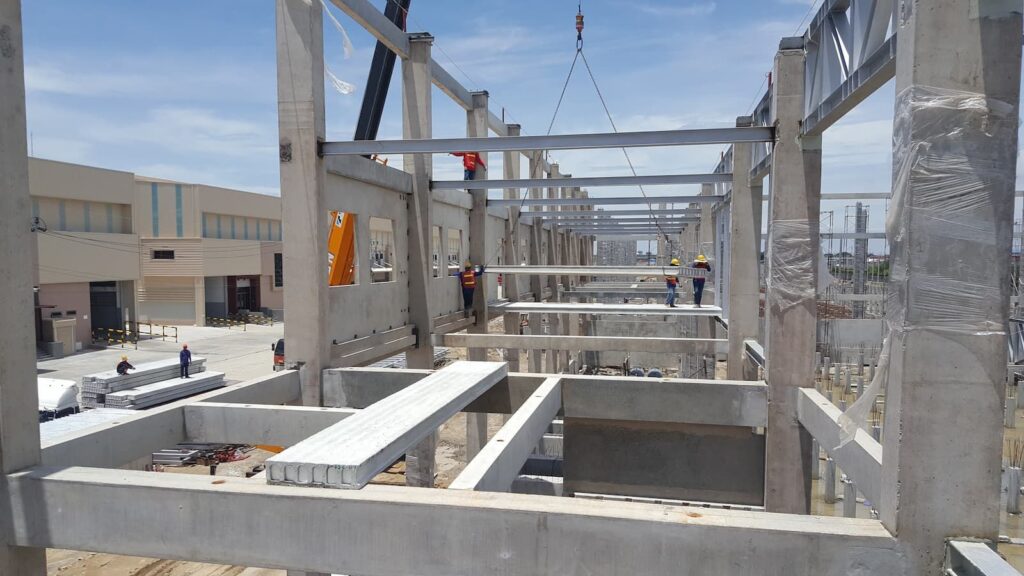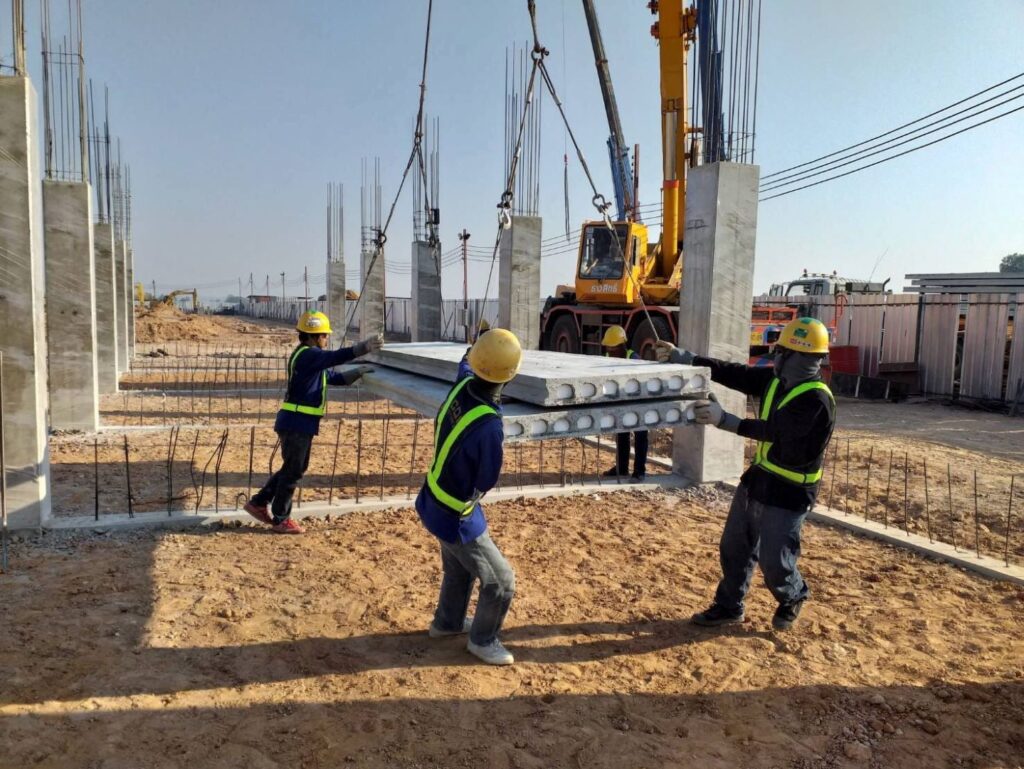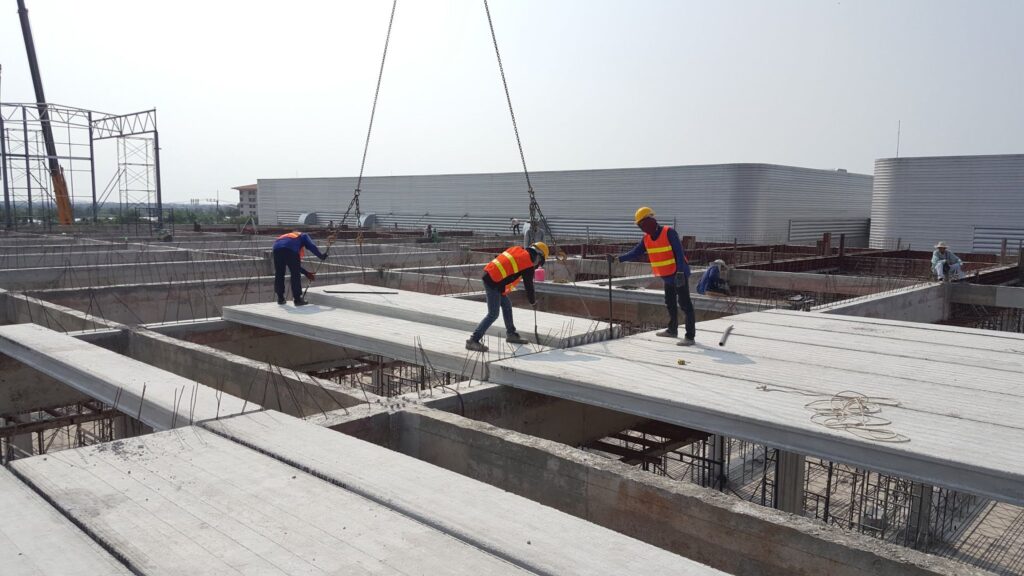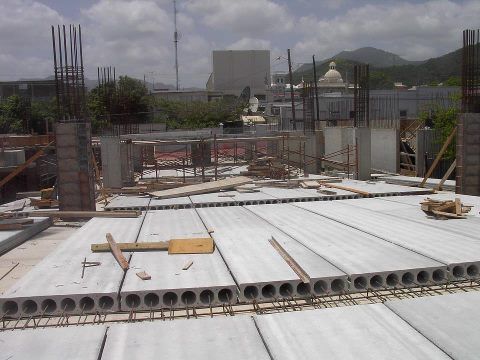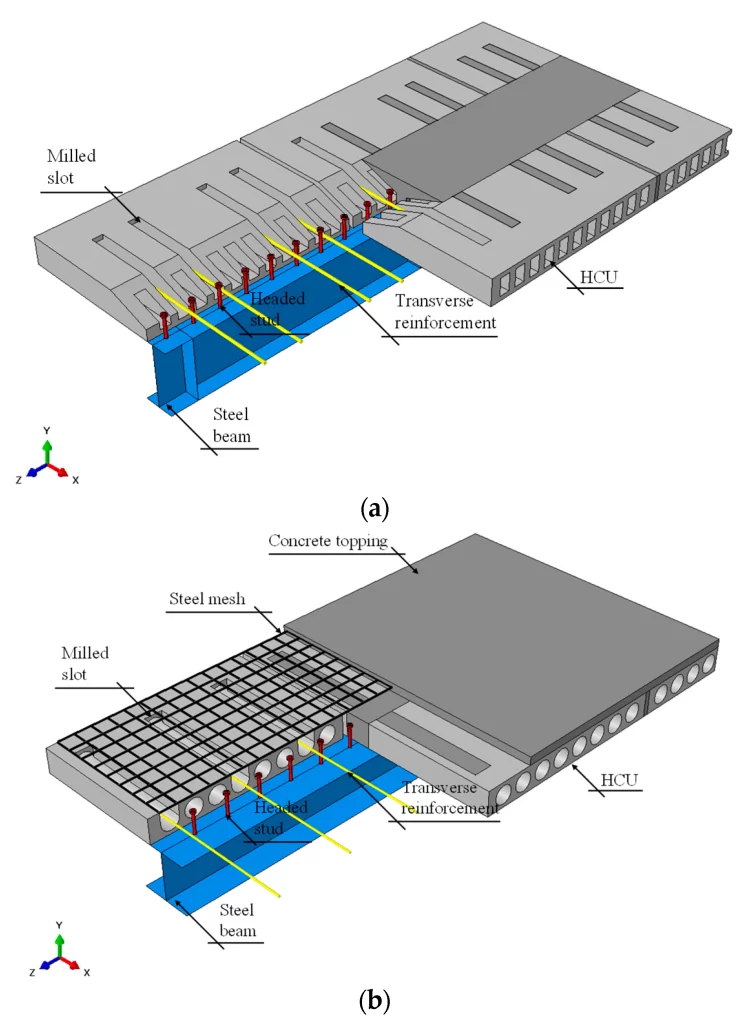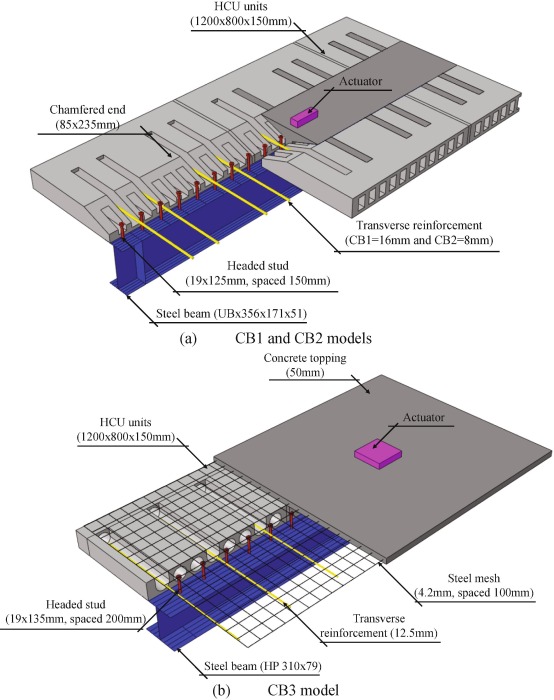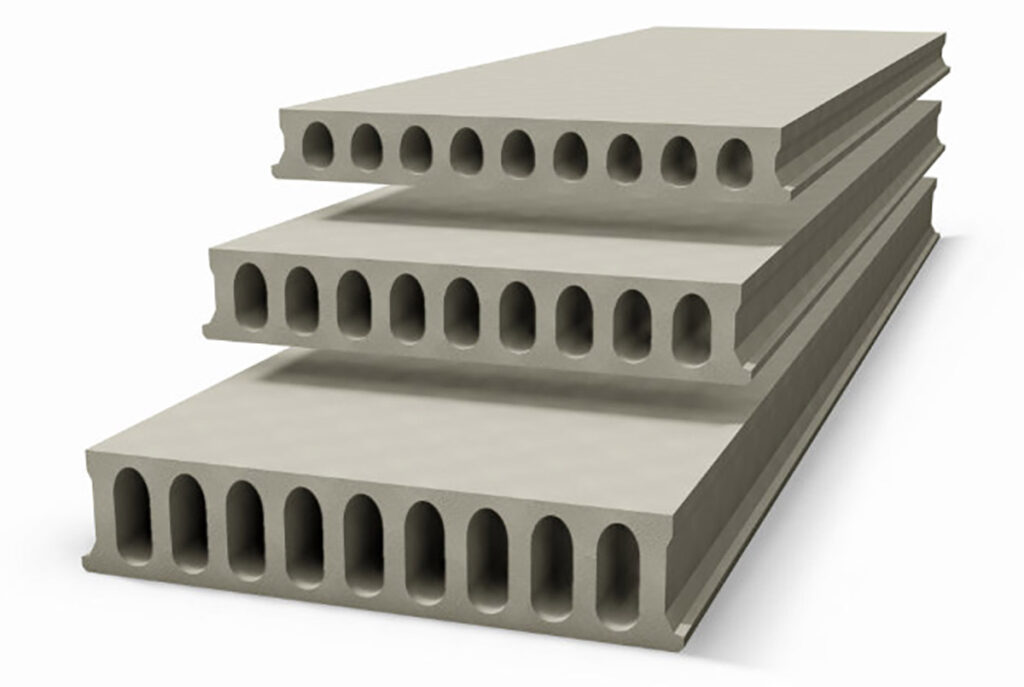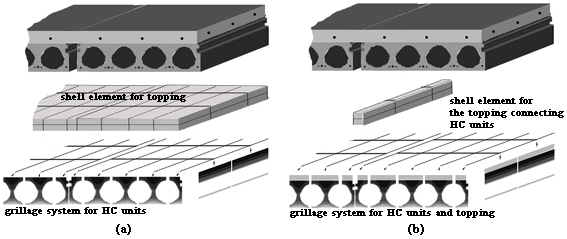
Hollow-core slabs are prestressed and precast concrete elements, manufactured using long line steel casting beds. They are typically 1200mm wide (but can range from 600mm – 2400mm), and between 150mm – 500mm deep.
Spans can be anywhere up to around 20m, and applications range from individual houses to residential apartments, office buildings, hotels, schools, hospitals, supermarkets, industrial units and car parks.
Longitudinal voids run throughout a hollow-core slab. These reduce raw material consumption, costs, the self-weight of slabs themselves and provide ready-made ducts for services.
Hollow core ribbed slabs have excellent span capabilities, achieving a capacity of 2.5 kN/m2 over a 16m span. The long-span capability is ideal for offices, retail or car park developments. Units are installed with or without a structural screed, depending on requirements. Slabs arrive on-site with a smooth pre-finished soffit. In car parks and other open structures, pre-finished soffits offer a maintenance free solution.
Importance of Concrete
Prestressed hollowcore requires the use of high quality raw materials, such as high strength concrete, and low relaxation steel wire/strand.
The produced elements have high load resistances thanks to a low water/cement ratio of concrete from 0.32 to 0.38. Moisture, Temperature & Plasticity control are considered mandatory for the mixing plant in order to get excellent hollow core slab finishing
Efficiency & Sustainability
Prestressed concrete, and hollow-core slabs in particular, offer exceptional structural efficiency. Long spans and shallow units allow for low material usage, and better use of space within buildings.
Hollow-core is extremely durable, retaining its structural capacity for a lifespan of 100 years or more. Production of elements in a controlled factory environment reduces waste, noise and emissions.
Concrete has a large part to play in the heating and cooling of buildings, which consumes large amounts of energy. Hollow-core slabs contribute to the thermal mass of a building, and innovations enable reductions in the energy used for air conditioning.
Advantages of Hollowcore
- ASSURED QUALITY
- EXCELLENT LOWER SURFACE FINISH
- READY TO PAINT
- QUICK AND EASY INSTALLATION
- EXCELLENT FIRE RESISTANCE
- HIGH LOAD CAPACITY AND RIGIDITY
- EASY PROJECT IMPLEMENTATION GIVING DESIGNERS GREATER VERSATILITY
- EASILY ADAPTED TO ENABLE MOUNTING OF ANCILLARY BUILDING SYSTEMS
- REDUCED SELF-WEIGHT
- BIG COST SAVINGS
- EFFICIENT SPAN/DEPTH-RATIO LEADING TO REDUCED STOREY HEIGHT
- HIGH DURABILITY AND LOAD RESISTANCE
- LONG SPANS WITHOUT THE NEED OF TEMPORARY SUPPORTS
- EXCELLENT THERMAL PROPERTIES AND ACOUSTIC INSULATION
- GREEN PRODUCT REDUCED USE OF RAW MATERIAL
- CAN BE USED IN SEISMIC ZONES
- PRODUCTION FLEXIBILITY
Disadvantages:
- If not properly handled, the hollow core ribbed slab units may be damaged during transport.
- It becomes difficult to produce satisfactory connections between the precast members.
- It is necessary to arrange for special equipment for lifting and moving of the precast units.
- Not economic for small spans.
- Difficult to repair and strengthen