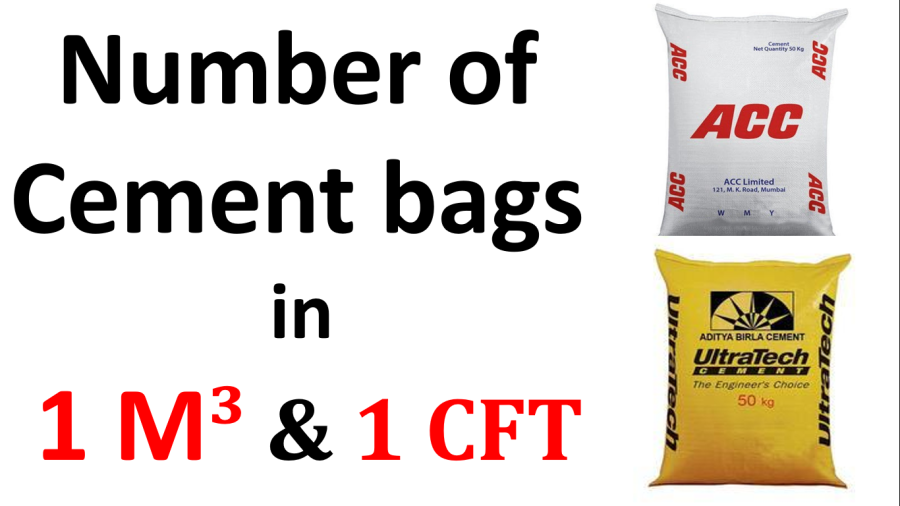
In order to calculate how many bags of cement required in 1m3, you should know about the dry density of cement.
In general Density = Mass/Volume
Dry Density of cement = Dry Mass/ Unit Volume
Got confused? Let me explain: In general cement consists of moisture content so Mass of cement includes Cement with Moisture content
Dry Mass includes cement without moisture content
So, Usually, 4% of moisture content is present in cement.
Dry Density of Cement = 1440kg/m3
Each bag of cement consists of = 50kg
No. of bags in 1m3 = 1440/50
= 29bags (approx)
Result:
Approximately 29 bags are required for 1m3 of cement.
]]>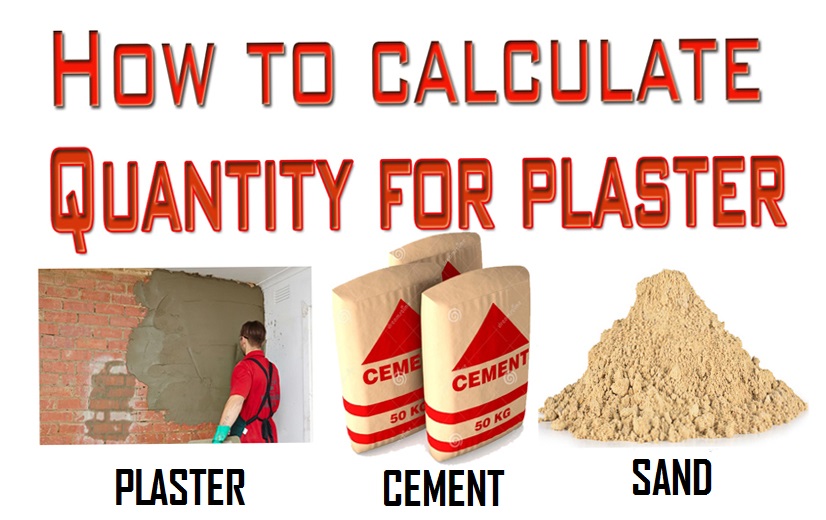
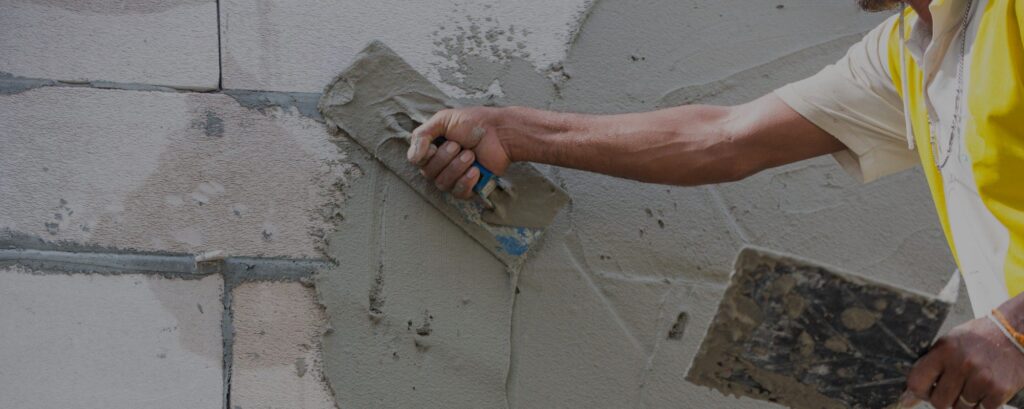
Plaster is a building material used for the protective or decorative coating of walls and ceilings and for moulding and casting decorative elements.
In English “plaster” usually means a material used for the interiors of buildings, while “render” commonly refers to external applications. The most common types of plaster mainly contain gypsum, lime, sand or cement, but all work in a similar way. The plaster is manufactured as a dry powder and is mixed with water to form a stiff but workable paste immediately before it is applied to the surface.
The reaction with water liberates heat through crystallization and the hydrated plaster then hardens. Plaster can be relatively easily worked with metal tools or even sandpaper, and can be moulded, either on site or to make pre-formed sections in advance, which are put in place with adhesive. Plaster is not a strong material; it is suitable for finishing, rather than load-bearing, and when thickly applied for decoration may require a hidden supporting framework, usually in metal.
Notes
1- Cement Mortar Ratio for wall plastering 1:6
2- Cement Mortar Ratio for ceiling plastering 1:4
3- Plastering thickness should not be more than 12-15 mm. If there is a need for an additional coat don’t do that at one go.
4- Ensure you are using good quality of cement & Sand.
5- Ensure you are using measuring box (not head pan) for site mix.
Example
Given that:
Ratio: 1:4
L= 6 M
H = 3 M
Thickness of Plaster = 12 mm
Volume of plaster = L * H * Thickness
Volume of plaster = 6 * 3 *0.012 = 0.216 m3
Dry Vol. =Wet Vol. * 1.27 ⇒ 0.216 * 1.27 = 0.274 m3
Vol. of cement = 1/5 * 0.274 = 0.054 m3
Density of cement = 1440 kg per cubic metre
Vol. of cement = 0.054 *1440 = 78 kg
One bag of cement have 50 Kg
Vol. of cement = 0.054 *1440/50 = 78 kg
Vol. of sand =4/5 * 0.274 = 0.21 m3
]]>