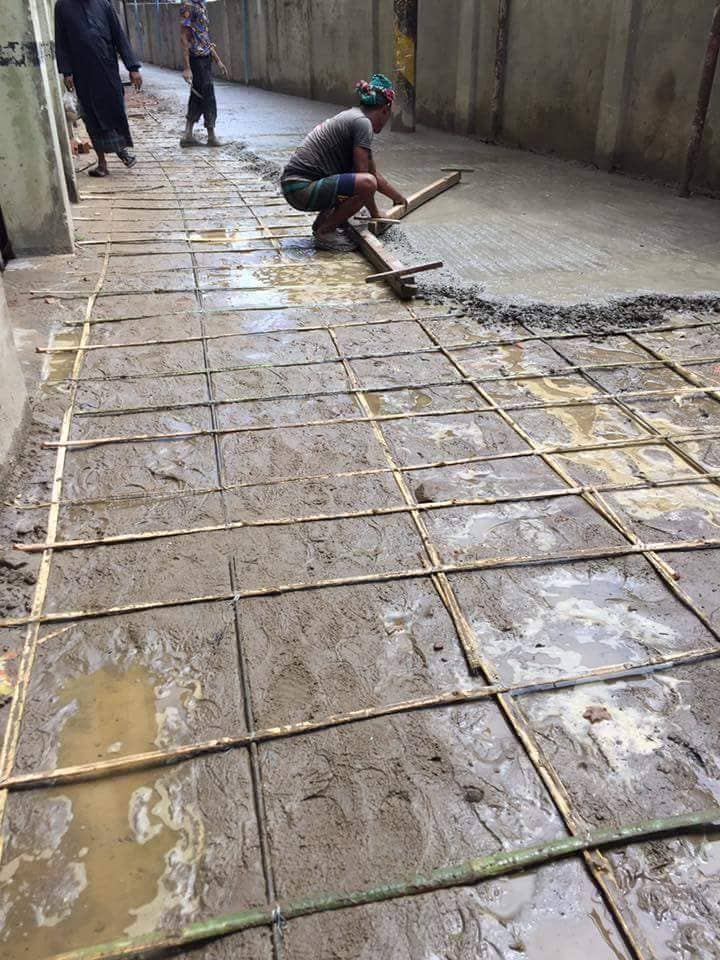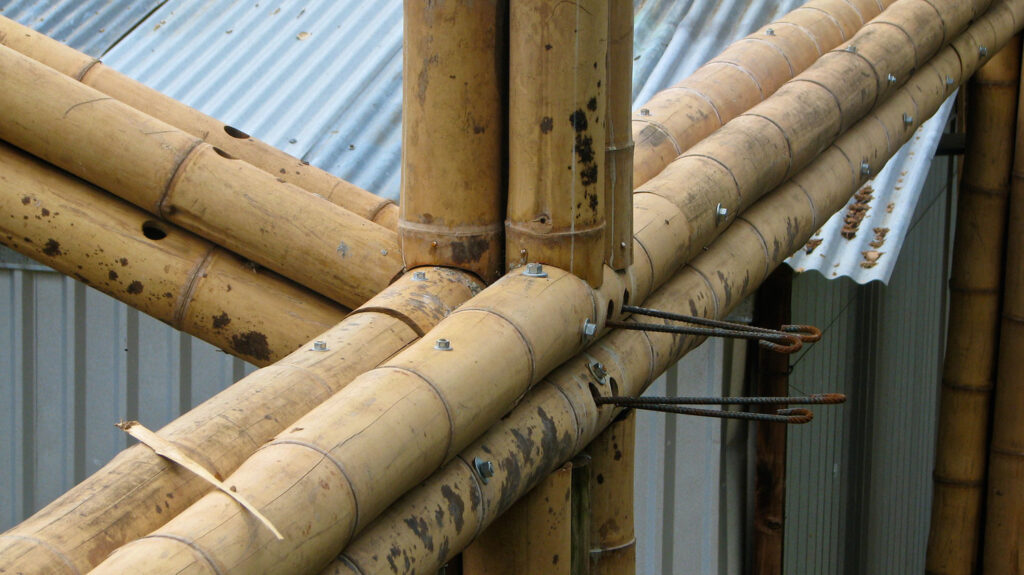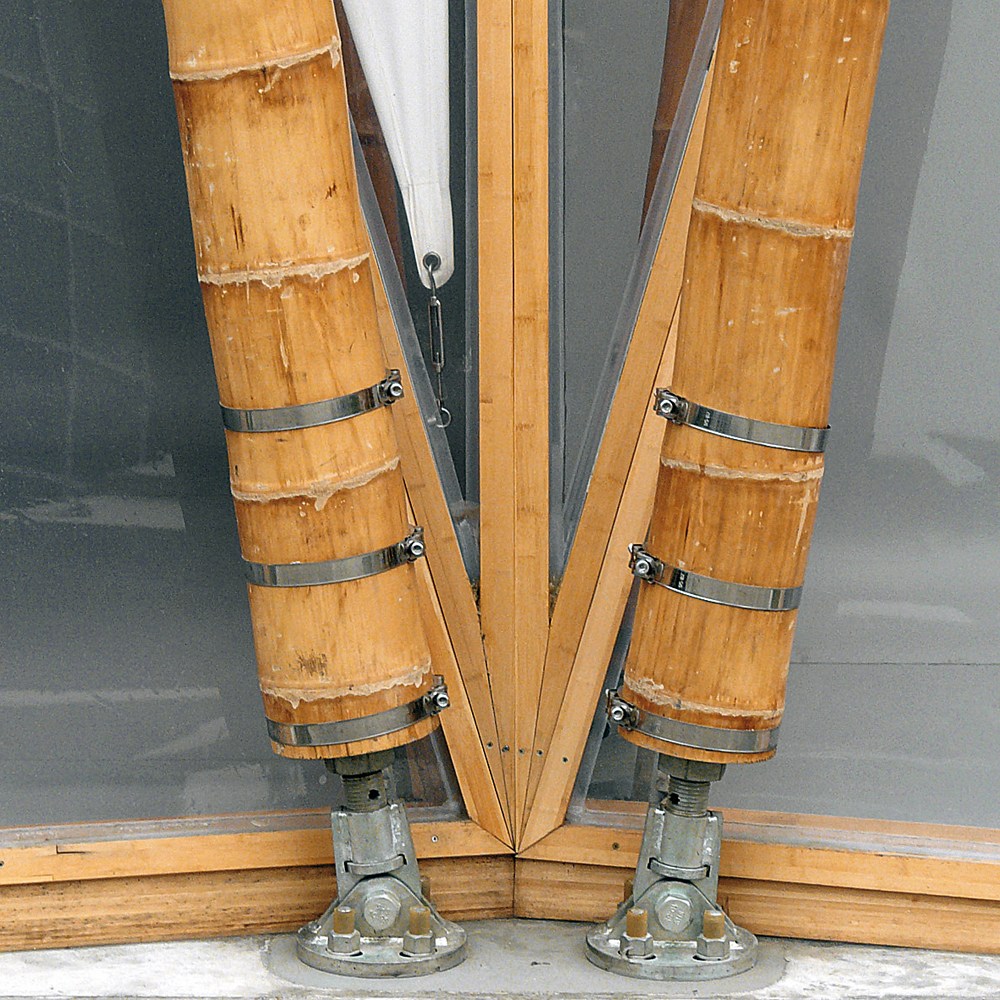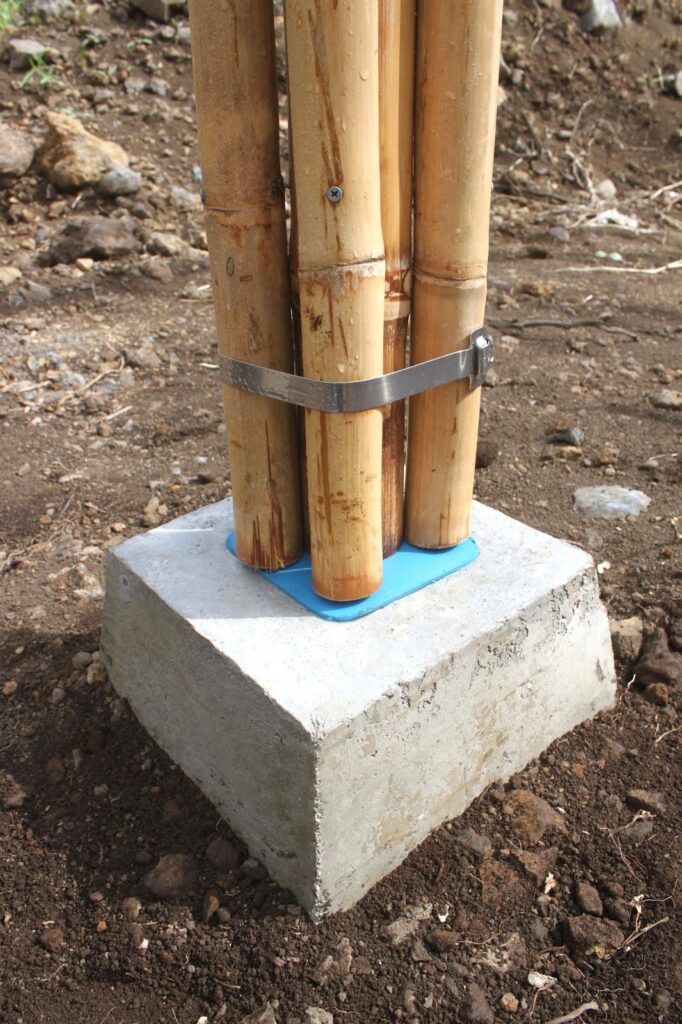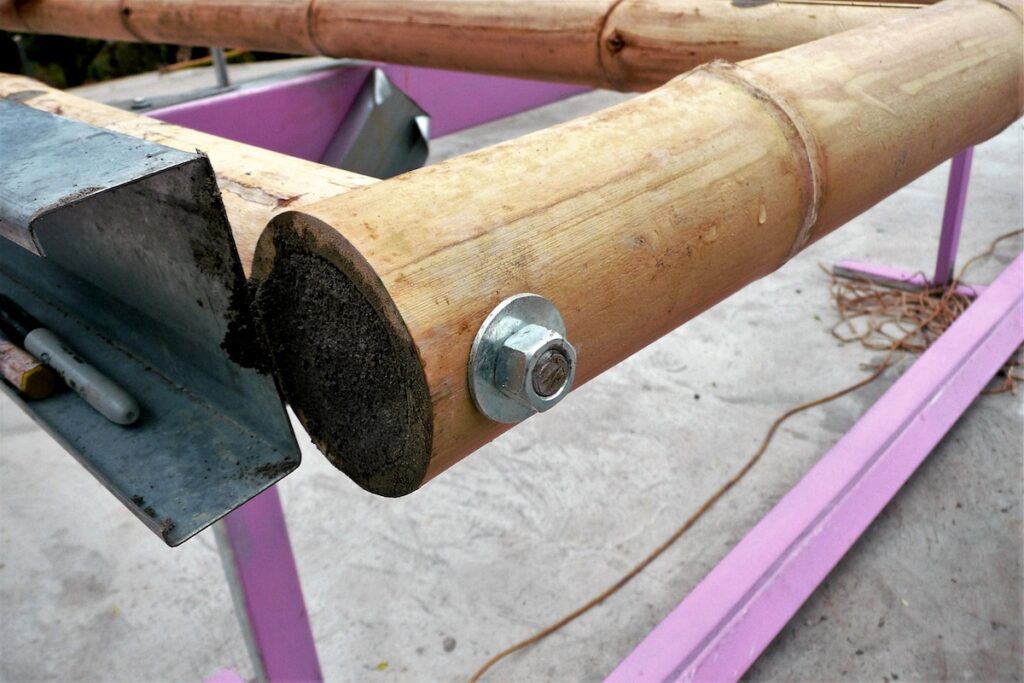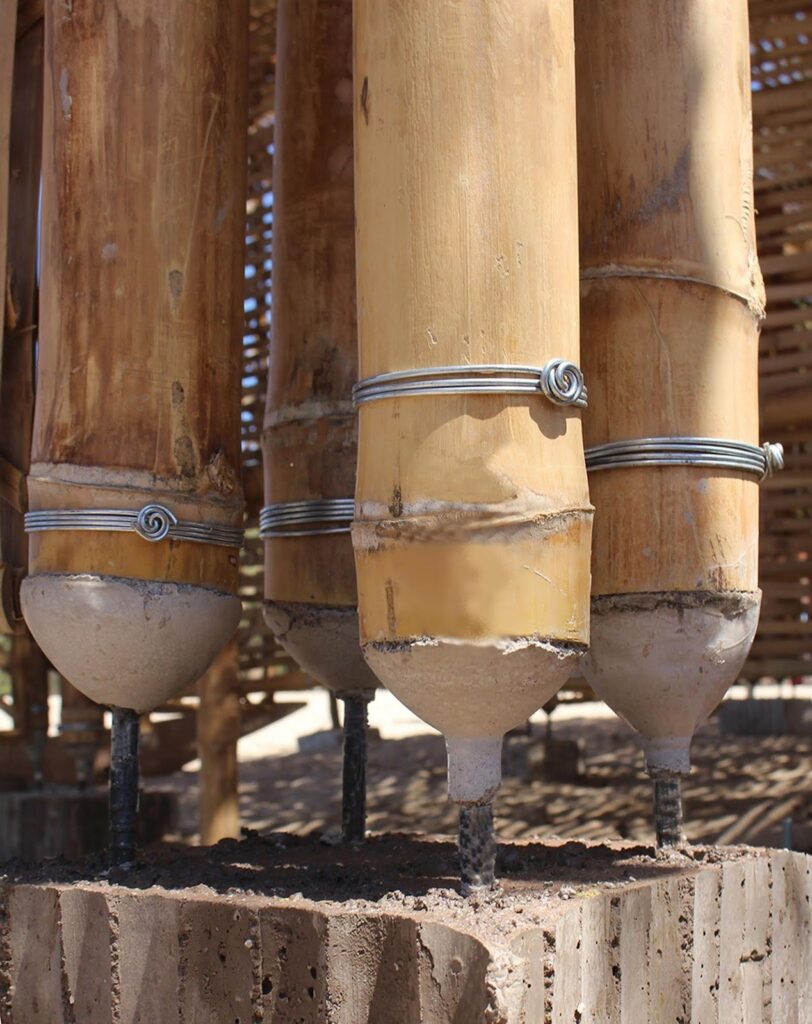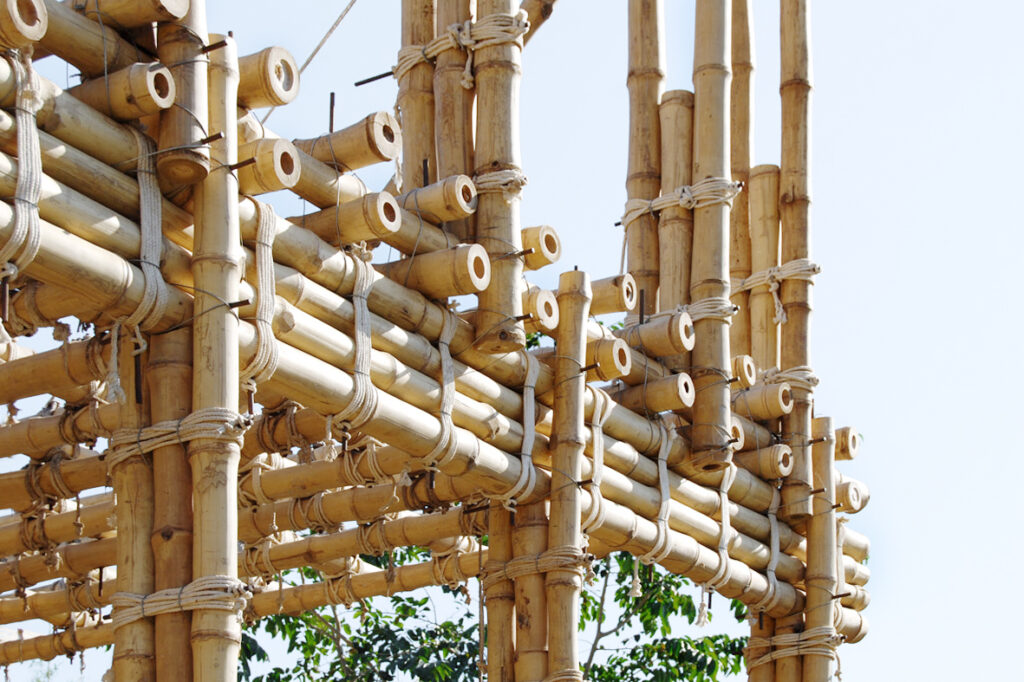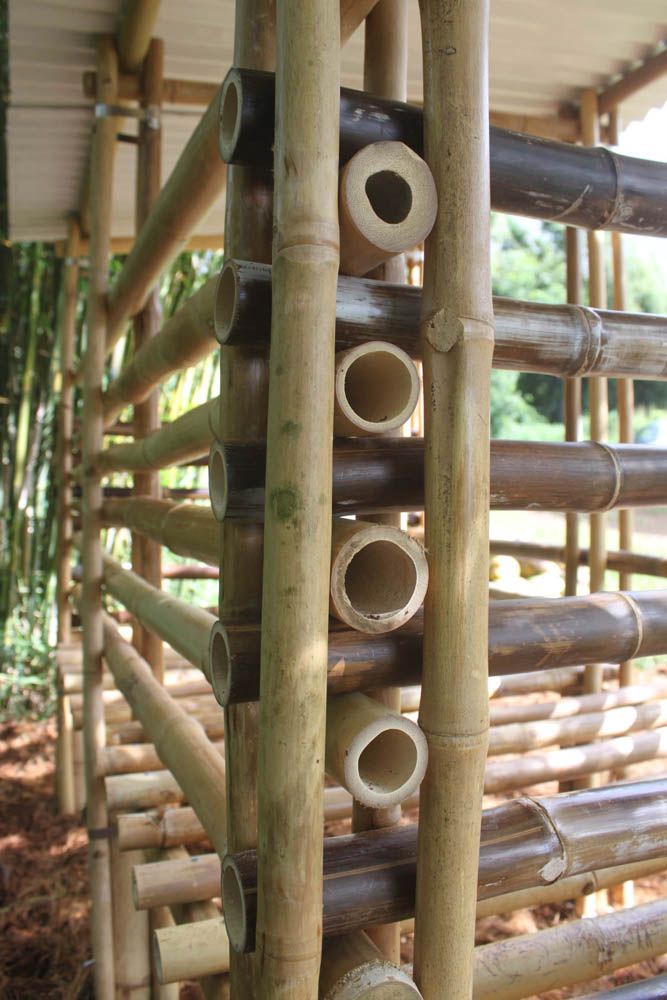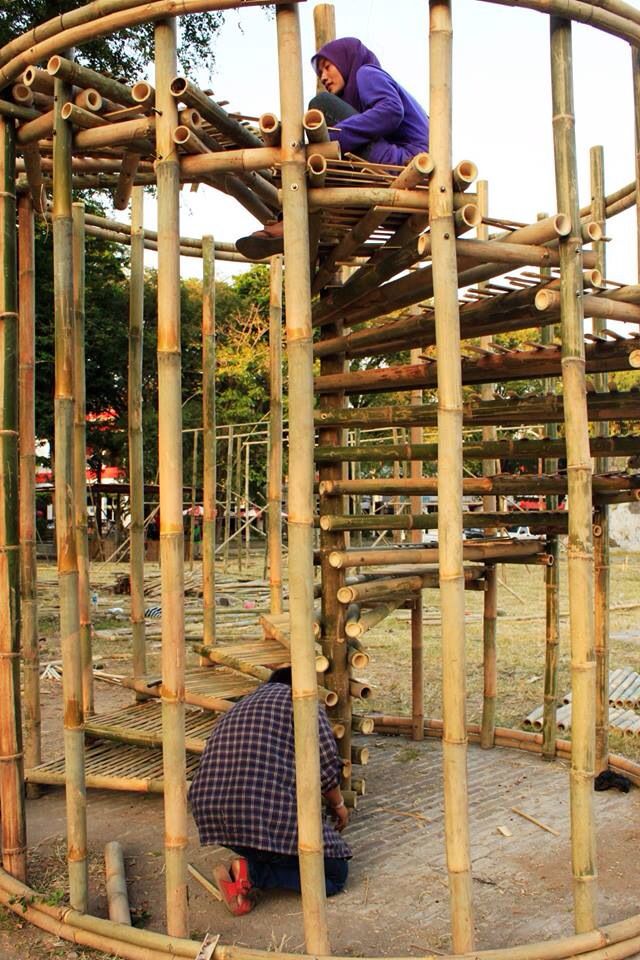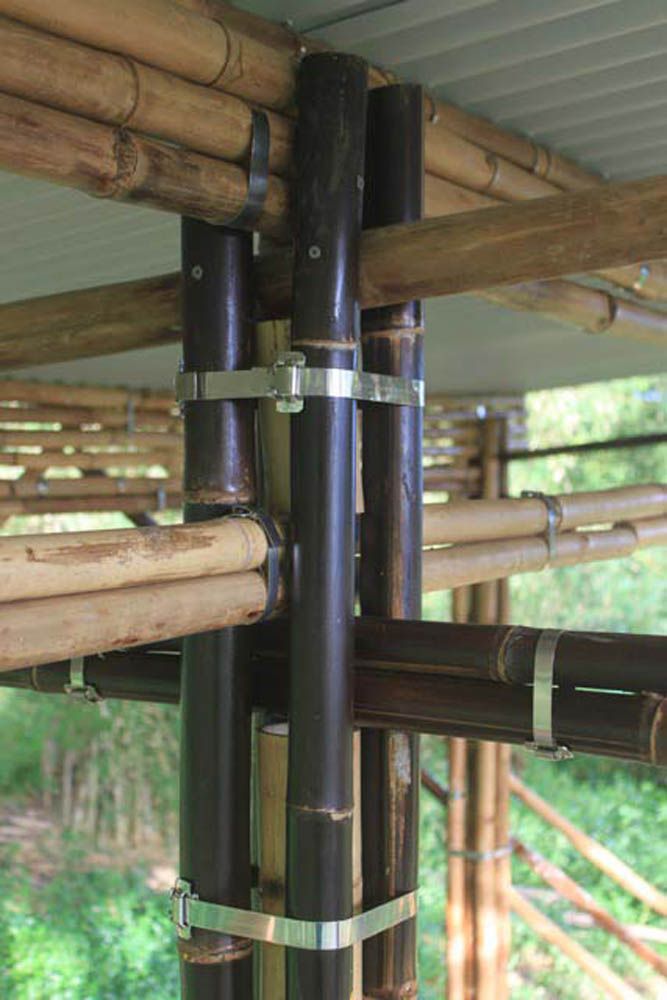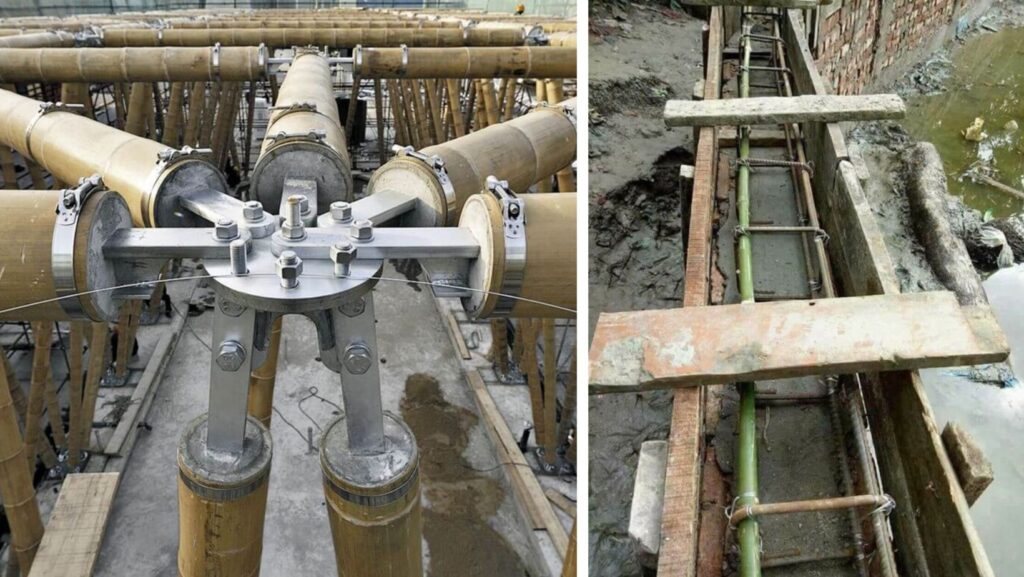
Bamboo has quite a high tensile strength. It is comparable with steel. Apart from this, bamboo has an impermeable protective layer on the outer side which protects it from rotting due to water, which is a major problem for almost all organic material.
#1.

#2.
Bamboo has quite a high tensile strength. It is comparable with steel. Apart from this, bamboo has an impermeable protective layer on the outer side which protects it from rotting due to water, which is a major problem for almost all organic material.
#1.
#2.
#3.
#4.
#5.
In tensile load application, results shown by bamboo are exciting because the ratio of tensile strength to the specific weight of bamboo is six times greater than steel.
#6.

#7.
#8.
#9.
#10.
#11.

#12.
#13.
#14.
#15.
#16.
#17.
#18.
#19. 
#20.
#21.
#22.
#23.
#24.
#25.
#26.
#27.
#28.
#29.
#30.
#31.
#31.
#33.
#36. 
What do you think? Comment and share your friends!
]]>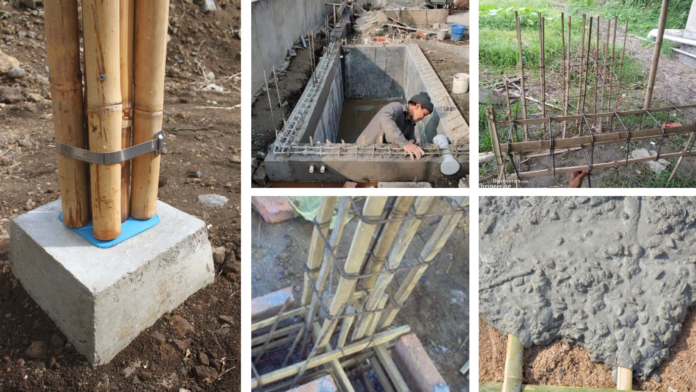
More Than 15 Photos Of Using Bamboo As Reinforcement In Building Construction
#1

#2

#3

#4

#5

#6

#7

#8

#9

#10

#11

#12

#13

#14

#15

#16

#17

#18

#19

#20

#21

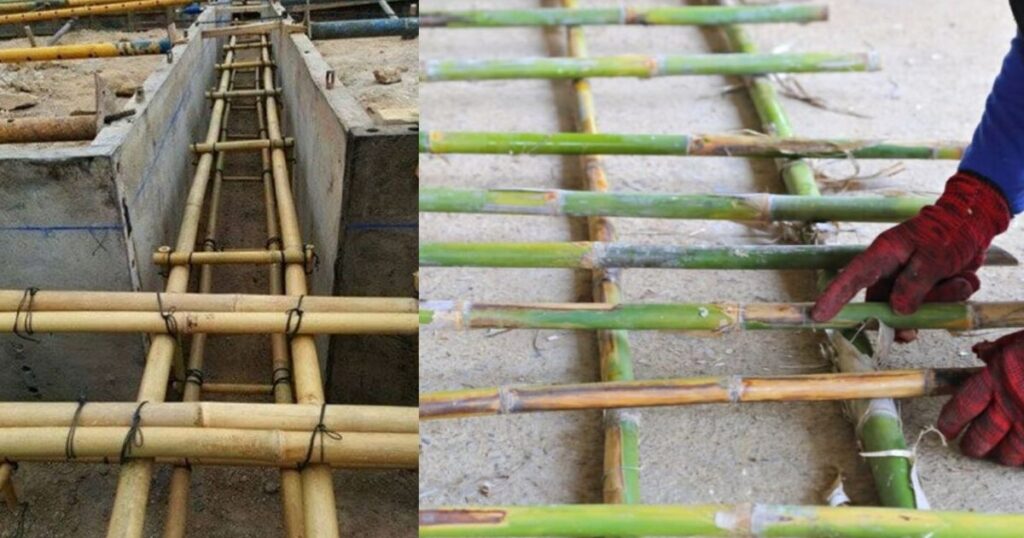
The steel as a reinforcing material is a demand that is increasing day by day in most of the developing countries. There is situations when the production is not found enough to face the demand for steel.
Hence it is essential to have an alternative that is worth compared to steel. Bamboo is found in abundant, they are resilient and hence these can face the demand as a reinforcing material and become an ideal replacement for steel.
The tensile strength property which is the main requirement of a reinforcing material is seen appreciable for bamboo, compared with other materials including steel. The structure of bamboo from its origin gives this property.
The hollow tubular structure has high resistance against wind forces when it is in natural habitat. Working on the weak points of bamboo and bringing up an innovation of bamboo as a structural steel replacement, would be a great alternative.
Advantages of Bamboo in Reinforcement:
- Bamboo is extremely strong natural fiber.
- It has high tensile strength.
- Due to its hollow structure, it is highly flexible.
- Lightweight compared to steel.
- Low cost and environment-friendly.
- It has great shock absorbing capacity.
Disadvantages of Bamboo in Reinforcement:
The biggest part which discourages the use of bamboo as reinforcement is its disadvantages.
- Less durable than steel, cannot be used in permanent structure.
- Shrinking problems.
- More prone to environmental degradation and insect attack.
- Cannot be used in cold climate.
- It does not have longer life compared to steel.
- Low modulus of elasticity, poor adherence to concrete mix.
- Due to lower modulus of elasticity, it can crack and deflect more than steel reinforcement.
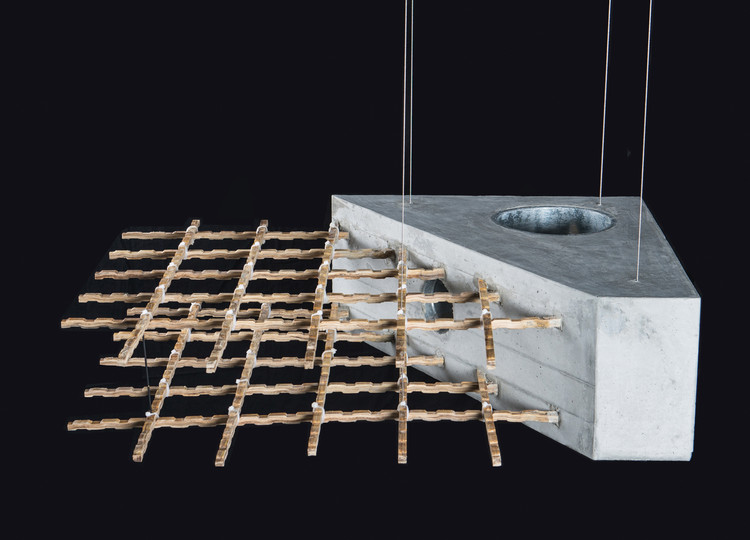
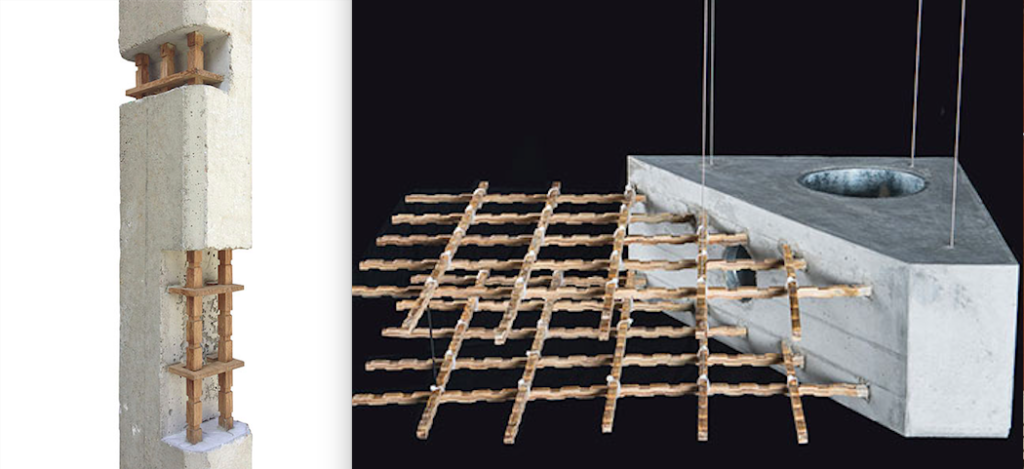
Selection of Bamboo for Reinforced Concrete Construction
Selection of bamboo for reinforcement can be done based on these factors
Color and Age – Employ bamboo having an evident brown color. This shows the age of bamboo to be at least 3 years.
Diameter – Use the one with long large culms.
Harvesting – Try to avoid those bamboos that are cut either during spring or summer seasons.
Species – Among 1500 species of bamboo, the best one must checked, tested to satisfy the requirement as a reinforcing material.

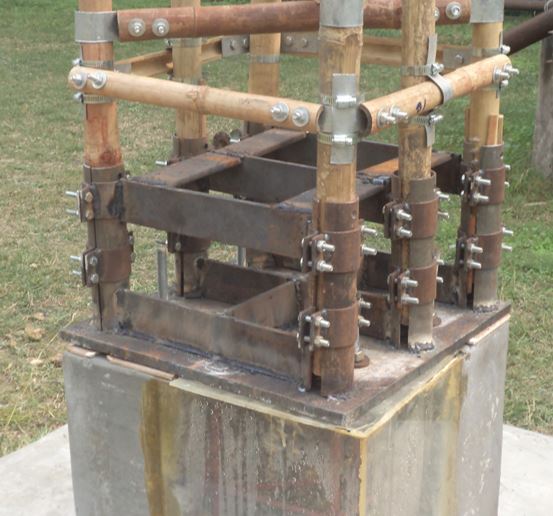
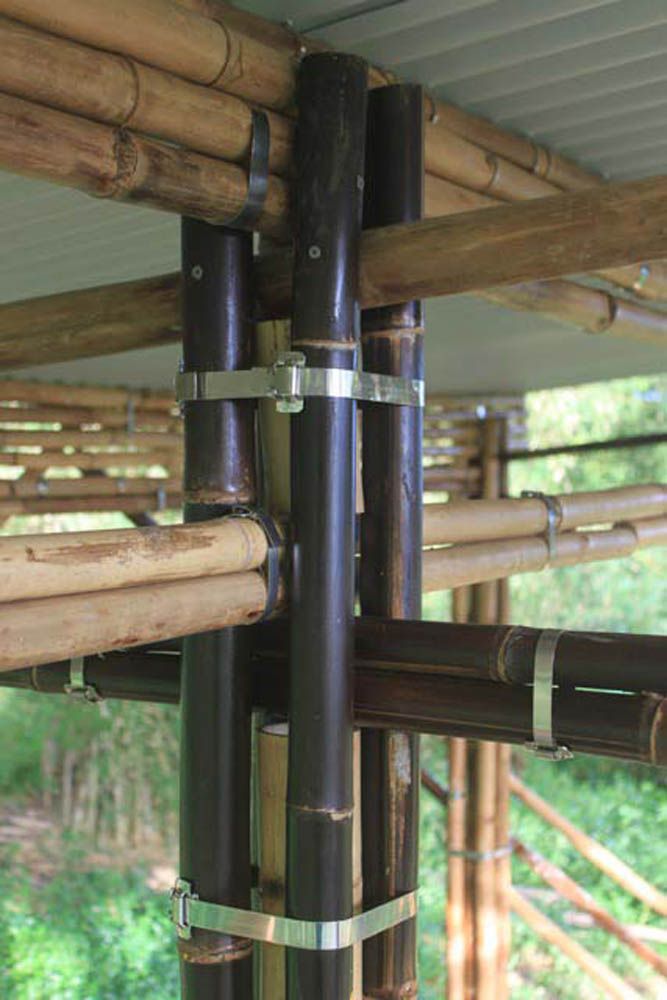
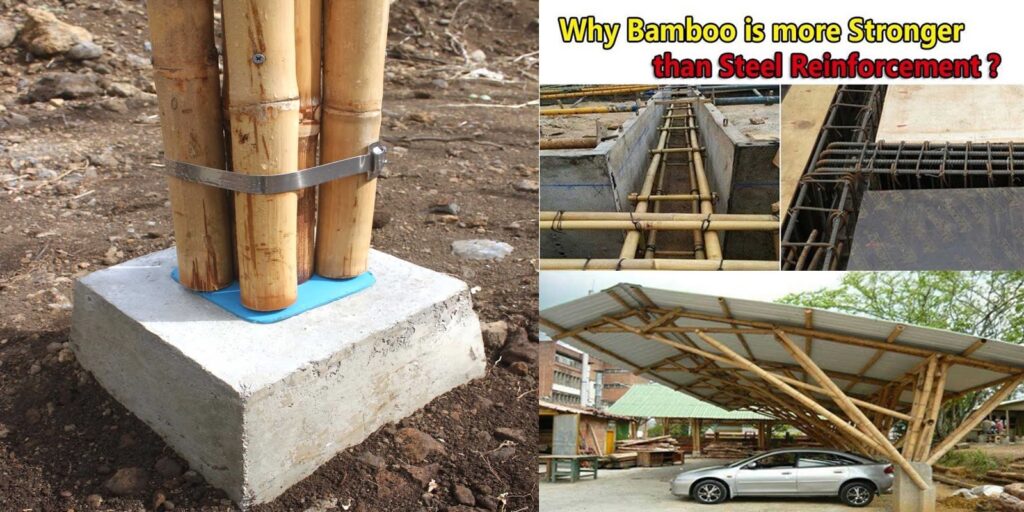
Bamboo has quite a high tensile strength. It is comparable with steel. Apart from this, bamboo has an impermeable protective layer on the outer side, which protects it from rotting due to water, which is a major problem for almost all organic material.
Now in civil engineering, many people are using bamboo in place of steel for reinforcement, but bamboo is an excellent choice for reinforcement in concrete because of its higher strength as compared to steel by weight, the tensile strength Bamboo’s tensile strength is roughly 28,000 per square inch versus steel’s 23,000. Bamboo is stronger more than 6 times of steel reinforcement, On comparison, the energy needed to produce steel is almost 50 times that of this natural product.
Use of Bamboo and Its Strength In tensile load application, results shown by bamboo are exciting because the ratio of tensile strength to the specific weight of bamboo is six times greater than STEEL.