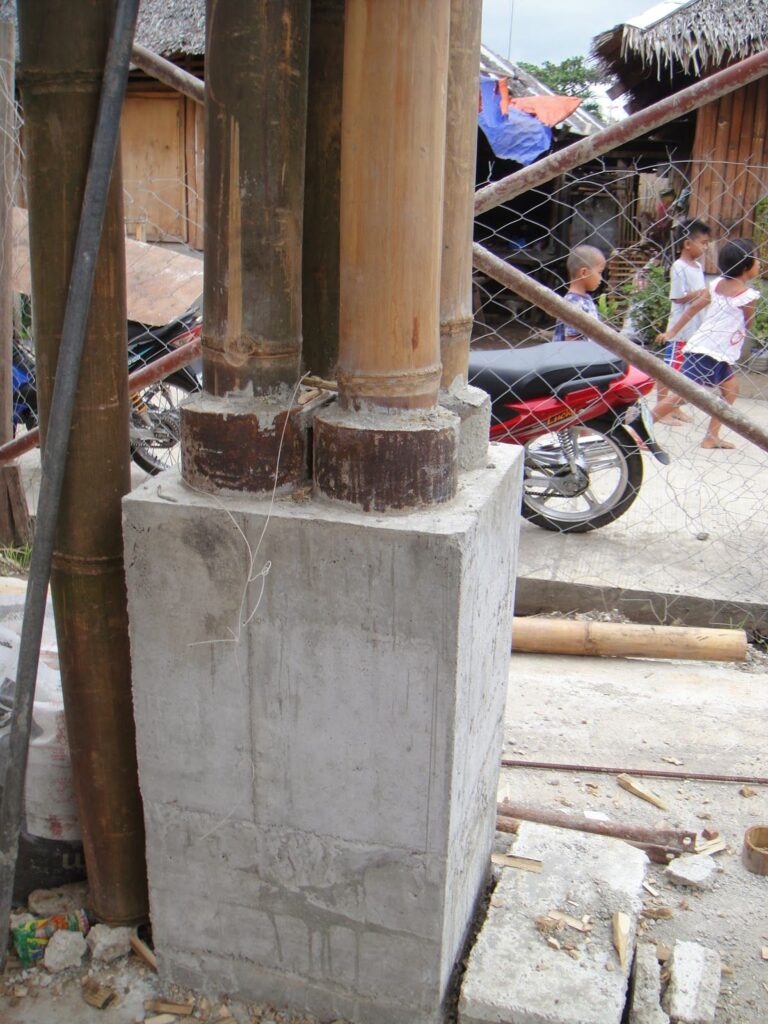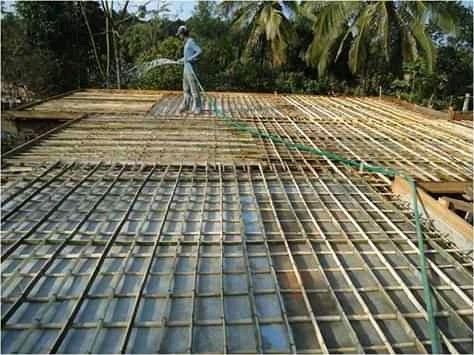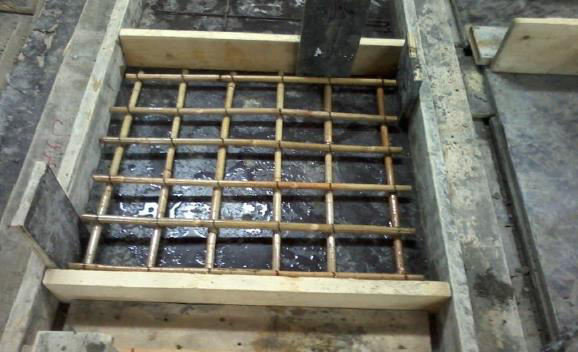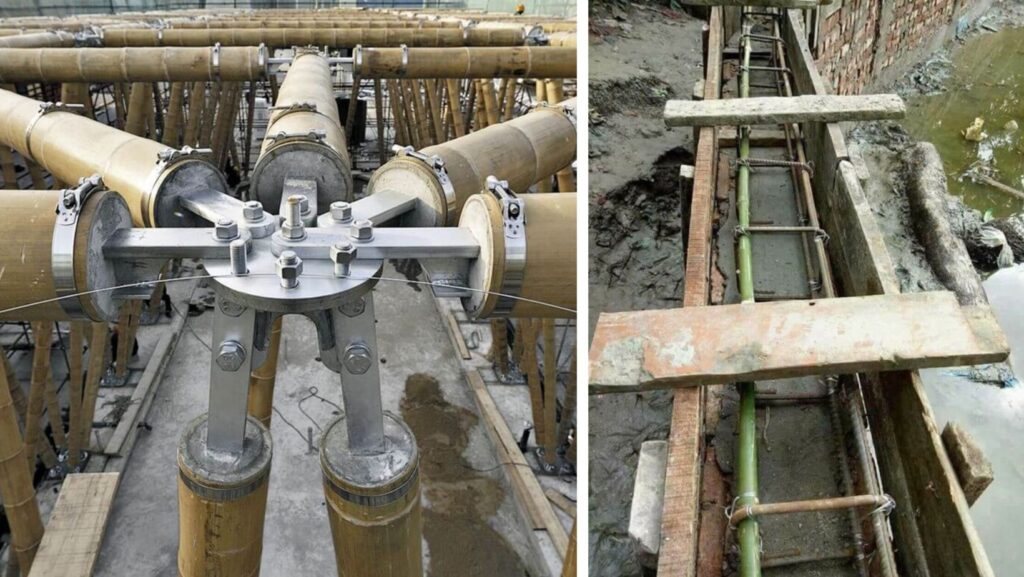
Bamboo has quite a high tensile strength. It is comparable with steel. Apart from this, bamboo has an impermeable protective layer on the outer side which protects it from rotting due to water, which is a major problem for almost all organic material.
#1.

#2.
Bamboo has quite a high tensile strength. It is comparable with steel. Apart from this, bamboo has an impermeable protective layer on the outer side which protects it from rotting due to water, which is a major problem for almost all organic material.
#1.
#2.
#3.
#4.
#5.
In tensile load application, results shown by bamboo are exciting because the ratio of tensile strength to the specific weight of bamboo is six times greater than steel.
#6.

#7.
#8.
#9.
#10.
#11.

#12.
#13.
#14.
#15.
#16.
#17.
#18.
#19. 
#20.
#21.
#22.
#23.
#24.
#25.
#26.
#27.
#28.
#29.
#30.
#31.
#31.
#33.
#36. 
What do you think? Comment and share your friends!
]]>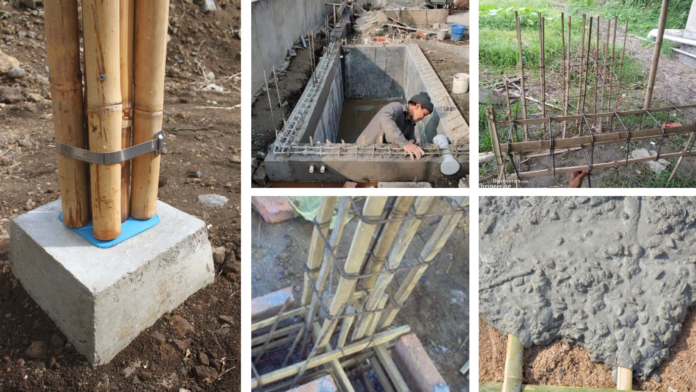
More Than 15 Photos Of Using Bamboo As Reinforcement In Building Construction
#1

#2

#3

#4

#5

#6

#7

#8

#9

#10

#11

#12

#13

#14

#15

#16

#17

#18

#19

#20

#21

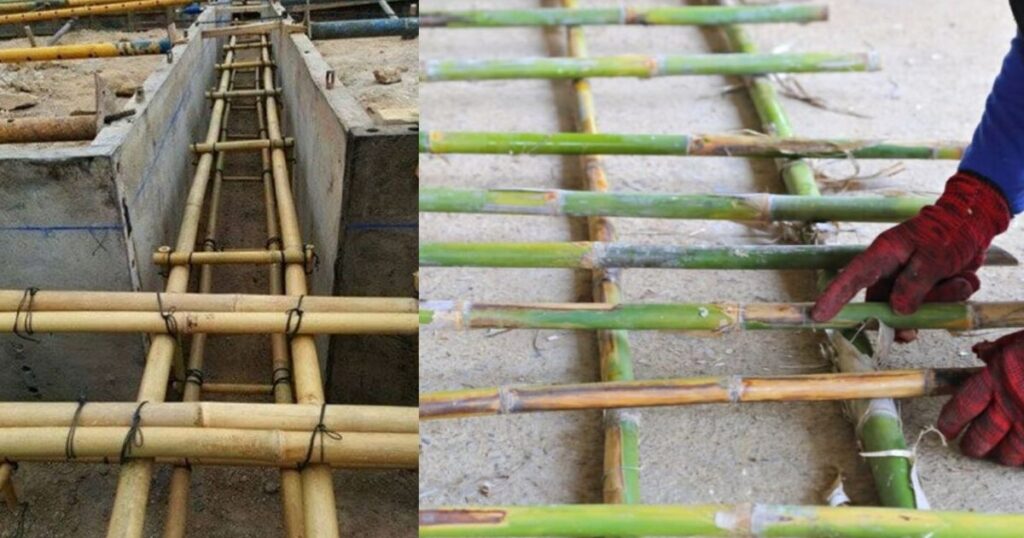
The steel as a reinforcing material is a demand that is increasing day by day in most of the developing countries. There is situations when the production is not found enough to face the demand for steel.
Hence it is essential to have an alternative that is worth compared to steel. Bamboo is found in abundant, they are resilient and hence these can face the demand as a reinforcing material and become an ideal replacement for steel.
The tensile strength property which is the main requirement of a reinforcing material is seen appreciable for bamboo, compared with other materials including steel. The structure of bamboo from its origin gives this property.
The hollow tubular structure has high resistance against wind forces when it is in natural habitat. Working on the weak points of bamboo and bringing up an innovation of bamboo as a structural steel replacement, would be a great alternative.
Advantages of Bamboo in Reinforcement:
- Bamboo is extremely strong natural fiber.
- It has high tensile strength.
- Due to its hollow structure, it is highly flexible.
- Lightweight compared to steel.
- Low cost and environment-friendly.
- It has great shock absorbing capacity.
Disadvantages of Bamboo in Reinforcement:
The biggest part which discourages the use of bamboo as reinforcement is its disadvantages.
- Less durable than steel, cannot be used in permanent structure.
- Shrinking problems.
- More prone to environmental degradation and insect attack.
- Cannot be used in cold climate.
- It does not have longer life compared to steel.
- Low modulus of elasticity, poor adherence to concrete mix.
- Due to lower modulus of elasticity, it can crack and deflect more than steel reinforcement.
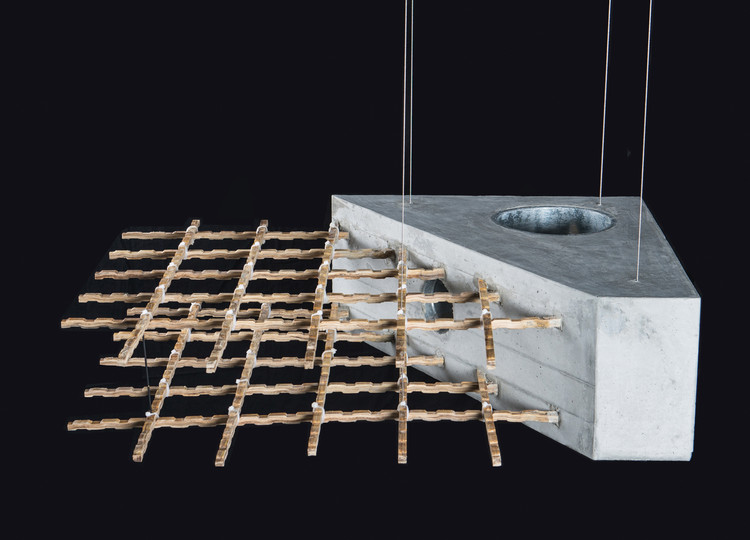
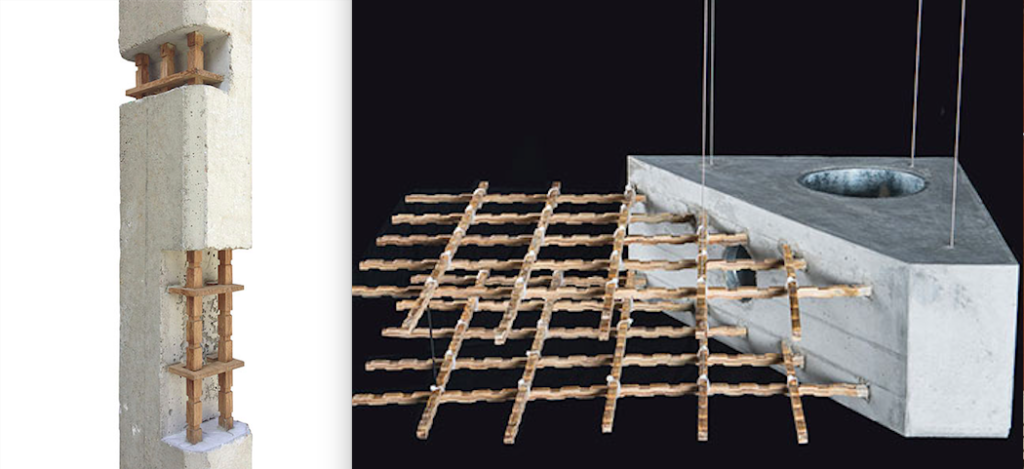
Selection of Bamboo for Reinforced Concrete Construction
Selection of bamboo for reinforcement can be done based on these factors
Color and Age – Employ bamboo having an evident brown color. This shows the age of bamboo to be at least 3 years.
Diameter – Use the one with long large culms.
Harvesting – Try to avoid those bamboos that are cut either during spring or summer seasons.
Species – Among 1500 species of bamboo, the best one must checked, tested to satisfy the requirement as a reinforcing material.
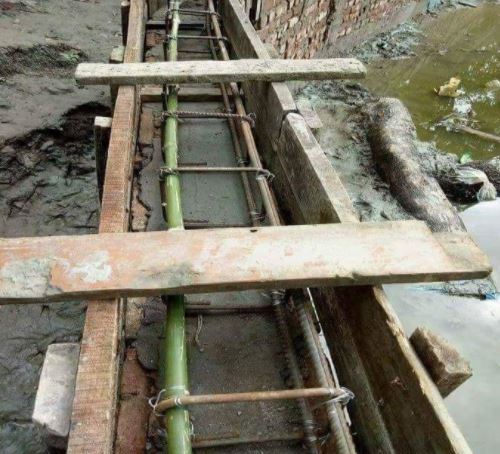
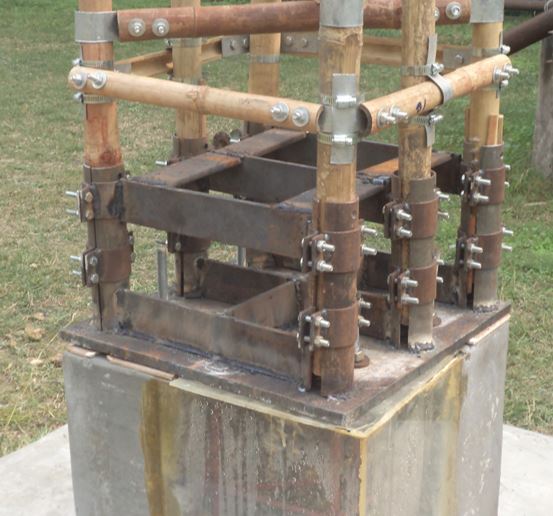
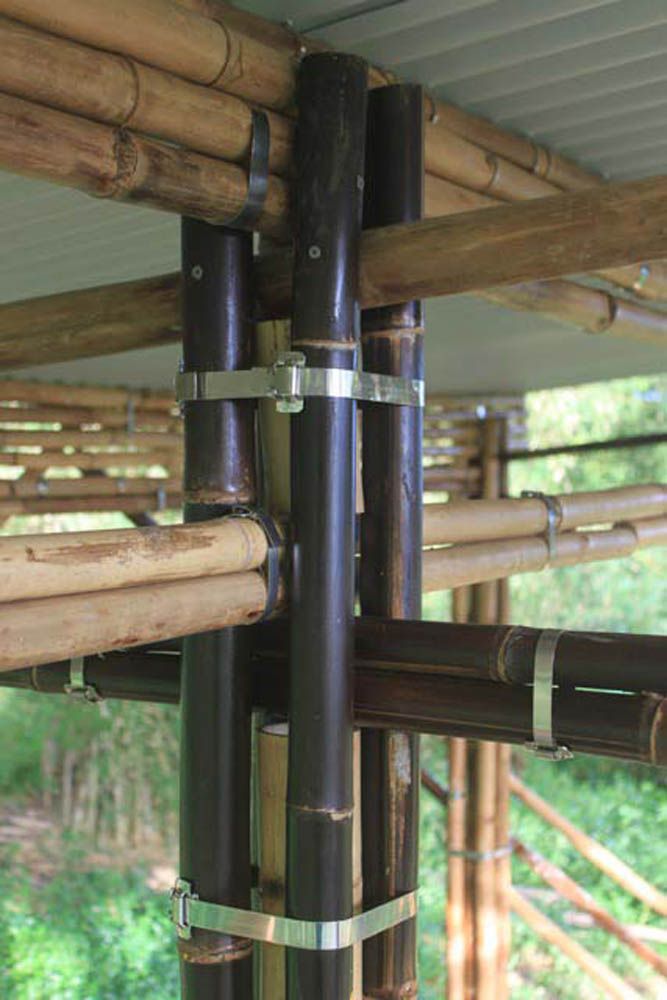
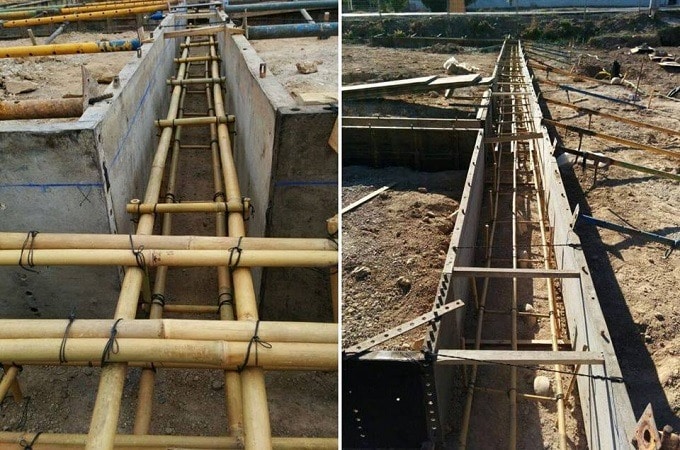
Introduction
- Bamboo has been used as a construction material in certain area for centuries. A study of bamboo is used as a reinforcement in precast concrete elements was carried out in U.S. Army Engineer Waterway experiment station in 1964.
- Bamboo was given recent consideration for use as reinforcement in soil cement pavement slabs in which the slabs behave in elastically even under light loads.
- Bamboo is characterized as a bio degradable, renewable and an energy efficient natural resource.
- It is an environmentally sustainable building material.
- Bamboo can be used as an alternative material in reinforcement of concrete.
Characteristics of Bamboo Reinforced Concrete
- Bamboo can prevent pollution.
- The specific gravity of bamboo varies between 0.4 to 0.5
- The strength of bamboo is greater than most of the timber products.
- Bamboo is giant grass not a tree.
- The ratio of tensile strength to specific weight of the bamboo is about 6 times that of steel.
- The density of fibers in cross-section of a bamboo shell varies with thickness as well as height.
- Bamboo is more prone to insect attack than other trees and grasses.
Selection of Bamboo
- Use only bamboo showing a pronounced brown color. This will insure that the plant is at least three years old.
- Do not use whole culms of green, unseasoned bamboo.
- Avoid bamboo cut in spring or early summer. These culms are generally weaker due to increased fiber moisture content.
- Select the longest large diameter culms available.
Preparation
- Sizing
- Splitting
- Seasoning
- Bending
- Waterproof coating
Concrete Mix Proportions
- The same mix designs can be used as would normally be used with steel reinforced concrete.
- Excess water causes swelling of the bamboo.
- Concrete slump should not as low as workability will allow.
- High-early strength cement is preferred to minimize cracks caused by swelling of bamboo when seasoned bamboo cannot be waterproofed.
Bamboo as an Engineering material
- Durability
- Effect of water absorption
- Bonding strength
Comparison of Steel and Bamboo
- The strength of bamboo is greater than steel.
- Increases the strength of the buildings.
- Bamboo can crack and deflect more than steel reinforcement.
- Bamboo is easily accessible.
- Bamboo lowers the cost of construction.
Placement of Bamboo
- Bamboo reinforcement should not be placed less than 1.5 inches from the face of the concrete surface.
- The clear spacing between bamboo rods or splints should be less than the maximum size aggregate plus ¼ inch.
- The ties can be made with vegetation strips.
- Spacing of the stirrups should not exceed 6 inches.
- Reinforcement should be evenly spaced and lashed together on short sticks placed at right angles to the main reinforcement.
Effect of water absorption
- The main shortcomings of bamboo is its property of water absorption.
- The dimensional variation of untreated bamboo due to water absorption can cause micro or even macro cracks in cured concrete.
- This can be controlled by treating the bamboo.
Advantages of Reinforced Bamboo Concrete
- Low cost construction.
- It is eco friendly as it absorbs NO2 in water and CO2 in air.
- Bamboo is easily accessible.
- It withstands 7.8 Richter of seismic attack.
Conclusion
- It is a boon for light weight and temporary buildings.
- The environmental and financial comparison demonstrates that bamboo can compete as a building material.
- Furthermore bamboo can play a role a finishing material.
- Bamboo is a natural product and will therefore always have some extent of irregularity.
- Bamboo can play a role as a non-supporting or finishing material.