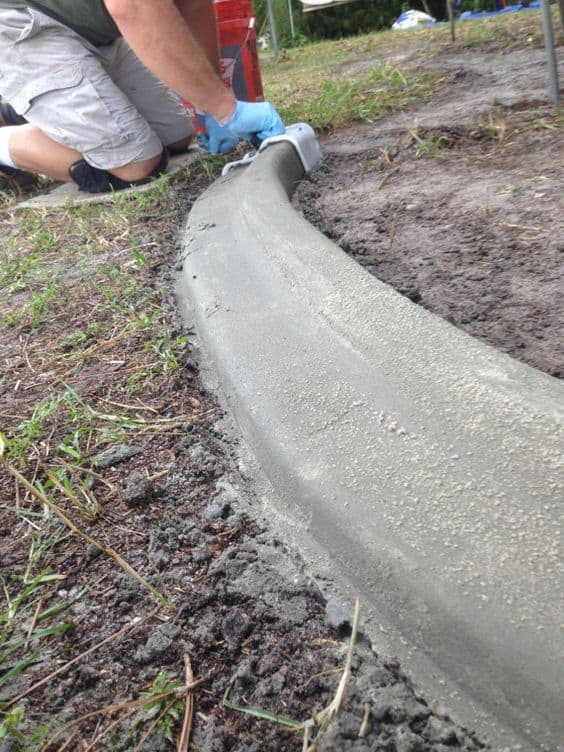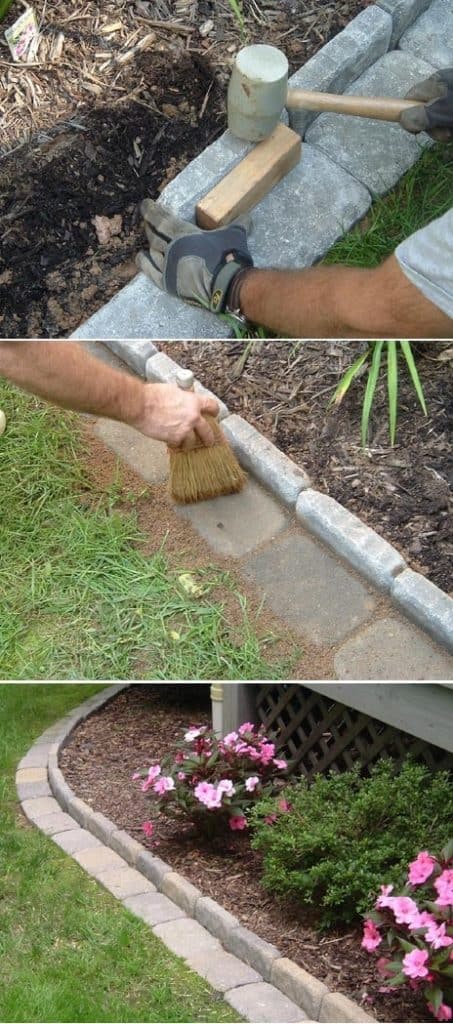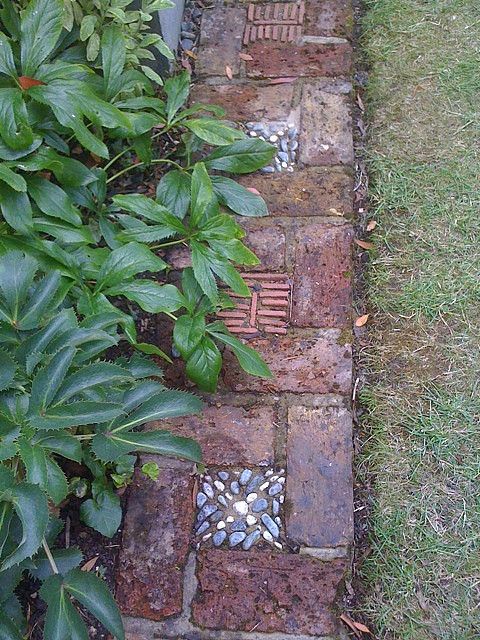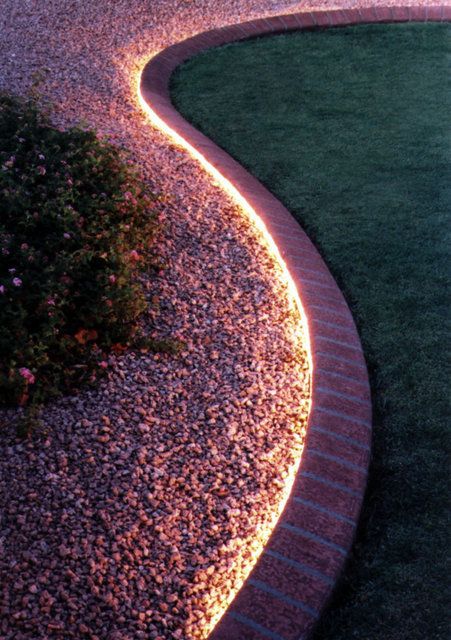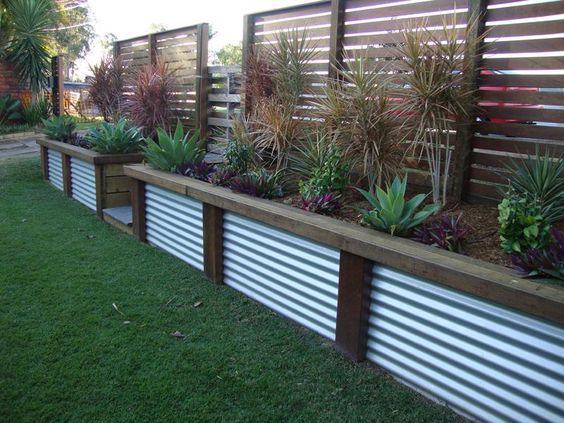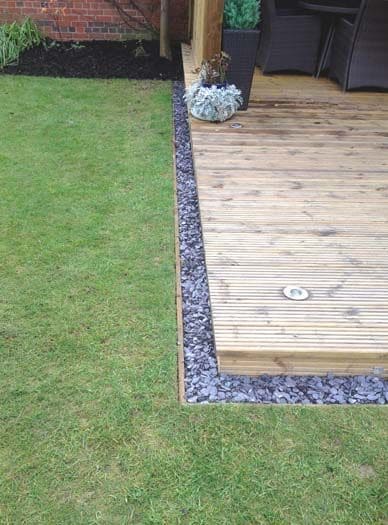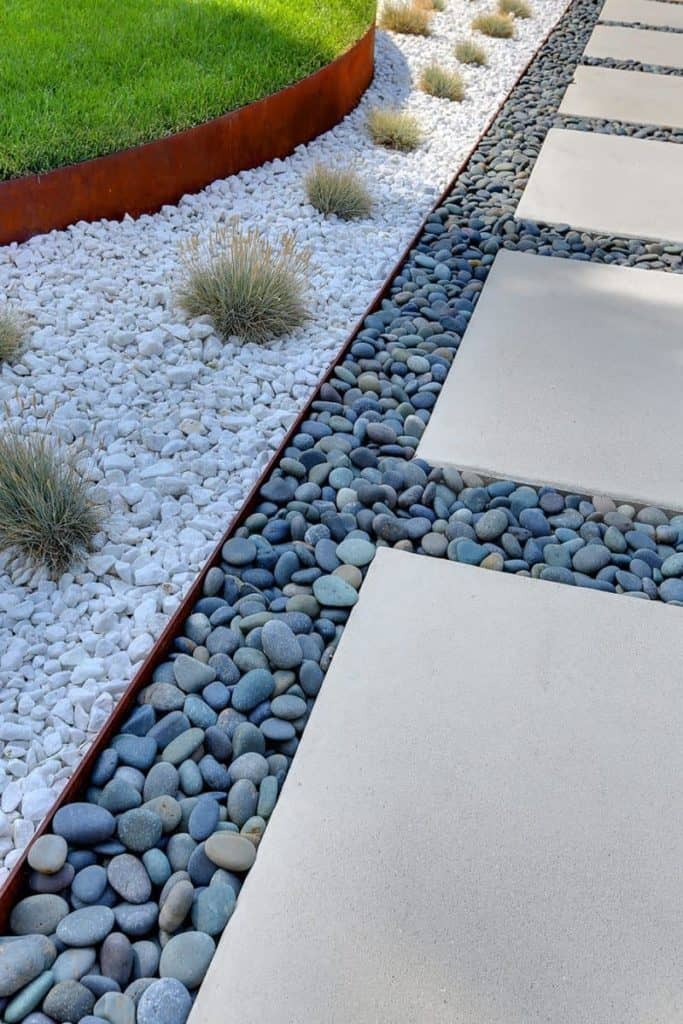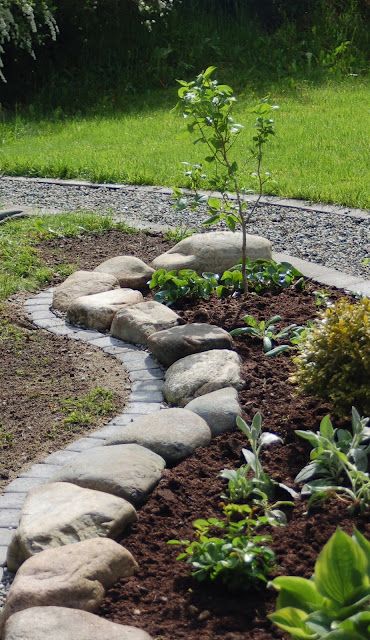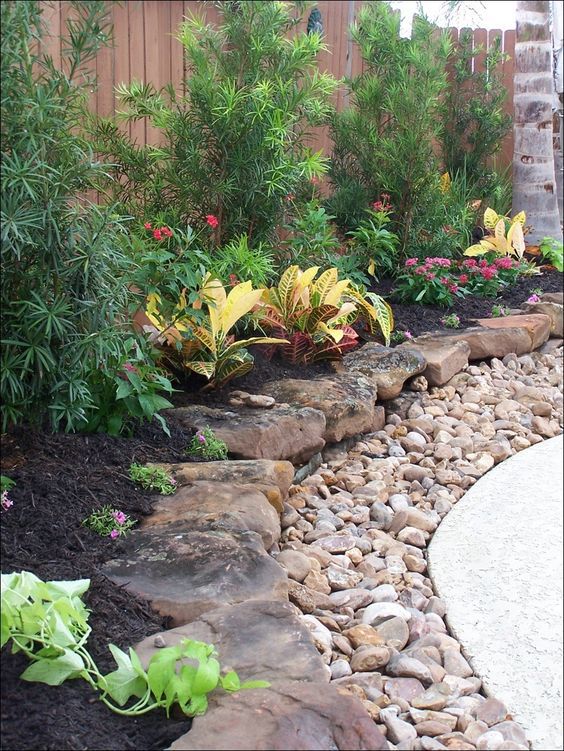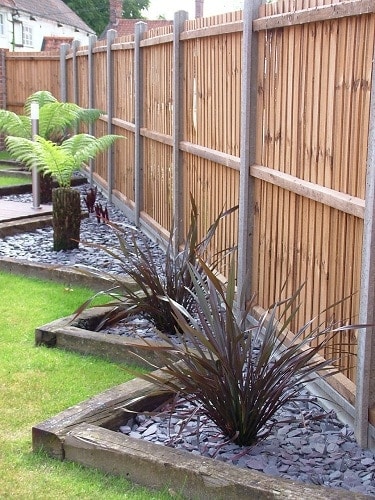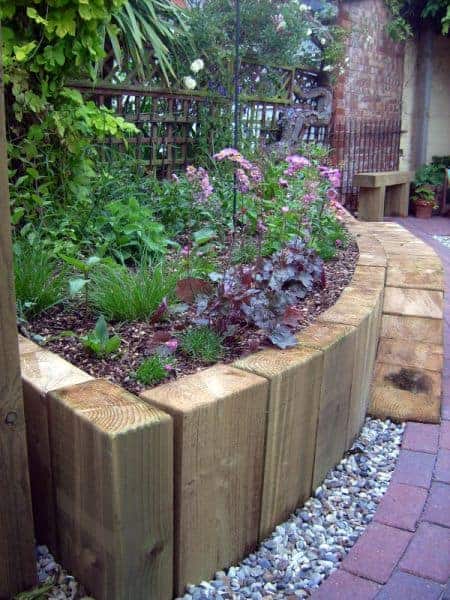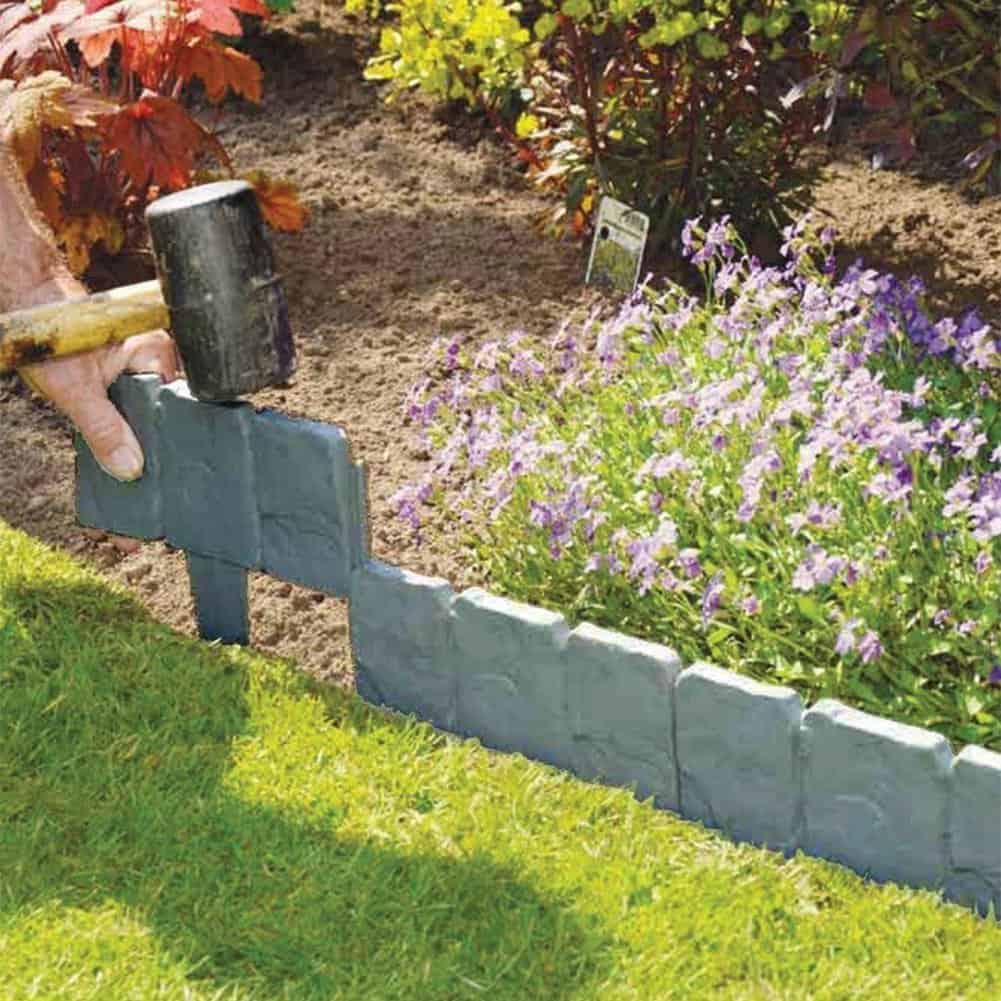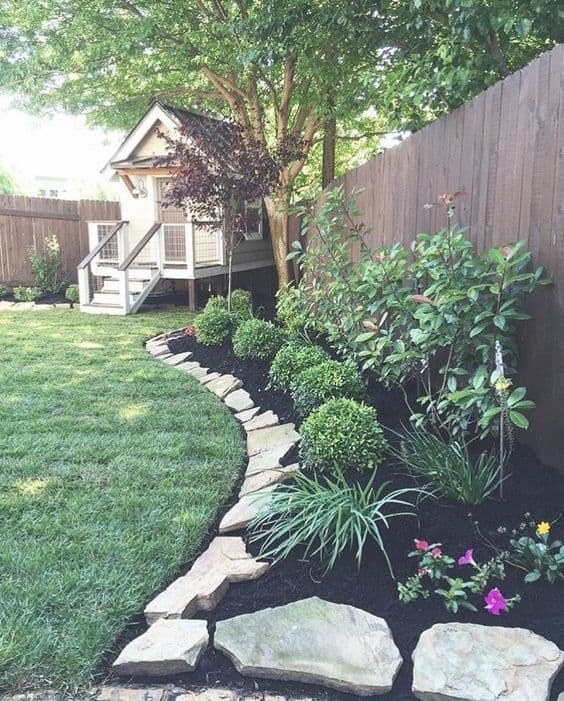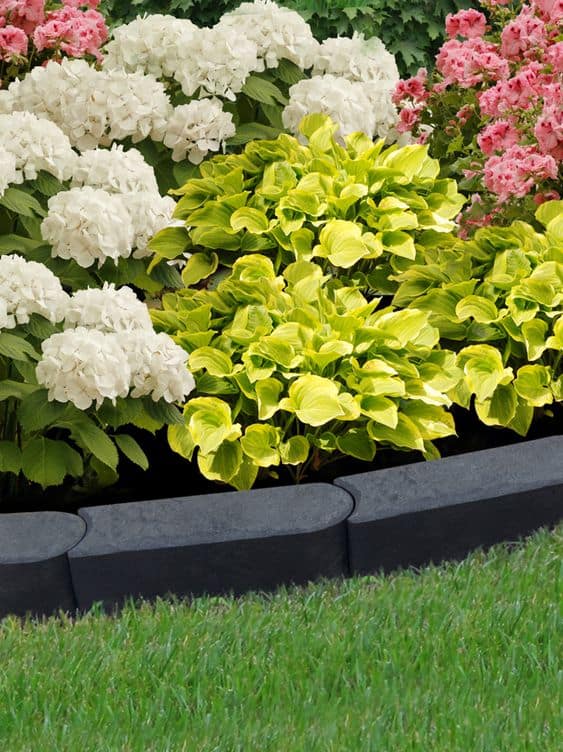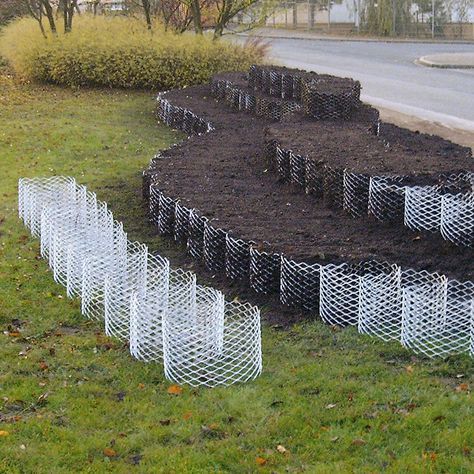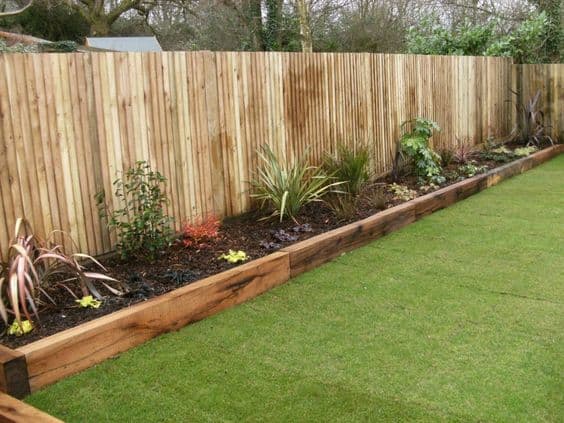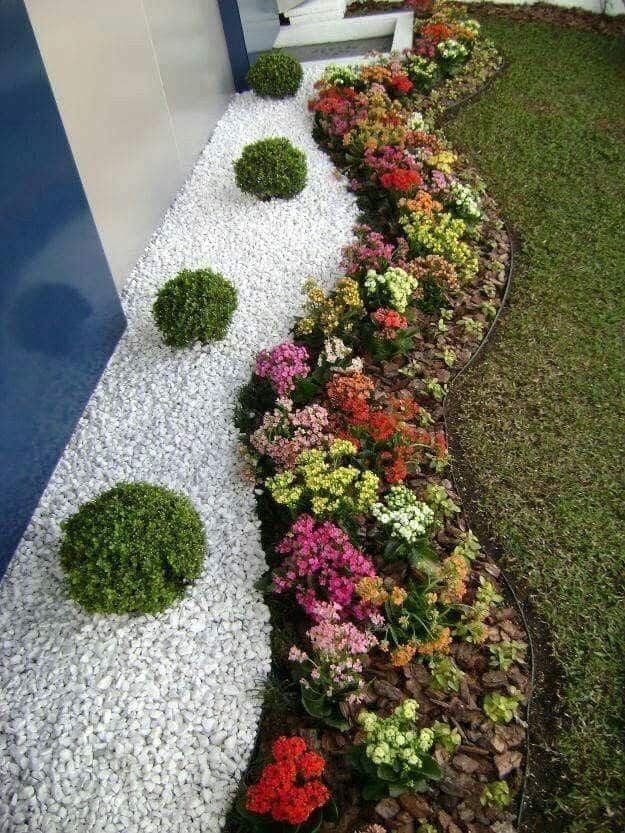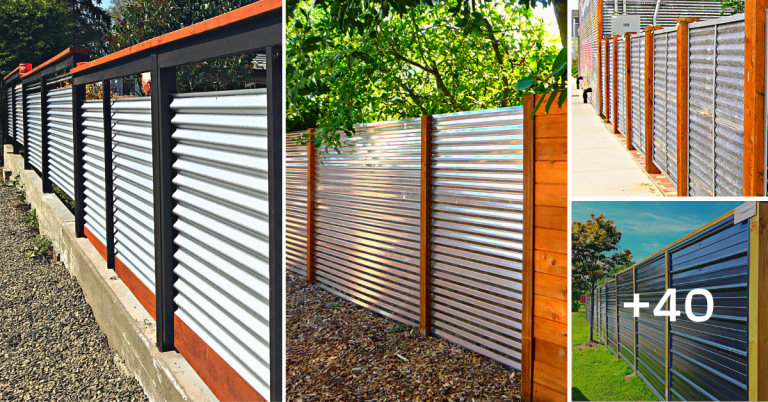
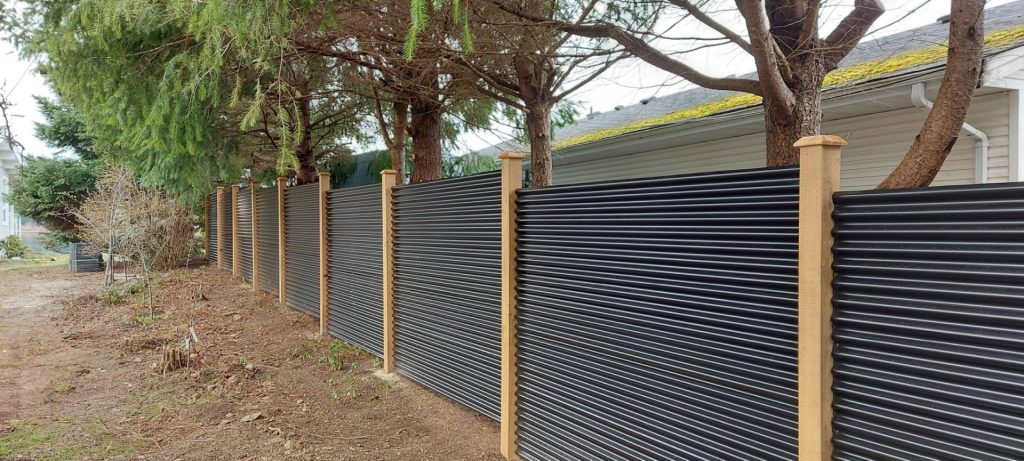
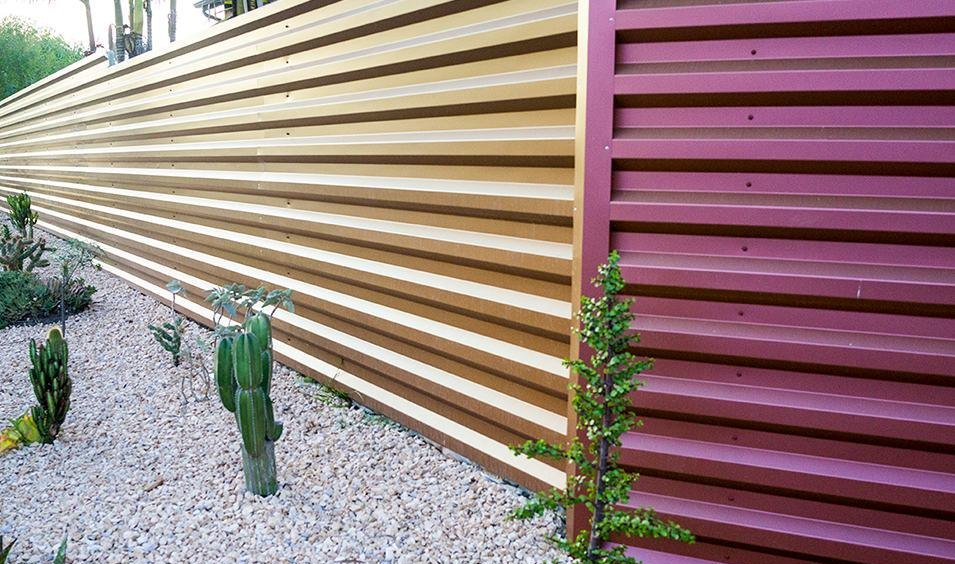
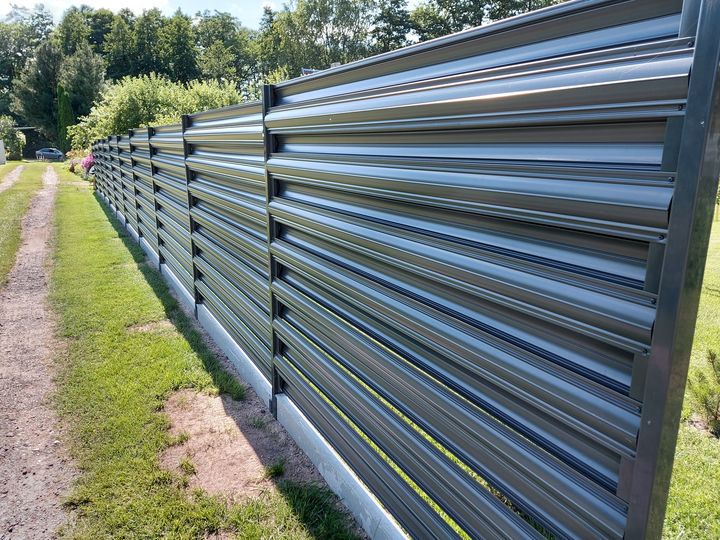
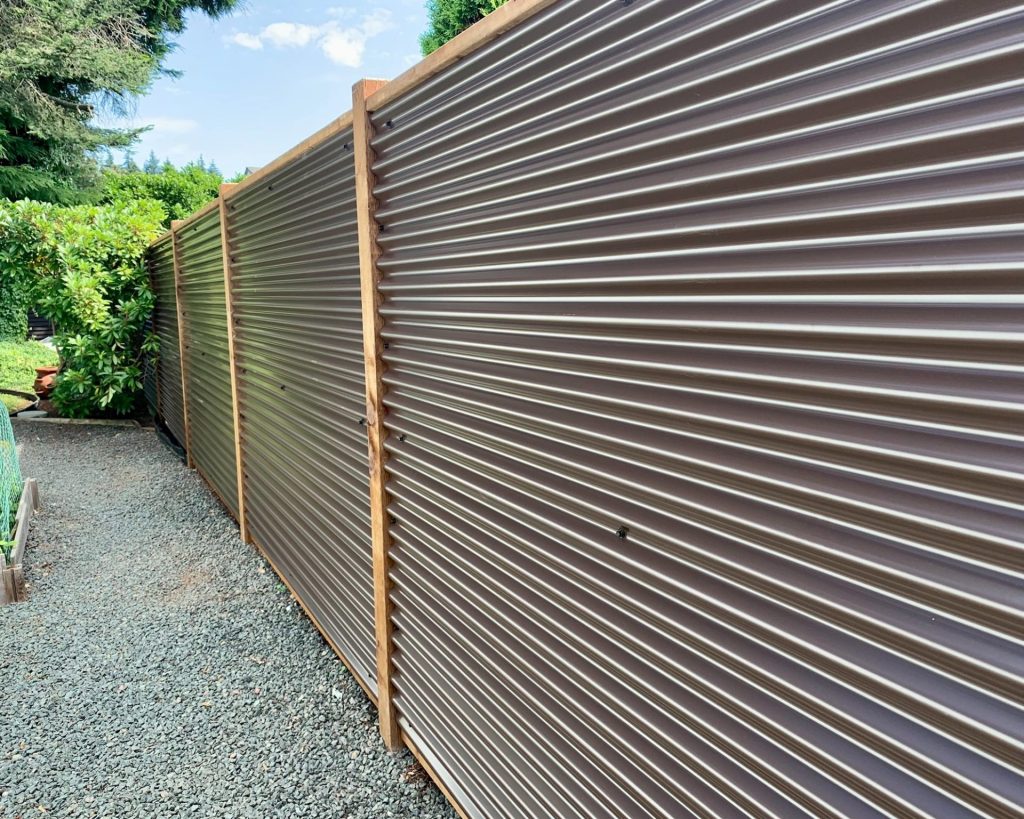
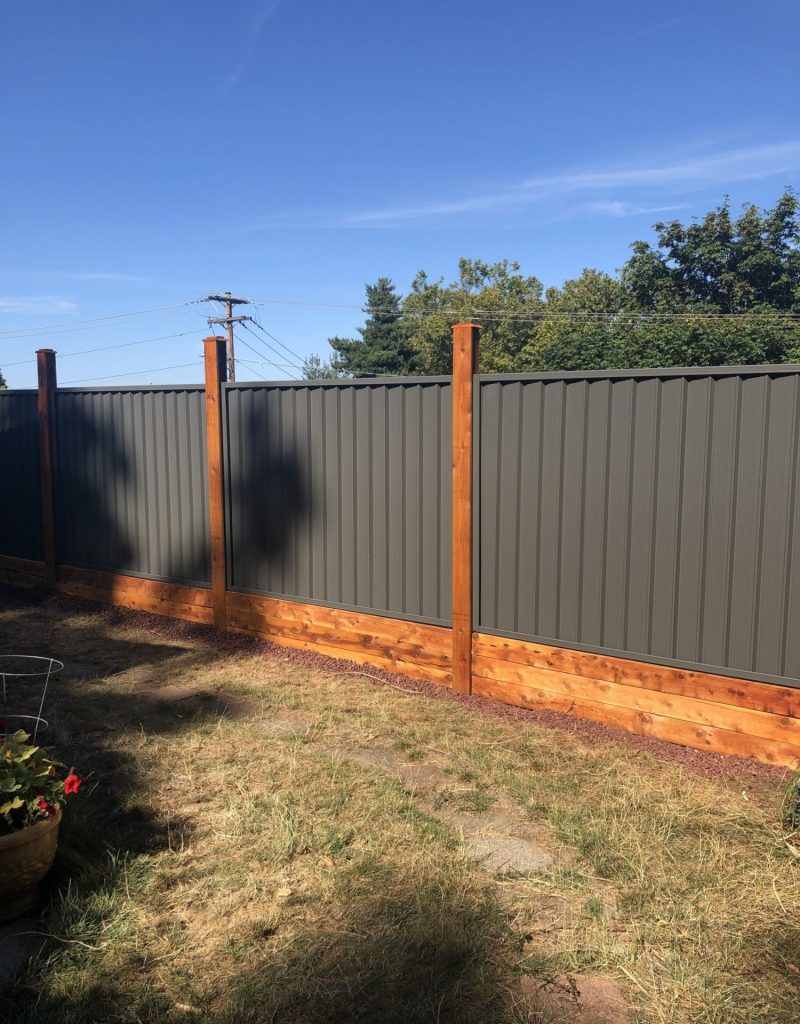
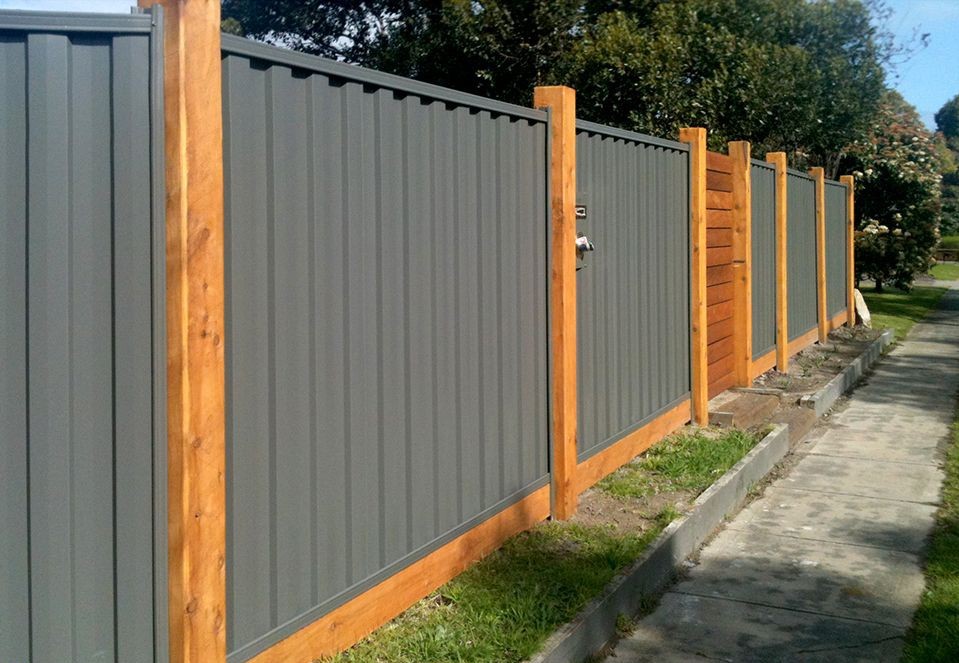
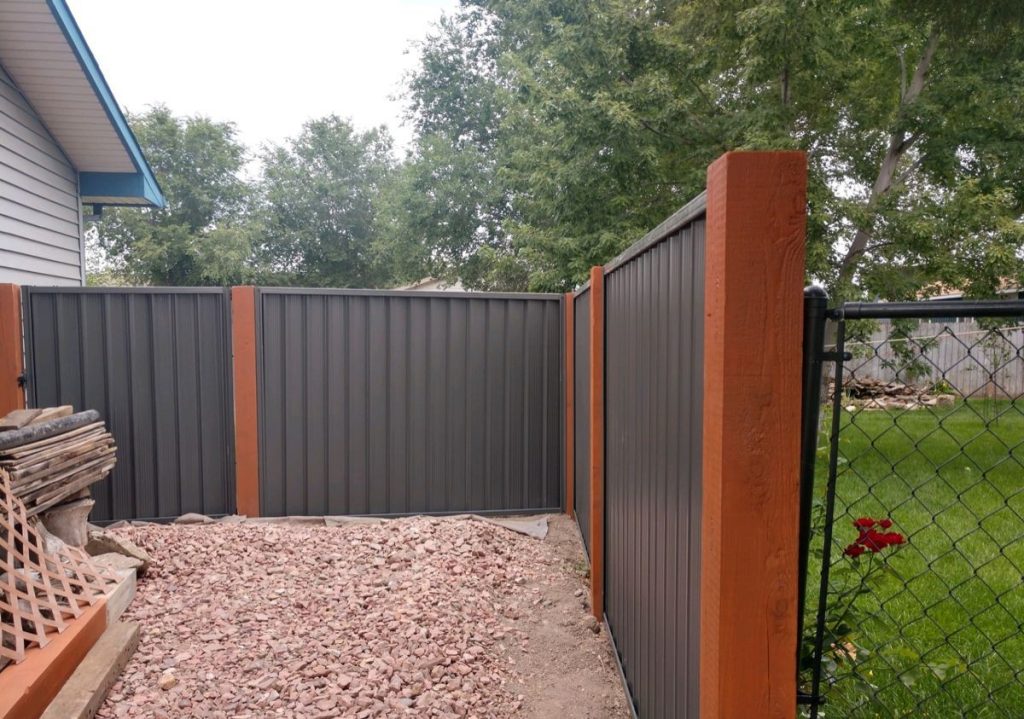
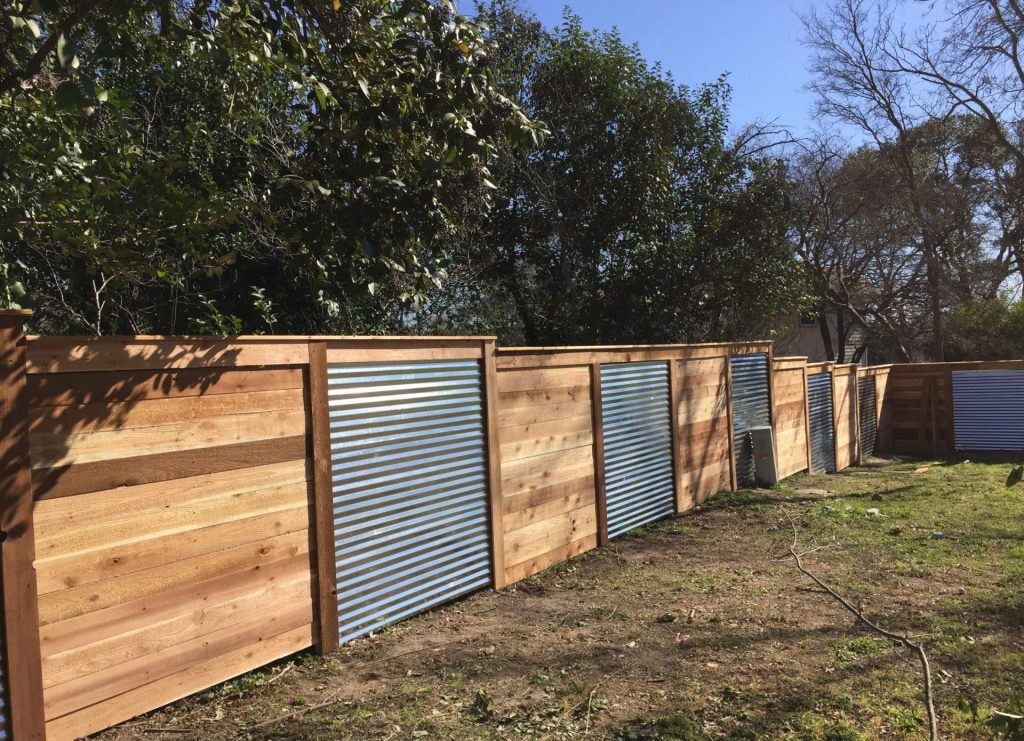
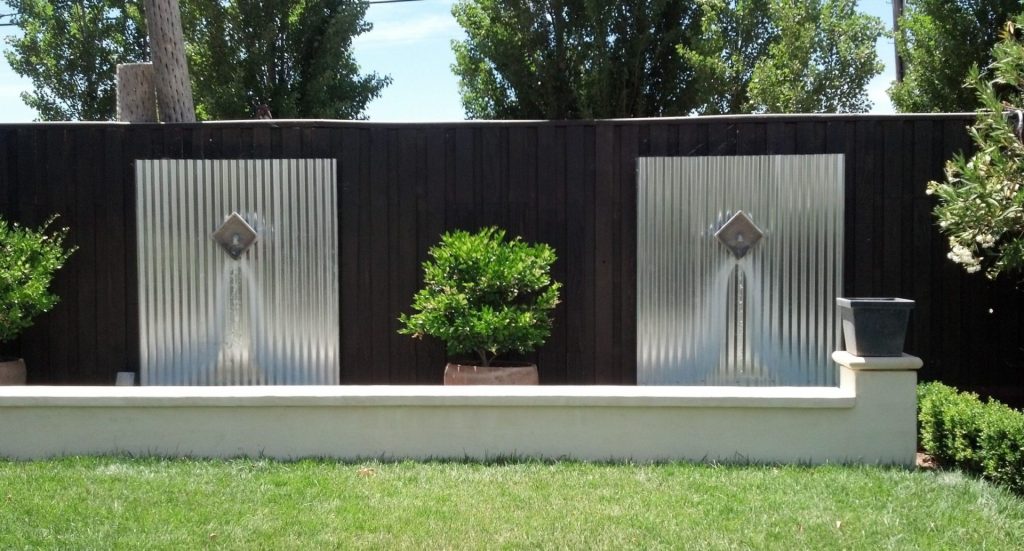
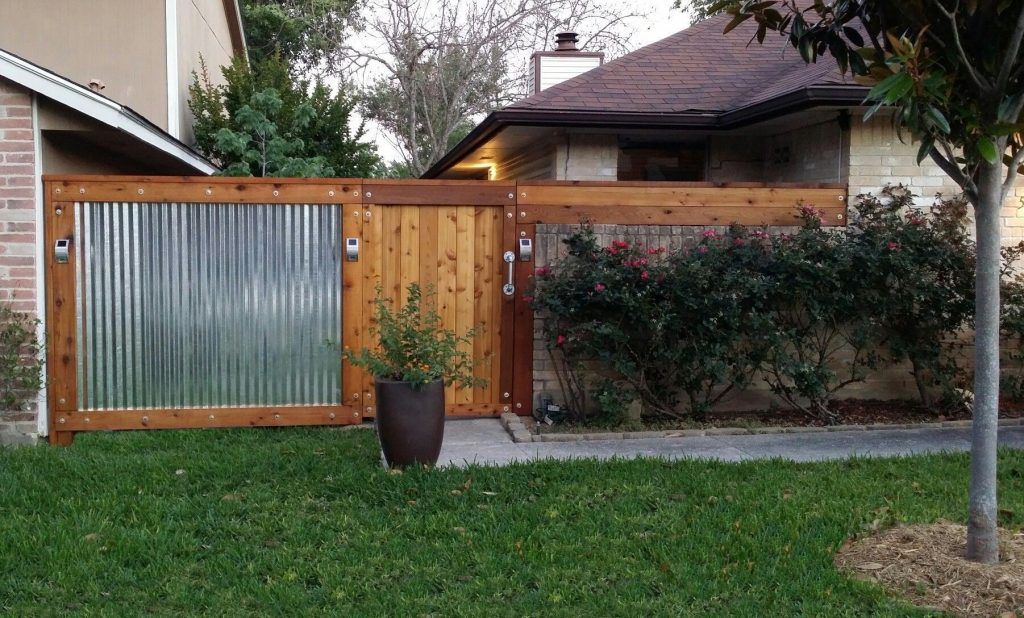
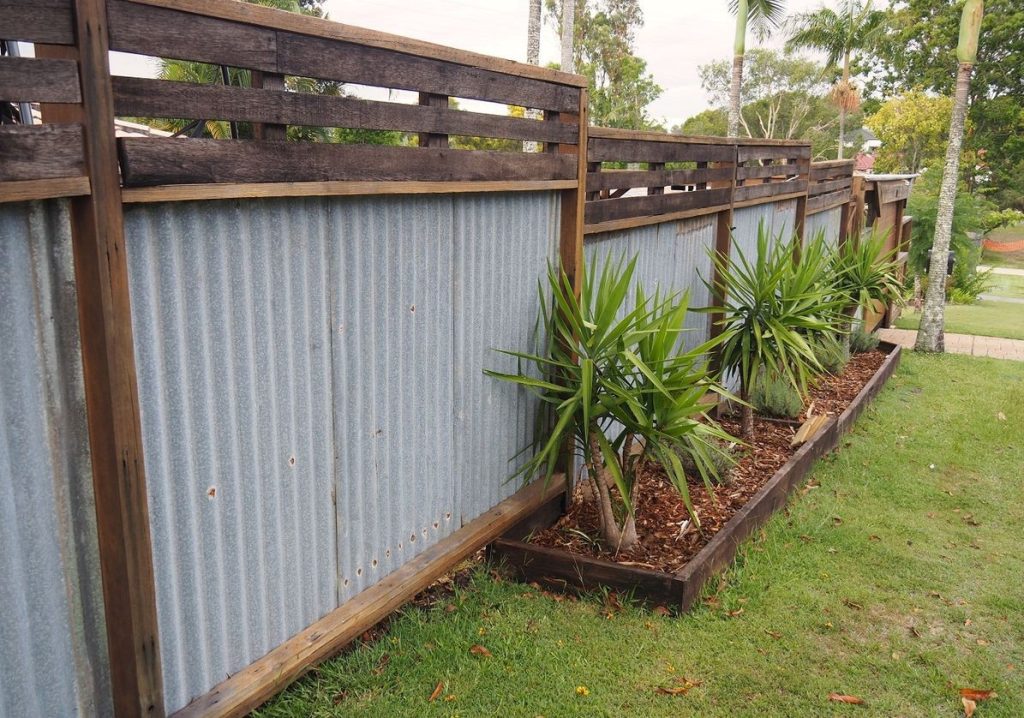
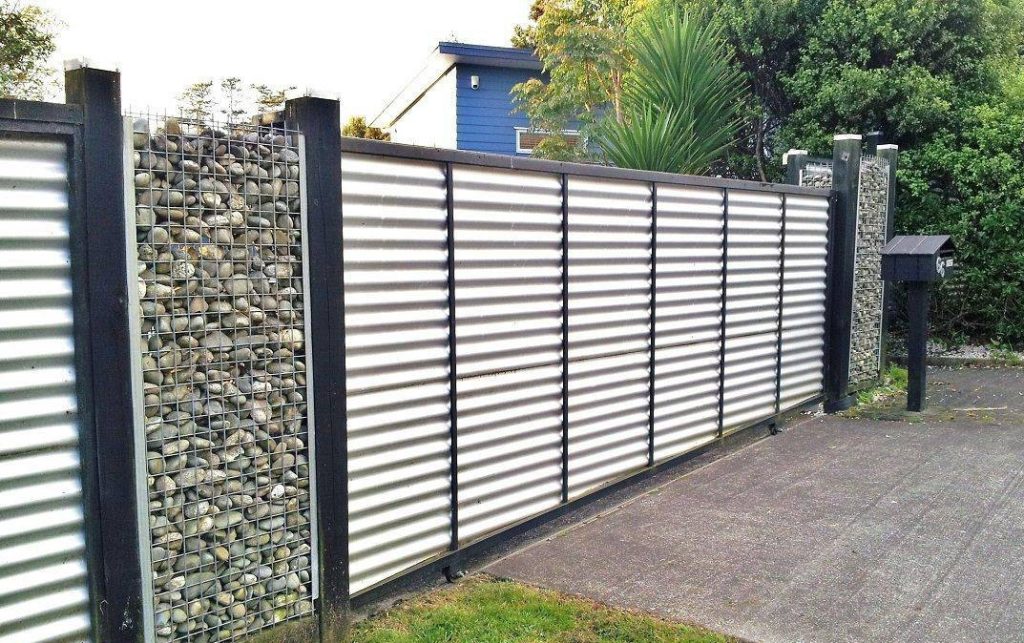
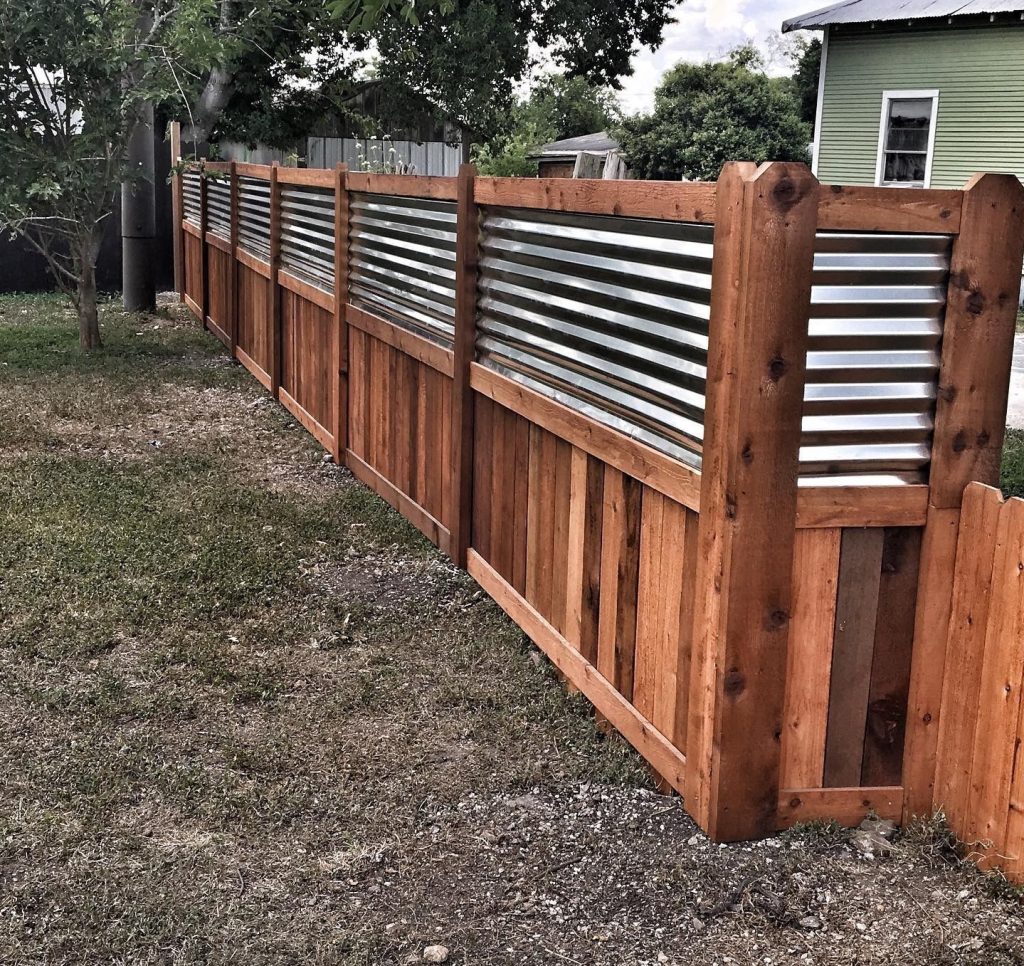
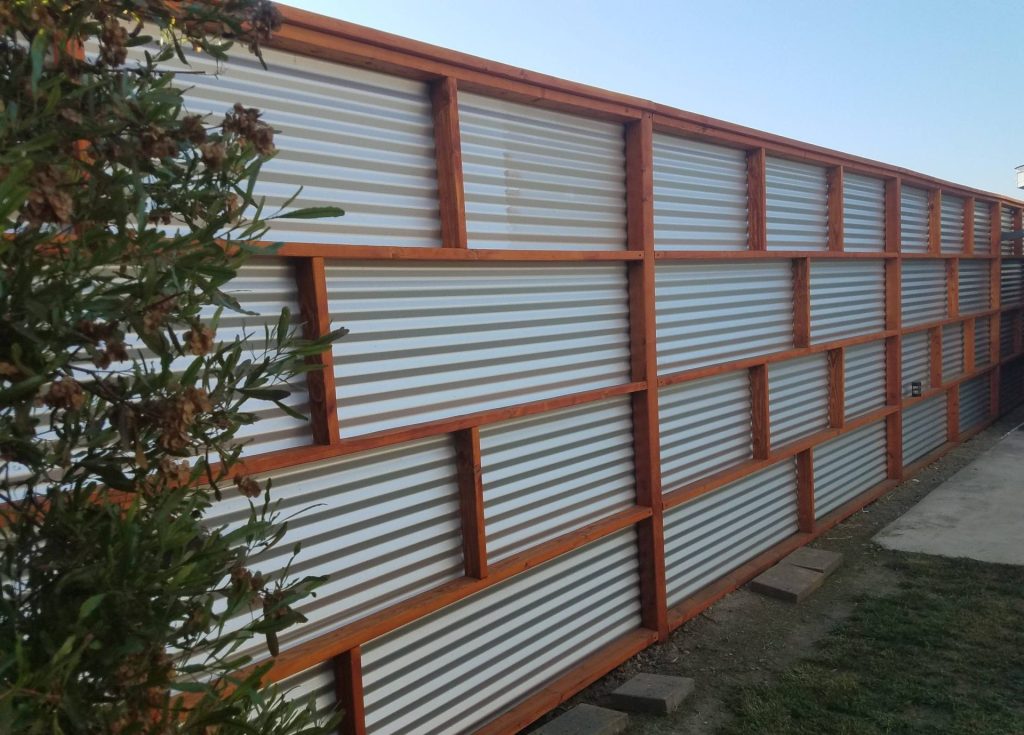
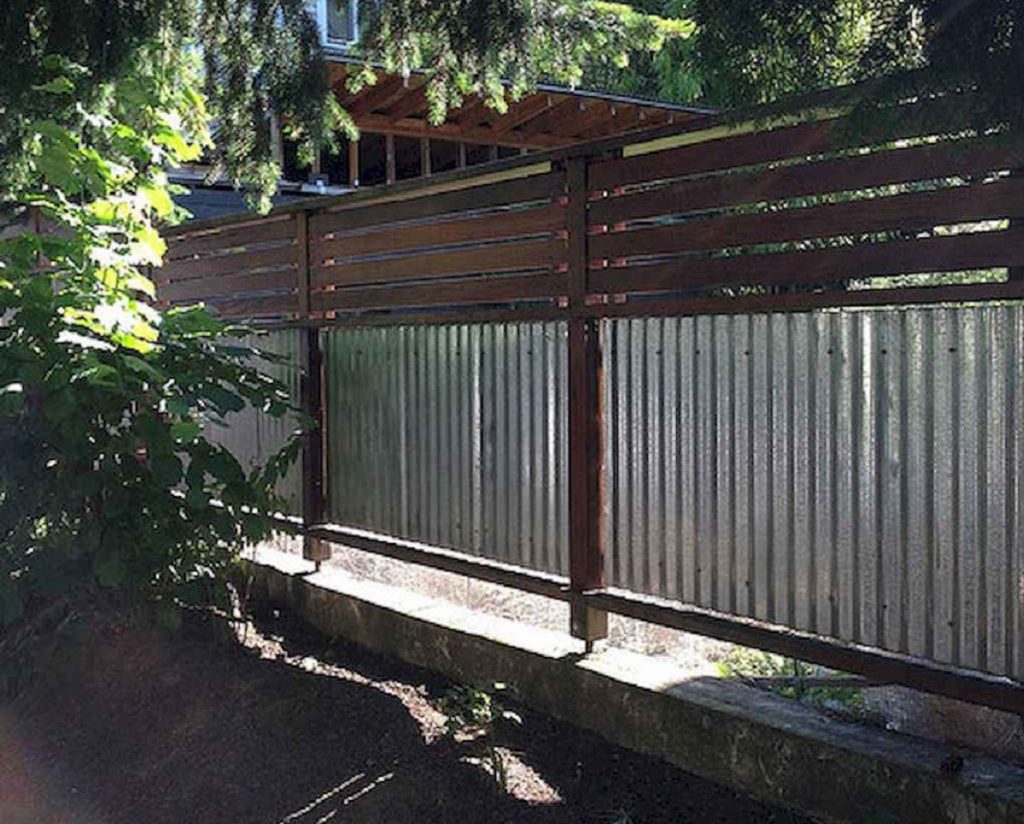
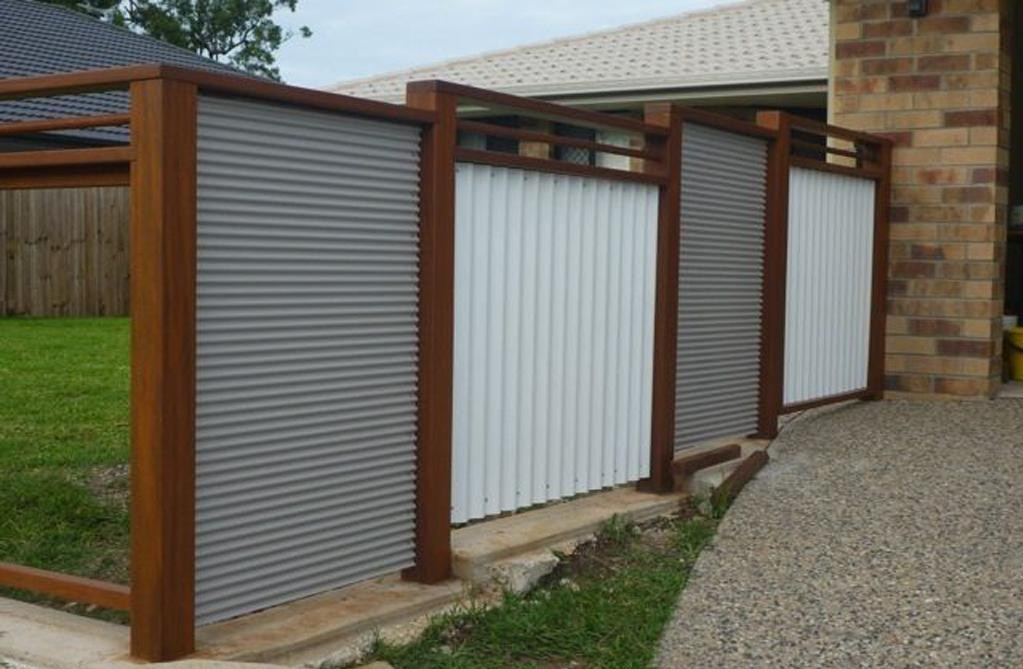
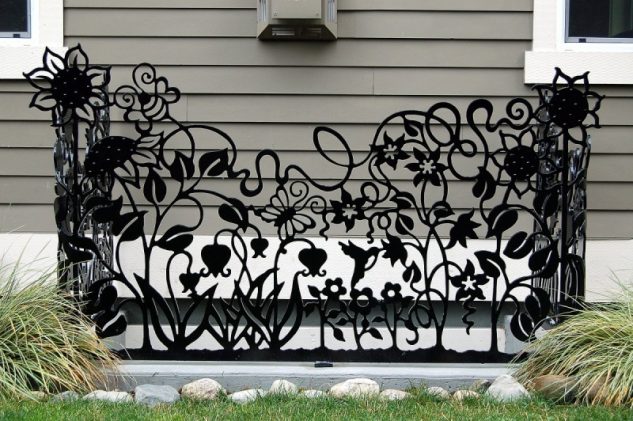
Adding decorative corrugated accents to the landscape of your home or office can be a fun and inexpensive way to update an outdoor space. With a large selection of colors and finishes, corrugated metal can complement almost any design.

You can use corrugated metal in a bright color to frame your patio or bare metal next to brightly colored walls to offset the color.
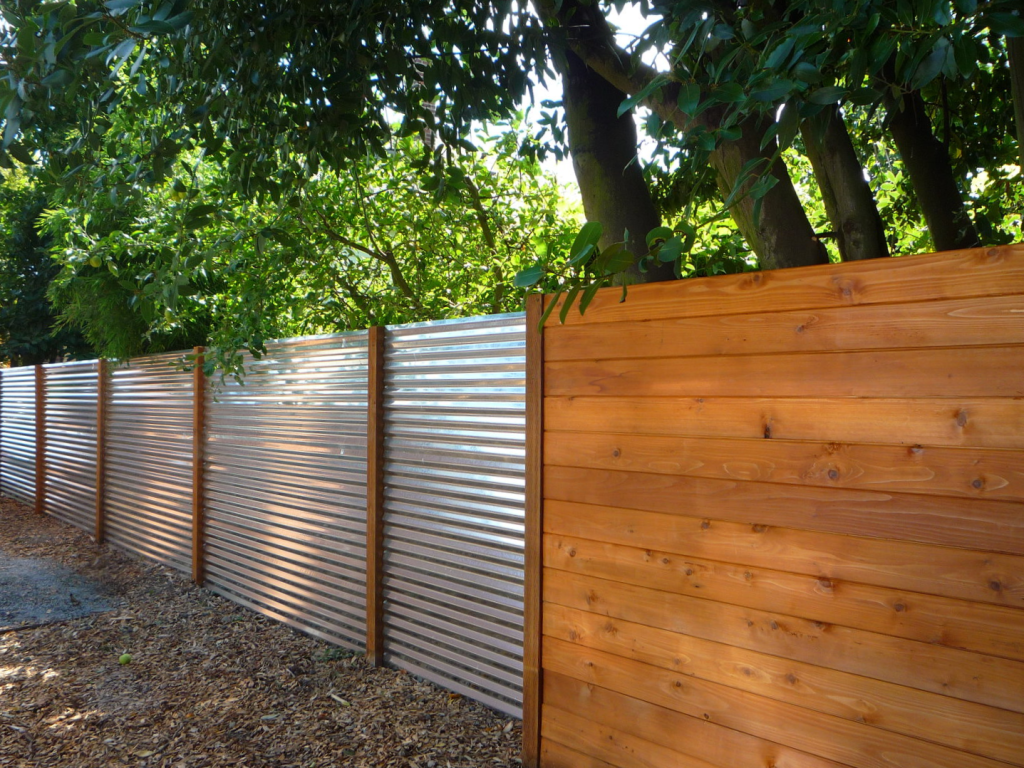
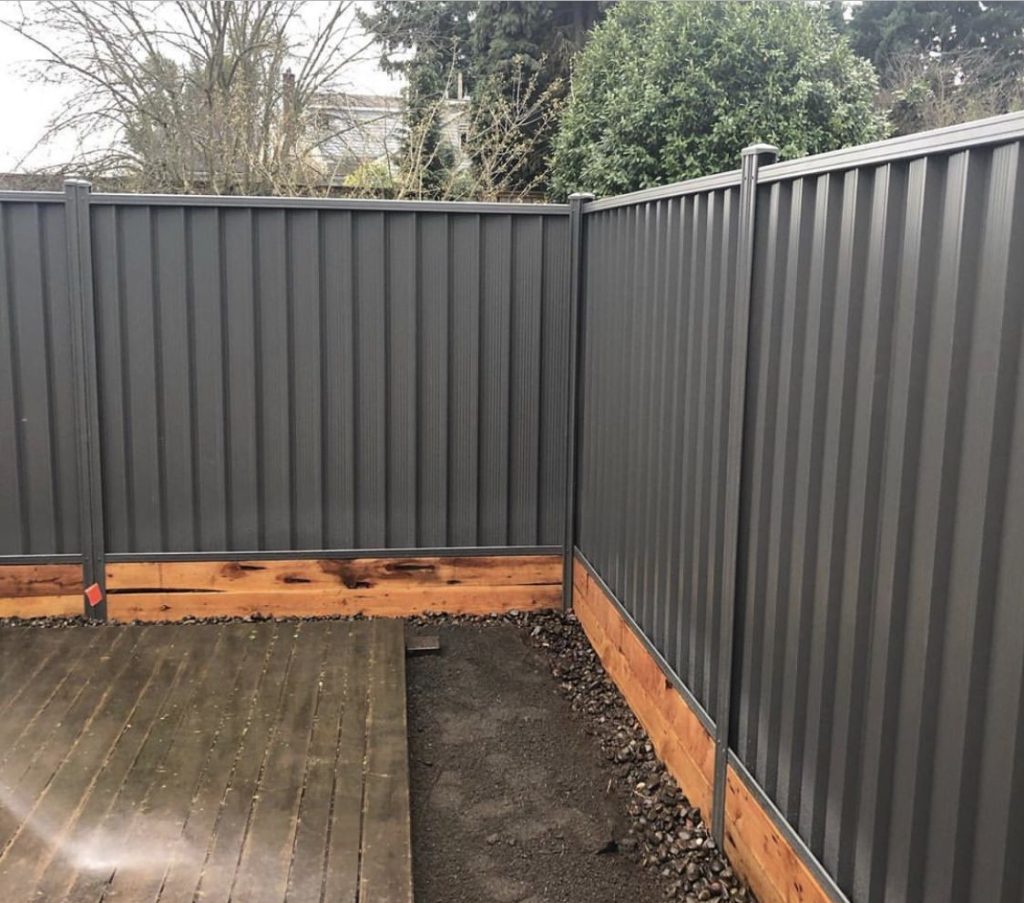
For those of you with small critters, running a piece of corrugated along the bottom of the fence may help Spot from escaping again. The possibilities are almost endless with how to use decorative fencing.

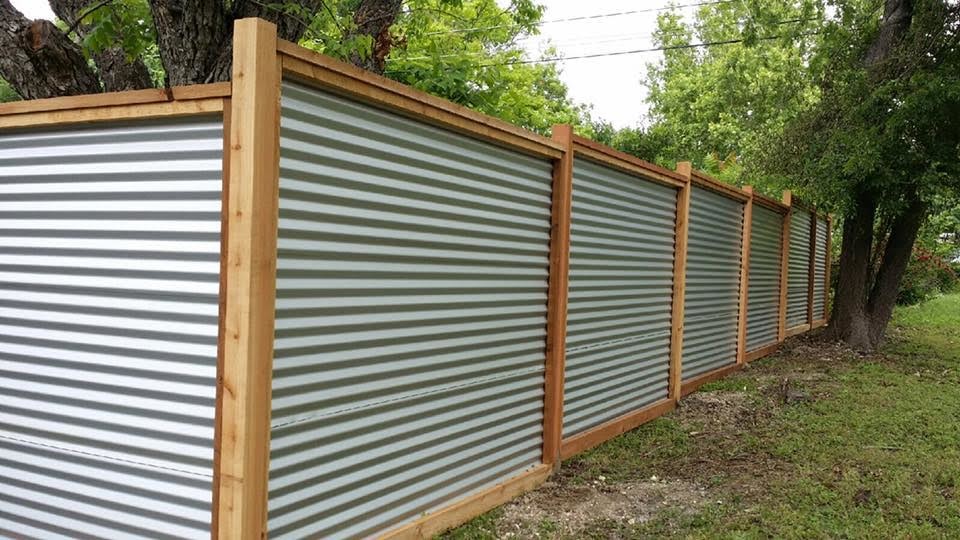
Corrugated panels are a great way to protect your property and livestock from harsh weather and high winds.
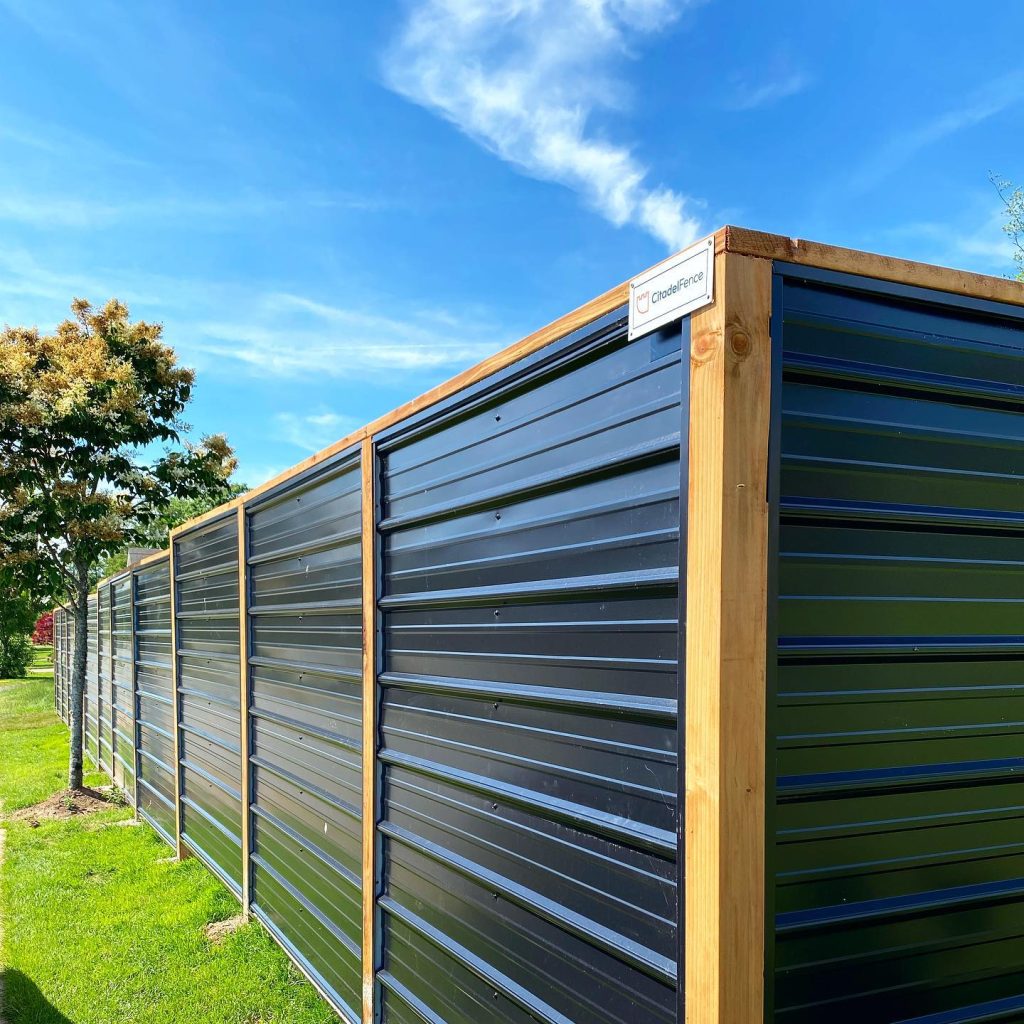
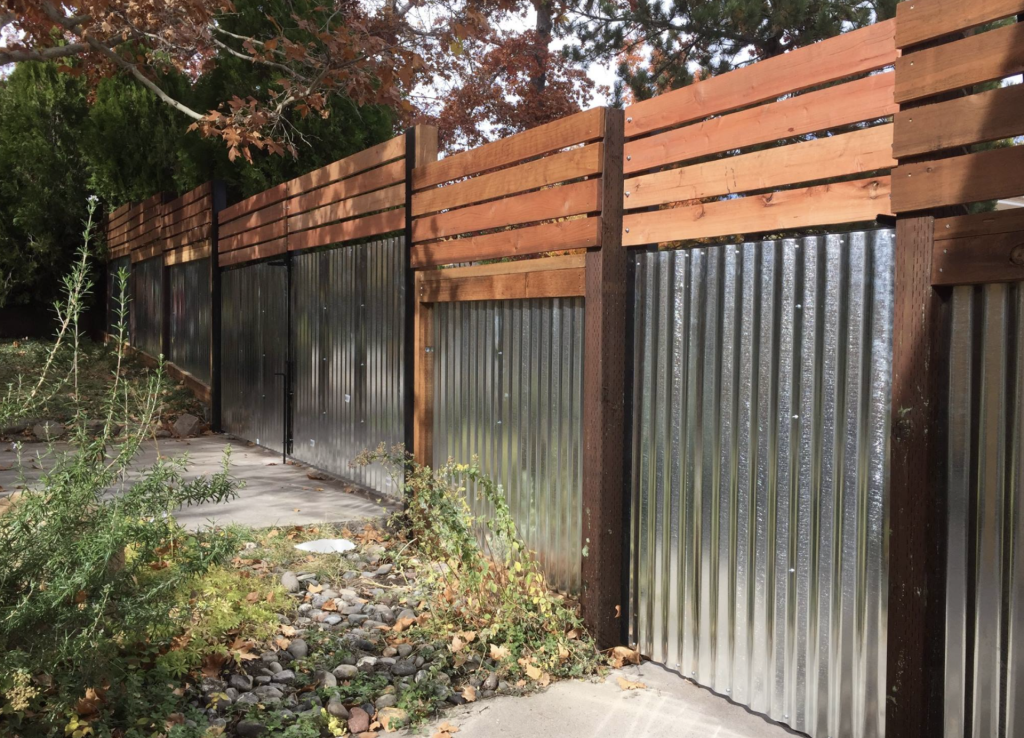
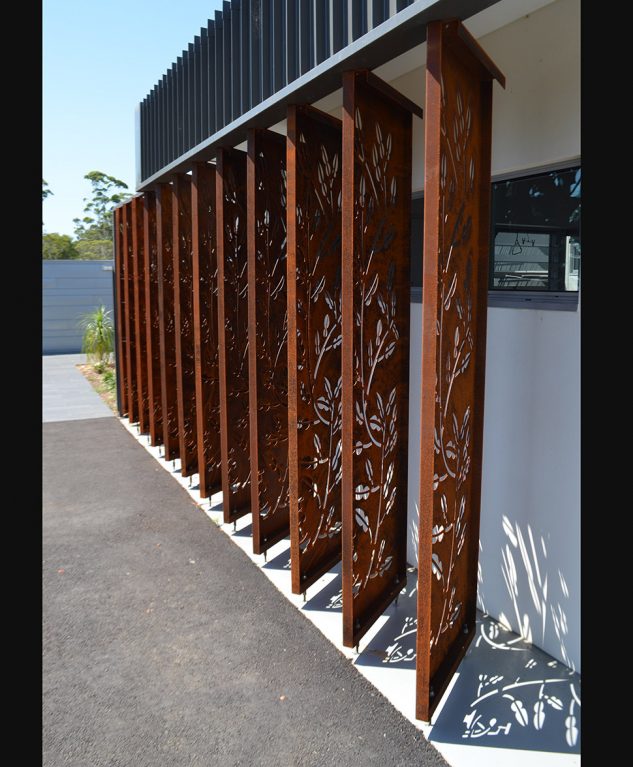
If your focus is preventing snow accumulation and drift, aligning your panels vertically with smaller gaps between panels will work best.

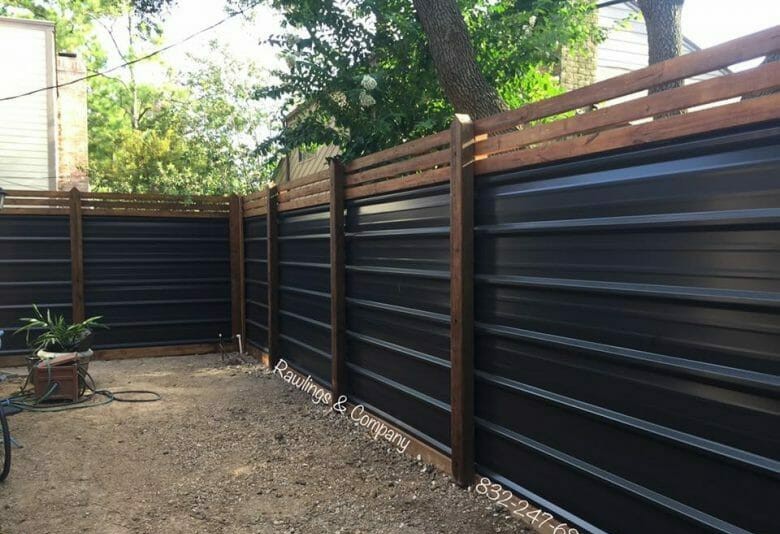
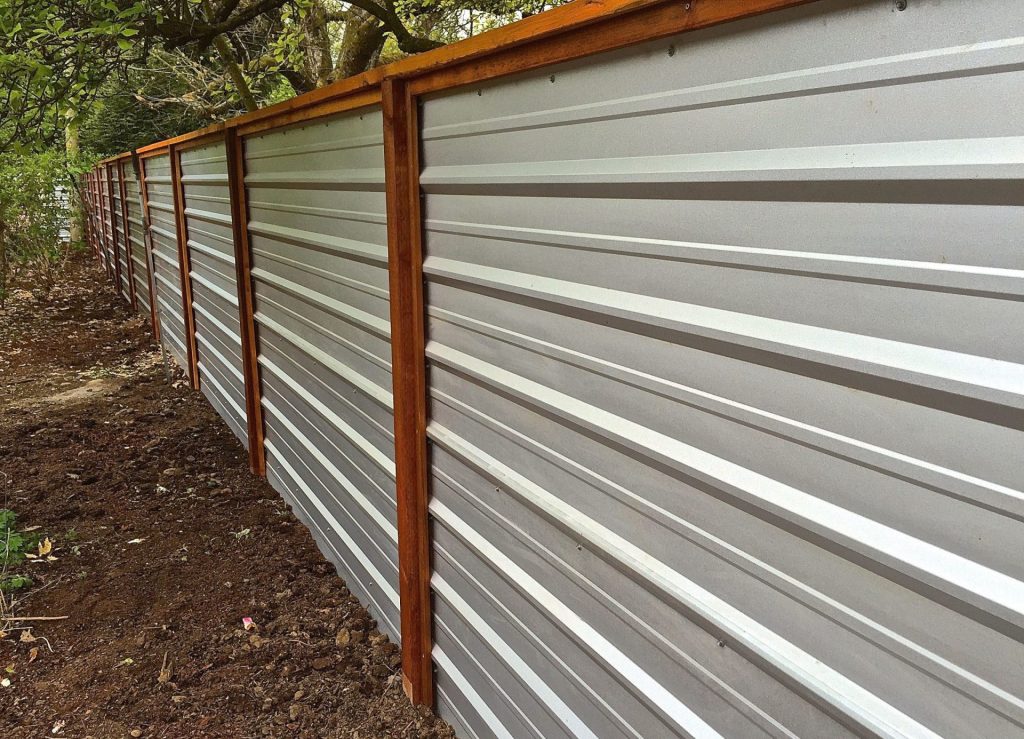
A horizontal layout is recommended if you want to cut down wind. With simple installations and easy maintenance, metal fencing is a top choice for wind and snow break fencing.

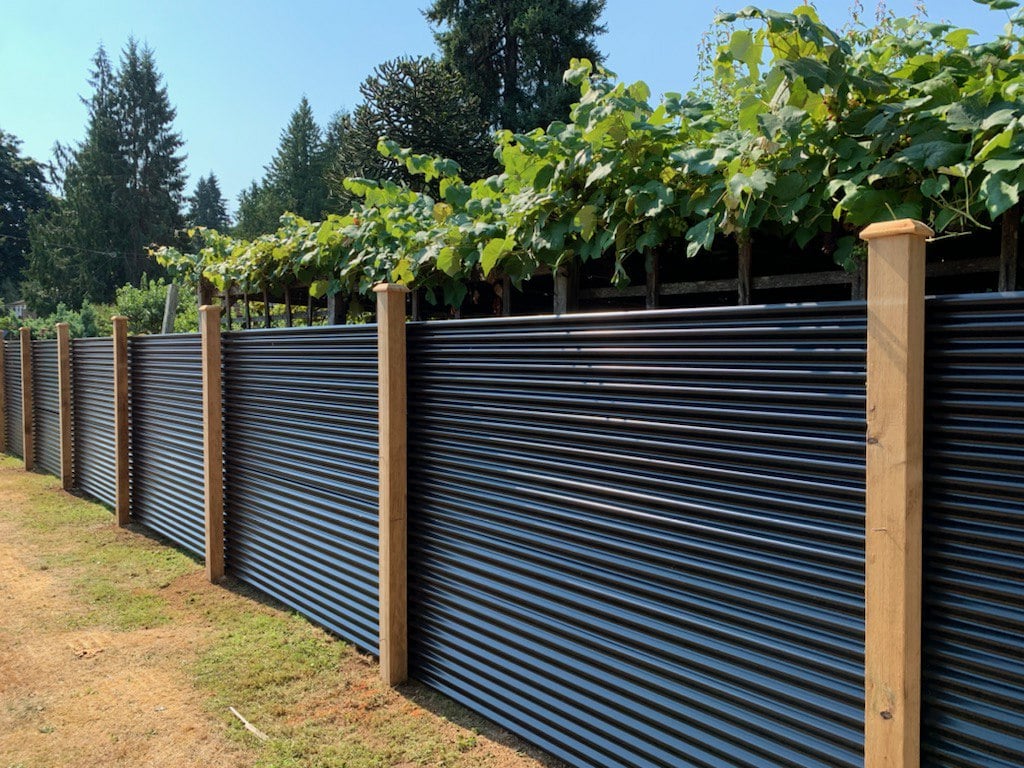
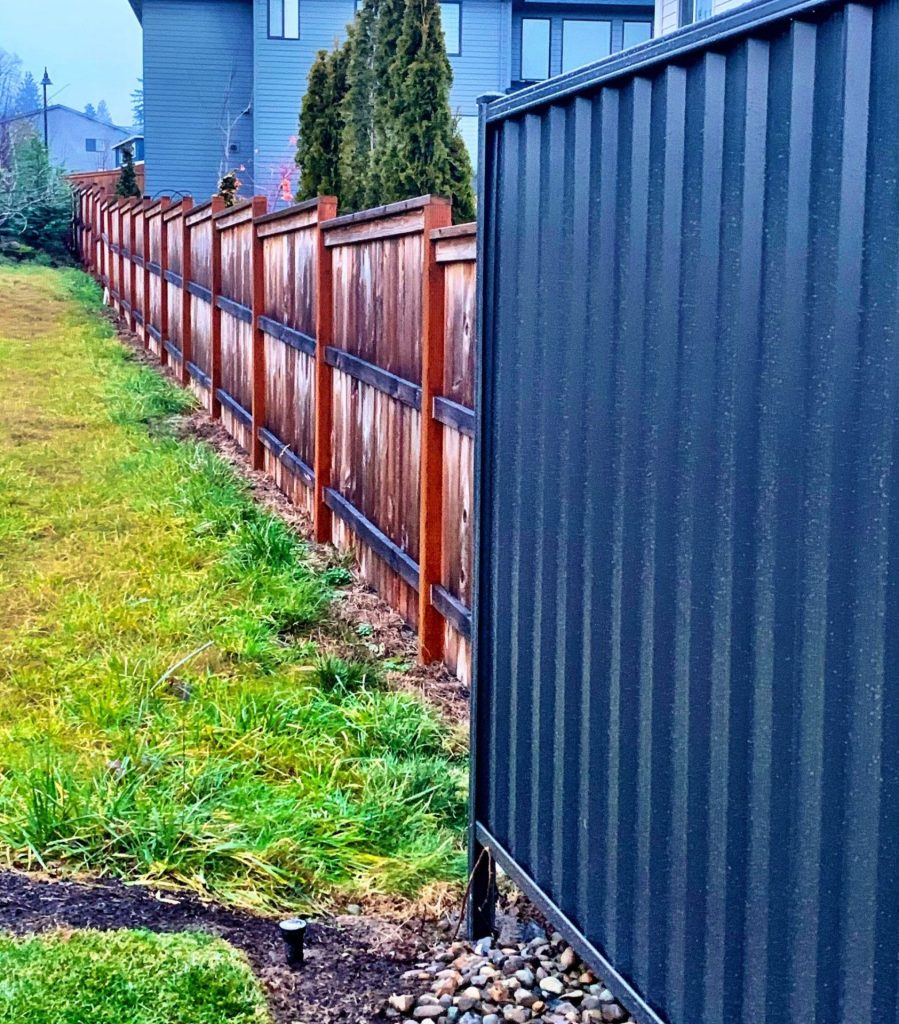
For privacy fencing for residential needs, steel fencing can provide a combination of durability and style. Let us help you find the best fit for your needs and design!











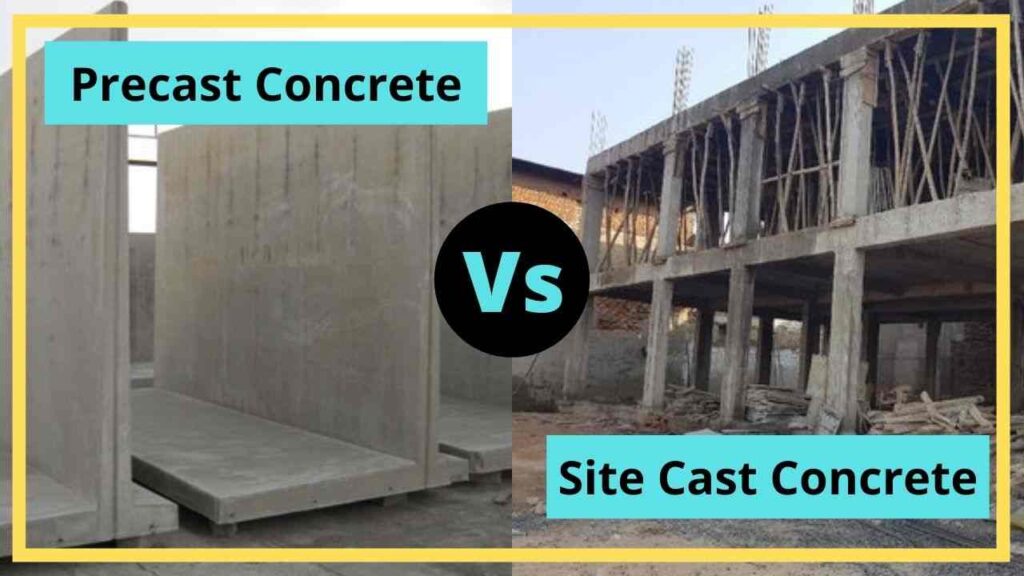
Concrete is a very important material in construction. Cast in situ and precast are two main methods of the concreting process. In this article, we will see which concrete method is better to cast in situ or precast concrete. Now let’s start with their introduction.
Cast in site Concrete
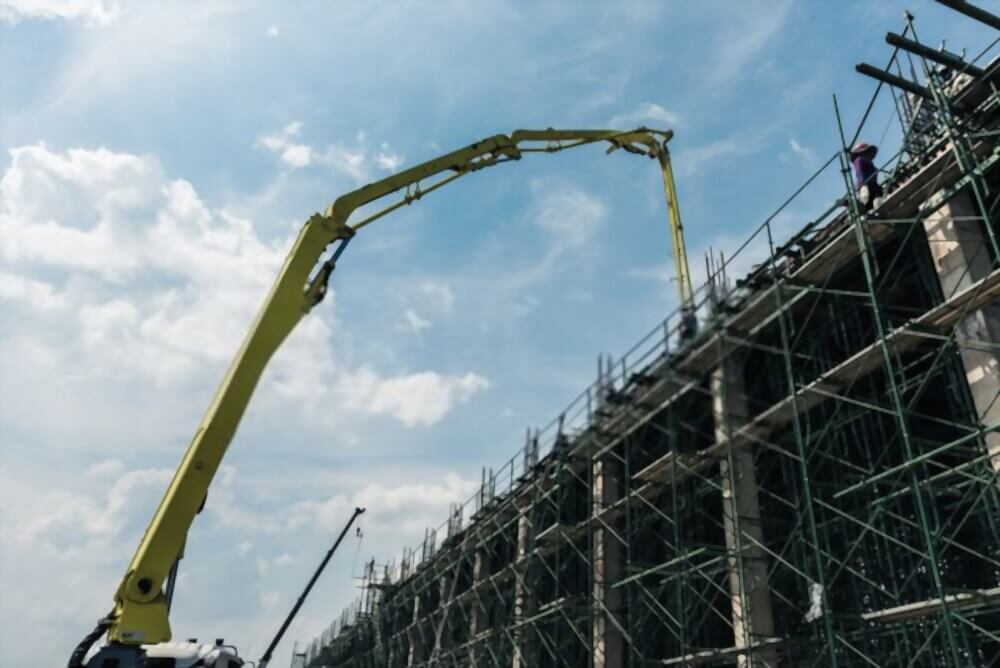
Concrete poured at the site is called cast in situ concrete. Cast in situ concrete also known as cast in place concrete. It is the conventional method of concreting this method is generally used in the world for most of the projects. In this method, formwork is made at the site and liquid concrete is poured in the formwork and then cured.
Precast Concrete
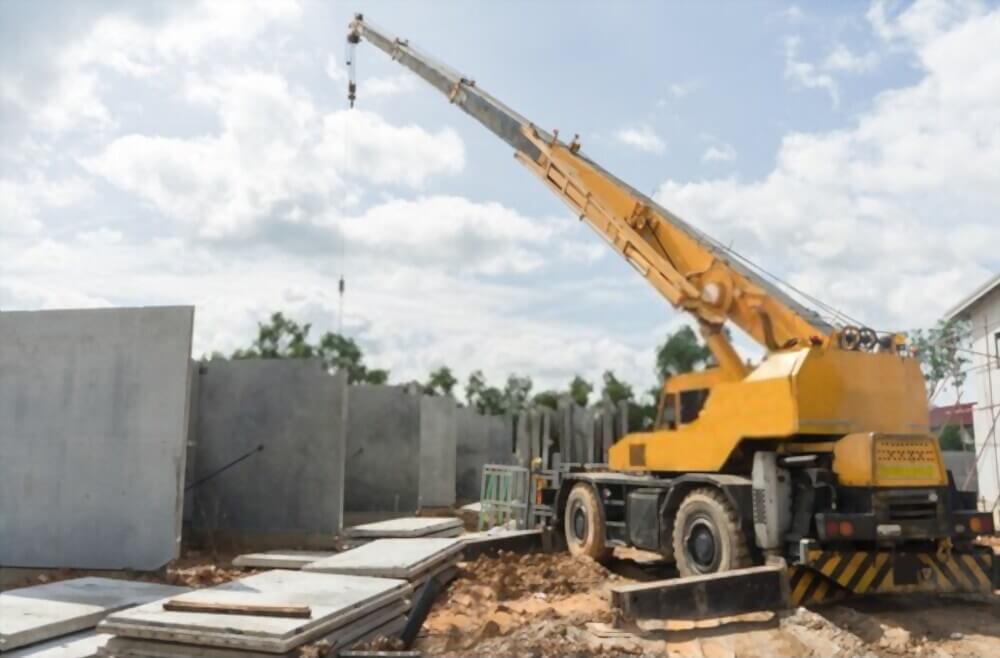
In precast concrete method concrete is made with reusable mould cured in a controlled environment, transported to site and fixed into place. Here a controlled environment is nothing but a precast plant.
Precast concrete members are cast and cured at a precast plant and then transported to site and only jointing will be done at the site.
I hope you got the idea that what is cast in situ concrete and Precast concrete?
Now we start our topic difference between the cast in situ concrete and precast concrete according to some factors.
Factors that affect to choose cast in Situ or precast concrete
These are some factors which are very important to choose a concreting process at the project.
- Time
- Quality
- Labor Cost
- Speed of construction
- Curing Conditions
- Weather Conditions
- Similar Components
- Form-Work (Shuttering and D-Shuttering)
- Concrete handling
- Number of joints
- Resistance to earthquake and Wind Pressure
- Contractor selection
- Material wastage
- Material Storage
- Quantity of materials
- On-Site test
- Plaster requirement
- Shifting cost
- Cranes
- Lack of knowledge
Time
In the case of precast concrete method elements like slabs beams, columns can be cast in advance does it saves time. Whereas,
in case of the cast in situ concrete method elements cannot be cast in advance that’s why this process takes more time to complete the project.
Quality
In the case of quality can be controlled and maintained easily because precast concrete is made in a factory. Hence, ideal conditions and exact measurements can be maintained throughout the process. Gives better quality than cast in situ method of concrete in terms of durability, stability and reliability. Water cement ratio can be properly adopted in precast concrete landing cast in situ concrete which can lead to better quality control.
whereas cast in situ concrete is costed at the site. Hence, quality is concerned with the workmanship.
Many times the cement slurry flows through the badly fitted formwork which can lead to poor quality concrete.
Labor cost
In the precast concrete method, less number of labor shall be required has only joining of members shall be done at the site and also less skilled laborers are required for this job. Hence labor costs can be saved.
For cast in situ method, more number of labourers shall be required as all he works like pouring mixing, shuttering D shuttering curing shall be done at the site and also for this world’s more skilled labour shall be required. And these all factors can increase the labour cost of the project.
Speed of Construction
The precast concrete method requires less time for onsite construction as compared to cast in situ concrete method. Because precast members are transported to site and can be directly lifted and placed on the desired position and there is no waiting for it to gain strength. It requires minimal propping embracing, hence, it speeds up the construction time and saves cost.
Whereas cast in situ concreting requires more time. Because Concrete requires minimum 20 days to achieve 99% strength of its total strength does after creating one element only after seven days a new element can be created, which is dependent on the previous one because concrete equals 65% strength of its total strength in seven days.
source: civilrack.com
Curing Conditions
in the construction industry, curing takes major time in project completion. In precast, concrete method curing conditions can be controlled in a factory and high early strength can be achieved with the help of accelerated curing, the most commonly adopted curing techniques or steam curing at atmospheric pressure, warm water curing, boiling water curing and autoclaving.
Hence, there is no need of curing on site of the erection of members as members are already cured in the factory for desert is precast members can be installed immediately with no need of waiting for to gain strength and modularity like cast in place.
Therefore, it saves time and also reduces the cost of construction.
Whereas, in case of a cast in place concrete has limited curing is a difficult task and also it’s not worth hence, you will have to wait until the curing period gets completed. This increases the time of construction in the construction industry time is directly proportional to cost.
Weather Condition
In case of precast concrete weather condition does not affect costing work. If fabrication site for precast concrete can operate regardless of the weather precast concrete doesn’t shrink, distort or move and does not deteriorate with exposure to climatic change. Suppose, if it is raining and your precast slabs arrive on-site, then you can simply leave them into place.
Whereas in case of a cast in place concrete unexpected weather conditions can delay the casting book and if concreting is happening in cold weather then you can add cure time cost.
Similar Components
In the case of precast concrete construction, similar types of components are produced fast. Resulting in increased productivity and economic cost to thereby reducing the period of construction which can help to bring early returns of the investment. In precast construction. you can save the cost of concrete shuttering and de shuttering requires a fewer number of laborers.
Hence, you can save the cost of labourers to in precast construction please testing is done. Hence, it requires less reinforcement as compared to cost in situ concrete. As per research article published in the Journal of construction engineering (reasearchgate.net) on an average, the precast concrete slabs are 23.22% cheaper and precast columns are 21.4% cheaper than cast in place concrete construction, especially for large scale production. whereas in situ concrete is a cheaper form of construction for small structures.
Form-work (Shuttering and D-Shuttering)
The shuttering and de shuttering takes more time and space and hence increases the cost of construction, standardization and repetition. In the case of the precast method for repeated similar pieces like walls only higher as building, there is greater potential for standardization and repetition. The mould for the precast components can be used for a large number of repetitions, thereby reducing the cost of mould per unit.
Whereas, in case of cost in situ concrete the reputations of shuttering are very less as compared to precast. So, if limited standardization and repetition occur, then custom situ method will be more beneficial.
Precast Concrete concrete Handling
Precast concrete requires heavy machinery and cranes for handling which is lifting and installation of heavy elements.
In case of a cast in situ concrete method, the construction can be done without cranes.
Number of joints
In the case of precast concrete, there are lots of choice instructional systems. In precast concrete construction, detail said the joint becomes very critical and needs careful attention.
Whereas in case of the cast in situ concrete, less number of joints will be present in the structural system and no serious attention is required for joints.
Resistance to earthquake and Wind Pressure
Precast concrete members are less resistant to earthquake and wind forces. hence, they are not recommended against seismic or wind loads.
whereas cast in situ concrete members are more resistant to earthquake and wind forces
Contractor selection
Precast concrete structure one needs a skilled and technical contractor.
whereas, costumes to a concrete structure can be built by local contractors.
Material wastage
Precast concrete construction wastage of materials is negligible as compared to cast in place concrete. Whereas in case of a cast in place concrete method the wastage is more real. Precast structural members can be reused extended and refitted internally because structures do not need to be demolished and can simply be renovated internally conserving resources reducing waste and landfill.
On the other hand, cast in situ concrete structures cannot be reused.
Material Storage
In case of precast method, there is no need for very less space is required for storage of materials and formal you can order this talk of precast members from the factory as and when required, so, it saves space.
Whereas, in the case of the cost in situ method, you have to keep his price result for storage of materials.
Quantity of materials
Compared to the cost in situ method precast method uses less cement, less water, less steel, and less labor as it is factory-made for the production of precast concrete, advanced mix designs, and better vibrations are used.
On the other hand, the cast in situ method needs more quantity of materials.
On-Site test
In the case of the precast concrete method strength test is carried out at the factory. Hence, an on-site strength test is not required.
On the other hand, concrete on-site strength tests are extremely important for ensuring that your building is safe. So, if you are going on-site casting, then this is this tape that cannot escape.
Plaster requirement
On precast walls due to plain surface less quantity of plaster shall be required as compared to cast in situ.
On the other hand, in the case of custom place concrete construction, it is a little difficult to get the plain finish on walls. Hence more quantity of plaster shall be required.
Until here we discuss both precast and cast in situ concrete. There is a lot of advantages of precast concrete, Here, may you think then why not use mostly precast concrete instead of the cast in situ concrete method? Now, Let’s find the reason behind this.
Shifting cost
To carry out precast concrete construction, transportation and shifting costs are more because of long distances from the factory very few precast plants are available.
Cranes
We cannot fix the precast concrete members without a crane. Cranes are very expensive to hire or purchase. This the 2nd reason to not use precast concrete more.
Lack of knowledge
Before going for the precast concrete method you need to check the following points type and size of the building. Generally, the precast concrete method is used for bigger-size projects, check the reputations of members, if the same type of floors is there, then you can go for precast technology otherwise it is not feasible.
]]>
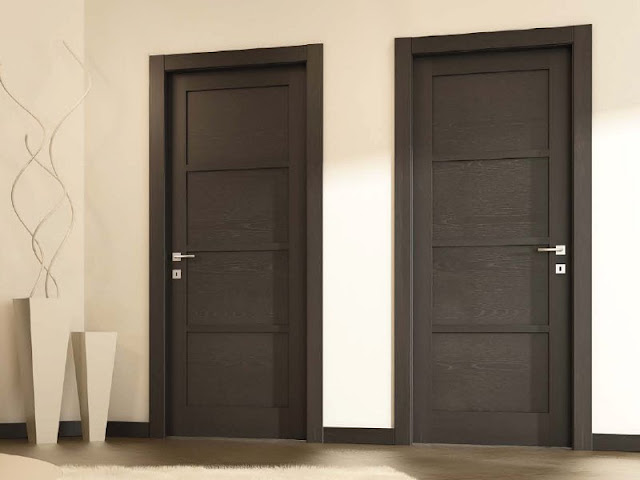
When it comes to finding the best bedroom doors it’s usually best to consider your budget, floorspace, or sound insulation needs, as well as your individual tastes. Fancier models like barn or french doors are excellent for master bedrooms. Simple flush or panel doors are strong choices for smaller bedrooms.
What type of door is best for bedroom?
When it comes to finding the best bedroom doors it’s usually best to consider your budget, floorspace, or sound insulation needs, as well as your individual tastes. Fancier models like barn or french doors are excellent for master bedrooms. Simple flush or panel doors are strong choices for smaller bedrooms.




What is the best doors for interior?
Solid wood doors are the best sound-insulating doors you can buy for the interior of your house. They have a warm, natural look and come in a variety of wood species to coordinate with your furnishings. Classic wood doors have the weight you can’t find in solid core or hollow core fiberglass doors.
How do I choose an interior door?
– Pick a door style. This is the first step in selecting interior doors. …
– Choose which way the door is to swing. This will determine where your hinges will be. …
– Select the material. …
– Frame your door with casing. …
– Select the perfect color.
Which type of doors are best?
A steel door is your best bet if security and durability are top priorities. Steel units are stronger than wood or fiberglass doors, and they won’t crack or warp.
What is the best finish for interior wood doors?
Oil- or latex-based interior paints or wood stain are the preferred finish treatments for interior wooden doors. Apply paint and stain only to a clean door, and tape off any glass or plastic accents before you begin to paint. Some paints and stains contain solvents, which can damage plastic accents.


Which door is best for room?
Solid wood doors are the best sound-insulating doors you can buy for the interior of your house. They have a warm, natural look and come in a variety of wood species to coordinate with your furnishings. Classic wood doors have the weight you can’t find in solid core or hollow core fiberglass doors.
What is the most popular bedroom door?
The most popular interior door styles are frosted glass, solid wood, knotty wood, shaker, and modern mirror doors. If you’re unsure about which interior doors are best for your home, contact a professional interior design specialist who can assist you. Interior doors come in many different sizes, colors, and styles
What is the trend for interior doors?
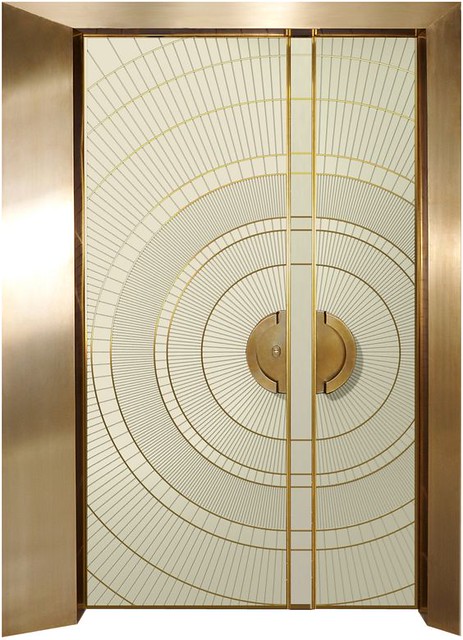
Interior Door Trends 2021: Geometric Patterns The trend with the inclusion of geometric patterns is for those who are fond of modern style and exclusive textures. All kinds of geometrical patterns are top trendy for interior door design 2021
Which doors are best for home?
A steel door is your best bet if security and durability are top priorities. Steel units are stronger than wood or fiberglass doors, and they won’t crack or warp.
What is the most popular Front Door style?
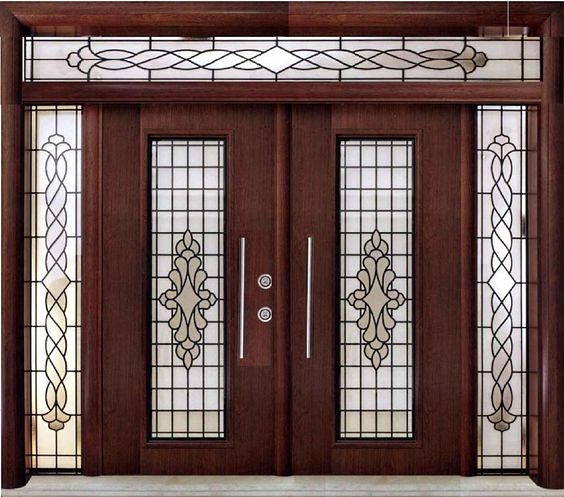
The traditional panel door will always be in style and is the most popular door in construction. It is also known as a Stile and Rail or a Frame and Panel door. A panel door gives the vibe of strong and sturdy, while looking beautiful and timeless
What type of interior doors are best?
Solid wood doors are the best sound-insulating doors you can buy for the interior of your house. They have a warm, natural look and come in a variety of wood species to coordinate with your furnishings. Classic wood doors have the weight you can’t find in solid core or hollow core fiberglass doors.
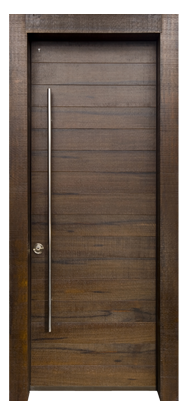
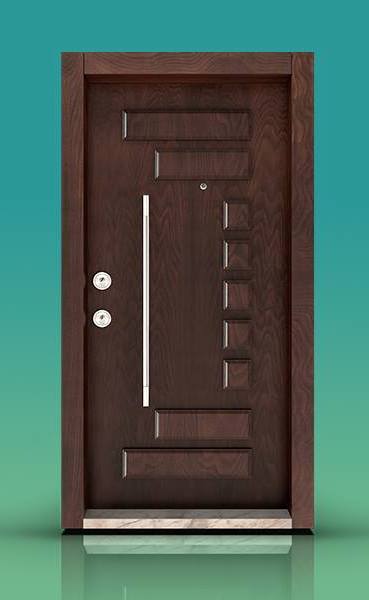
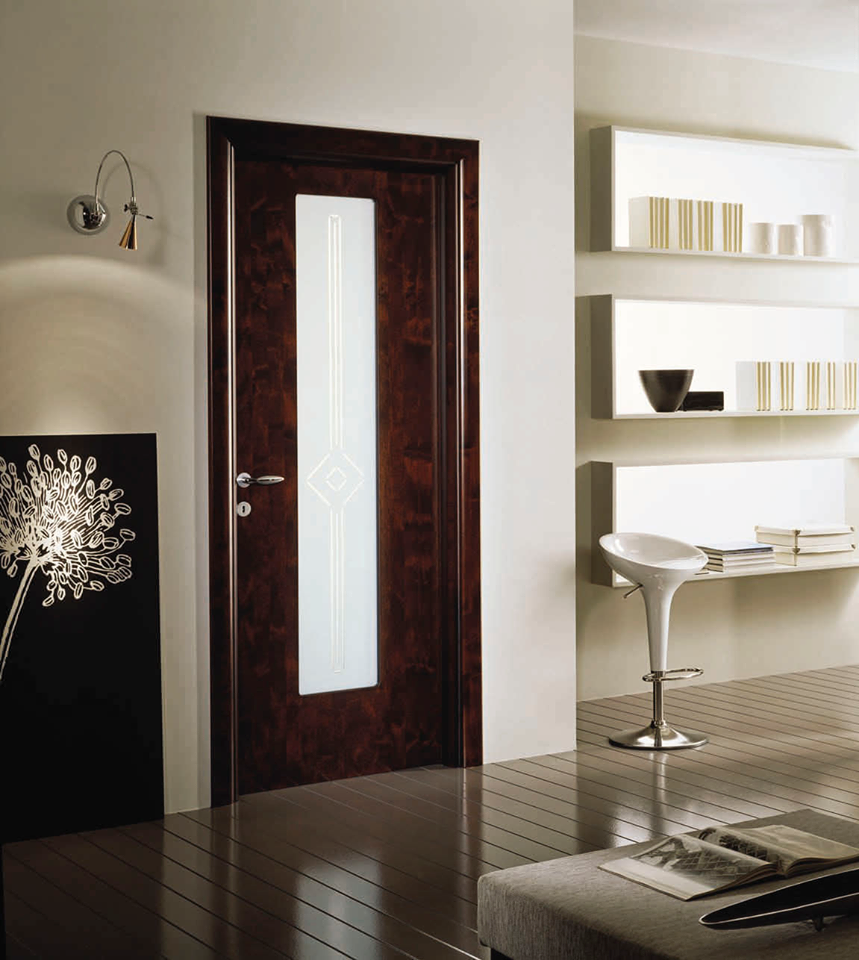
Are painted interior doors in Style 2021?
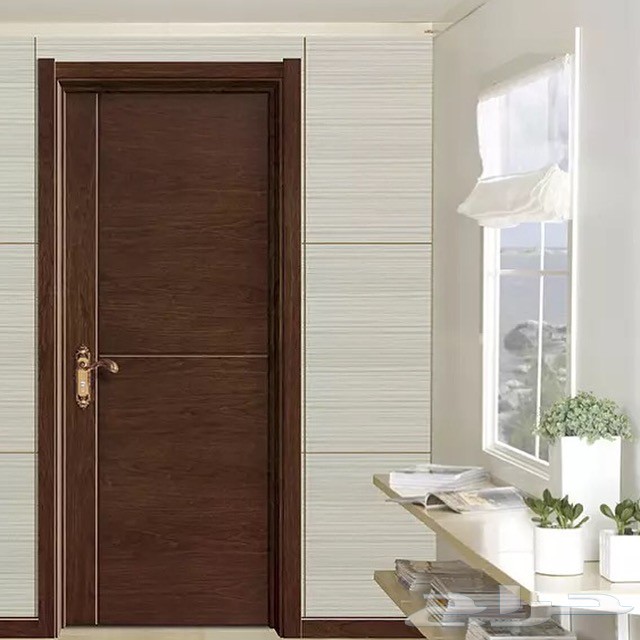
Deep dark: after so many seasons in which Scandinavian style, with its light and bright colours, has dominated among different trends, a return to dark tones is expected for 2021. Among the fashionable door colours, there is, therefore, space for finishes such as Black Oak.
Which type of door is best for bedroom?
When it comes to finding the best bedroom doors it’s usually best to consider your budget, floorspace, or sound insulation needs, as well as your individual tastes. Fancier models like barn or french doors are excellent for master bedrooms. Simple flush or panel doors are strong choices for smaller bedrooms.
Which doors are best for bedroom?
When it comes to finding the best bedroom doors it’s usually best to consider your budget, floorspace, or sound insulation needs, as well as your individual tastes. Fancier models like barn or french doors are excellent for master bedrooms. Simple flush or panel doors are strong choices for smaller bedrooms.
What type of interior doors are popular?
The most popular interior door styles are frosted glass, solid wood, knotty wood, shaker, and modern mirror doors.Aug 17, 2020
What is the best finish for interior doors?
Fingerprints and grime are to be expected on interior doors in high-traffic areas. So pick paint with a gloss or semi-gloss finish, rather than flat or eggshell, for a surface that’s much easier to wipe clean. A glossier paint also makes doors and trim stand out beautifully against the flatter wall surface.
source: decoalert.com
What are the different types of interior doors?
– Flush Doors.
– Panel Doors.
– French Doors.
– Glass Doors.
– Pocket Doors.
– Double doors.
– Bi-fold Doors.
– Accordion Doors.
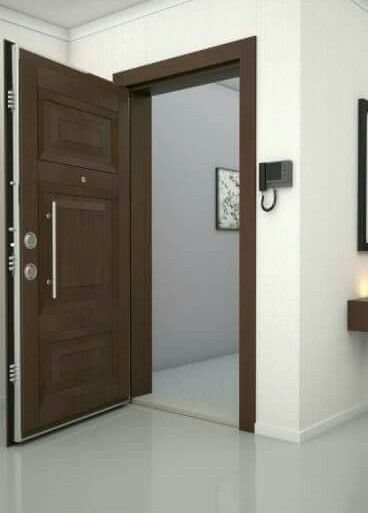
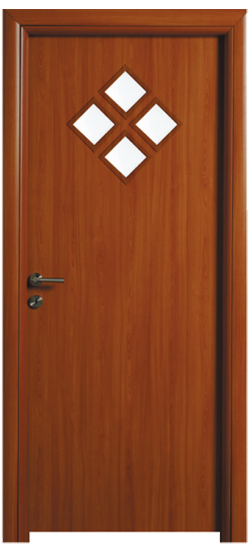
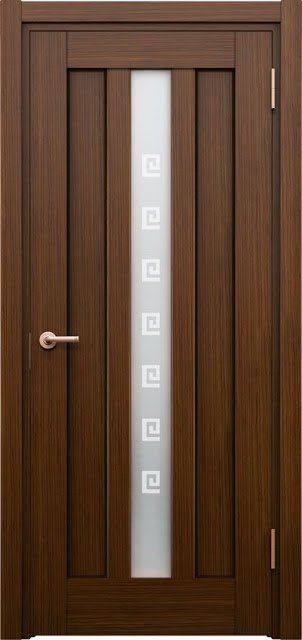
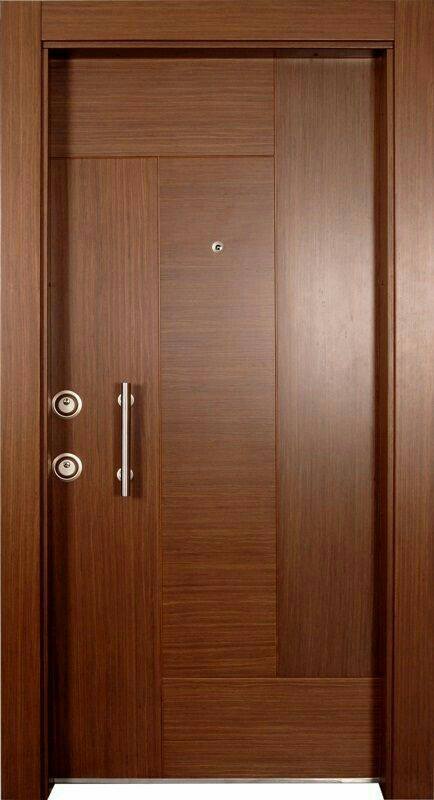
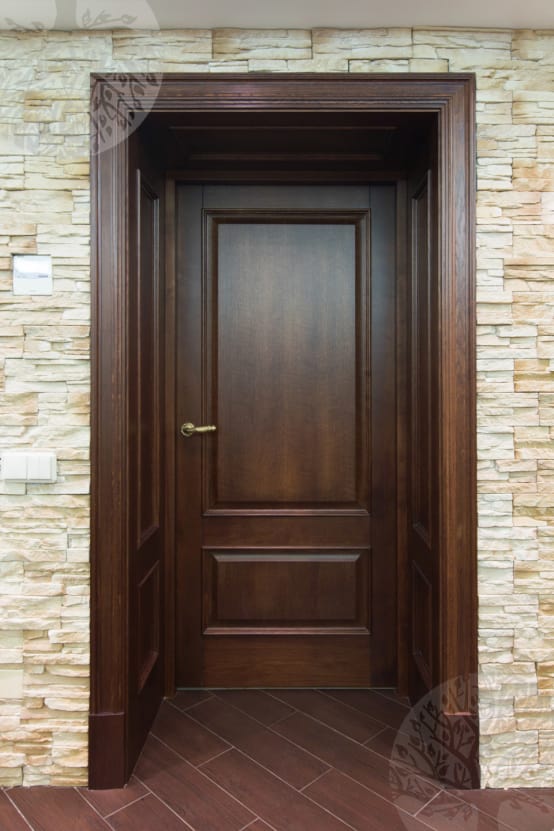
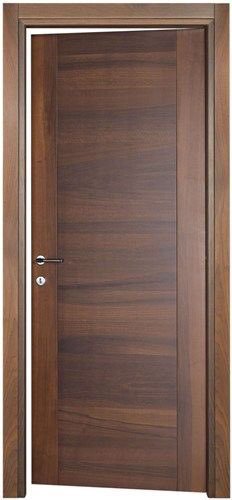
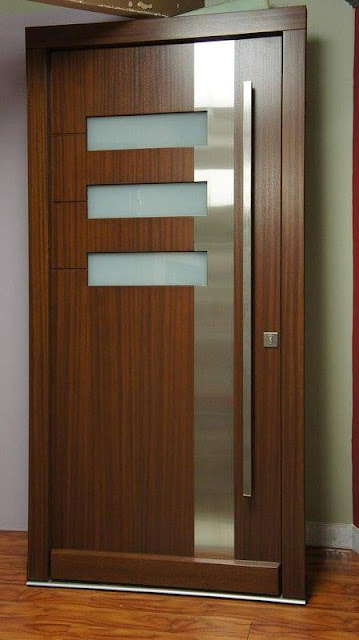
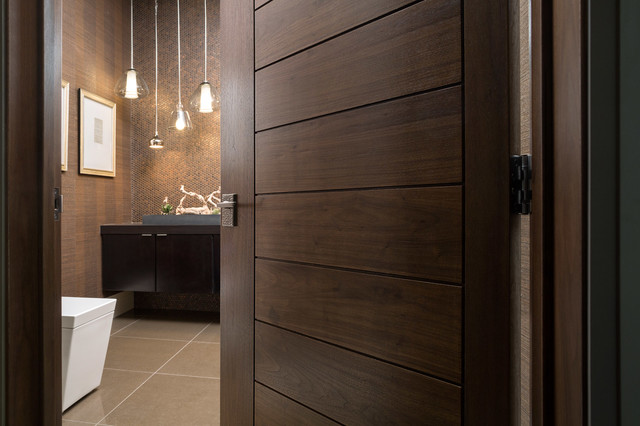
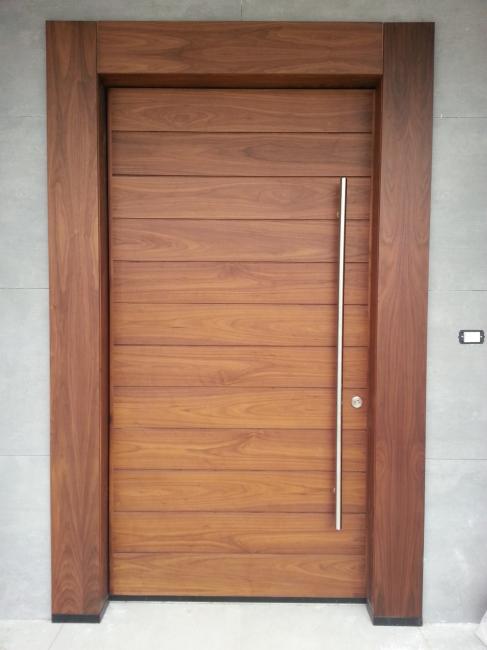
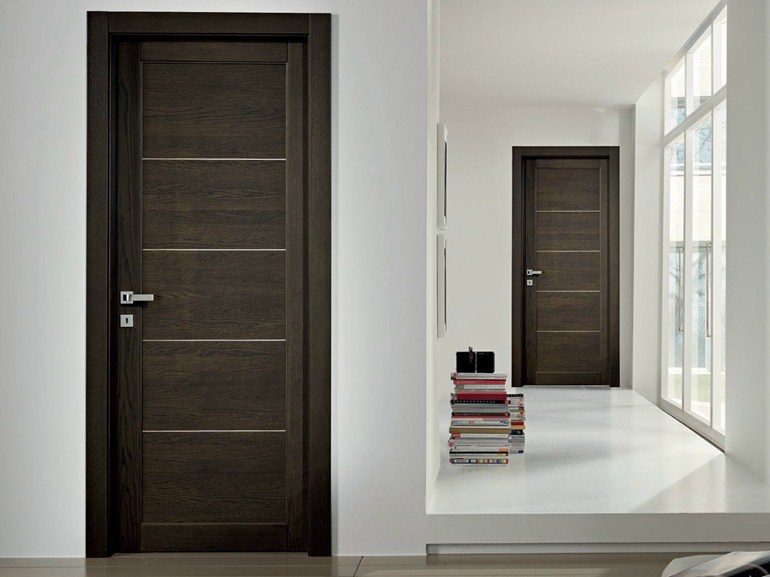
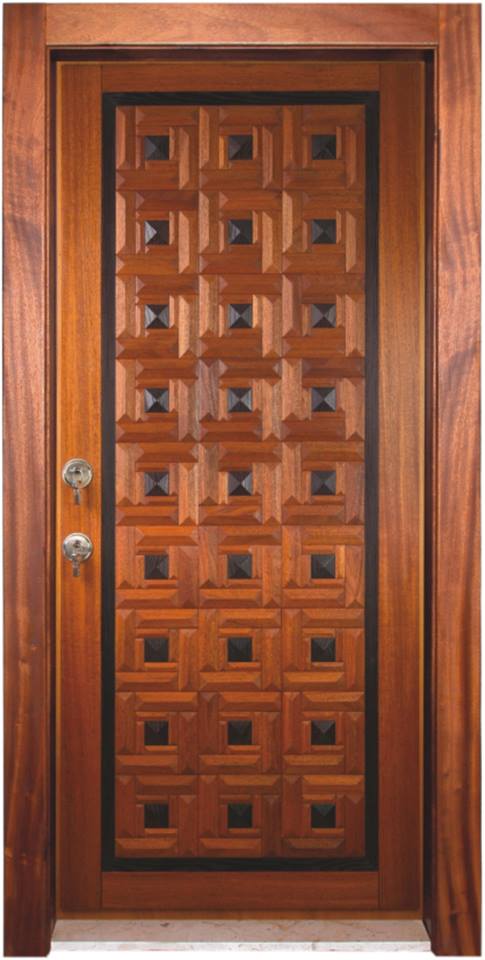
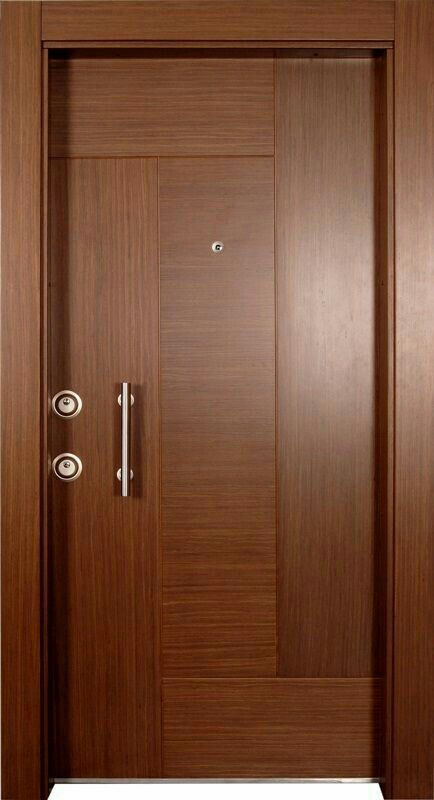
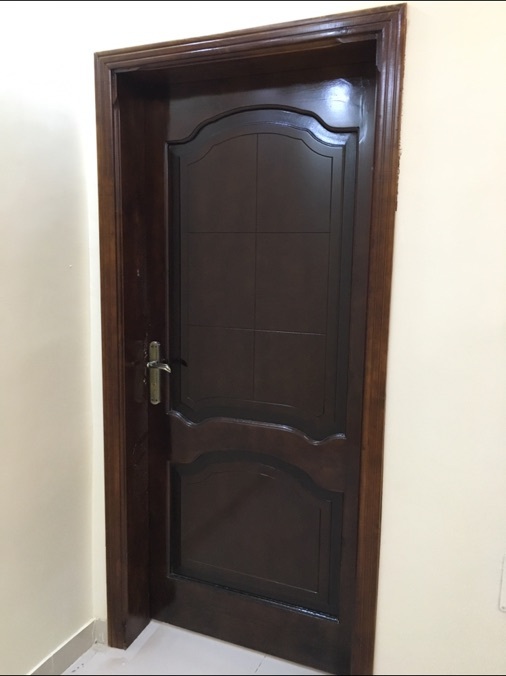
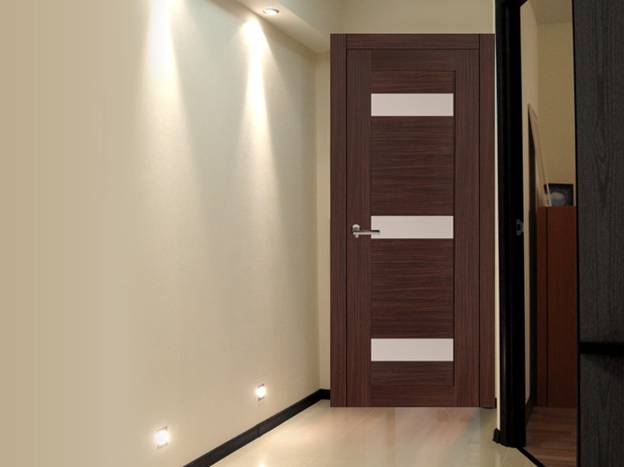
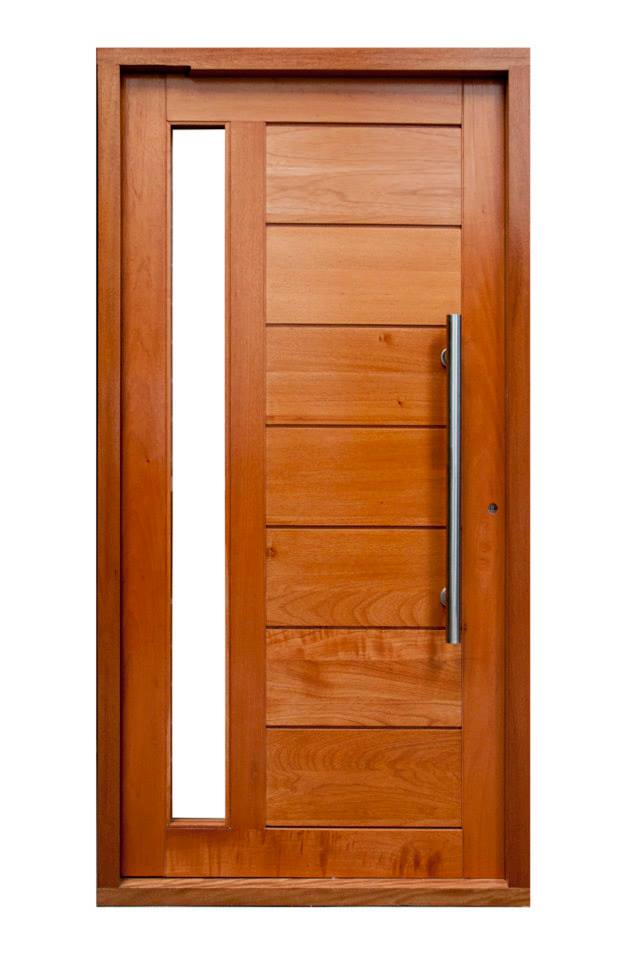
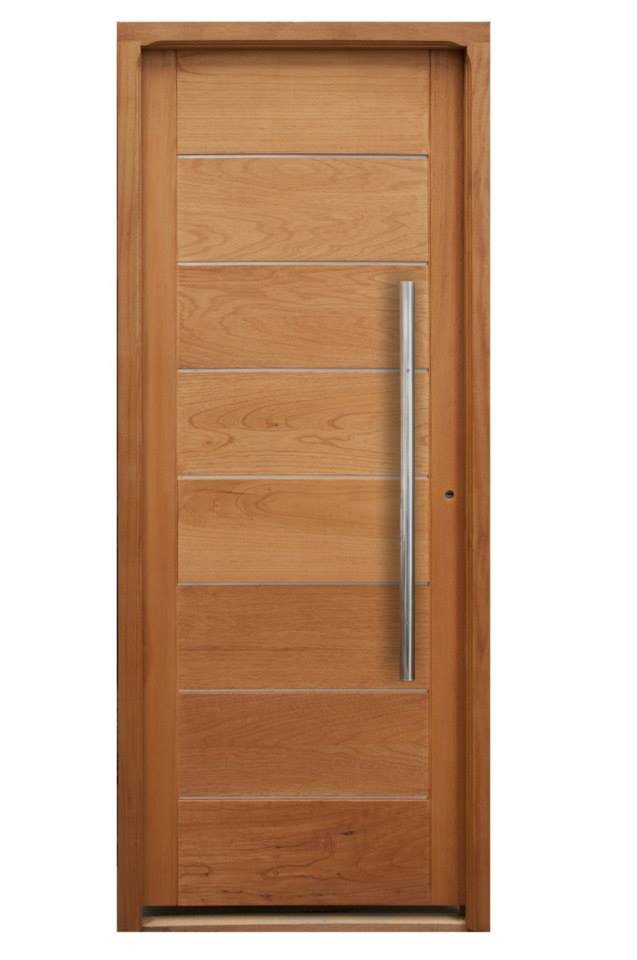
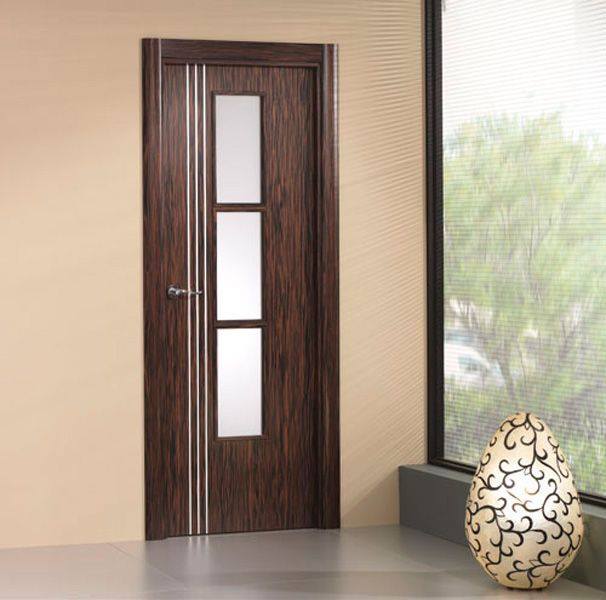
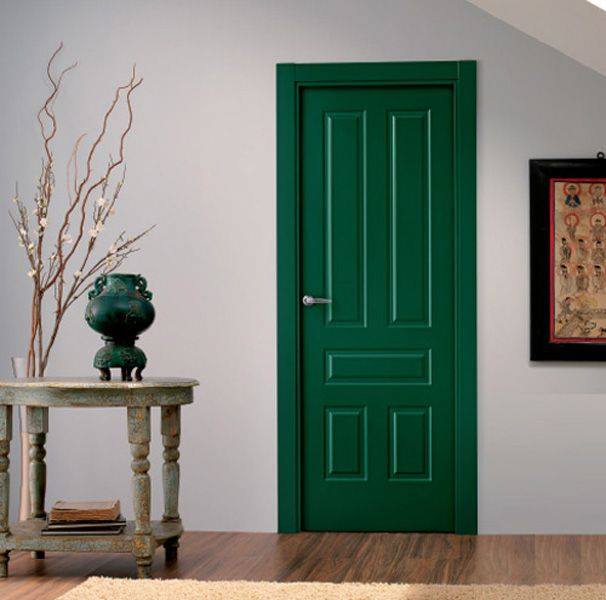
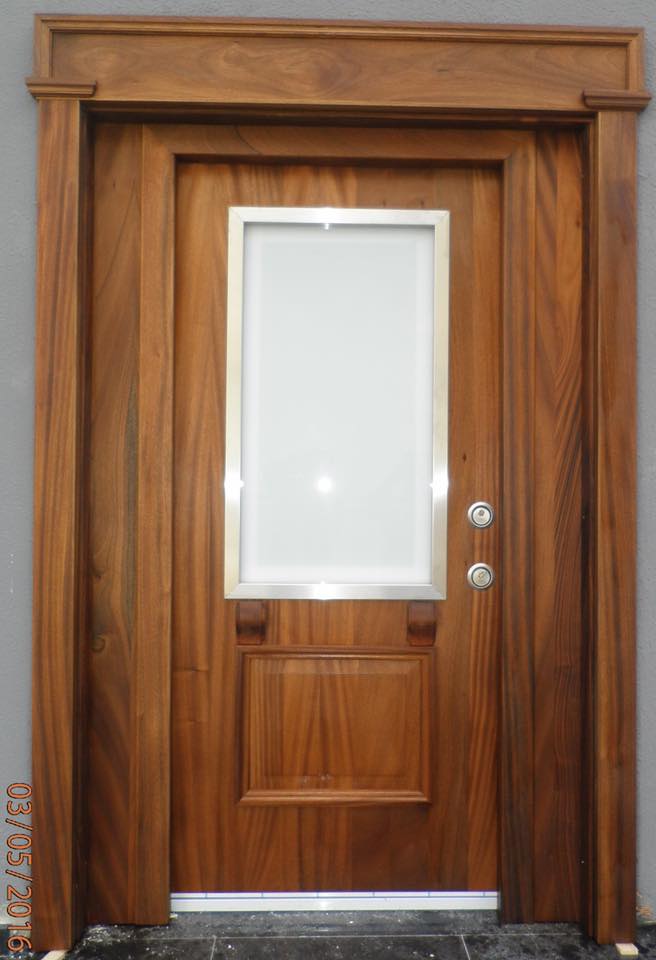
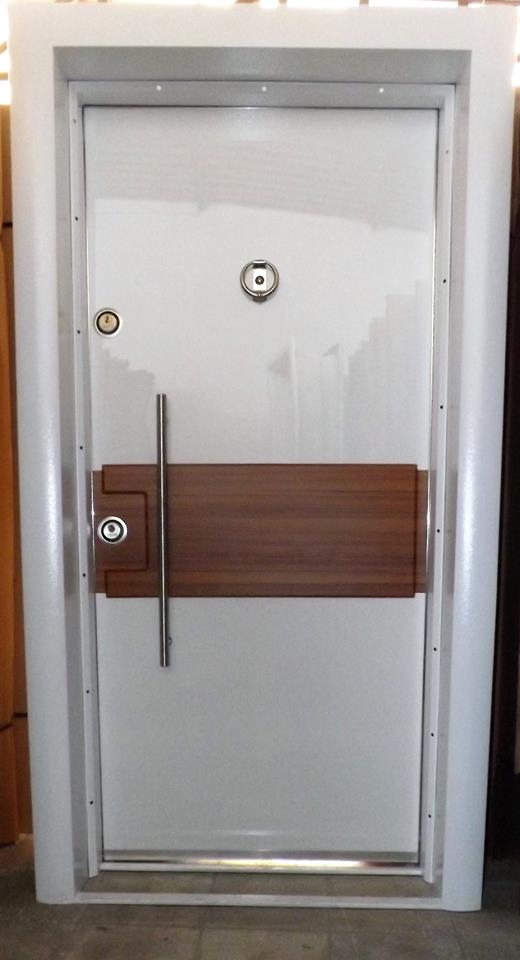
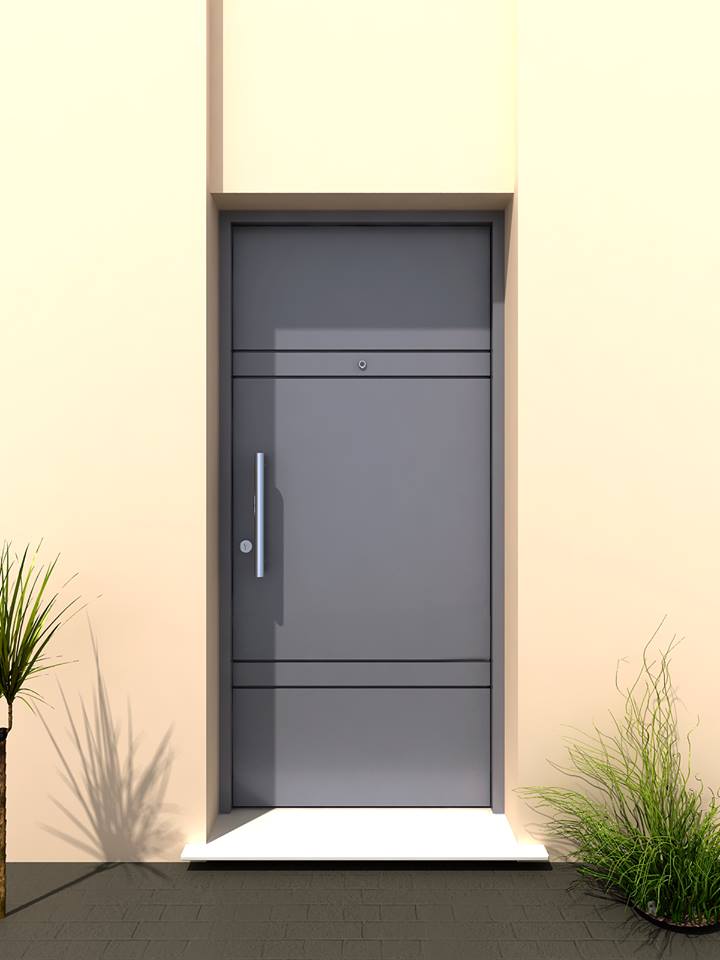
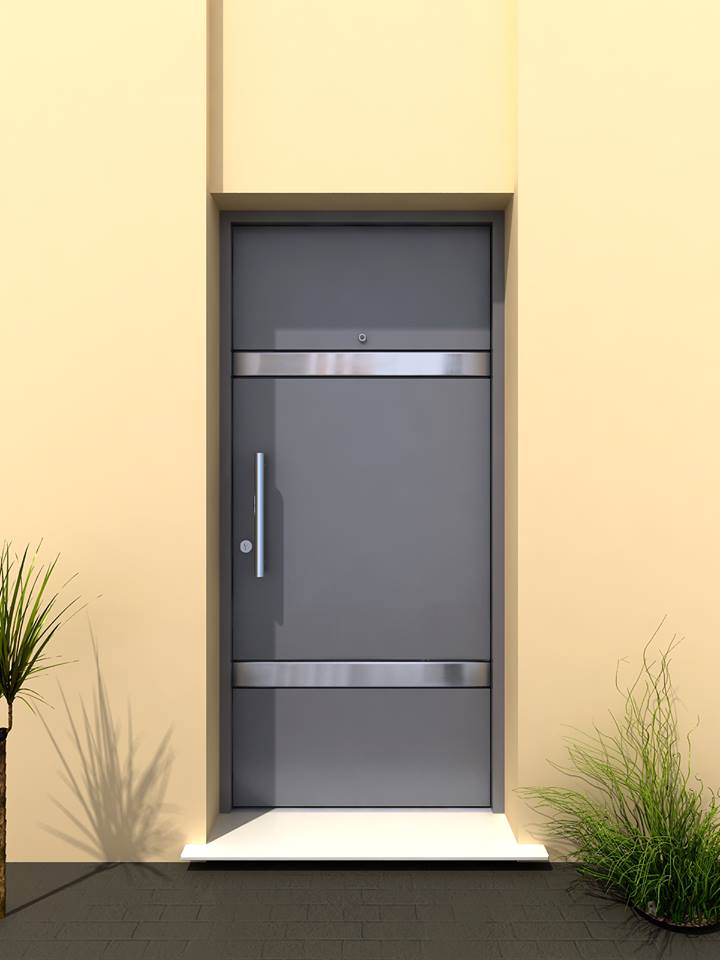
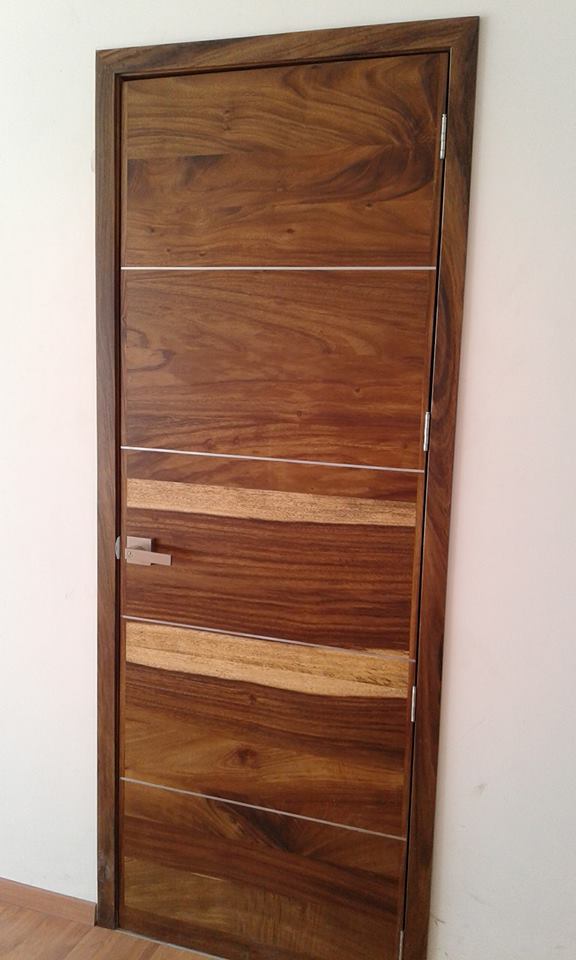
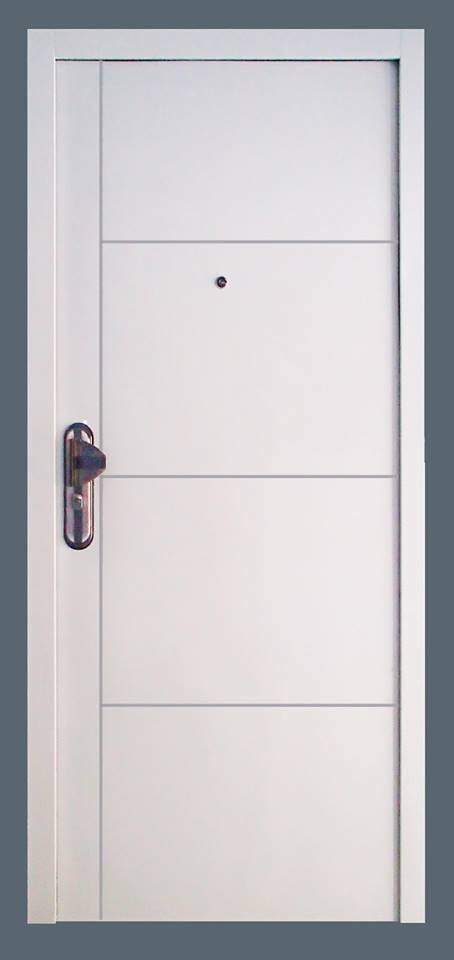
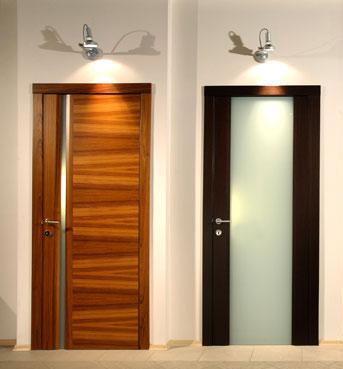
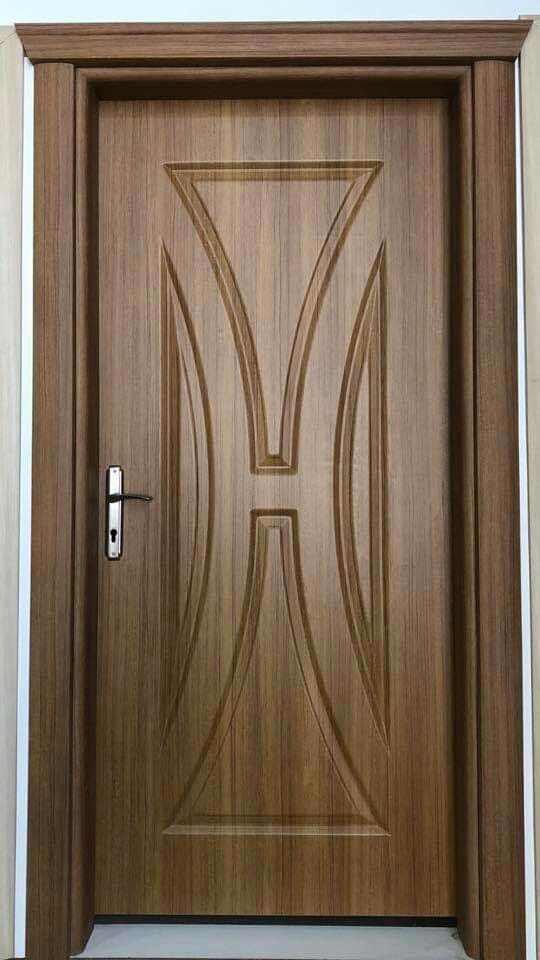

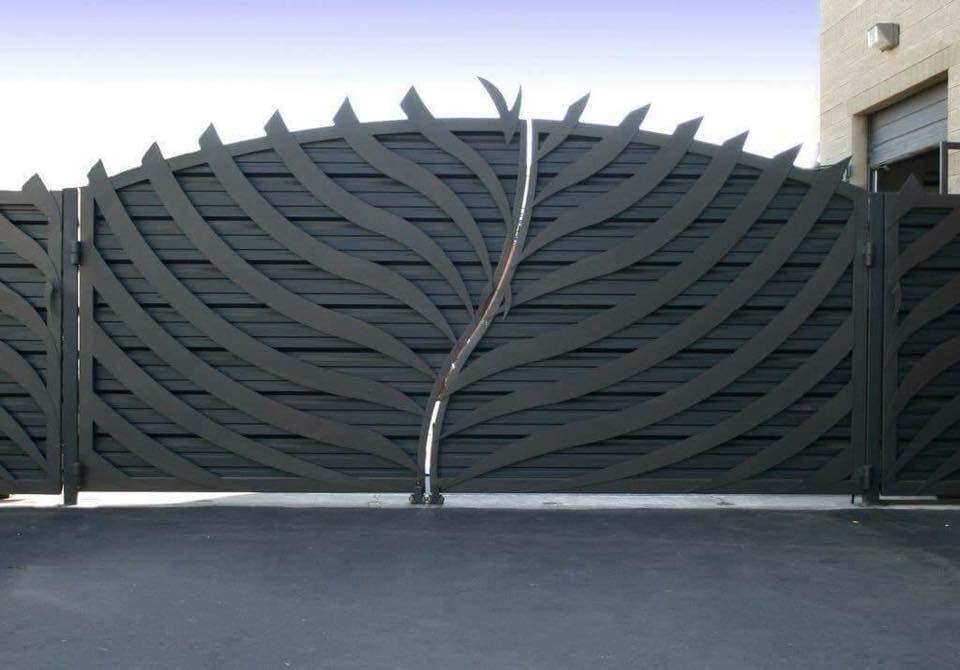
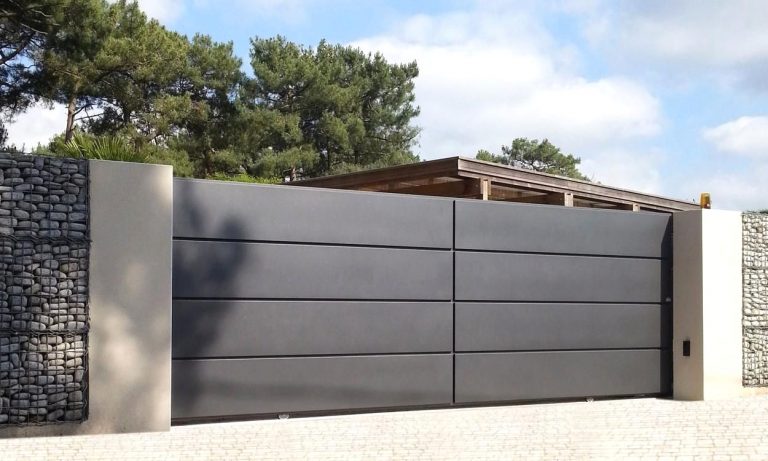
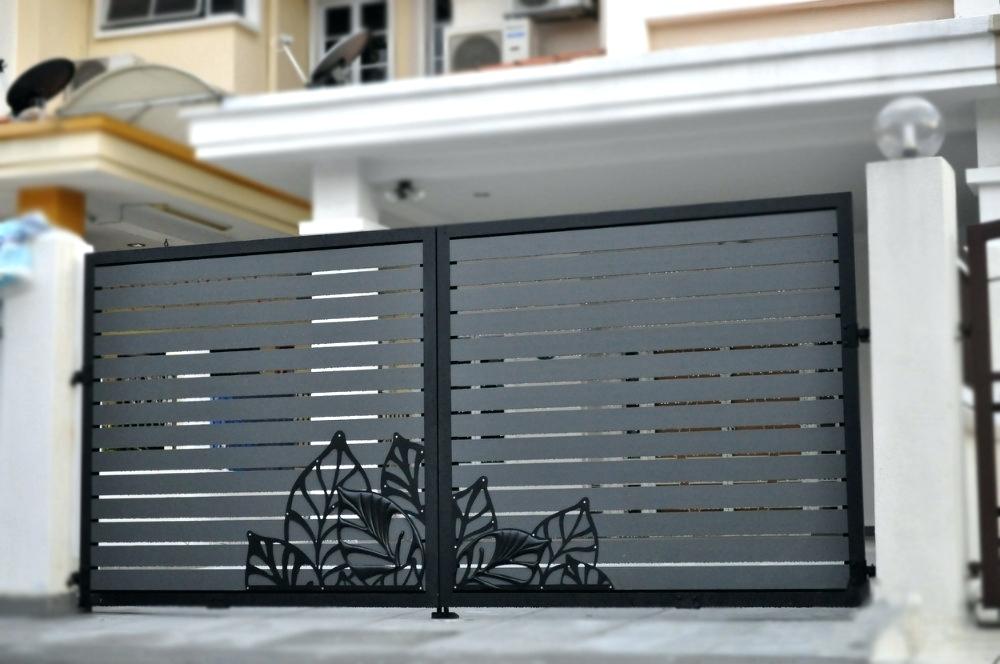
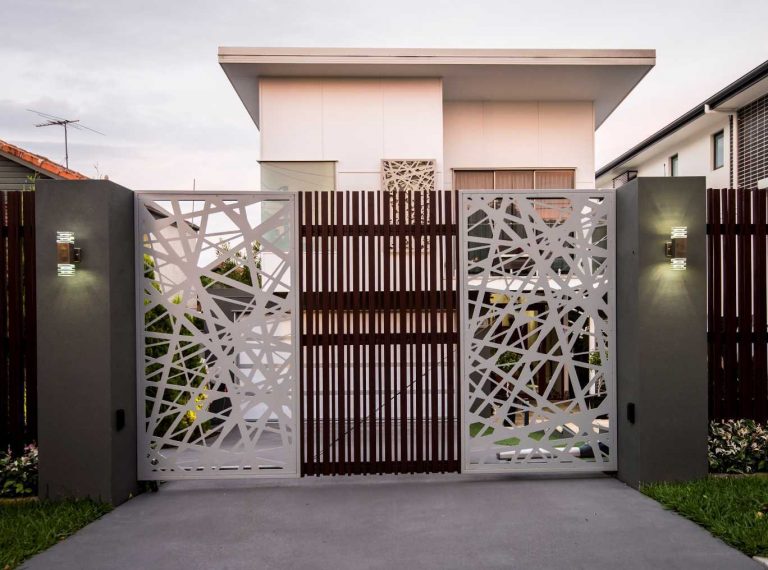
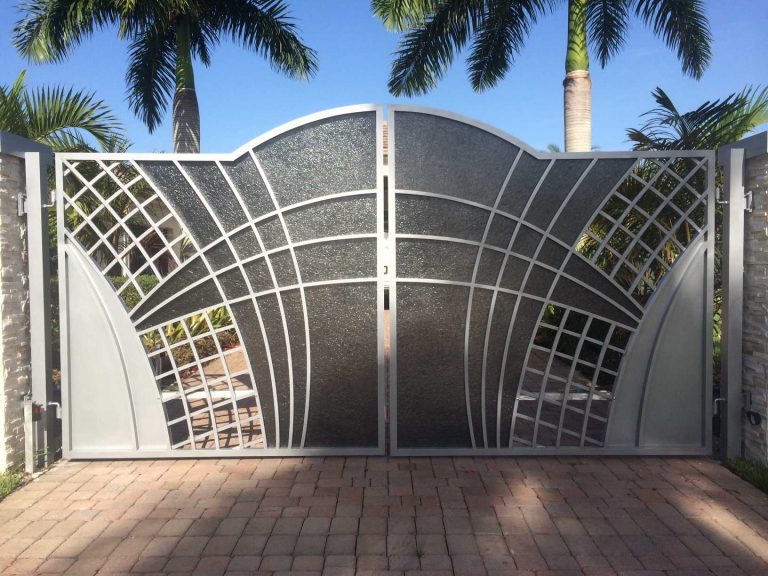
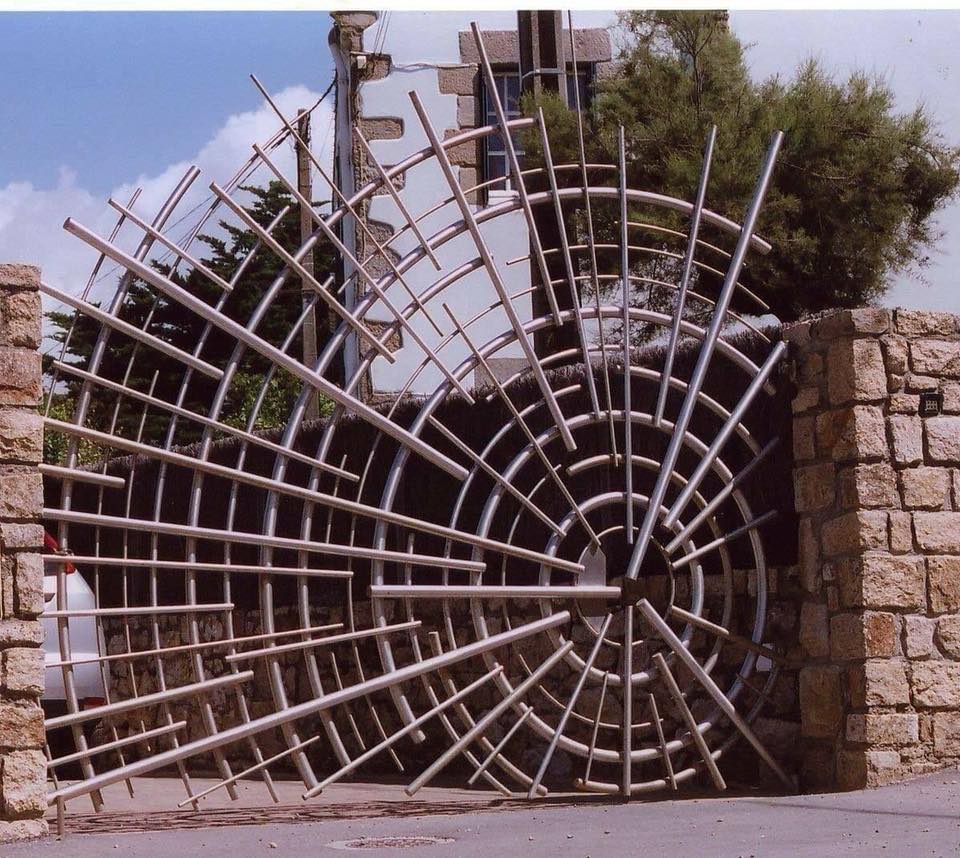
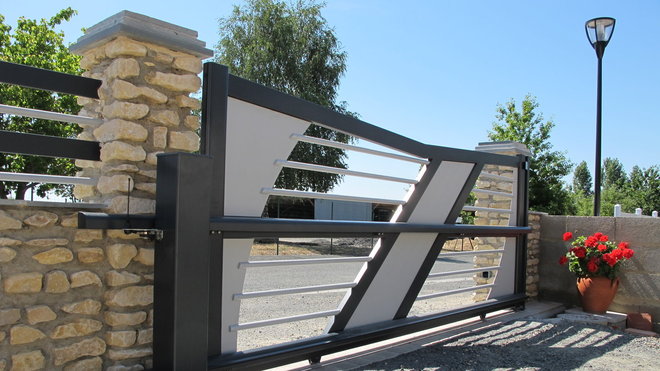
We understand the importance of a main gate for any home. As this is the entry of any home so in order to present your home just search our design catalogue.
There is Main Gate Design Catalogue design ideas shared on our site. All these designs ideas are tested on different types of parameters and under the supervision of skilled professional. With these designs we can ensure you for the best. Just take some time and search the theme that you want to give your main gate.
Adopt Quality Grade Material
When you are taking our plans then make sure that you are using same quality of material that have been said to use. If you do not do this then the look and quality of your gate may be differ from that you have got on our site. Take the building technology with industrial market standards with our Main Gate Design Catalogue design ideas then you get the best looking main gate for your house, that increase your reputation in society.
Enhance the Look of your Home
This is true that interior design is the most important part of any home. If you don’t have any proper and nice design for your internal view then it’s tough to make its looks nice. But, we must say that by taking our Main Gate Design Catalogue design ideas you can enhance the interiors of any home.







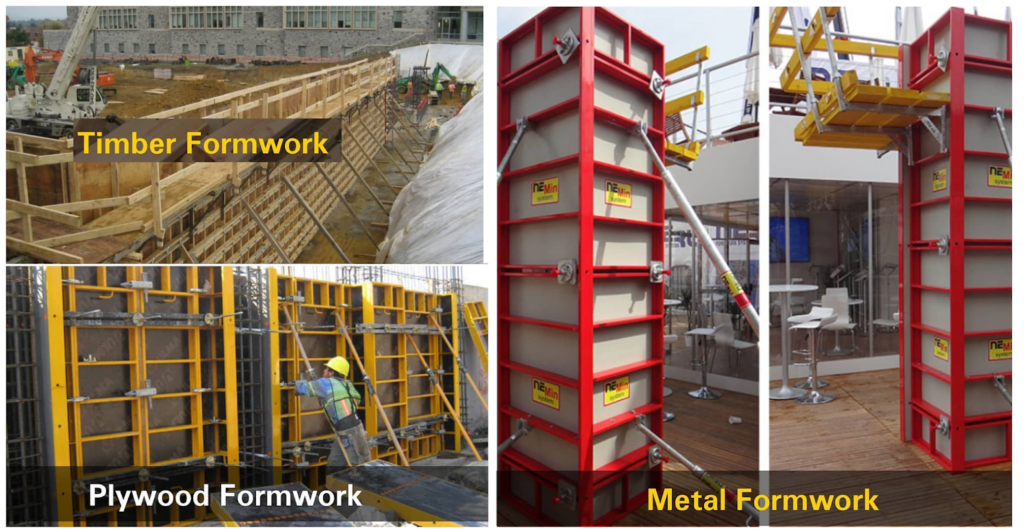
Formwork is a mold or open box, like a container in which fresh concrete is poured and compacted. When the concrete is set, the formwork is removed and a solid mass is produced in the form of the interior face of the formwork. The top of the formwork is normally left open.Falsework is the necessary support system that holds the formwork in the correct positionFormwork for concrete structural should be
1- Strong enough to resist the pressure or the weight of the fresh concrete plus any constructional live loads.
2- Rigid enough to retain the shape without undue deformation.
3- Economical in terms of the total cost of the forms and the concrete surface finishing when required.
4- Sufficiently watertight to avoid leakage at the joints.Formwork materials
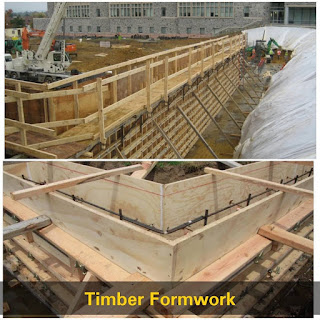
Formwork intended to form part of the permanent structure will generally be steel or concrete, Temporary formwork designed to be struck and reused may be made from any economic and easily worked material, timber, steel and GRC/GRP being the most common.
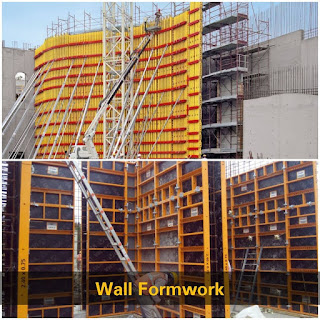
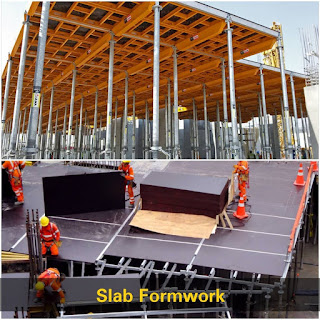
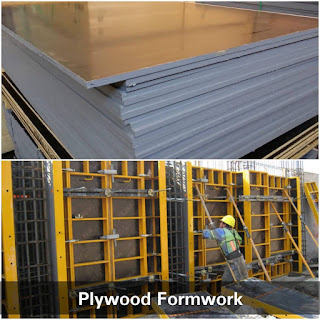
Formwork materials can be classified as:
1- Timber Formwork
2- Metal Formwork
3- Plastic Formwork
4- Insulating concrete form or insulated concrete form (ICF)
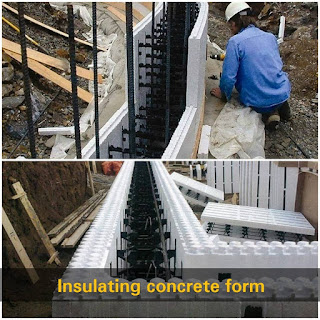
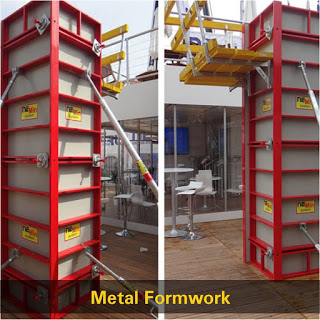
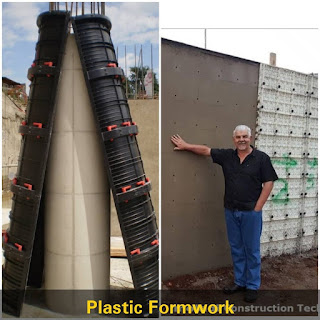
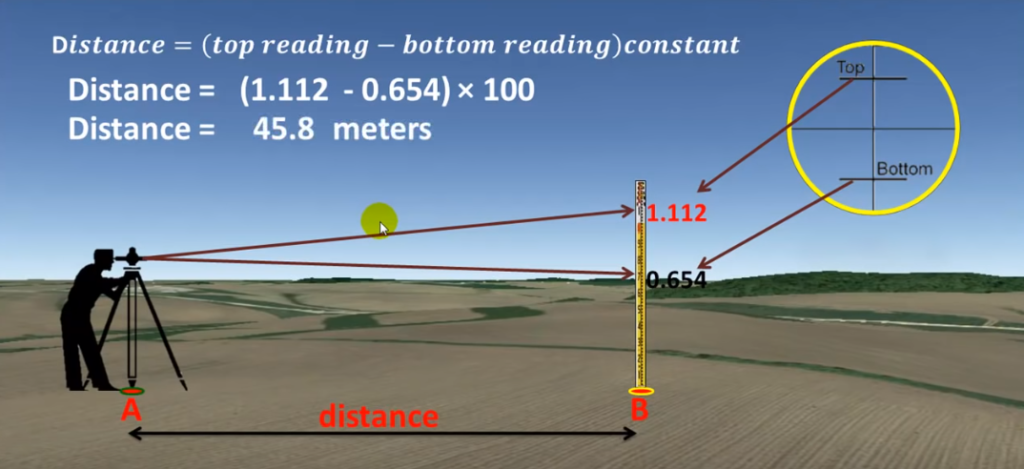
In reality, the method we are going to explicate is not only extraordinary for leveling machine. Obviously, this technique can be used using tachometer and any other device like theodolite, etc. In case there are two points on earth surface like point A and point B and we require the distance between these two points.
Here the distance signifies the horizontal distance between these two points. In order to find the distance, we just set the instrument at one of these points in the graduated staff rod. Furthermore, we require upper hair and lower hair readings.
Upper hair reading is equal to 1.112 and the lower hair reading is equal to 0.654 meter Now, we can make use of the horizontal distance determination formula.
Distance = (top reading – bottom reading) * constant
[Constant will be the horizontal distance between Point A and Point B]
Distance = (1.112 – 0.654) x 100
Distance = 45.8 meters
[The constant may be dissimilar for each and every type of instrument, however mostly we use 100. The constant can be found in the manual of leveling machine.]

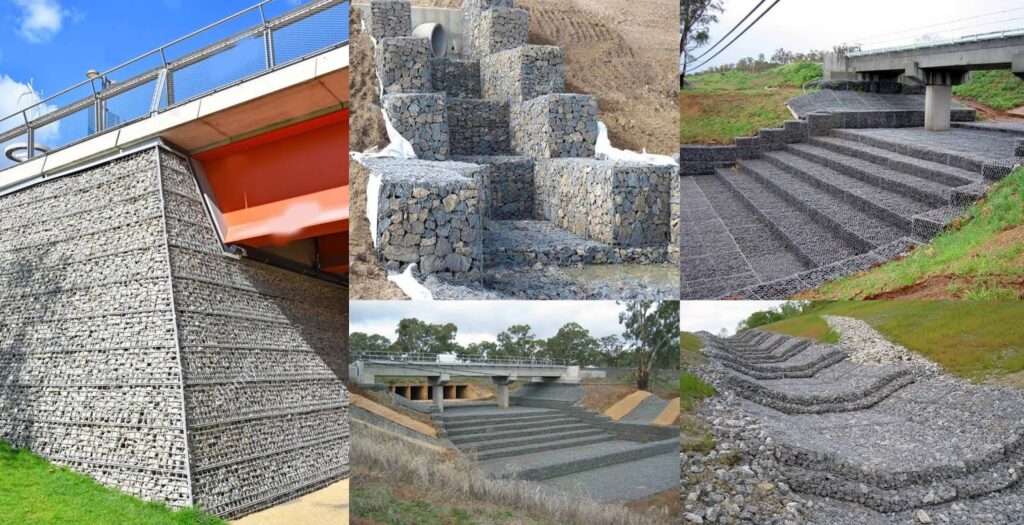
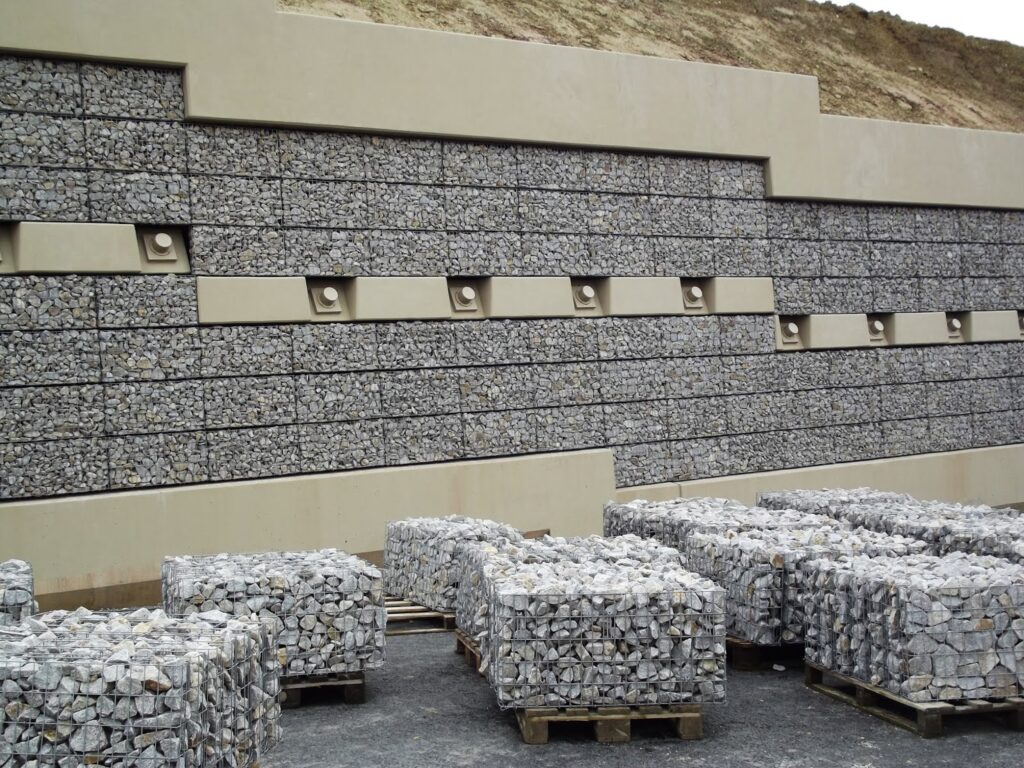
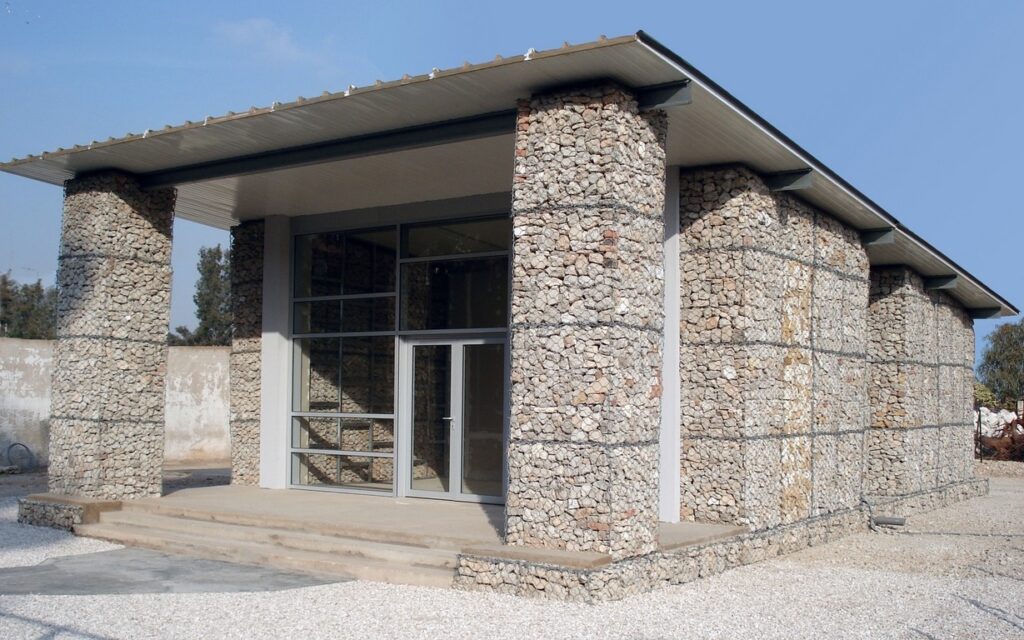
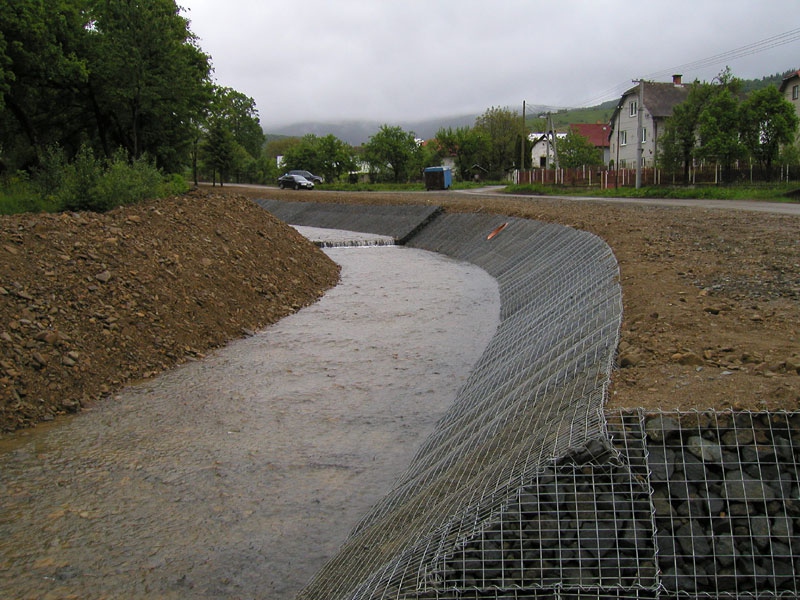
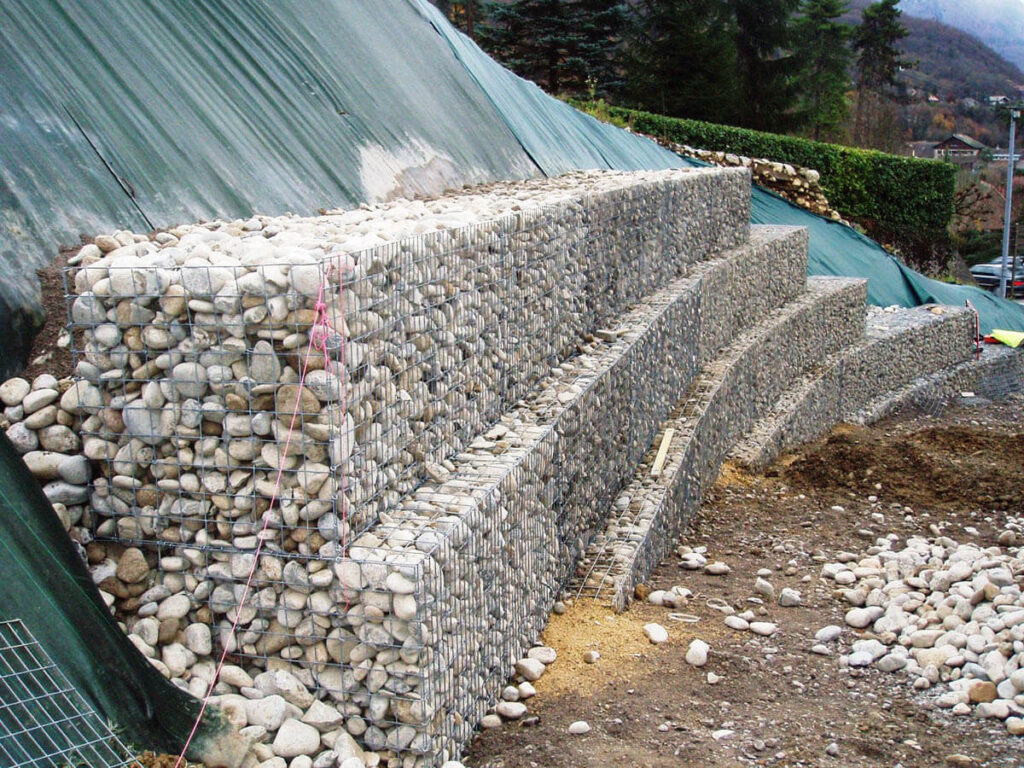
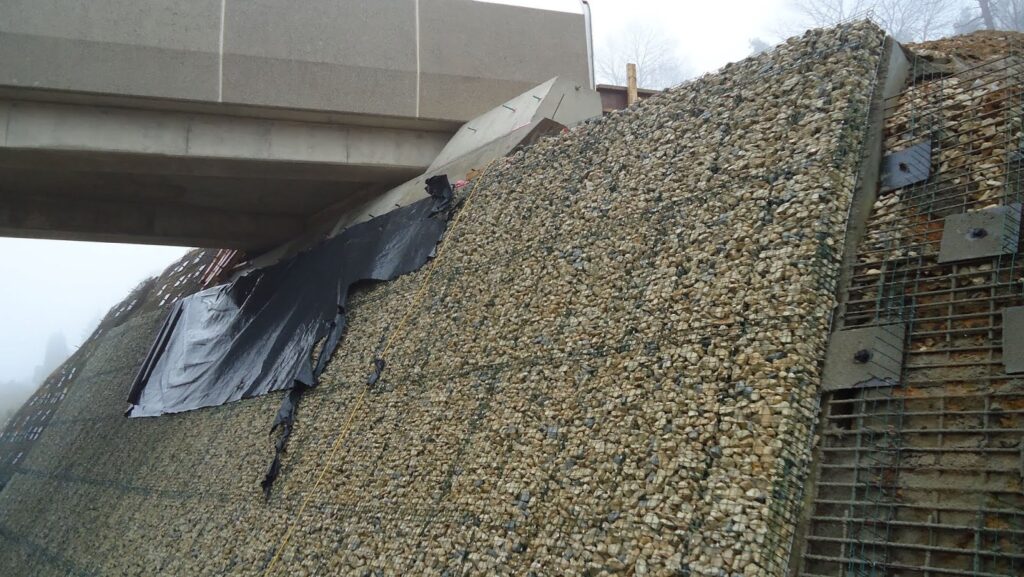
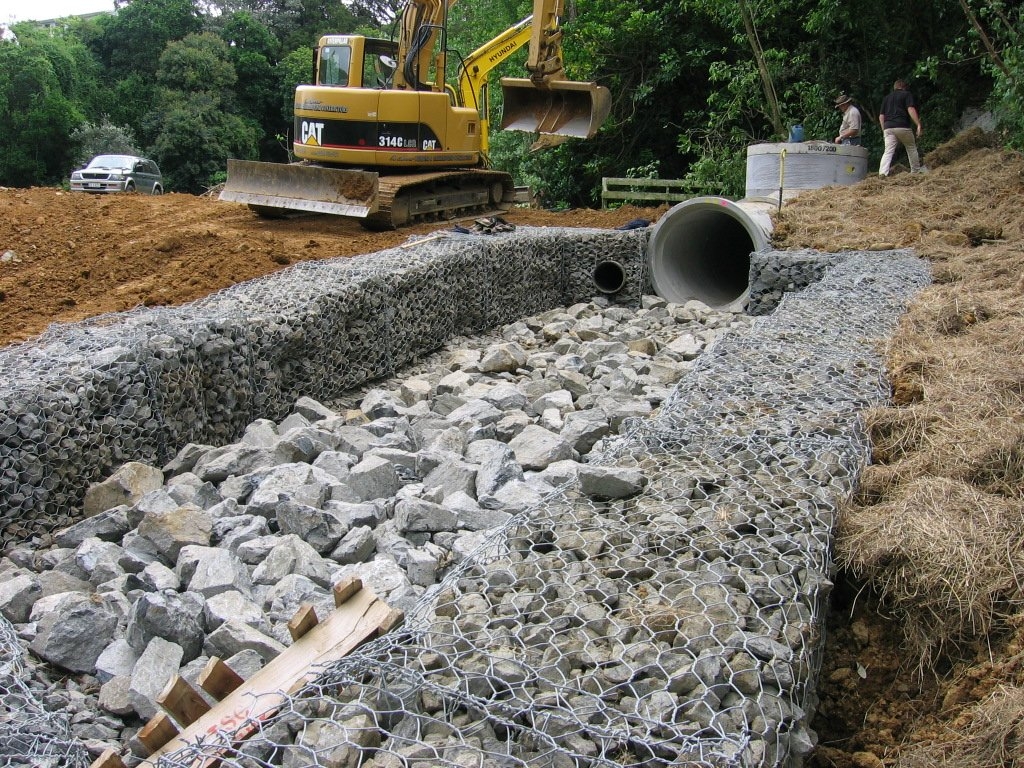
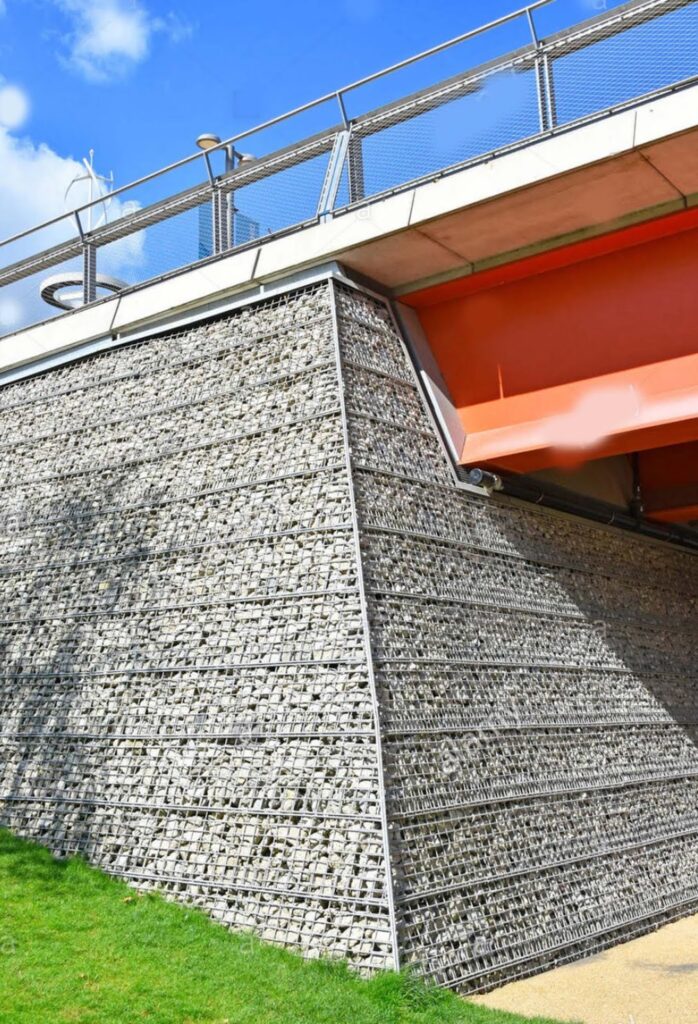
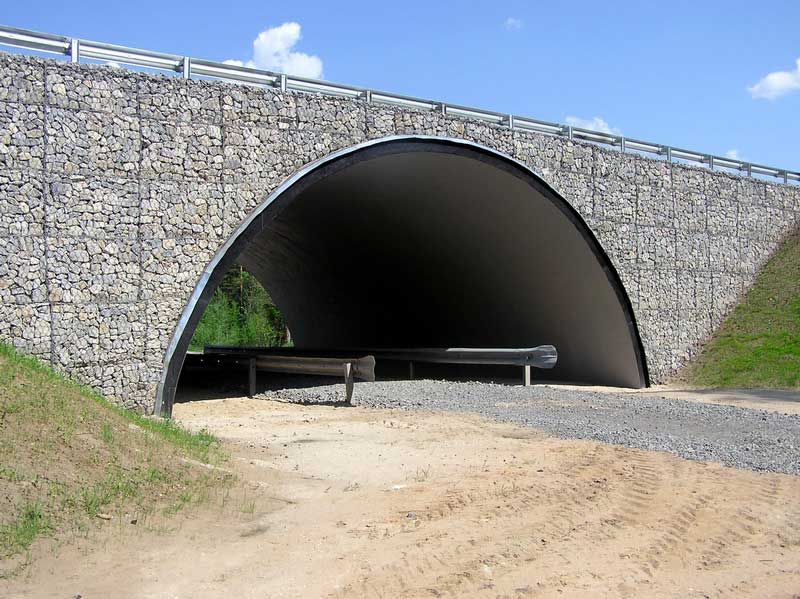
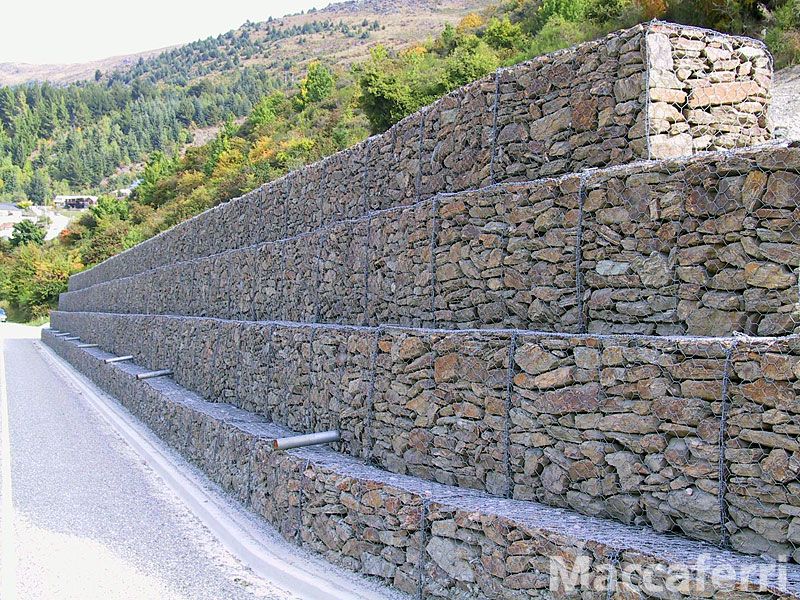
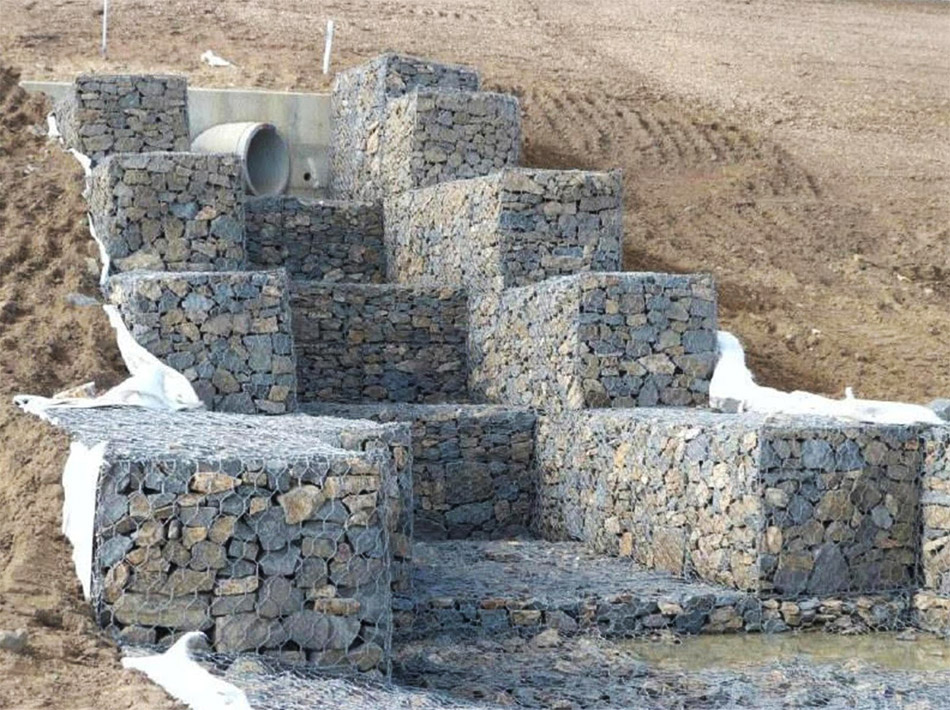
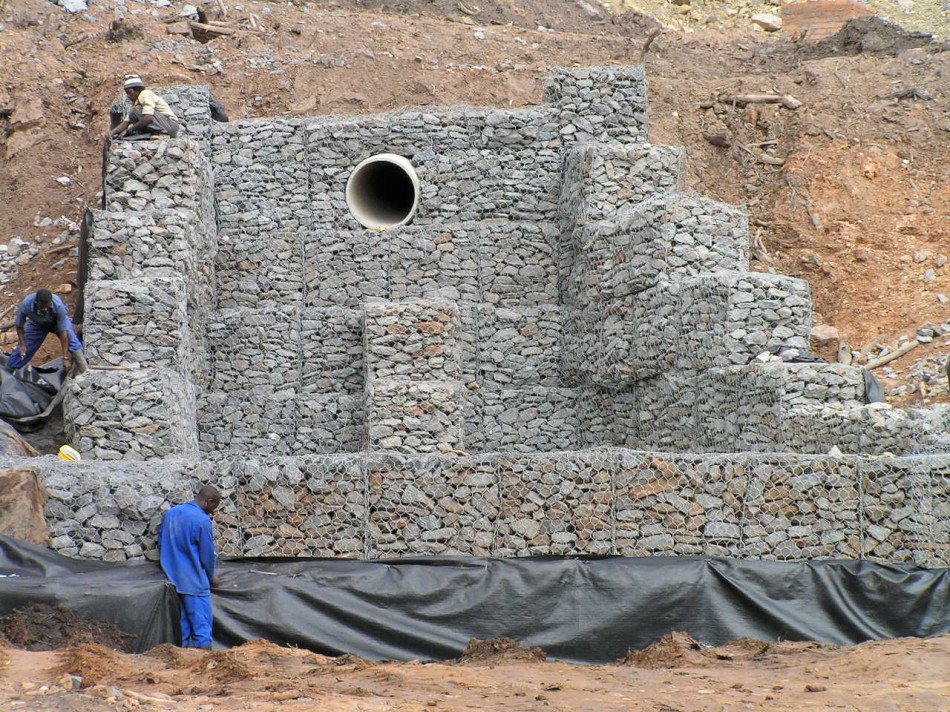
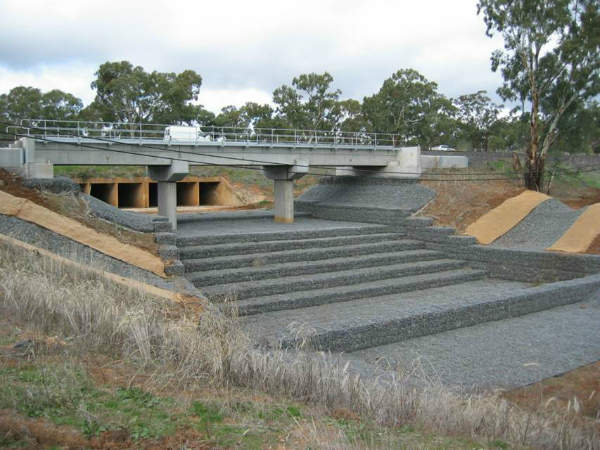
A gabion (from Italian gabion meaning “big cage”; from Italian gabbia and Latin cavea meaning “cage”) is a cage, cylinder, or box filled with rocks, concrete, or sometimes sand and soil for use in civil engineering, road building, military applications, and landscaping.
For erosion control, caged riprap is used. For dams or in foundation construction, cylindrical metal structures are used. In a military context, earth- or sand-filled gabions are used to protect sappers, infantry, and artillerymen from enemy fire.
Types of Gabions
1- Gabion baskets
2- Gabion mattresses
3- Gabion sacks
4- Gabion wire mesh
5- Decorative Gabion Elements
Applications of Gabions
1- Retaining structures such as retaining walls, revetment and toe walls to embankments and cuttings.
2- Corrosion prevention structures for instance sea walls, riverbank defenses, canal banks, dams, weirs, groins and for the protection of reservoirs and lakesides.
3- cylindrical metal gabion is used for dams or in foundation construction.
4- It is employed as a noise barrier.
5- Gabions are also used as temporary floodwalls.
6- It is utilized to change the direction of the force of floodwater around the weak structure
7- Stepped gabions improve energy dissipation in channels.
8- Finally, it is used for aesthetic purposes
Advantages of gabions
1- Durability
Gabion has a very high resistance to atmospheric corrosion because of the well-bonded zinc coating on the wire and its ability to support vegetation growth.
2- Flexibility
This feature permits the gabion to settle and deform without failure and loss of efficiency. Specifically, when unstable ground and moving water are encountered.
3- Permeability
It provides automatic and easy drainage, which eliminates the need for the installation of drainage pipes.
4- Strength
Gabions are satisfactory strong that is it is capable of resisting flood force, torrential force, and ice and earth pressure.
5- Economical
It is more economical in terms of both material and labor in comparison with other gabion alternatives.
6- Environmentally friendly
Recycled materials can be placed into the gabion cage. The gaps in the soil between filling materials allow the plantation to grow over time. Gabion elements are not affected by natural phenomena.















THESE ARE THE TOP 10 CIVIL ENGINEERING REQUIREMENTS TO BECOME A SUCCESSFUL CIVIL ENGINEER:
1. TESTS OF BUILDING MATERIALS:
A good civil engineer should have proper knowledge of different tests of building materials. Some important tests are listed below.
Concrete Test: Slump test, compression test, split tensile test, soundness etc.
Soil Test: Core cutter test, compaction test,sand replacement test, triaxial test, consolidation test etc.
Bitumen Test: Ductility test, softening point test, gravity test, penetration test etc.
2. INVESTIGATION OF SOIL:
Various soil tests are conducted to determine the settlement and stability of soils before starting a construction. So as a civil engineer, you should have enough knowledge of these tests which are performed at the site.
3. USES OF SURVEYING INSTRUMENTS:
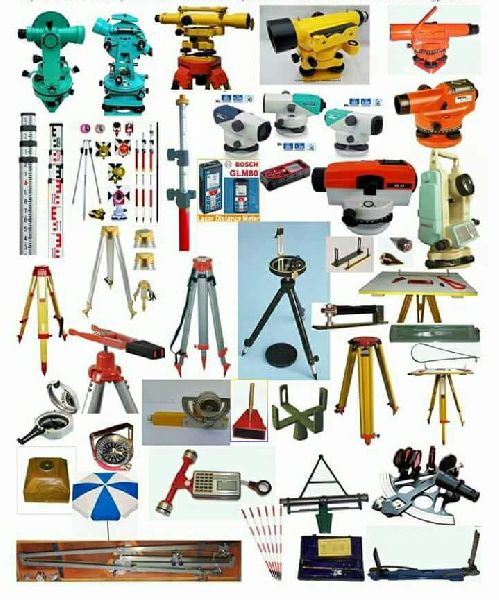
Usages of surveying instruments like the total station, theodolite etc is also a mandatory knowledge for every civil engineer. These instruments are used for marking and measurements.
4. STANDARD CODES USED IN CONSTRUCTION:
Every country has their standard safety specifications (eg: Is Code) for construction related works. All new construction should be done by following all the rules and procedures mentioned in the standard codes. Otherwise, chances of failure of a structure will be always high.
5. BAR BENDING SCHEDULE: Bar bending schedule is an essential chart for civil engineers. It provides the reinforcement calculation of RC beam such as cutting length, type of bending, the length of bending etc.
6. DRAWING AND DESIGN:
Drawing and design are the primary keys of an ongoing project. It provides all the required specifications of that project. Every site engineers should have the analyzing power of such drawings and designs.
7. ESTIMATION AND BILLS: Estimation and bills should be prepared by a civil engineer in a construction project.
8. QUALITY CONTROL:
Quality control ensures the profit of a project by reducing the extra costs. So you must have a basic knowledge of quality control.
9. ON FIELD MANAGEMENT:
Knowledge of formwork, concreting, safety measures etc is also a key aspect.
10. COORDINATION WITH LABOR: As a civil engineer, you must know how to deal with labors in a site.