What Is Plaster And Plastering?
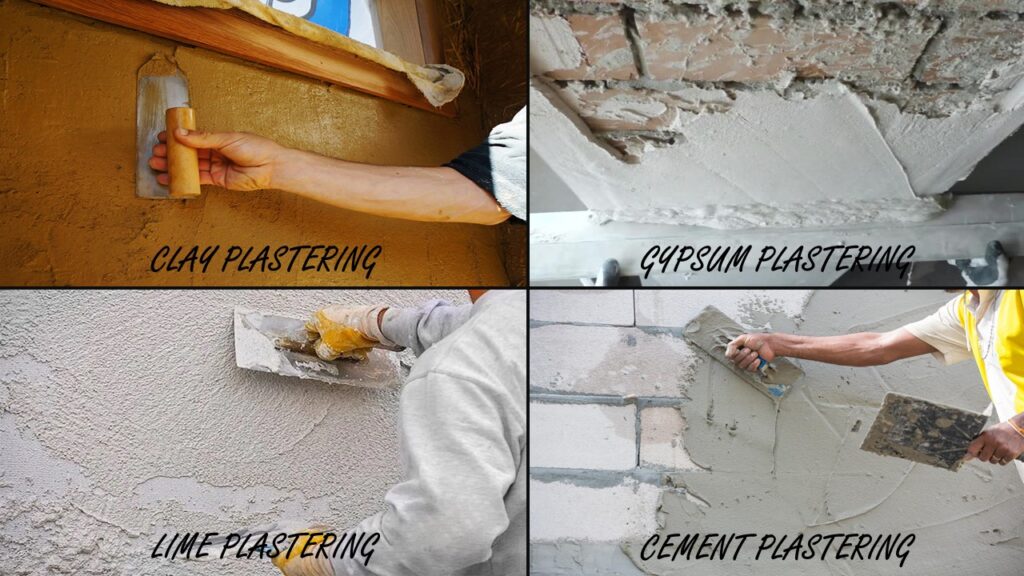
The process of applying plastic mortar on the surfaces of rough ceilings, walls, etc in order to obtain an even, smooth, and clean surface is known as plastering and the plastic mortar is called plaster. When plastering is done on external exposed surfaces, it is known as rendering. In this article, we will discuss different types of plastering used in construction.
Purpose Of Plastering
Plastering is done mainly for the following purposes:
- To protect the surface from harmful atmospheric effects such as rain, wind, sun, snow, etc.
- To create decorative effect as well as to improve the aesthetics.
- To hide defective and poor workmanship.
Types Of Plaster
Conventional types of plaster are as follows:
- Cement plaster
- Lime plaster
- Mud plaster
1. Cement Plaster
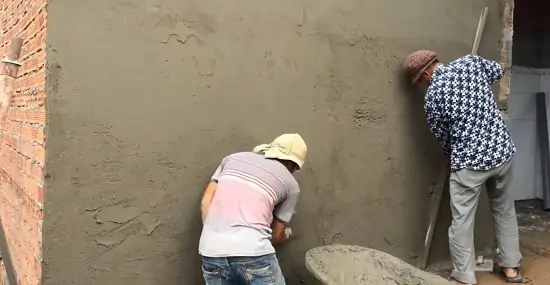
Cement plaster is the most common type of plaster in the construction industry. Cement plaster is a mixture of cement, sand, and suitable amount of water.
Proportions of cement and sand may vary according to the requirements of the plaster. But, the usual proportion are 1:3 and 1:4 which gives the best results.
Cement plaster is used on the interior walls and exterior walls, ceilings, and other building elements. For interior walls, a single coat of plaster is usually enough to achieve the desired surface.
For exterior walls, another coating is required depending on the thickness of the plaster and the nature of the surface. The thickness of cement usually ranges between 12 and 20 millimeters, depending upon the type of wall or ceiling surface.
The cement plastered surface requires proper curing with water for a minimum of 7 days. Improperly cured walls may develop cracks.
2. Lime Plaster
Lime plaster consists of lime, sand. and water. The proportion of lime and sand is equal. Sometimes, little amount of cement may also be added to improve the strength of the plaster. In lime plaster mostly fatty lime is used. Hydraulic lime results in blisters on the plastered surface.
Gulal, a type of fragrant gum may be added at a rate of about 1.6 kg/m3 of mortar. It gives good binding properties to the mortar. Chopped hemp is also be used at the rate of about 1kg/m3 of mortar.
It provides improved adhesive and tensile properties to the plaster. Types of plaster are now being replaced with cement plaster.
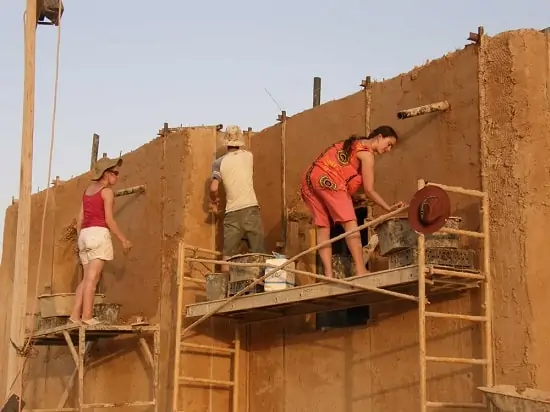
3. Mud Plaster
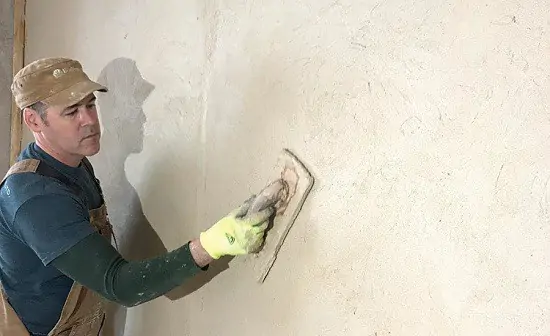
This is the cheapest type of plaster. It is made up of suitable proportions of clay and sand. The clay content should be free from grass, roots, organic matter, stone pebbles, etc.
Chopped straw, hay, or hemp is also used in the mixture at the rate of 30kg/m3 of earth content. Mud plaster is mostly used in villages and temporary constructions.
Special Types Of Plaster
Besides the above plastering materials, there are some special types of plasters. They are as follows:
1. Waterproof Plaster
As the name suggests, this type of plaster protects the masonry wall from ingress of moisture and thereby eliminating or reducing dampness of the wall.
The mortar for waterproof plaster is prepared by mixing cement, sand (1:2), and pulverized alum at the rate of about 12 kg/m3 of sand content.
Water to be used in the mix is not normal water but the water is prepared by dissolving 75gm of soft soap per liter of water.
2. Stucco Plaster
Stucco plaster is a type of decorative plaster that provides excellent finishing. This type of plaster is usually done in three coats with a thickness of about 25 mm. Each coat needs to be dry completely before applying the next coat. The first coat in stucco plaster is called scratch coat.

The second coat is called finer coat or brown coat and the final coat is known as a white coat or finishing coat. Stucco plaster can be used for internal as well as external walls.
3. Gypsum Plaster
Gypsum plaster is a factory-made product produced by partial or complete dehydration of mineral gypsum. It is available in powder form and in white color.
Dry gypsum powder is mixed with a suitable amount of water to form a ready paste that can be easily applied to the ceiling and wall surfaces.
The thickness of gypsum plaster is usually 6 mm- 20 mm. It dries very fast, so painting on the plastered surface can be started 72 hours after application.

It gives a very good smooth finish and level surface with excellent proper angled corners. This type of plaster can only be used in the interiors of the building, not suitable for external plastering. It can also be used to fabricate ceiling cornices and moldings.
It is fire resistant and a good thermal insulator. Another good advantage is there is no shrinkage during setting and hence it does not develop cracks.
4. Keen’s Cement
It is produced by calcinating alum with gypsum. It is the hardest and densest form of gypsum plaster. It is pure white in color and gives a very fine glass-like polish. This type of plaster is mostly used for ornamental works.
5. Martin’s Cement
Martin’s cement, another type of special plaster material is produced by calcinating peal as with gypsum. It also sets quickly and results in a hard and white surface.
6. Parian Cement
It is obtained by calcinating borax with gypsum. It is an alternative to keen’s cement and used for ornamental purposes.
7. Sirapite
This product is produced by slaking gypsum in petroleum. It is a good fire resisting plaster material.
8. Scagliola
It is obtained by dissolving keen’s cement and color pigments in glue. It gives marble like finishing, used for plasters, panels etc.
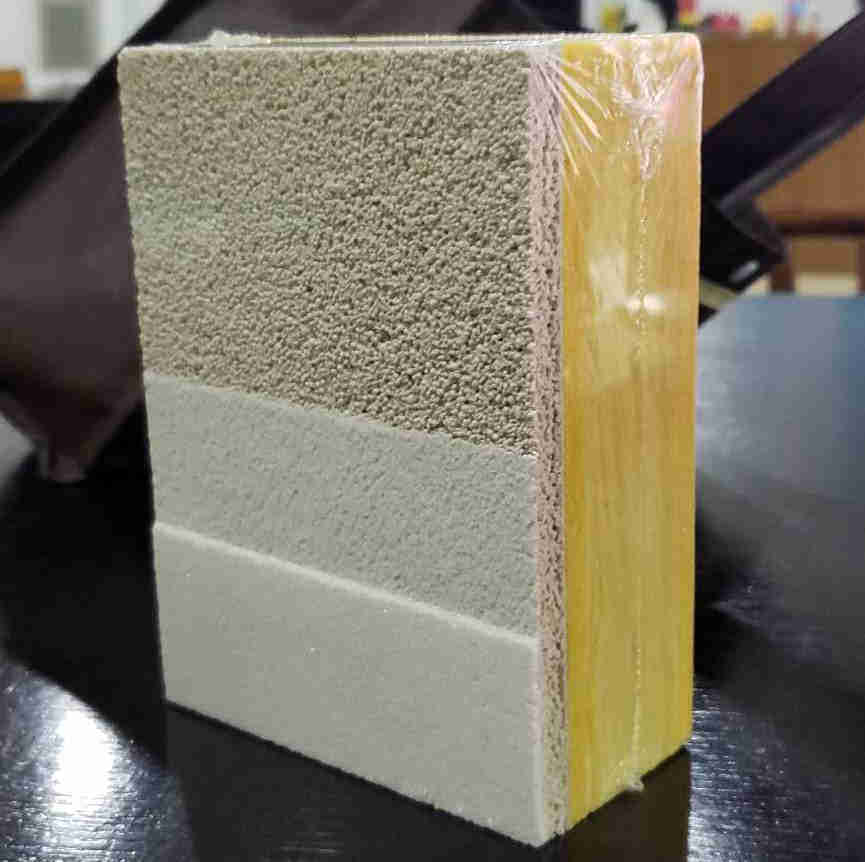
9. Acoustic Plaster
It is a gypsum product that is mostly used as a final coat. During final coat finishing small pores are left on the surface to absorb sound.
10. Barium Plaster
This type of plaster is made from barium sulphate. It is used as final coat in X-ray rooms.

11. Asbestos-marble plaster
It is prepared by mixing finely crushed marble, asbestos, and cement. It gives a beautiful marble-like finish on the surface.
12. Snow-crete and Color-crete cement
These are patented cement. They are mostly used on the exterior walls to create a very good appearance from the outside.
]]>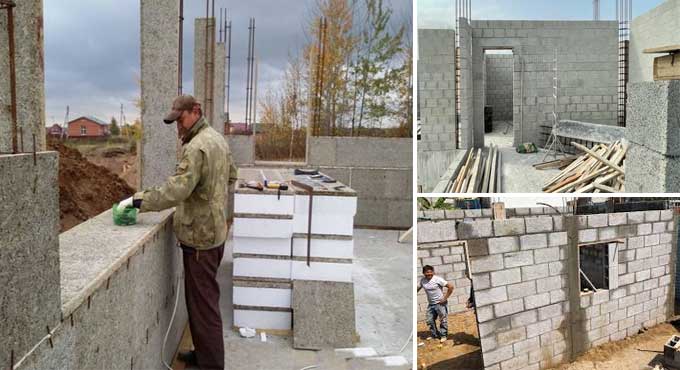
Besides the need for a stunning exterior design, builders are now looking for strong, durable, energy-efficient, and insulation capability architectures as well as ease of installation, maintenance, and so on, when looking for designs with an exterior deception.
There have been new experiments being conducted on exterior façade techniques recently. Listed below are a few of the most successful sustainable exterior façade techniques that can be used on your home.
These sustainable exterior façade techniques have been found to be more effective and efficient than traditional methods.
Some examples of best Exterior Sustainable facades
Here are some examples of the best exterior sustainable facades design for your home:-
Green wall on the entrance
Green walls are another great way to spruce up the exterior of your house, and if you keep them up, they are a lovely, bright option for enhancing the exterior design of your house in an environmentally friendly way.
In addition to being very energy-efficient, both vertical gardens and green walls contribute to reducing carbon emissions as a result.
As well as serving as a carbon sink, they also serve as a filter and absorb rainwater, reducing pollution as well. In addition to adding to the sustainability movement, a green wall can also enhance the aesthetic look of the façade without detracting from it.
Installation of exposed Brick wall
Unquestionable structural advantages of an exposed brick wall go beyond aesthetic considerations.
The thermal efficiency and sustainability of brick are significant factors in its widespread usage in construction.
Along with its advantageous structural qualities and simplicity of construction, minimalism is supported by the fact that less material is utilized in building.
We are restricting the usage of plaster to just the internal facades with the exposed brick wall. This will not only lessen the environmental impact of producing extra materials, but it will also cut down on the cost and duration of building.
It serves as the main focal point for external design since it not only has a rustic appeal but also gives texture to an otherwise dull environment.
Applying the Stucco
An exposed brick wall has undeniable structural benefits that go beyond cosmetic concerns. Brick’s extensive use in buildings is largely due to its thermal efficiency and sustainability.
Minimalism is backed by the fact that less material is used in construction, in addition to its excellent structural characteristics and ease of construction.
Only the internal façade with the exposed brick wall will be covered with plaster. This will reduce the cost and time of construction as well as the environmental effect of creating more materials.
Since it not only has a rustic charm but also adds texture to an otherwise bland setting, it acts as the primary focal point for exterior design.
Installing wood plastic composite cladding
A fantastic substitute for wood cladding is composite cladding. Essentially, it is constructed from reclaimed wood and plastic.
It is well known that composite cladding combines the classic beauty of wood with the sturdiness of an engineered composite.
In contrast to wood, which has to be replaced more frequently and consumes more resources, wood plastic composites are made to last for decades. Additionally, composite cladding doesn’t need chemical sealants to preserve it.
Panels made of aluminum composite
Aluminum, polymer and a few minerals are recyclable components that are used to make aluminum composite panels.
Since ACP sheets are 100% recycled, they are very sustainable and maintain all of their original characteristics during manufacture and design.
ACP sheets contribute to insulation, lowering the need for active systems. Additionally, they emit a lot less heat into the atmosphere. They are durable and relatively simple to maintain, according to the climate.
They are very adaptable and cost-effective because these sheets can be etched with patterns and designs that resemble marble brick or stone cladding.
Wrapping it up
The creation of a modern home necessitates current sustainability solutions, therefore the outside façade concepts described above not only make your home sustainable but also give it character, making it stand out.
Working with nature rather than attempting to counteract its effects is the fundamental functional principle of façades. In other words, integrating the building with its surroundings starts with the outer façade.
]]>
House construction through an architect is a long-range project that generally goes many months or years. Furthermore, it happens in consecutive as well as in some instances concurrent periods from the purchase of a constructible land lot to the allocation of the house, throughout the design as well as the critical period of the construction activities.
This section presents the distinct periods for the particular instance of the design as well as construction of houses.
Moreover, a comprehensive presentation of the broader level instance can be identified in the measures for the design as well as construction of buildings.
1. Purchase of a land lot as well as financing
Prior to the house construction, the owner should carry out a part of evaluation to locate a constructible land lot as well as the required funding.
So as to construct a house, 3 requirements should generally be fulfilled:
- Holding a piece of land or the permission to utilize it, as well as having confirmed its constructability. Generally the constructability of a land lot should be confirmed through getting a certificate of town planning from the related administration.
- Getting the required funds: bank loans, assistance, personal investment, and so forth, for:
- The acquisition of the land and its probable connections to the distinct networks of roads as well as conveniences (electricity, sewage, water, telecommunications).
- The construction of the house: procurement of each and every material as well as disbursements of the contractors responsible for every domain (electricity, plumbing, masonry, roof).
- The disbursement of the fees of the distinct experts who are going to ensue – notary, architect, geometer, and so forth.
- Getting the building permit, which, determined by the nation as well as the area, might be presented to some conditions in relation to the size of the terrain, house, required design, and so forth.
2. Initial draft – sketch, budget as well as building permit
House is planned by the architect as per the discussion with client, as per the client’s requests as well as budget, considering the requirements of the plot of land (climate, shape, orientation) as well as local urban planning guidelines, in order to design comprehensive plans that are going to create the foundation of the application dossier with regards to a building permit.
Throughout the initial design period, the architect makes a simple introductory draft, which rearranges the subsequent parts:
- One site plan – establishing the house in the whole land lot.
- One basic plan of the house.
- The surface of the several rooms as well as portions of the house.
- A descriptive report of the project.
- An initial estimate of the overall cost of the house.
3. Comprehensive design as well as selection of contractors
Once the building permit is obtained, the architect is going to conduct the comprehensive design of the whole house as well as the plans needed for the fulfillment of each of its portions. The architect openly describes the distinct lots with regards to discussion of the contractors of every domain:
- Sections, plans, as well as elevations required for the appropriate knowledge of the complete project and the involvement of every specialist.
- A comprehensive quote which defines each and every process to be conducted by every field and the related costs.
- A suggestive plan with regards to the completion of the various works with regards to every department.
4. The construction site
The commencement of the construction site signals the start of the effective construction of a house. It comprises 2 major sorts of work: the structural works having construction with regards to the structure as well as the firmness of the house, as well as the resulting works that rearrange the tasks required for the well-being of the house and its day-to-day use by the occupants.
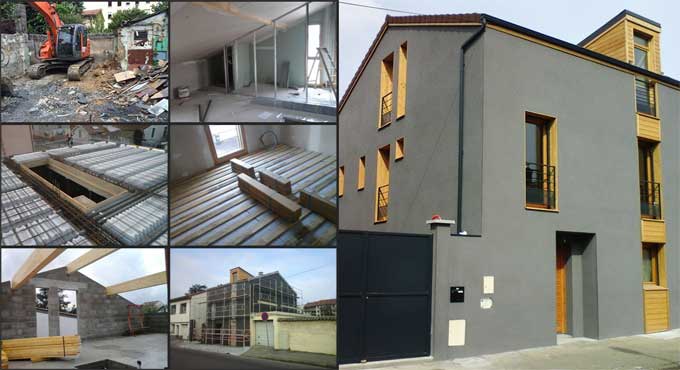
One can have a look at the photographs of the whole advancement of a project site for a city house to demonstrate the several phases of the construction, beginning at the demolishment of the previous structure to the completion of the new structure. That original house depends upon the utilization of standard and inexpensive building materials and the features of wood like decoration material in contradiction of a gray coating of the original form of the house.
Structural works: Structural works comprise the construction of the structural elements of the house, its anchorage in the ground, the sturdiness of the walls as well as the roof. They happen in a sequence of interventions of 4 main departments, from floor to roof.
Secondary works: The secondary works comprise the implementation of the several elements of interior fittings as well as finishes for aesthetics as well as comfort for the daily life of the occupants. Some secondary works can sometimes be carried out together.
5. Reception of the works
On the completion of the works, a written report is documented for the reception of the house with the help of the architect. Furthermore, the date of this report is the legal date of the commencement of the stages of the several assurances for the works.
]]>
A staircase provides easy access from floor to floor. A staircase is a room or space that contains stairs. Stairway Design Calculation is necessary before constructing stairs to determine their risers and tread positions.
Buildings with multiple floors have staircases for access and communication. Fires spread from floor to floor with the help of these paths.
As a result, the structure must be protected by fire-resistant walls, floors, and ceilings. In the same way that floors are designed to carry specific loads, the frame will have to carry certain loads. Stairs can be built from a variety of materials such as timber, bricks, stone, steel, or reinforced cement concrete.
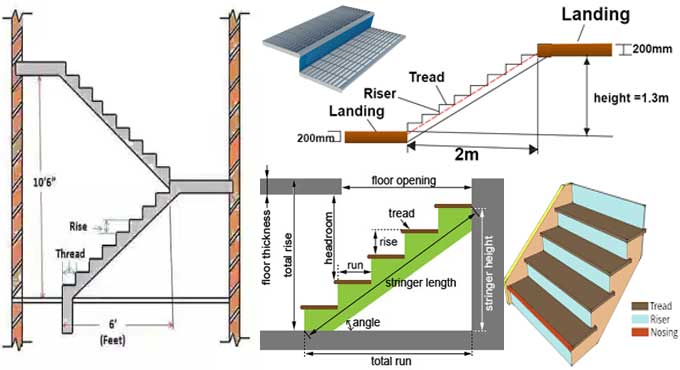
Tread: As you go up or down stairs, you place your foot on the top portion of the step is called Tread.
Riser: Step treads are supported by this vertical portion is known as Riser.
Points to Consider When Calculating Tread and Riser
The reason for 10 inches of tread is that everyone wears slippers that may be up to 10 inches in length for an average adult person, so you want to make sure the treads are no shorter than 10 inches in length.
A 5-inch rise may be considered normal in construction buildings where stairs are mostly used by the ill or elderly where they have to climb without using the full amount of energy. That will make it easier to access the riser. It is also important that the tread is wide enough.
Calculation of Riser and Treads of Staircase
There must be equality between every tread and riser. It is better to adjust with a calculator than to adjust one or two stair dimensions. You calculate the rise and treads of stairs by measuring the distance between the landing, where the bottom step rests, and the upper finished floor.
A total rise calculated by dividing it by the desired riser height. Round up or down if the result is a fraction. The height of the riser is determined by dividing the total rise by that number. A dimension to determine first before planning any stair is the rise and tread of the steps and their number.
The following points need to be considered before learning about rise and thread fix:
Two-floor clear distance (A) is 3.20 meters.
Distance between first and last riser on one flight (B) = 1.80m.
Staircase Riser Calculation
Decide the size of the riser first,
The riser size is 7 inch & range is 6-8 inch.
Risers = Clear Distance between Two Floors (A) / Risers Size
= 10foot 6 inches= 126 inches/ 7
= 18 nos.
It’s 9 for the first flight and 9 for the second flight.
Staircase Tread Calculation
The next step is to calculate the tread size. Obviously, there is a difference in treads between a single flight and several rises for any stair. Depending on the type of stair, this dimension can be changed.
Formula for Riser Tread
Number of threads per flight = No. of risers per flight – 1
= 9 – 1
= 8 nos.
Thus, Tread Size = Total Stair Width / No. of Threads
= 6 foot = 72 inches/ 8
Tread size = 9 inch
Precautions: When calculating the design of staircases, here are some things to keep in mind:
- All parallel steps in a building should have the same tread and riser sizes on each floor.
- Any stair or step should have a minimum of 2 m of vertical space.
- For general safety reasons, a flight should usually not have more than 12 risers.
- 850 mm is the minimum width for the staircase. There may be three standard widths for stairs: 1.1 m, 1.6 m, and 1.9 m.
- Buildings used by the public, such as malls, cinemas, and shopping centers, may require wider stairways.
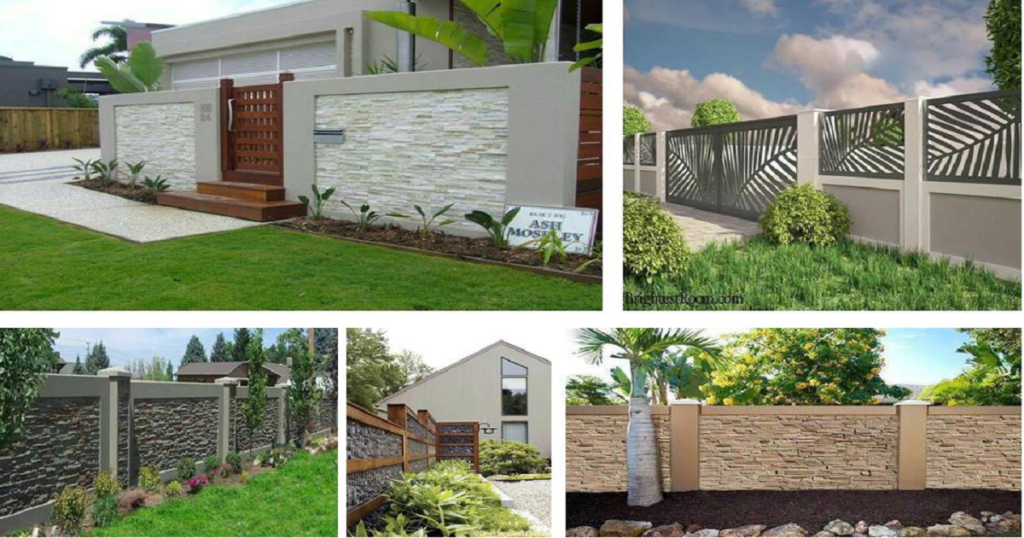
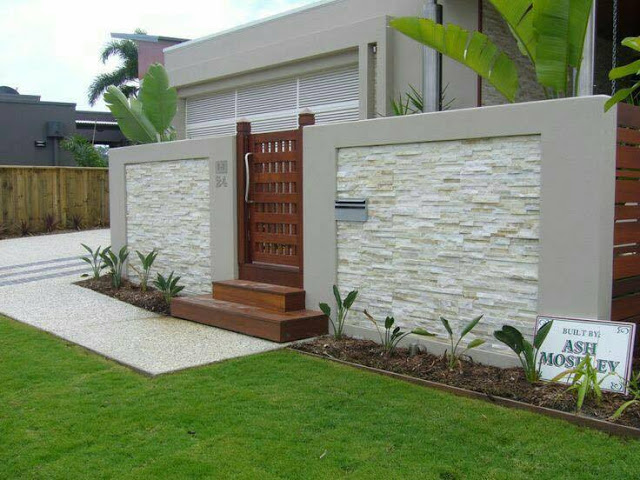
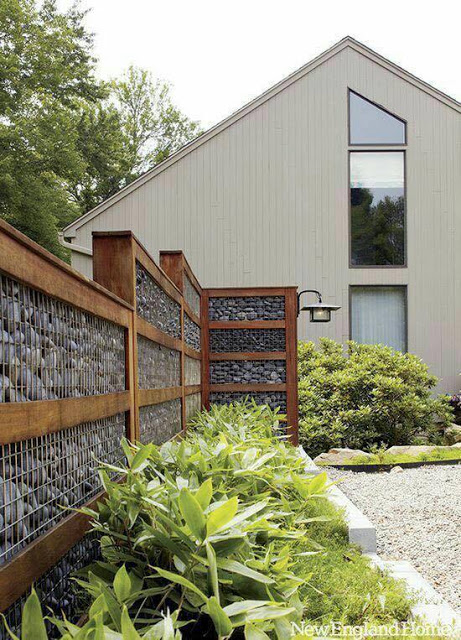
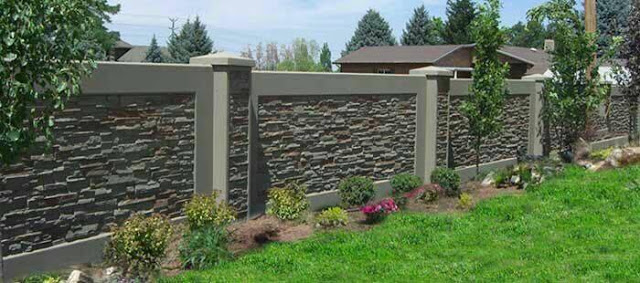
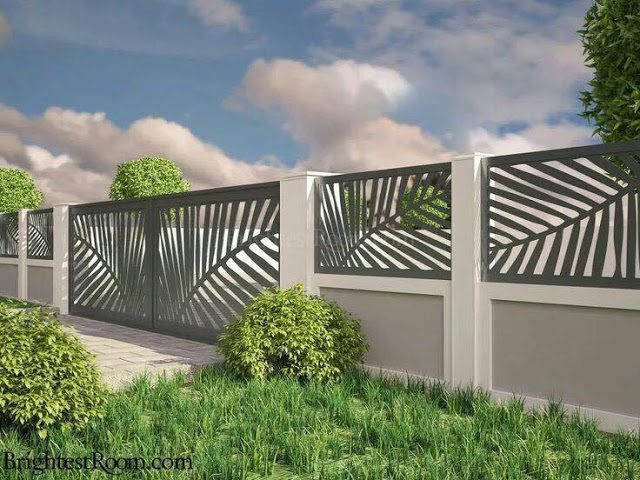
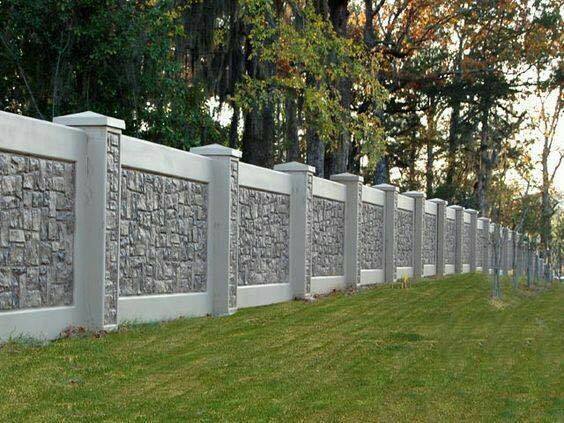
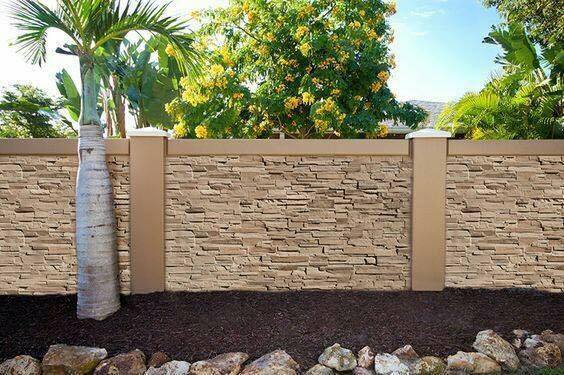
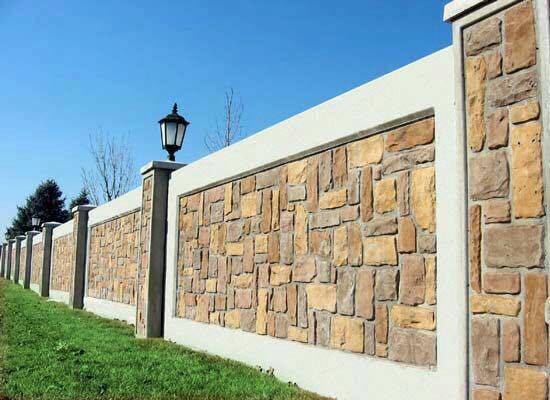
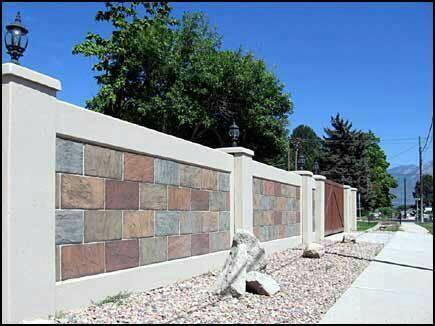
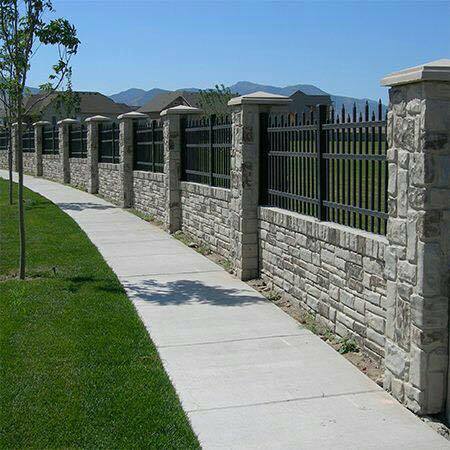
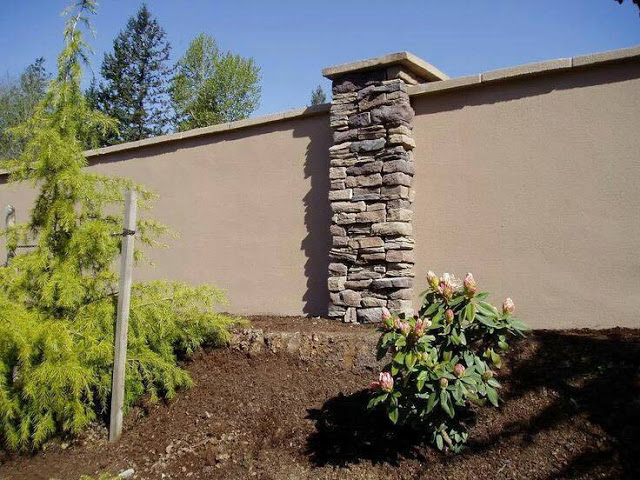
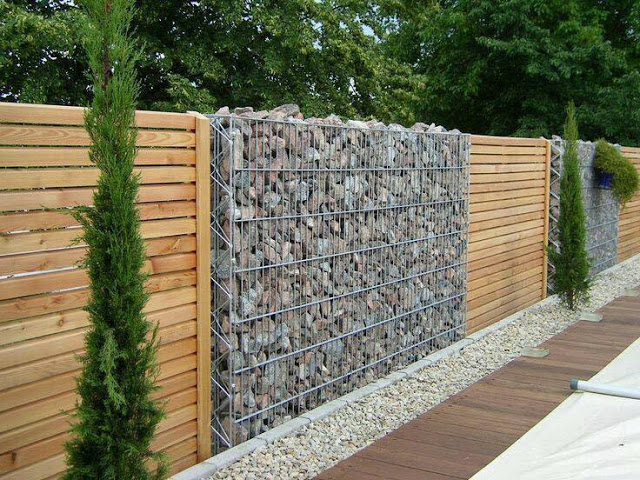
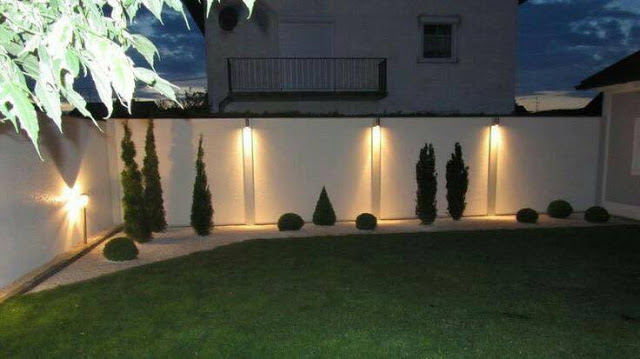
When everything perfect you want for your house but why not waste some more money for front-yard wall , your house should be perfect inside out. Even that means to decorate your wall with great and different texture, because what matters the most is that your house should grab everyone’s attention.
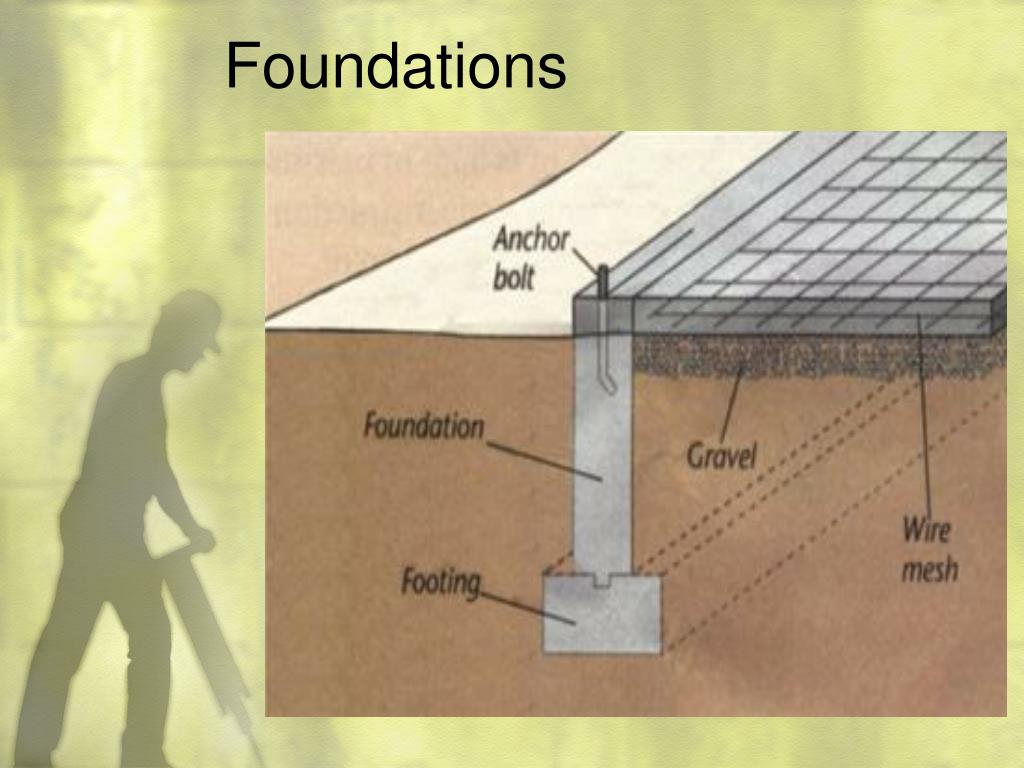
Foundation
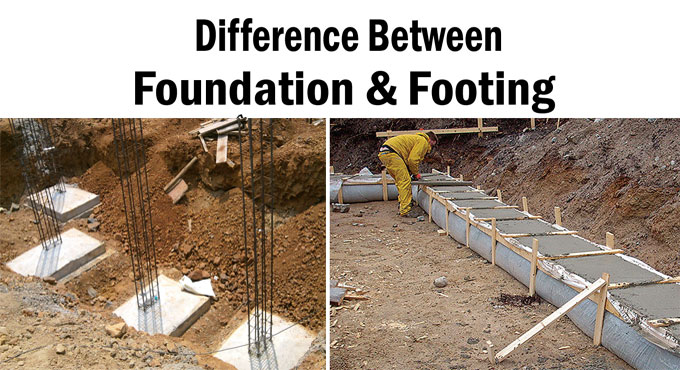
In Civil Engineering, a foundation is the lower portion of a building structure that transfers the building’s gravity load into the earth. A strong foundation is required in order for a building to stand the test of time and survive for decades or even centuries.
Foundations are commonly separated into two distinct categories: shallow foundations and deep foundations.
A building’s foundation is made by first digging a trench into the ground. Dig deep enough to reach the subsoil. Subsoil is more solid than topsoil, which is where plant roots grow.
Concrete is then poured into the trench, supported and strengthened further with steel rods. When the concrete dries, the steel holds it all together.
This is known as reinforced concrete, and once it is in place, the structure can be built on top.
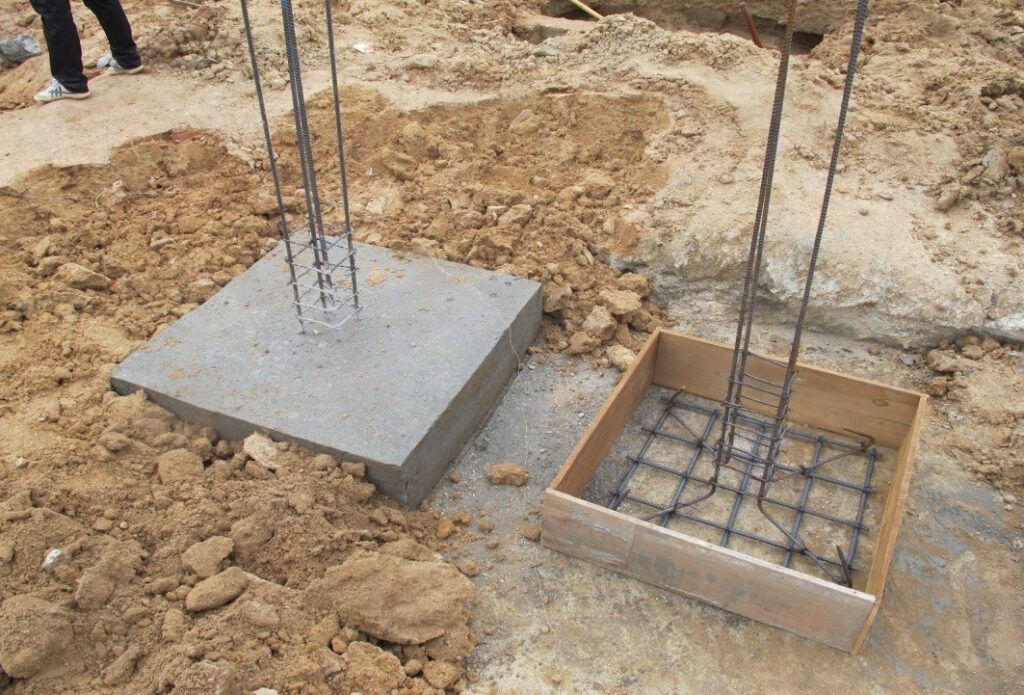
Footing
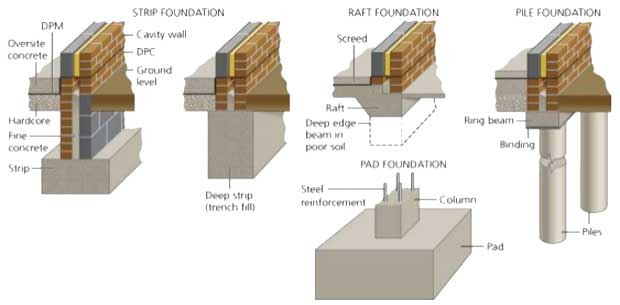
In Civil Engineering, a footing is a foundation that is constructed under the base of a wall or a column.
The purpose of the footing is to distribute the weight of the building over a large area. The term footing is generally used in conjunction with shallow foundations, not deep foundations.
or
Foundation
- A foundation is the lower portion of a building structure that transfers the building load into the earth.
- A strong foundation is required in order for a building to stand the test of time and survive for decades or even centuries.
- Foundations are commonly separated into two categories:
- Shallow foundations
- Deep foundations
- Building foundation is made by first digging a trench into the ground. Dig deep enough to reach the subsoil.
- Concrete is then poured into the trench, supported and strengthened further with steel rods. When the concrete dries the steel holds it all together.
- This is a reinforced concrete and once it is in place, the structure can be built on top.
- Footing includes slab, rebar which are fabricated of brickwork, masonry or concrete.
- Footing reinforces support to an individual column.
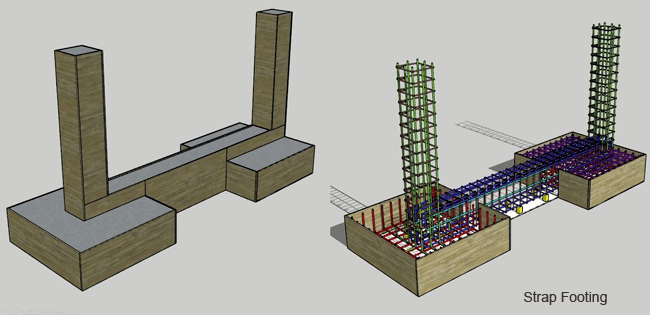
Footing
- A footing is a foundation that is constructed under the base of a wall or a column.
- Purpose of the footing is to distribute the weight of the building over a large area. The term footing is generally used in conjunction with shallow foundations not deep foundations.
- Footing is placed directly below the lowest part of the structure it supports.
- Foundation types include piles, caissons, footings, piers the lateral supports and anchors.
- Foundation is an extensive support because it gives support to a group of footings as an entire building.
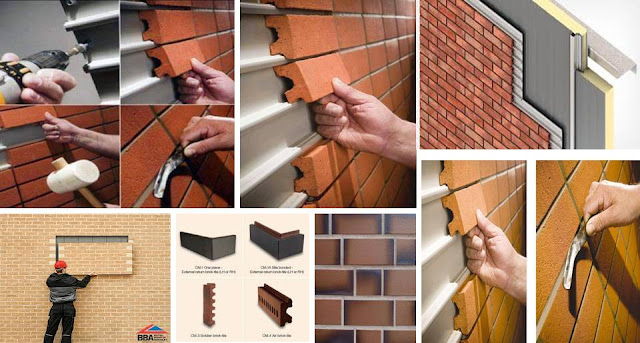
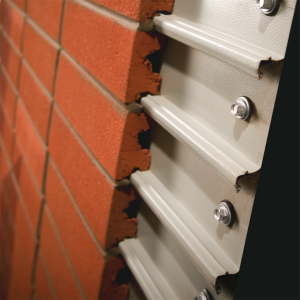
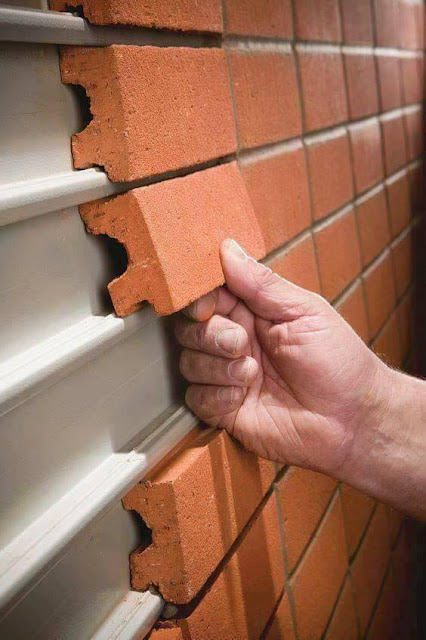
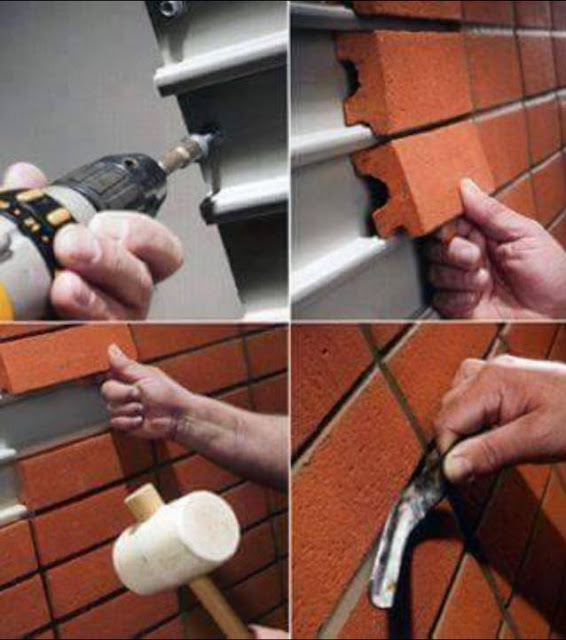
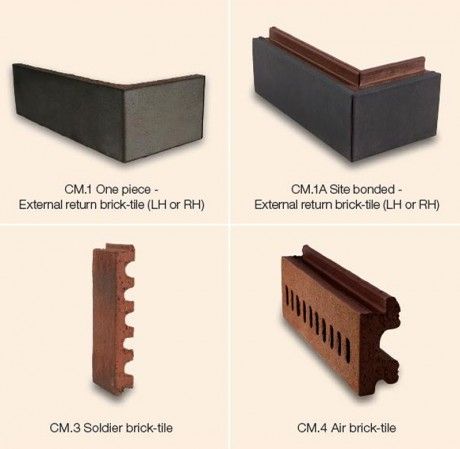
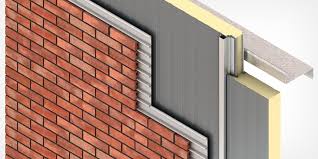
The Corium Cladding System is comprised of genuine brick tiles with a unique and patented profile that mechanically fix to an HPS200 coated and galvanized receiver tray. Each tray interlocks to form a drainage plane, which is then mounted to the engineered framing system. The brick tiles are clipped into place. This mechanical “clipping” system is proprietary to Corium and provides a high-strength façade that offers a level of design flexibility unheard of with traditional hand laid bricks.
The system is a fully engineered rain screen assembly with rear ventilation, which provides an open cavity, an uninterrupted air/moisture barrier and continuous-insulation capability, meeting the requirements of ASHRAE 90.1 for maximum thermal and moisture performance.
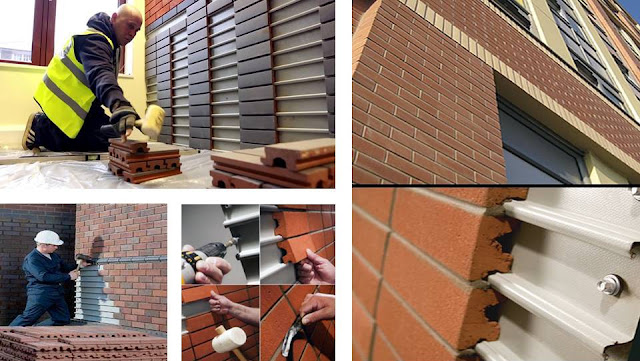
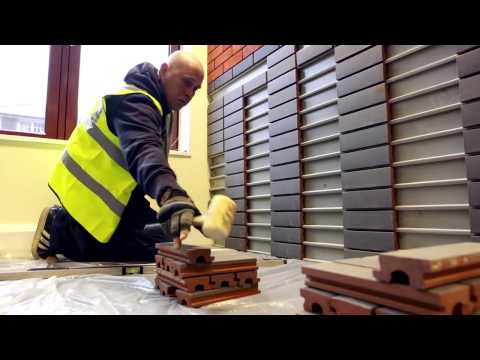
Brick Cladding Installation: Step by Step
- Rows of profiled steel sections are fixed to the backing structure.
- Corium extruded fired clay brick tiles are simply clipped into place by hitting the brick tile with a rubber mallet. The clipping process ensures that consistent horizontal joints are achieved, whilst vertical joint spacing can be adjusted to suit design requirements.
- Once all the Corium brick cladding tiles are installed and the quality approved, mortar is applied to vertical and horizontal joints between the tiles to provide a brickwork finish.
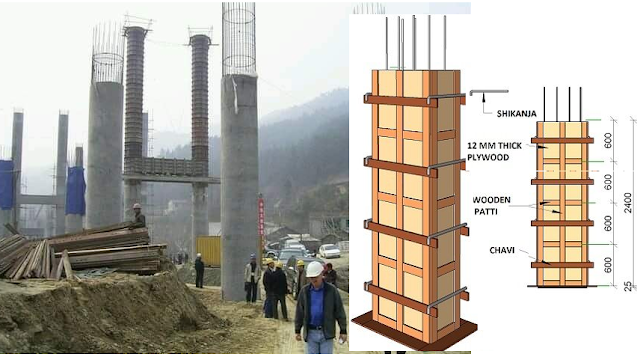
Column has not fixed size. The column’s size depends on different aspects such as loads on column, material used in column etc. According to these aspects the size of column should be assumed or accepted as well as after that verification for safety is needed.
There are different types of columns such as RCC columns, long column. Short column, timber columns and tied column etc. now a days, RCC column are mostly use in structures because it is economical and also bear more load easily.in this article, the size of RCC columns will be discussed.
The size of column should not be less than 9” x 9” inches; and for one storey building concrete mix will be M15 [1:2:4].
the size of column 9” x 9” inches are to be use in 1 or 2 storey structure. For high strength in 1 or 2 storey building the M20 (1:1.5:3) concrete mix will use. While normally M15 concrete mix (1:2:4) ratio is better to use. the size of column should not be not less than or more than 12” x 9” inches.
Distance between Columns:
The center distance between two columns must be same. In all situations, prepare a layout for column on a grid. the center to center distance between two columns with size 9”x 9” inches must not be greater than 4 meter. While in high rise building the center to center distance between two columns should not be more than 7 meter. It should be less than 7 meter.
The size of column must be increase because of these aspects that is given below:
- If the distance between two columns is increase the dimension of columns will also be increase
- The height of structure also affects the dimension of column if height is increases the dimension will be more while low in rise building the dimension of columns will be low.
- The distance between two columns and height of column is directly proportional to the dimension of height.
Size of Column:
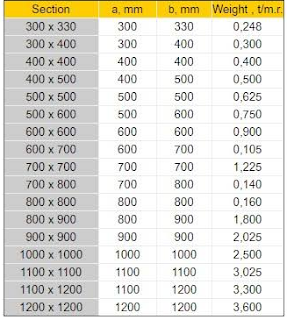
The size of column can be assumed by the table that is given below:
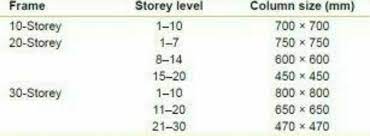
For the 10 storey building the size of column will be 700 x 700 mm. while for the 20 storey building the size of column for the first seven (1 to 7) storey the dimension of column will be 750 x 750 mm and after seven to fourteen (8 to 14) for 20 storey building the size of column will be 600 x 600 mm while for 15 to 20 storey the dimension of column will be 450 x 450 mm.
Alignment of column:
The grid is prepared in survey of placing the columns. This grid helps to avoid the errors as well as placing of columns could be implement suitably also the columns can easily be placed in two different manners that that is given below:
- The straight line can be done by the help of a grid.
- The circular or curvature is used in circular buildings.
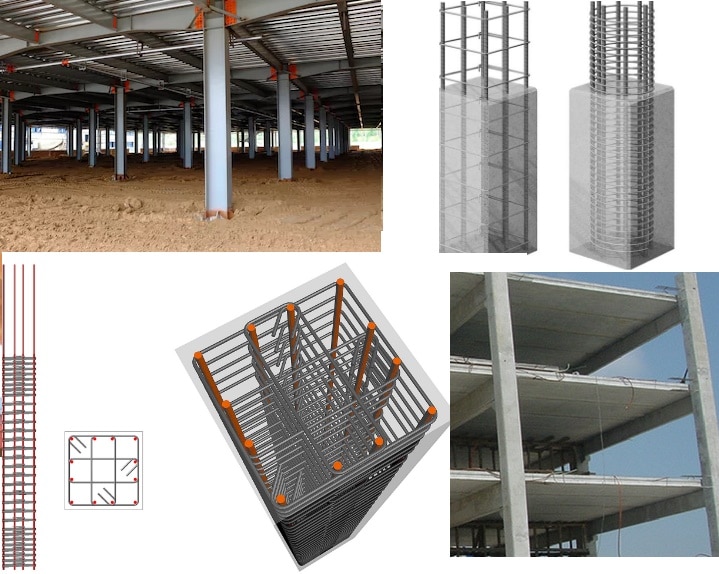
The askew or irregular arrangement of columns instead of straight is fully incorrect structural design. Moreover, it must be considered that at the time columns are raised, beams are set or joining the columns. Moreover, the askew or irregular arrangement of create different problems that is given below:
- Load is transfer irregularly which results in failure of structure.
- Problems is caused in construction of walls.
- Problems is caused in setting of beams.
- Problem is caused to extend the columns in next slab
Conclusion:
I hope I have discussed all the information about standard size of columns used in Construction in this post.
If you learnt something from it, please be sure to share it with someone who might benefit from it.
If you want to add any information which has missed in this article you can mention it in the comment section.