What Is Plaster And Plastering?
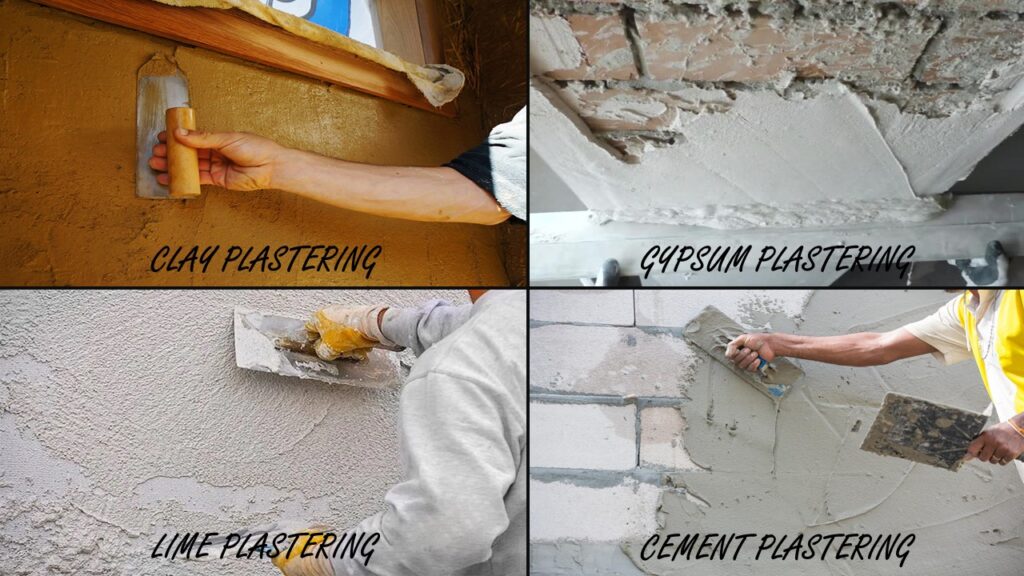
The process of applying plastic mortar on the surfaces of rough ceilings, walls, etc in order to obtain an even, smooth, and clean surface is known as plastering and the plastic mortar is called plaster. When plastering is done on external exposed surfaces, it is known as rendering. In this article, we will discuss different types of plastering used in construction.
Purpose Of Plastering
Plastering is done mainly for the following purposes:
- To protect the surface from harmful atmospheric effects such as rain, wind, sun, snow, etc.
- To create decorative effect as well as to improve the aesthetics.
- To hide defective and poor workmanship.
Types Of Plaster
Conventional types of plaster are as follows:
- Cement plaster
- Lime plaster
- Mud plaster
1. Cement Plaster
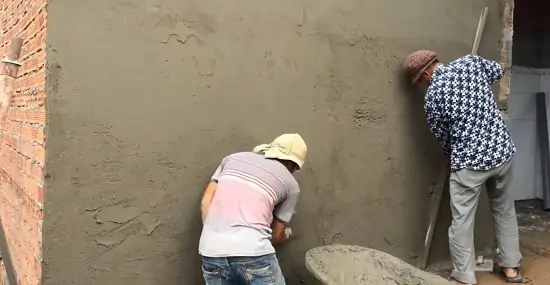
Cement plaster is the most common type of plaster in the construction industry. Cement plaster is a mixture of cement, sand, and suitable amount of water.
Proportions of cement and sand may vary according to the requirements of the plaster. But, the usual proportion are 1:3 and 1:4 which gives the best results.
Cement plaster is used on the interior walls and exterior walls, ceilings, and other building elements. For interior walls, a single coat of plaster is usually enough to achieve the desired surface.
For exterior walls, another coating is required depending on the thickness of the plaster and the nature of the surface. The thickness of cement usually ranges between 12 and 20 millimeters, depending upon the type of wall or ceiling surface.
The cement plastered surface requires proper curing with water for a minimum of 7 days. Improperly cured walls may develop cracks.
2. Lime Plaster
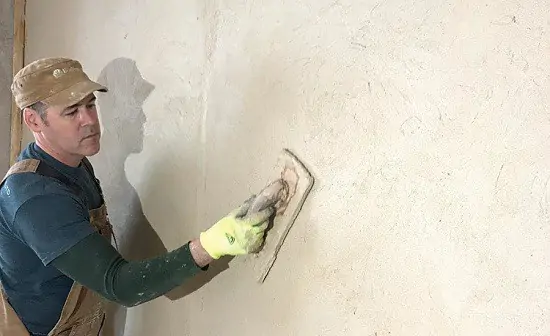
Lime plaster consists of lime, sand. and water. The proportion of lime and sand is equal. Sometimes, little amount of cement may also be added to improve the strength of the plaster. In lime plaster mostly fatty lime is used. Hydraulic lime results in blisters on the plastered surface.
Gulal, a type of fragrant gum may be added at a rate of about 1.6 kg/m3 of mortar. It gives good binding properties to the mortar. Chopped hemp is also be used at the rate of about 1kg/m3 of mortar.
It provides improved adhesive and tensile properties to the plaster. Types of plaster are now being replaced with cement plaster.
3. Mud Plaster
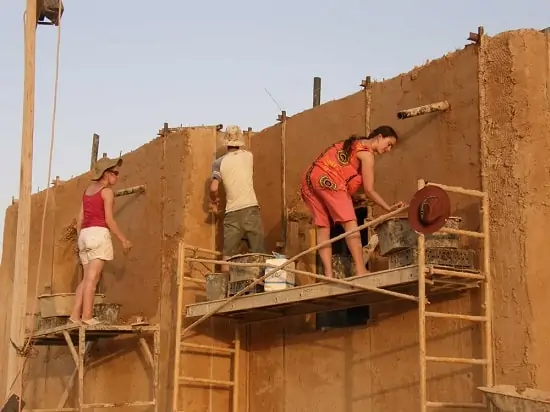
This is the cheapest type of plaster. It is made up of suitable proportions of clay and sand. The clay content should be free from grass, roots, organic matter, stone pebbles, etc.
Chopped straw, hay, or hemp is also used in the mixture at the rate of 30kg/m3 of earth content. Mud plaster is mostly used in villages and temporary constructions.
Special Types Of Plaster
Besides the above plastering materials, there are some special types of plasters. They are as follows:
1. Waterproof Plaster
As the name suggests, this type of plaster protects the masonry wall from ingress of moisture and thereby eliminating or reducing dampness of the wall.
The mortar for waterproof plaster is prepared by mixing cement, sand (1:2), and pulverized alum at the rate of about 12 kg/m3 of sand content.
Water to be used in the mix is not normal water but the water is prepared by dissolving 75gm of soft soap per liter of water.
2. Stucco Plaster
Stucco plaster is a type of decorative plaster that provides excellent finishing. This type of plaster is usually done in three coats with a thickness of about 25 mm. Each coat needs to be dry completely before applying the next coat. The first coat in stucco plaster is called scratch coat.

The second coat is called finer coat or brown coat and the final coat is known as a white coat or finishing coat. Stucco plaster can be used for internal as well as external walls.
3. Gypsum Plaster
Gypsum plaster is a factory-made product produced by partial or complete dehydration of mineral gypsum. It is available in powder form and in white color.
Dry gypsum powder is mixed with a suitable amount of water to form a ready paste that can be easily applied to the ceiling and wall surfaces.
The thickness of gypsum plaster is usually 6 mm- 20 mm. It dries very fast, so painting on the plastered surface can be started 72 hours after application.

It gives a very good smooth finish and level surface with excellent proper angled corners. This type of plaster can only be used in the interiors of the building, not suitable for external plastering. It can also be used to fabricate ceiling cornices and moldings.
It is fire resistant and a good thermal insulator. Another good advantage is there is no shrinkage during setting and hence it does not develop cracks.
4. Keen’s Cement
It is produced by calcinating alum with gypsum. It is the hardest and densest form of gypsum plaster. It is pure white in color and gives a very fine glass-like polish. This type of plaster is mostly used for ornamental works.
5. Martin’s Cement
Martin’s cement, another type of special plaster material is produced by calcinating peal as with gypsum. It also sets quickly and results in a hard and white surface.
6. Parian Cement
It is obtained by calcinating borax with gypsum. It is an alternative to keen’s cement and used for ornamental purposes.
7. Sirapite
This product is produced by slaking gypsum in petroleum. It is a good fire resisting plaster material.
8. Scagliola
It is obtained by dissolving keen’s cement and color pigments in glue. It gives marble like finishing, used for plasters, panels etc.
9. Acoustic Plaster
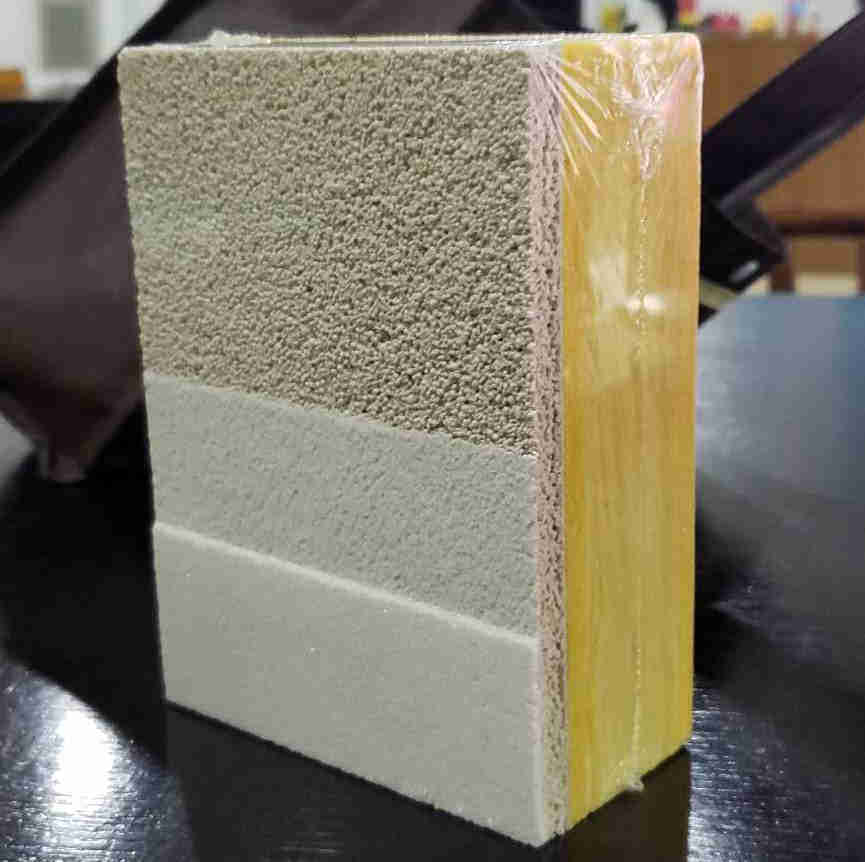
It is a gypsum product that is mostly used as a final coat. During final coat finishing small pores are left on the surface to absorb sound.
10. Barium Plaster
This type of plaster is made from barium sulphate. It is used as final coat in X-ray rooms.

11. Asbestos-marble plaster
It is prepared by mixing finely crushed marble, asbestos, and cement. It gives a beautiful marble-like finish on the surface.
12. Snow-crete and Color-crete cement
These are patented cement. They are mostly used on the exterior walls to create a very good appearance from the outside.
]]>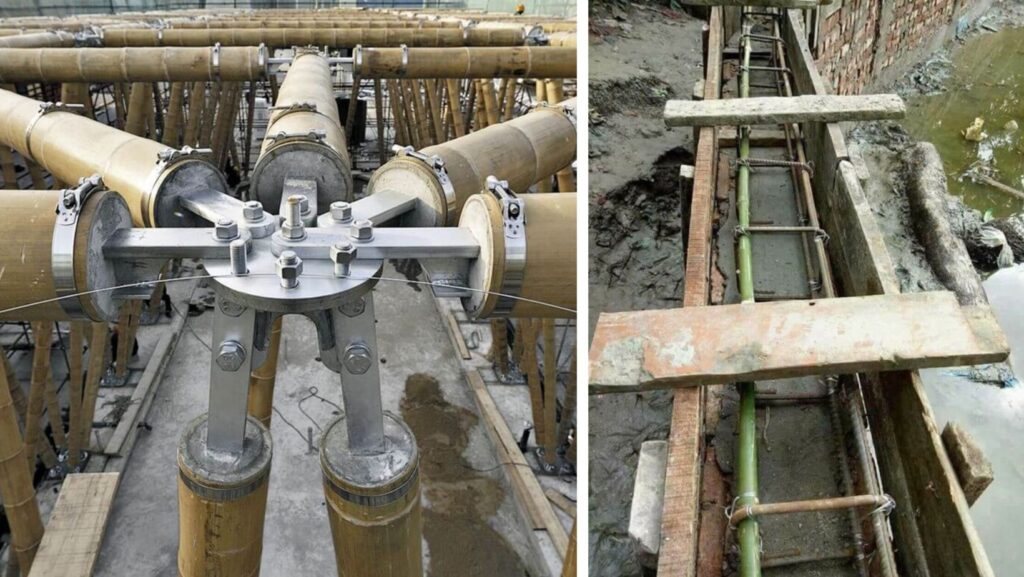
Bamboo has quite a high tensile strength. It is comparable with steel. Apart from this, bamboo has an impermeable protective layer on the outer side which protects it from rotting due to water, which is a major problem for almost all organic material.
#1.

#2.
Bamboo has quite a high tensile strength. It is comparable with steel. Apart from this, bamboo has an impermeable protective layer on the outer side which protects it from rotting due to water, which is a major problem for almost all organic material.
#1.
#2.
#3.
#4.
#5.
In tensile load application, results shown by bamboo are exciting because the ratio of tensile strength to the specific weight of bamboo is six times greater than steel.
#6.

#7.
#8.
#9.
#10.
#11.

#12.
#13.
#14.
#15.
#16.
#17.
#18.
#19. 
#20.
#21.
#22.
#23.
#24.
#25.
#26.
#27.
#28.
#29.
#30.
#31.
#31.
#33.
#36. 
What do you think? Comment and share your friends!
]]>
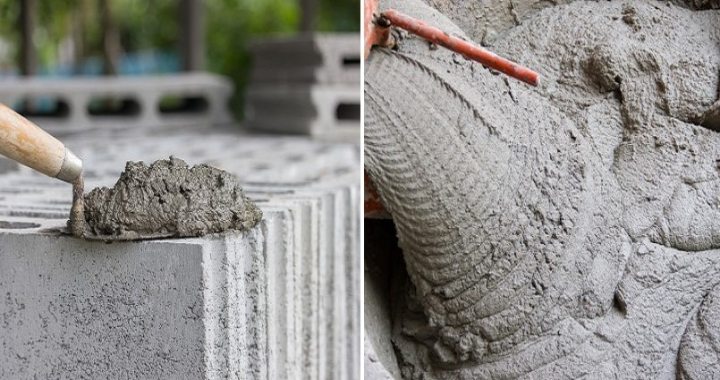
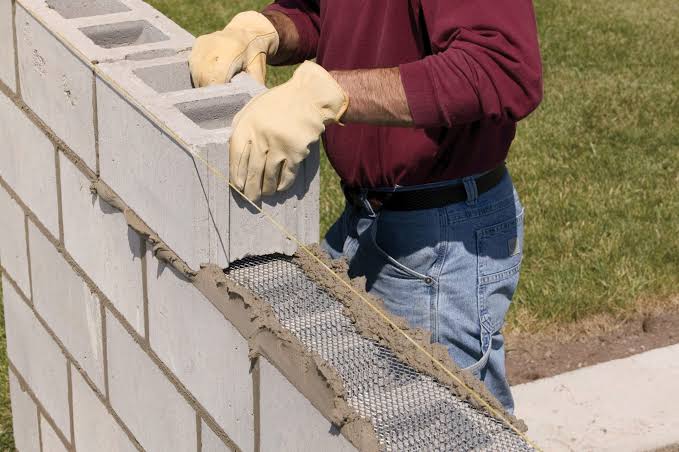
Building mortars are mixtures, used for the joining of bricks and stones.
Definition:- A paste obtained by adding water to a mixture of fine aggregates such as sand and binding material.
The pyramids of the have been built with clay-gypsum, gypsum-lime and lime mortar.
The safety, strength and durability of resulting wall or any structure depends upon quality of mortar used as a binding medium.
Functions of mortar:-
- It provides force or cohesion between the structural unit.
- It acts as a medium for distributing the forces throughout the structure uniformly.
- Additional strength and resistance against the rain penetration and other such weathering agencies.
- In stone or brick masonry, it fills up empty joints, a thin liquid mortar used for such purposes is termed as Grout.
Qualities or properties of mortar:-
- The mortar mix should be workable- easily transported to the place of application.
- It should develop adequate strength in tension, compression and bond for the work for it is used.
- It should capable of retaining sufficient water during it’s application.
- It should be sufficiently plastic easily placed on the bed is construction in the form of thin, smooth and uniform layer.
- It should be durable and strong in itself on drying and hardening at the same time. It should not react in anyway with construction units.
- It should set and garden quickly construction could be done with speed.
- It should not develop any cracks on drying and should be able to maintain their appearance for quite long period.
- It should capable of developing the designed stresses.
- It should be economical to make without compromising on any of the qualities.
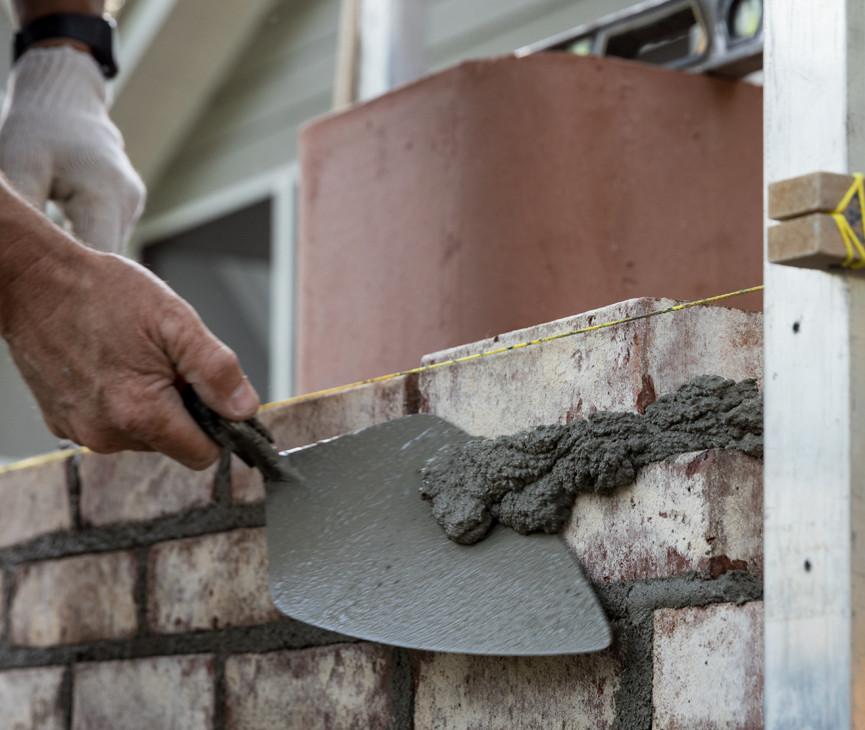
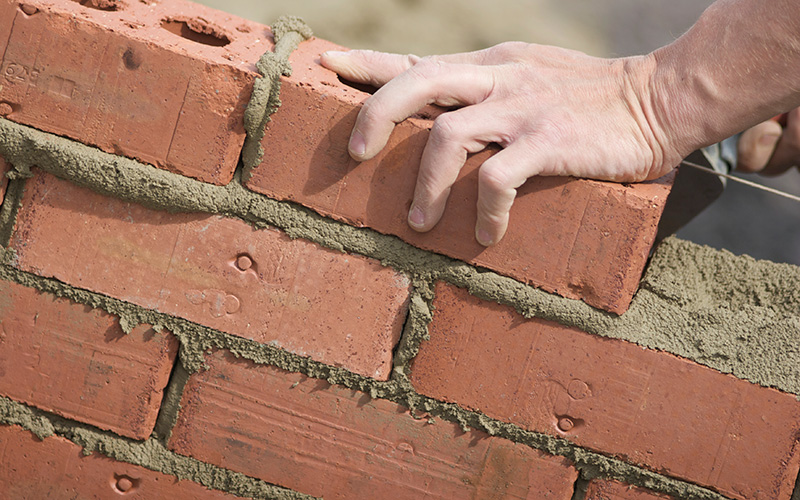
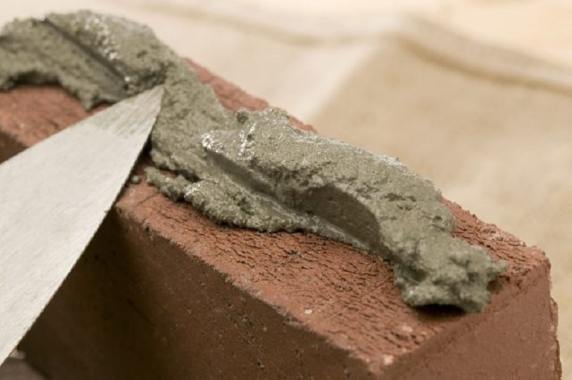
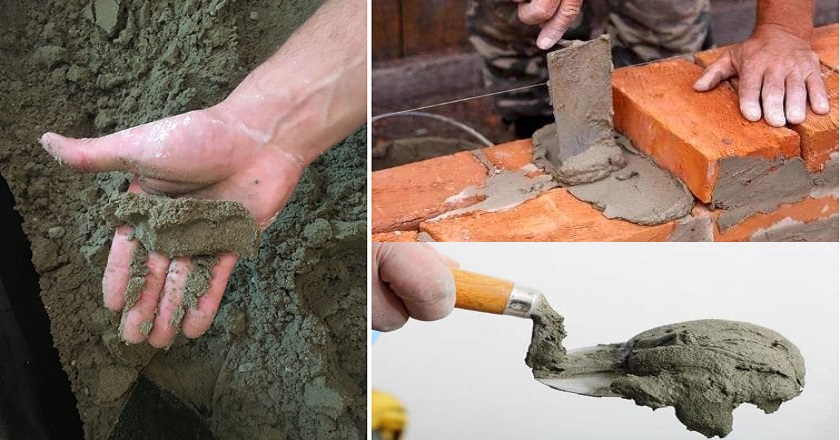
Although the terms mortar, cement and concrete may be used interchangeably, each of these materials serve very different functions within the construction industry and are therefore used for different applications. This article will discuss the specific applications in which the construction industry utilizes mortar compared to other materials.
What is Mortar?
Mortar is a construction material comprised of a binding material, aggregate and water. In terms of strength, mortar is considered to be less strong compared to concrete, which is a building material composed of cement, sand and gravel. As a result, mortar is typically used as a binding material for specific purposes, such as the maintenance of a building’s structure or to join bricks together, rather than as a complete building material on its own. Mortar is used for a variety of different applications within the construction industry and has therefore proved to be particularly useful for civil engineering purposes.
Types of Mortar
In order to choose the appropriate type of mortar for a given project, both the specific construction application and the binding material of interest must be considered. The main types of mortar, each of which are named according to the binding material being used, include cement, hydraulic and fat lime, gypsum, gauged, surkhi, aerated cement and mud mortar.
Each type of mortar has different characteristics making them useful for certain projects. For example, cement mortar is associated with a greater level of resistivity and strength against water, whereas hydraulic lime water is particularly suitable for damp areas that are waterlogged. Regardless of what type of mortar is used, the preparation of mortar will typically involve the addition of water to the binding material and fine aggregate to ultimately create a malleable paste.
Applications of Mortar
In addition to classifying mortar by its binding material, it can also be categorized by the specific application it is being used for. These applications include:
Bricklaying Mortar
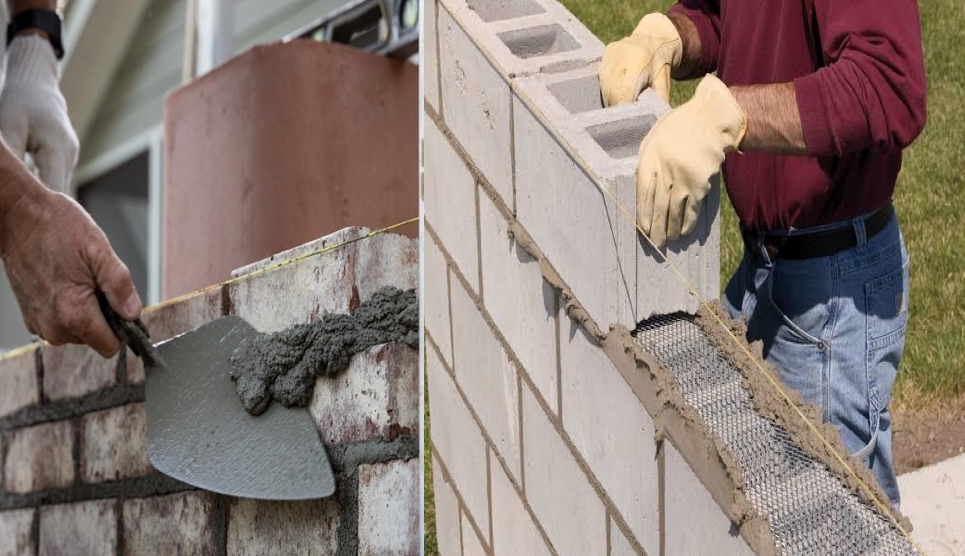
Bricklaying mortar is most commonly used to bind bricks, stones and concrete blocks together for masonry projects. Bricklaying mortar can also be used as a bed to support these building materials from bearing an uneven weight distribution onto each other as the structure is being built.
Finishing Mortar
For construction projects that require plastering, as well as those looking to add a certain aesthetically pleasing appearance to the structure, finishing mortar is typically used. Finishing mortar, which will often utilize lime and/or cement as the binding material, is used to increase the strength and mobility of a structure, as well as improve its resistance against damaging environmental incidents like rain and wind.
Thinset Mortar
Thinset mortar can be used as a glue-like structure for projects that require ceramic or stone installation.
Advancements in Mortar Technology
In an effort to improve the ease of handling mortar on the construction site, BASF has recently introduced their newest low dust repair mortars known as MasterEmaco T1060DR and 1061DR. BASF anticipates their low dust mortars to be particularly useful for the construction of both interior and exterior horizontal concrete surfaces, as well as during the repair of both full and partial structural concrete materials.
]]>
1. Introduction
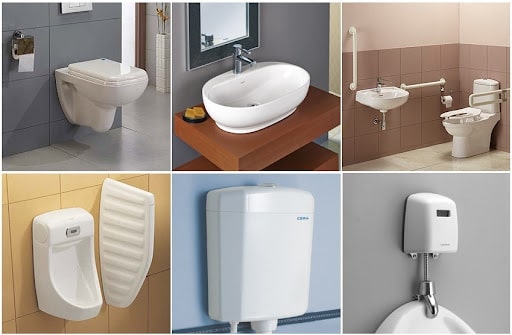
Sanitary Fittings are used to maintain hygiene in a building, lab, and other places where hygiene is necessary. There are different sanitary fittings available in the market.
2. Sanitary Fittings
The following fittings are commonly used in buildings, for efficient collection and removal of wastewater to the house drain:
(i) Washbasins
(ii) Sinks
(iii) Bathtubs
(iv) Water closets
(v) Urinals
(vi) Flushing cisterns.
2.1. Wash Basin
Washbasins are usually made of pottery or porcelain ware. Sometimes, they are also made of porcelain-enameled cast iron, pressed steel, or plastic, especially where the number of users is more.
An ordinary washbasin is mounted on brackets fixed on the wall, while a pedestal-type basin is mounted on a pedestal rising from the wall. They are available in different shapes and sizes.

Normally, a washbasin is provided with two taps- one for hot water and the other for cold water mounted at its top. It has an oval-shaped bowl, with an overflow slot at the top.
The waste pipe with a metallic strainer is pro-vided at the bottom of the bowl. The waste pipe has a trap at its bottom.
2.2. Sink
While a washbasin is used for washing hands, face, etc. a sink is used in the kitchen or laboratory. These may be made of glazed fire clay, stainless steel, metal, porcelain, or enameled pressed steel. They are manufactured in various sizes and shapes, though the rectangular shape is quite common in kitchens. It may also have a drainboard attached to it.
A sink may also be constructed of cast-in-situ concrete, with suitable finishing surfaces such as marble, terrazzo, etc. The out-let pipe, provided with a grating of brass or nickel, may discharge over a floor trap or nahni trap.
2.3. Bathtub
Bathtubs are usually made of iron or steel coated with enamel, enameled porcelain, or plastic material. They may also be made of cast-in-situ concrete finished with marble chips or terrazzo, or else may Over-be made of marble slabs properly flow jointed at the side.
It has a length varying from 1.7 to 1.85 m, width between 0.7 m to 0.75 m, and depth near waste pipe varying from 0.43 m to 0.45 m. The overall height may vary between 0.58 to 0.6 m. It is provided with outlet and overflow pipes, usually of 40 mm diameter. A trap with a proper water seal is used at the outlet.
2.4. Water closets
Water closets are designed to receive and discharge human excreta directly from the person using them. The appliance is connected to the soil pipe by means of a suitable trap. It is usually connected to a flushing cistern to flush the closet and discharge the human excreta to the soil pipe. Water closets are of three types.
1. Indian type
2. European type
3. Anglo-Indian type.
1. Indian type
The Indian style water closet (W.C.) is simple in construction and working, but is used in squatting positions. It is usually made of porcelain. The pan and trap are available in two different pieces. The trap has an opening for anti siphonage pipe. The W.C. is fixed in a squatting (or sitting) position just at floor level. Since the excreta does not directly fall into the trap, therefore, there are chances for excreta to become foul.
The excreta may stick to the surface of the pan if the flushing is not proper. The flush water enters the rim of the pan through the opening provided in the front of the pan. The flushing cistern is normally kept-2 m above the closet. Indian-type closet requires a greater quantity of water (at least 10 liters) for flushing.
2. European type
It shows a typical European-type water closet. It is usually made of porcelain. It is a wash-down water closet, provide with a seat and a cover. The pan has a flushing rim to spread the flush water The excreta directly falls in the trap, and therefore there are less chances of excreta becoming foul. The pedestal type European W.C. also known as commode is commonly used.
The closet is fitted with either a P-trap or S-trap. It can also be used at the upper floors, while in the case of Indian type WC the upper floor has to be depressed to receive the pan fixed at floor level. Generally, a low-level flushing cistern is used with the European type W.C.
3. Anglo-Indian W.C.
The main advantage of Indian type W.C. is that it can be used in squatting position since i is fixed at floor level, while a European type W.C., which is fixed at about 40 cm higher than the floor level, cannot be conveniently used in squatting position since the legs of the user cannot rest on thin rim conveniently. However, the defect with Indian W.C. is that the excreta it does not fall directly in the An Anglo-Indian W.C. removes both these defects. The closet is fixed about 40 cm above the floor level.
However, the upper rim of the Pan is properly enlarged so that legs can rest on it while used in a squatting position. The inner shape of the pan is intermediate between the two types, with a wider top area of the trap. The excreta directly falls in the water contained by the trap. The top flushing rim and seat etc. are similar to the European type.
Requirements of a water closet
The following are the requirements of a good water closet:
1. It should be convenient in use by persons of all ages both old as well as children,
2. The size of the pan should be such that the urine, as well as the fecal material, does not fall outside the pan.
3. The trap should be such that water does not splash when the excreta falls in the water.
4. Urine should not splash outside the pan.
5. Fecal matter should flow easily in the trap, without sticking to the water. For that, the surface of the pan should be smooth.
6. Flushing should be achieved effectively with the use of a small quantity
7. Fecal material should not be too plainly visible before flushing.
8. The water in the trap should provide an effective and air-tight seal.
9. The pan should be of durable material so that it does not crack with the passage of time.
1.5. Urinals
Urinals are usually of two types :
(i) bowl type and
(ii) slab or stall type
The former type in used in residential buildings while the later type is used in public buildings. A stall urinal normally has more than one unit, with a center to center spacing of 0.6 to 0.7 m. The two types of urinals. The Bowl best types of urinals are made of enameled fire-clay, others of salt-glazed stoneware, marble, slate, and cement.
The contents of urinals are collected and discharged into the soil pipe through the floor trap (nahni trap). Automatic flushing cisterns are generally provided for stall-type urinals, which operates at regular interval of 10 to 15 minutes.
1.6. Flushing cisterns
Flushing cisterns are used for flushing out water closets and urinals. These are made of either cast iron or porcelain. For Indian type WC, cast iron flushing cistern is normally used, fixed at about Over 2 m above the floor level. For Euro flow pear type and Anglo-Indian type closets, porcelain cisterns are normally used, fixed at about 60 cm above floor levels. The low-level flushing cisterns, made of porcelain, are decent in look and operate very easily by simply turning a handle.
Flushing cisterns are of two types
(i) valveless siphonic type and
(ii) valve fitted siphonic type.
Bell-type flushing cistern, commonly used with Indian-type closets, is the typical example of the valveless siphonic cistern. A bell-type flushing cistern consists of the following parts:
1. A bell or dome
2. A float
3. A lever with a chain
4. Inlet, outlet, and overflow pipes and
5. Cast iron casing.
The bell is connected to a flushing chain through a lever. The float is so set that when the discharge level is reached, the float rod closes the inlet cock. When the chain is pulled, the bell is lifted up, thus splashing the water. The splashing of water takes away some air with it, causing a partial vacuum in the top of the bell. Siphonic action thus starts, and water in the cistern enters the bell through holes provided at its bottom.
When the tank is emptied, air enters from the bottom and siphonic action is broken. The lowering of the float results in the opening of the inlet cock, and water thus enters the cistern.
It should be noted that the chain should be released immediately after the pull, otherwise the partial vacuum caused by splashing water may be destroyed by the entry of air from the flush pipe. The capacity of a bell-type flushing cistern may vary between 5 to 15 liters.
Source: dreamcivil.com
]]>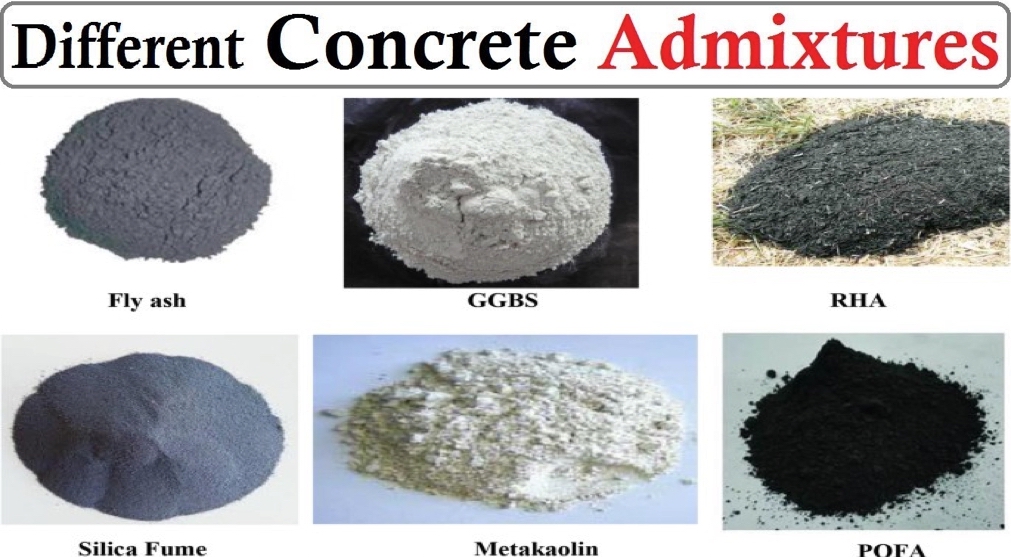
Use of additives in concrete for a long time, construction has not been understood without concrete, undoubtedly one of the reference materials. But behind something as ‘simple’ such as concrete, there are many secrets. For example, just as construction needs this material, concrete itself needs the help of additives for many years to be able to adapt to any project that is put ahead.
As with food, concrete admixtures are used to modify its basic properties, adding properties that it does not have on its own, to obtain a mixture that is much better adapted to the project you want to undertake. Although it may seem so, the use of additives is not something modern: in its own way, they have already been used since the mid-1950s.
What can be highlighted about the existence and use of admixtures for concrete?
They can be organic or inorganic in nature, created artificially.
They are always added before mixing and the proportion used can never exceed 5% of their weight.
They have different capacities and that is why there are a large number of additives, although the most used are those that modify the setting process to adapt to specific circumstances.
TYPES OF ADDITIVES FOR PREFABRICATED CONCRETE
Accelerating, retarding, water-repellent, antibacterial, or even with coloring properties, the additives serve, above all, to optimize different resources both on-site, in the factory, or throughout the useful life of the construction carried out. In this way, they help in their own way to meet the inalienable goal of construction sustainability.
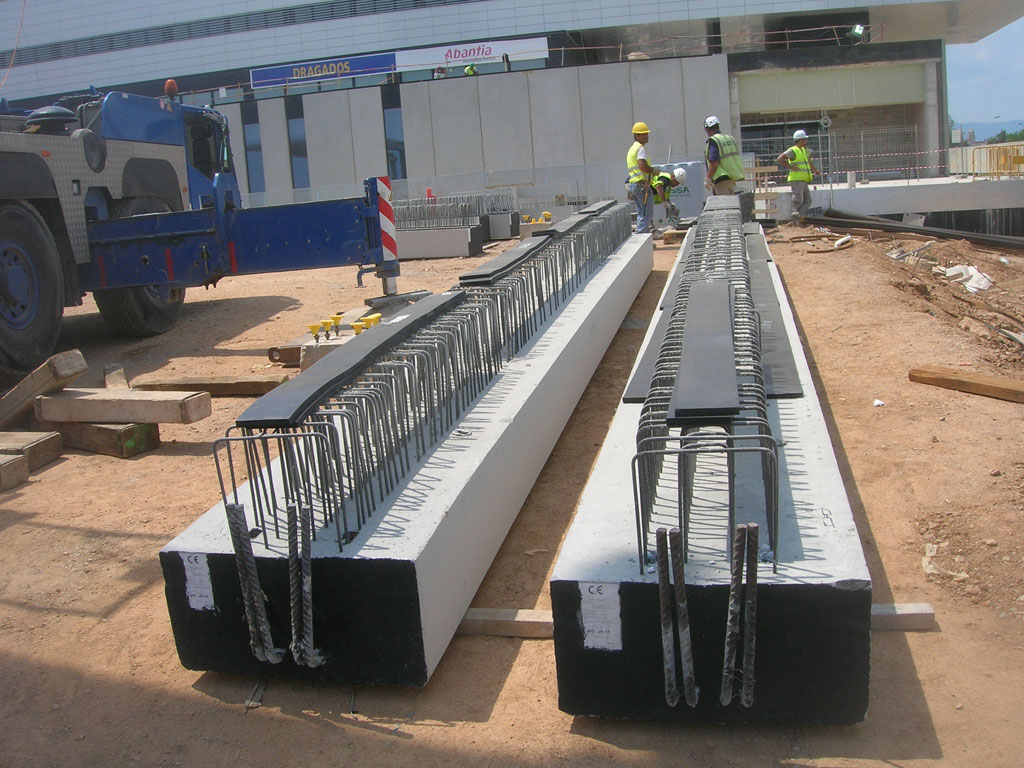
In the specific case of precast concrete, all the parts and the aids provided by additives always serve the same benefit: achieving more efficient processes, reducing the energy used, and optimizing the use of materials without sacrificing higher performance. quality, as this additive specialist company, stands out.
SOME PRACTICAL EXAMPLES
Setting accelerators, for example, are common in the production of precast concrete and, as their name indicates (which does not leave much room for a surprise), they reduce the time it takes for concrete to set by increasing, among other variables, its speed. hydration. The opposite work is achieved with retarders, which delay the start of this process while maintaining their “docility” for longer. However, set retarders are more recommended for mass or pumped concrete, but are not typically used in precast elements.
What other important details can be highlighted about the accelerators?
They allow rapid progress of the work and even the transport of the parts that are generated in the factory.
A significant reduction in the waste generated is generated, an external one directly linked to the sustainability criteria.
Another very famous additive is the super plasticizer, which has the fundamental objective of improving the life cycle of those it builds thanks to its use. The name, again, already reveals some details without the need for great knowledge: it manages to increase plasticity, allows rapid release of prestressing, and reduces the amount of water used for mixing.
This super plasticizer additive from Base, specific for precast, has a long list of advantages, but some are as relevant as that “improves the impermeability and durability of concrete” because it reduces its porosity; In addition, it reduces curing cycles and allows the manufacture of low-temperature concrete.
On the other hand, the use of additives that allow the inclusion of air in the concrete facilitates the intentional retention of microscopic air bubbles. The process to form these bubbles is really technical, but it is worth detailing that the final objective is to optimize the concrete life most efficiently, especially against freezing and thawing, as well as against the action of salts and sulfates.
WHAT IF THE CONCRETE HAS TO BE COLORED?
Well then, the best thing to do is to use coloring additives that allow this material to be adapted to what the project requires. Thanks to these additives we have a compelling reason to say that concrete is not just a gray matter.
In works with precast, the external appearance is essential. We talk about covers, for example. So, if the intention is to provide a different color than usual, “we will have to use colorants or pigments. These additives are powders generally made up of metal oxides”,
]]>
Concrete is widely used building material in the construction world. Concrete is made up of various ingredients, and of course all of them have different role. The properties of concrete generally rely on the mixing of concrete ingredients i.e. cement, coarse aggregates, fine aggregates (sand), and water.
The whole world wishes their structure to be strong and durable and for that, they always design their structure according to the desired strength and service. Strength gives an overall indication of quality of concrete; as it is directly related to the lifelong performance of the concrete structure. The strength of the concrete shows the ability of the structure to withstand various loads (i.e. Dead Load, Live Load, Earthquake Load, Wind Load, etc..). The strength of the concrete can be measured with the different test that are conducted on it such as, Compressive strength, Tensile strength and Flexural strength.
Apart from the above tests there are various factors that can also affects the strength of the concrete, highlights of those factors are described below:
Factors that Affect the Strength of Concrete
01. Water/Cement Ratio
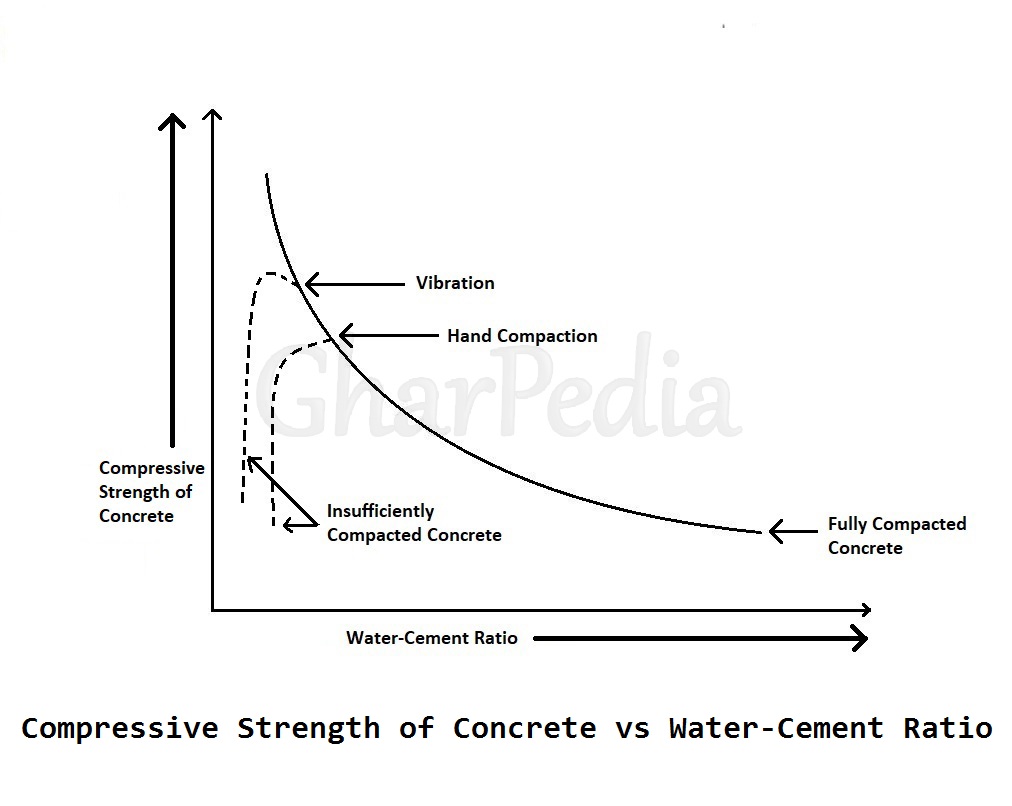
The ratio of the weight of water to the weight of cement is called Water/Cement ratio. It is the most important factor for gaining the strength of concrete. The lower w/c ratio leads the higher strength of concrete. Generally, the water/cement ratio of 0.45 to 0.60 is used. Too much water leads to segregation and voids in concrete. Water/Cement ratio is inversely proportional to the strength of concrete. As shown in the chart below when the w/c ratio is increased the strength of concrete gets decreased and when w/c ratio is decreased then the strength of concrete increases.
02. Compaction of Concrete
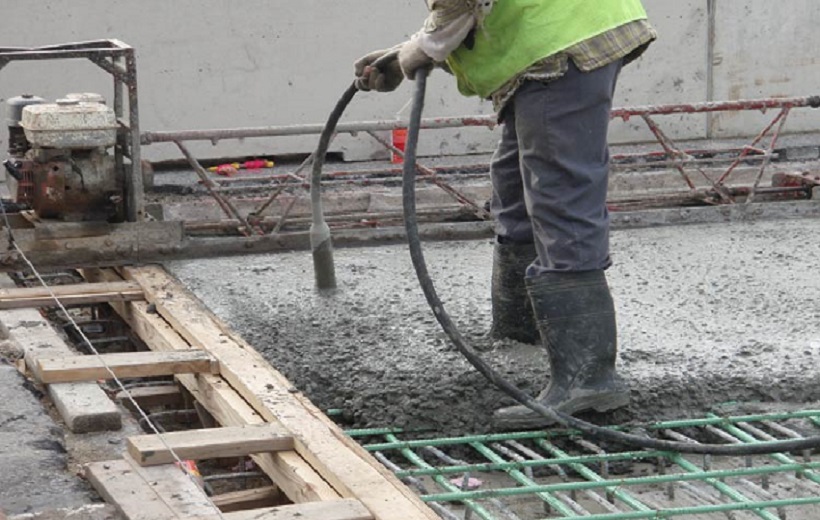
Compaction of concrete increases the density of the concrete because it is the process in which air voids are removed from freshly placed concrete which makes the concrete compact and dense. The presence of air voids in concrete greatly reduces its strength .Approximately 5 % of air voids can reduce the strength by 30 to 40 %. As we can see in the above chart, even at the same water/cement ratio strength is different with different compaction accuracies. In the fully compacted concrete, strength is higher than the insufficiently compacted concrete.
03. Ingredients of Concrete
The main ingredients of concrete are cement, sand, aggregate and Water. Quality of each material affects the strength of the concrete. All materials, therefore, should fulfill the standard criteria for use in concrete like.
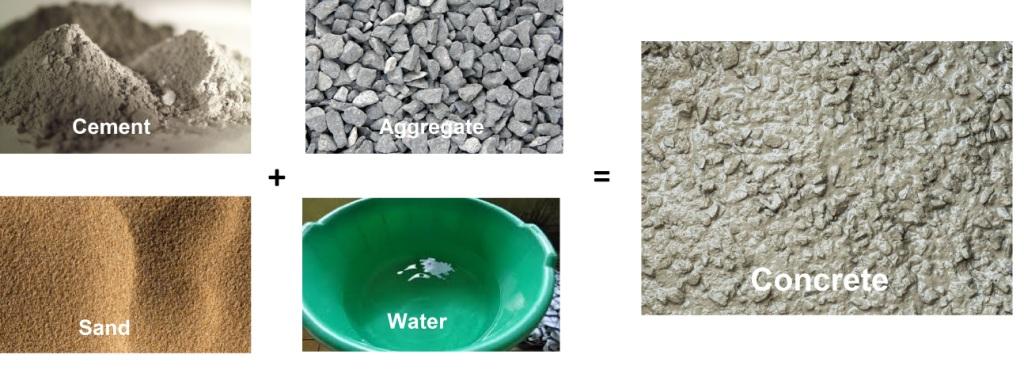
(a) Type and Quantity of Cement
The quantity of cement greatly affects concrete strength. The higher cement content increases the tendency of shrinkage cracks when the concrete is getting cured and hardened. Types of cement also have a great impact on the properties of hardened concrete. According to IS 456 2000, the minimum cement content specified ranges from 300 to 360 kg per cubic meter of concrete for various exposure conditions and for various grades of concrete. Maximum cement content in concrete is also limited to 450 kg per cubic meter of concrete. The grade of cement – i.e. 33 grade, 43 grade, 53 grade will also affect the strength of concrete. The higher the grade, the higher strength particularly high early strength.
(b) Types and Quantity of Aggregate
The strength of concrete depends upon the strength of aggregates. Low quality of aggregate reduces the strength of concrete. The quantity of aggregate also affects the properties of hardened concrete. At constant cement content, the higher amount of aggregate reduces the concrete strength. The shape and grading of aggregate play a major role as far as strength of concrete is concern.
(c) Quality of Water
Quality of water plays a significant role in the setting and hardening process of concrete. Acidic, oily, silty, and seawater should not be used in concrete mix. Impurities of water give an adverse effect on the strength of concrete. Therefore, potable water is always used in concrete mix.Particularly the impure water may lead to corrosion, carbonation or acid attack, therefore, reduces the life of concrete.
04. Curing of Concrete
Curing of concrete is the most essential to prevent plastic shrinkage, temperature control, strength development and durability. Curing provides the desired moisture and temperature at the depth and near the surface after placing and finishing of concrete for development of strength. In other words, curing provides sufficient water to concrete for completing the hydration process without interruption which is important for strength development. Commonly 7-day curing corresponds to 70 % of compressive strength. Curing period depends on the types of cement and the nature of work. Generally, it’s about 7 to 14 days for Ordinary Portland Cement. There are many methods of curing like Ponding and immersion, Spraying and fogging saturated wet coverings etc.
Hence please remember, use as less water as possible during concrete mixing and use as more as possible after concreting.
05. The Shape of Aggregate
There are many shapes of aggregate like angular, cubical, elongated, elongated and flaky, flaky, irregular and rounded.
Angular aggregates are rough textured, and rounded aggregates are smooth textured. Thus, the rounded aggregates, create the problem of lack of bonding between cement paste and aggregate. Angular aggregates exhibit a better interlocking effect in concrete, but the angular aggregate contains a larger amount of voids. For this, you needed well-graded aggregate. The shape of aggregates becomes more important in case of high strength and high-performance concrete where very low w/c ratio is used. In such cases, cubical shape aggregates with uniform grading are required for better workability.
06. Maximum Size of Aggregates
Larger size aggregates give a lower strength because they have a lower surface area for development of gel bond which is responsible for strength. Larger size aggregate makes concrete heterogeneous. It will not distribute loading uniformly when stressed. Due to internal bleeding, the problem of development of the micro cracks in concrete happens when larger size aggregates are used in concrete.
07. Grading of Aggregate
Grading of aggregates determines the particle size distribution of aggregates. It’s the most important factor for concrete mix. There are three types of graded aggregate Gap Graded Aggregate, Poorly graded aggregate and Well-graded aggregate.
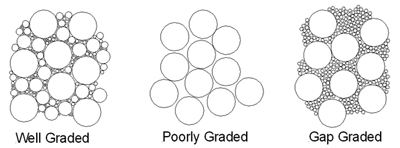
Well-graded aggregate contains all size of particles of aggregate. So that, they have a less amount of voids. The use of well-graded aggregates gives higher strength to the concrete.
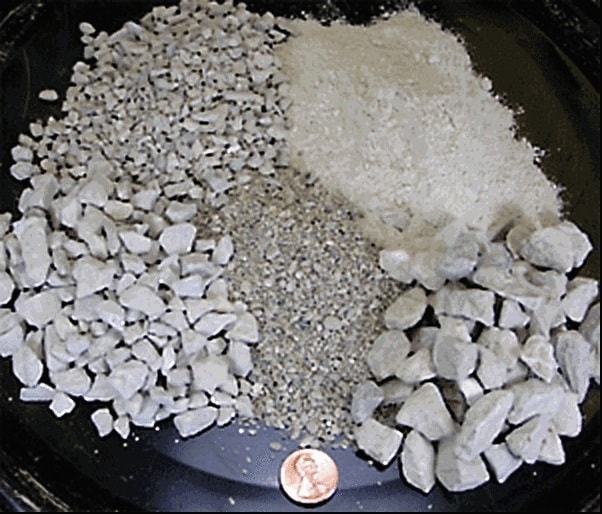
08. Weather Condition
Weather condition also affects the strength of concrete due to different reasons. In cold climate, exterior concrete is subjected to repeated freezing and thawing action due to the sudden change in weather. It produces deterioration in concrete. With the change in moisture content, materials expand and contract. It produced cracks in concrete.
09. Temperature
With the certain degree of temperature increase, the rate of hydration process increases in it which, it gains strength rapidly. Sudden temperature changes create a thermal gradient, which causes cracking and spalling of concrete. So that, the final strength of concrete is lower at the very high temperature.
10. The Rate of Loading
The strength of concrete increase with the increase in the rate of loading because at the high rates of loading, there is less time for creep. Creep produces permanent deformation in the structure at constant loading. So that, the failure occurs at limiting values of strain rather than the stress. In rapid loading, the load resistance is better than the slow loading.
11. Age of Concrete
With increase in age of concrete, the degree of hydration would be more. Hydration process is the chemical reaction of water and cement. Hydration produces the gel which plays a significant role in the bonding of particles of the concrete ingredients. Therefore, the strength of concrete increases with its age. Normally, concrete strength gets doubled after 11 years provided there are no adverse factors.
The knowledge about factors which affect the concrete strength is helpful in many ways particularly during designing the structure, choosing material for concrete, observing precaution for different weather conditions, choosing different methods for concreting, aiming better life of building structures, for low maintenance of building after construction, longer durability and better serviceability etc.
source: gharpedia.com
]]>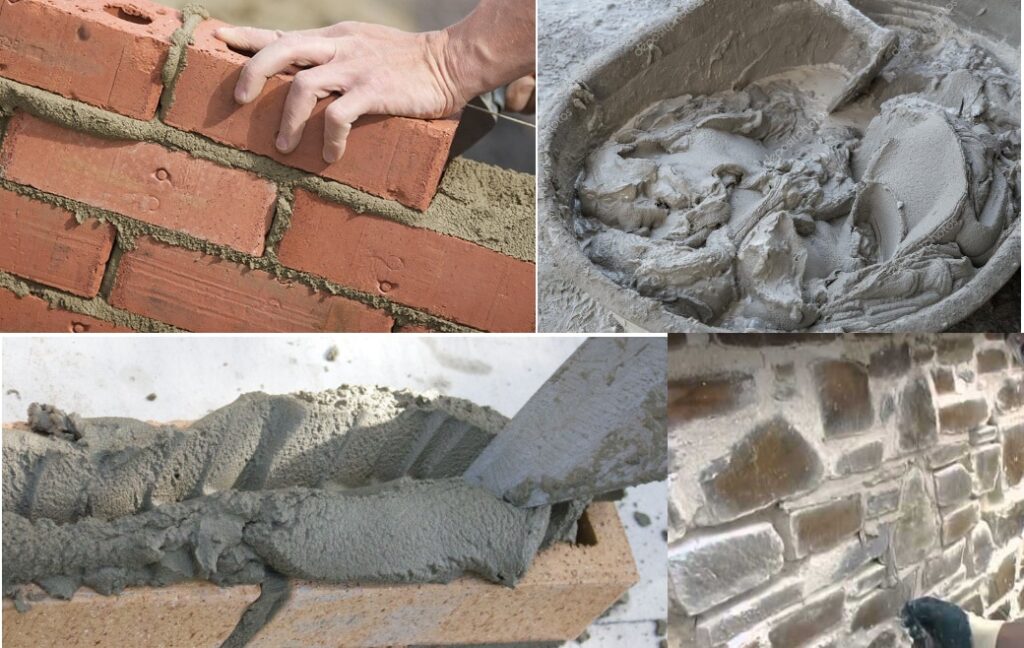
Different types of mortars used in masonry construction based on application, binding material, density and purposes. Mortar is a workable paste prepared by adding water to a mixture of binding material and fine aggregate. This plastic paste is useful to hold building materials such as stone or brick together.
What is Mortar:
Mortar is defined as a paste of cement or lime, sand and water prepared by mixing of its.
When the paste is prepared by mixing of cement or lime and sand without water is known as dry mortar.
When the mortar is prepared by mixing cement, sand and water is known as wet mortar.
Types of mortars:
Mortar can be classified into four groups.
- Based on bulk density
- Based on binding material
- Based on nature of application
- Special types of mortars
| Based on bulk density | Based on binding material | Based on application | Special types of mortar |
|---|---|---|---|
| 1. Heavy mortars | 1. Cement mortar | 1. Masonry mortar | 1. Fire resistant mortar |
| 2. Light weight mortars | 2. Lime mortar | 2. Finishing mortar | 2. Light weight mortar |
| 3. Mud mortar | 3. Sound absorbing mortar | ||
| 4. Surkhi mortar | 4. X-ray shielding mortar | ||
| 5. Gypsum mortar | |||
| 6. Cement – lime mortar |
1. Based on bulk density
There are two types of mortar based on bulk density.
- Heavy mortars
- Light weight mortars
a. Heavy mortars:
Mortar which has bulk density greater than 1500 kg/m3 is called heavy mortar. Generally, It uses heavy aggregates like quartz.
b. Light weight mortars:
If the bulk density of mortar is less than 1500 kg/m3 is called light weight mortars. It uses light aggregates like pumice. Lightweight mortar is prepared by mixing of light material like sawdust, rise husk, jute fibers, asbestos fibers, pumice with sand and cement.
Lightweight mortar is generally used in sound proof construction and heat proof construction. Cinder is a example of light weight mortar.
2. Based on binding material
- Cement mortar
- Lime mortar
- Mud mortar
- Surkhi mortar
- Gypsum mortar
- Cement – Lime mortar
i. Cement mortar:
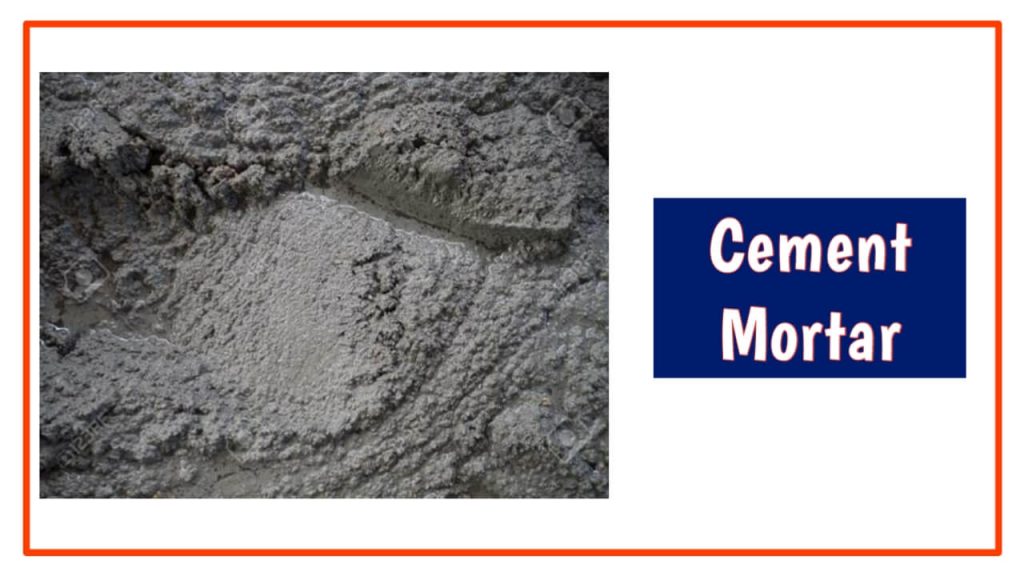
Cement mortar is a mixture of cement, sand and water where cement is used as binding material. The ratio of cement and sand is 1: 2 to 1: 6.
Cement mortar is used where high strength is required and water-insulation is required.
Cement mortar is mostly used in brick or stone masonry.
ii. Lime mortar:
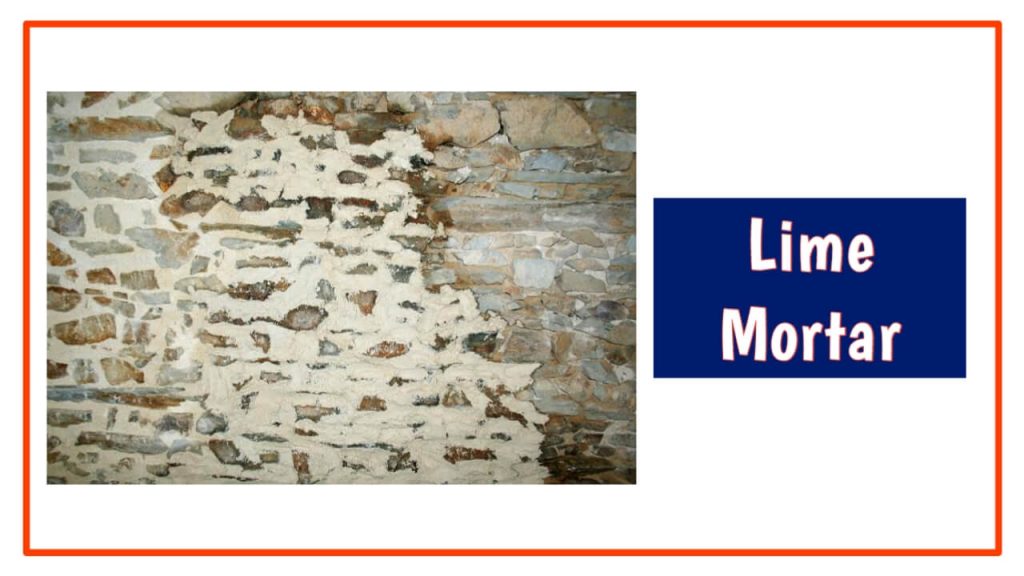
Fat lime or hydraulic lime is used in this types of mortar. Lime used as a binding material. The ratio of lime and sand is 1: 3 for fat lime and the ratio of lime and sand is 1:2 for hydraulic lime.
Hydraulic lime is more suitable for water logged area.
Its plasticity is high.
It is used in the construction of heavy loaded members. Fat lime should not be used in damp places.
iii. Mud mortar:
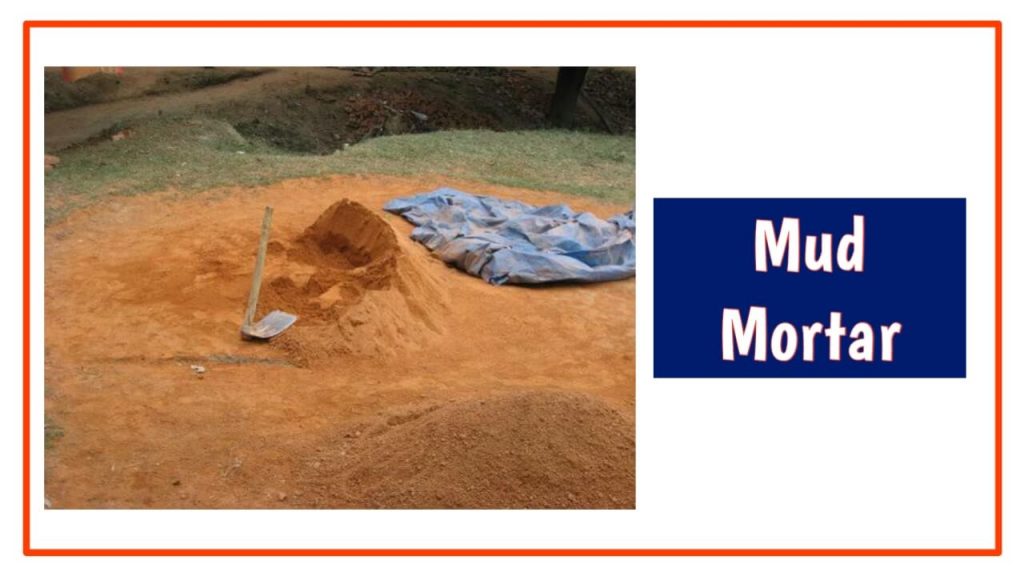
- Mud mortar is mixtures of mud or clay, saw dust, rice husk, water and cow dunk in which mud used as a binding material.
- It is also called Garo.
- It is used to build economical and low-cost buildings.
- It is not useful in damp places or in heavier buildings.
- This mortar is used to build small houses, especially in villages.
iv. Surkhi mortar:

- This types of mortar is made from a mixture of lime, water and Surkhi powder where lime is used as binding material.
- Surkhi is powdered of burnt clay which gives more strength compare to sand.
- It does not use sand.
- This type of mortar can be used in all types of general construction.
- It cannot be used in plaster or painting.
v. Gypsum mortar:

Gypsum mortar is a mixtures of gypsum, fine sand and water. Gypsum is used as a binding material. It has low durability in damp conditions.
vi. Cement-lime mortar:
This type of mortar is made by mixing cement and lime in a ratio of 1: 6 to 1: 8.
3. Based on Nature of application:
There are two types of mortar based on application.
i. Masonry mortar:

Used for brick or stone masonry. The proportion of ingredients like sand, cement and water is depend on binding material.
ii. Finishing mortar:
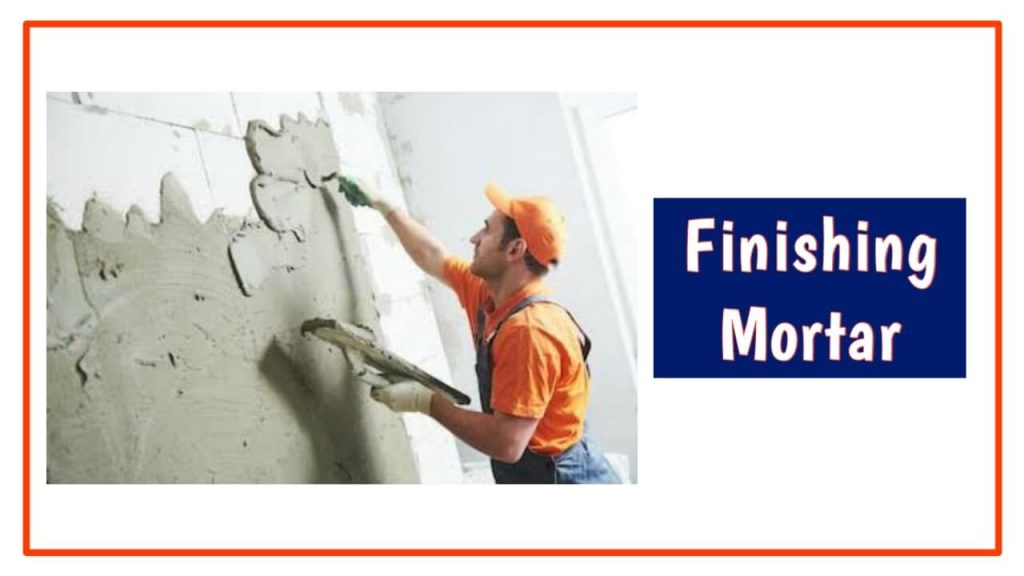
It is used in works like plaster, pointing. It is also used for good aesthetic view of construction as per architecture.
Finishing mortar should has good strength and resistant against atmospheric action.
4. Special types of mortars:
- Fire resistant mortar
- Light weight mortar
- Sound absorbing mortar
- X-ray shielding mortar
i. Fire resistant mortar
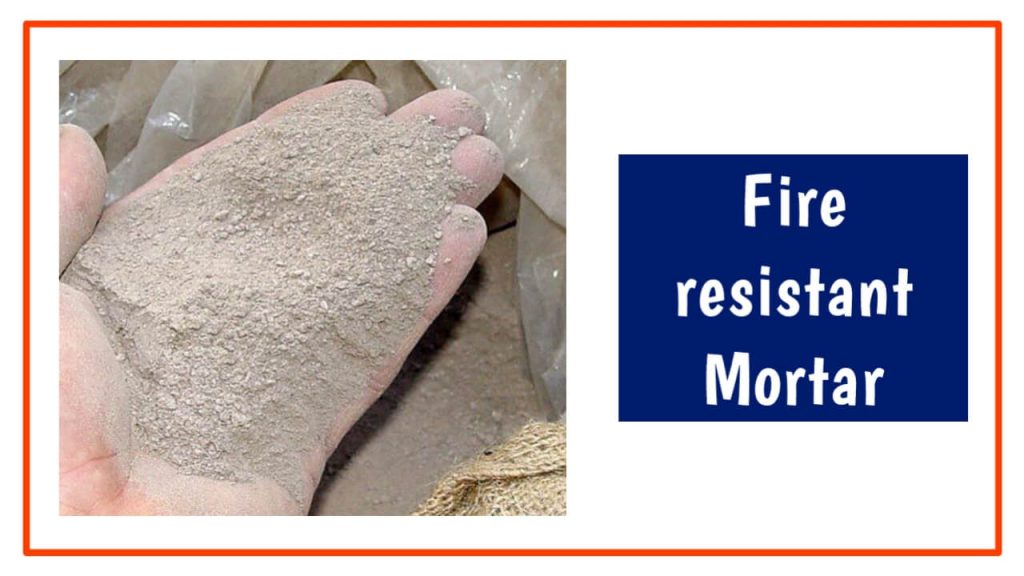
Fire resistant mortar is prepared by mixing of aluminum cement and powder of fire bricks. In this mortar proportion of aluminium cement and powder of fire bricks is 1:2. Fire resistant mortar is act as fire shield in building.
It is used in furnace lining, ovens.
ii. Light weight mortar:
Light weight mortar is prepared by mixing of light material like sawdust, rise husk, jute fibers, asbestos fibers, pumice with sand and cement.
Lightweight mortar is generally used in sound proof construction and heat proof construction.
iii. Sound absorbing mortar:
Sound absorbing mortar is prepared by mixing of light weight material like pumice, saw dust, cinder with binding material like cement, gypsum or lime.
The density of such mortar is 600 to 1200 kg/m3.
iv. X-ray shielding mortar:
- X-ray mortar is one type of heavy mortar. Its density is more than 2200 kg/m3.
- In this mortar, the heavy stone is used as aggregate.
- Such mortar is used for plaster walls and ceiling of X-ray cabinet to protect room against ill effects of X-ray.
Properties of Good mortar:
The characteristics of a good mortar are as follows:
- It should stick well with bricks or stones.
- It should be cheap.
- It should be durable.
- It should be easily workable.
- It should be set as soon as possible.
- It should be able to withstand against tensile and compressive stresses.
- It should not allow rainwater to enter.
- It should not affect the durability of the material when it comes in contact with the material.
Uses of mortar:
The uses of mortar are as follows.
- Attach bricks, stone.
- For plaster and pointing work.
- For pipe joints
- To obtain a level surface for the components of the building
- To improve the appearance of the structure.
- Use as an X-ray resistant material.
- Use as a sound-absorbing material.
Mortars used for different masonry work and its ratio:
Mortars used for different masonry work and its ratio are as below.
| Name of work | Types of mortar and its ratio |
|---|---|
| Stone masonry work in the foundation | Cement mortar 1:6 |
| Construction in water logged area | Cement mortar 1:3 |
| Masonry work in super-structure | Cement mortar 1:6 / cemrnt-lime mortar 1:1:6 |
| For the partition wall and Parapet wall | Cement mortar 1:3 / Lime mortar 1:1 |
| Plasterwork | Cement mortar 1:3 to 1:4 / Lime mortar 1:2 |
| Pointing work | Cement mortar 1:1 to 1:2 |
| Reinforced brickwork | Cement mortar 1:3 |
| Damp-proof Course | Cement mortar 1:2 |
| Mortar for laying fire bricks | 1:2 Aluminius cement and fire bricks powder |
| For the construction of the arch | Cement mortar 1:3 |
| Stonemasonry work | Lime mortar 1:2 / Cement mortar 1:6 |
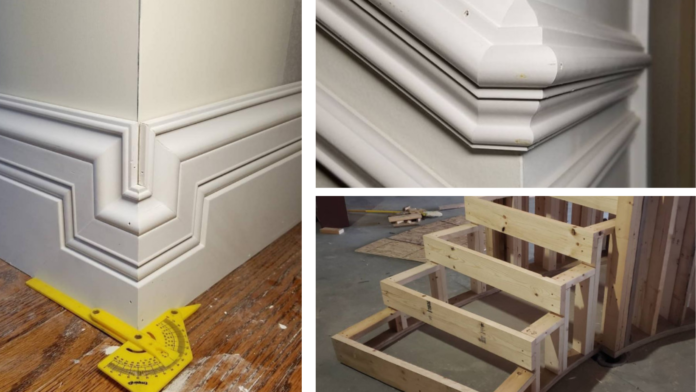
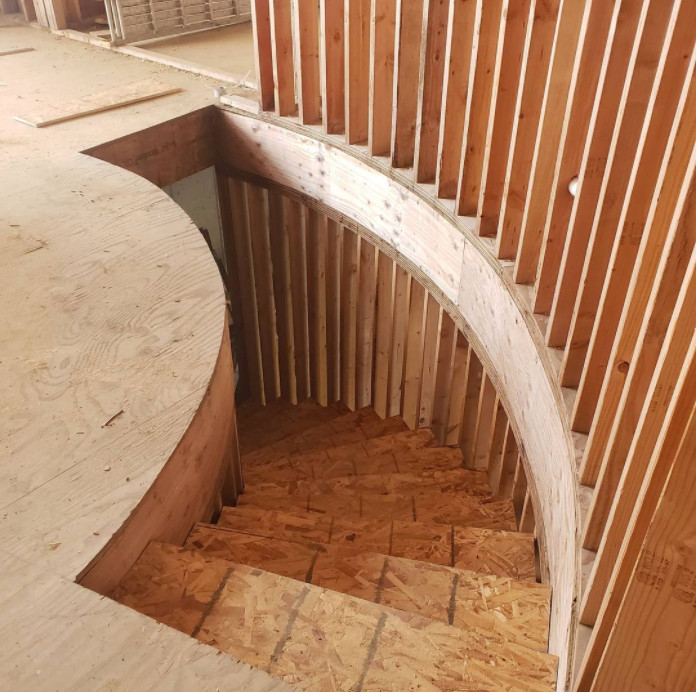
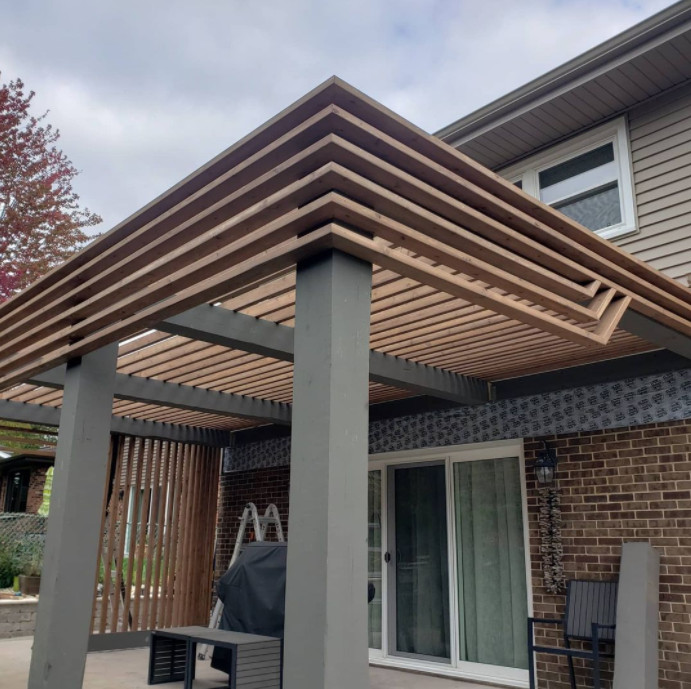
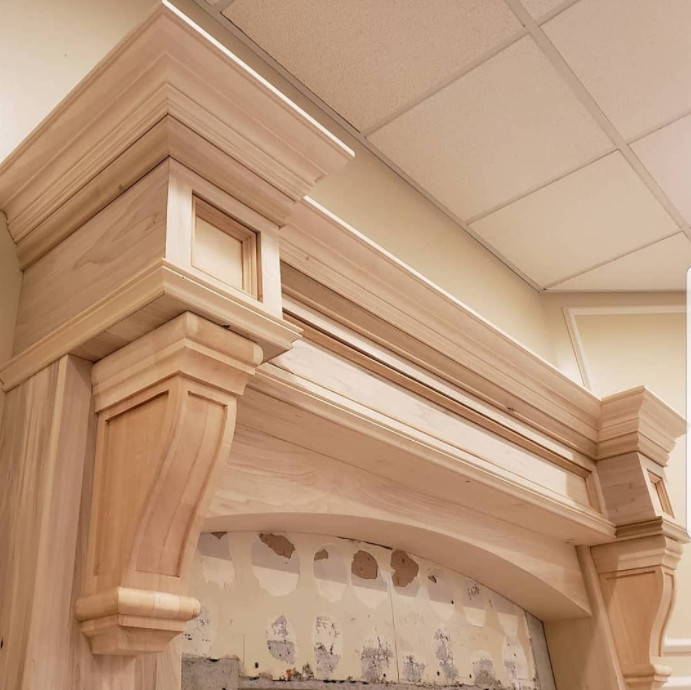
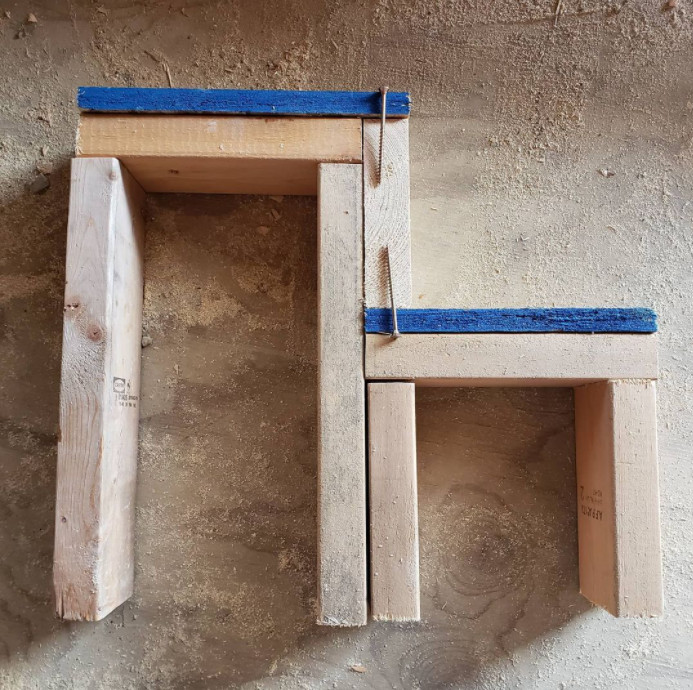
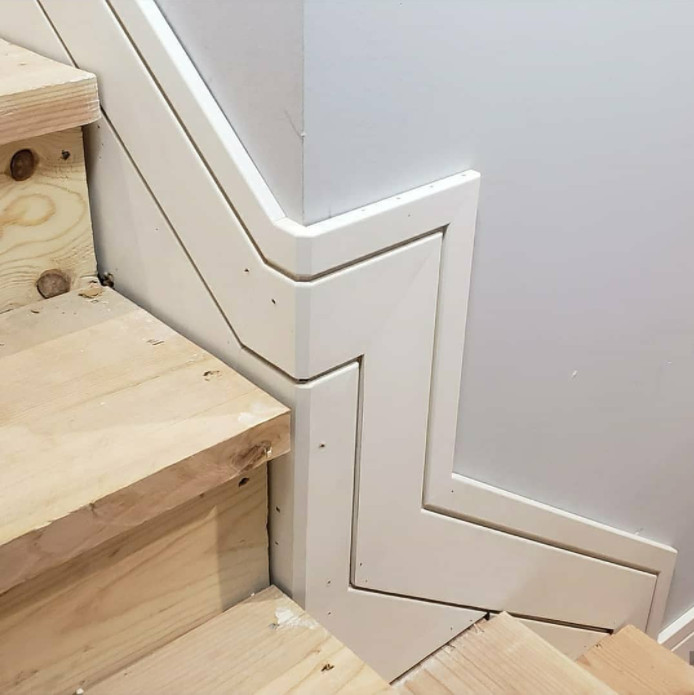
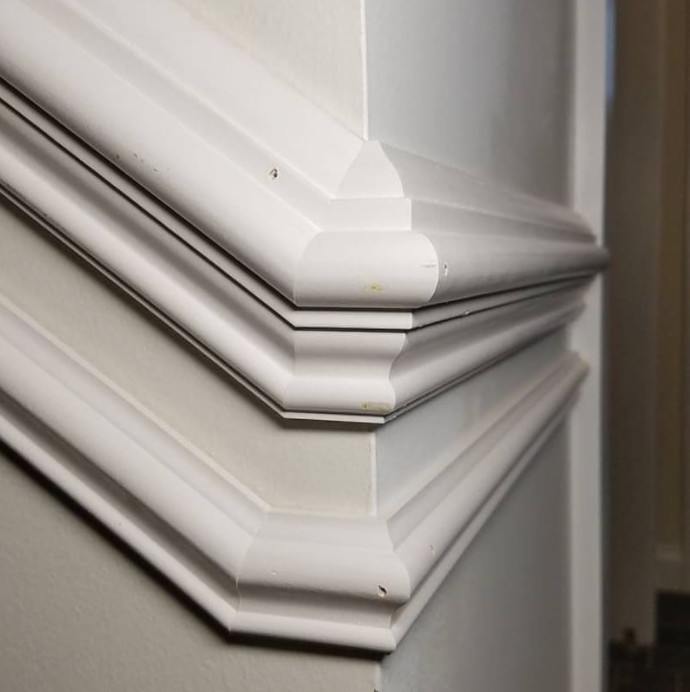
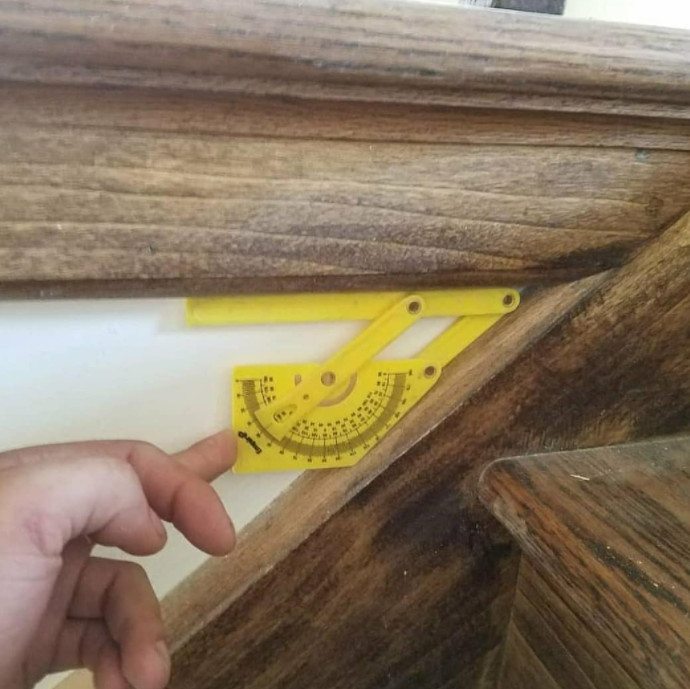
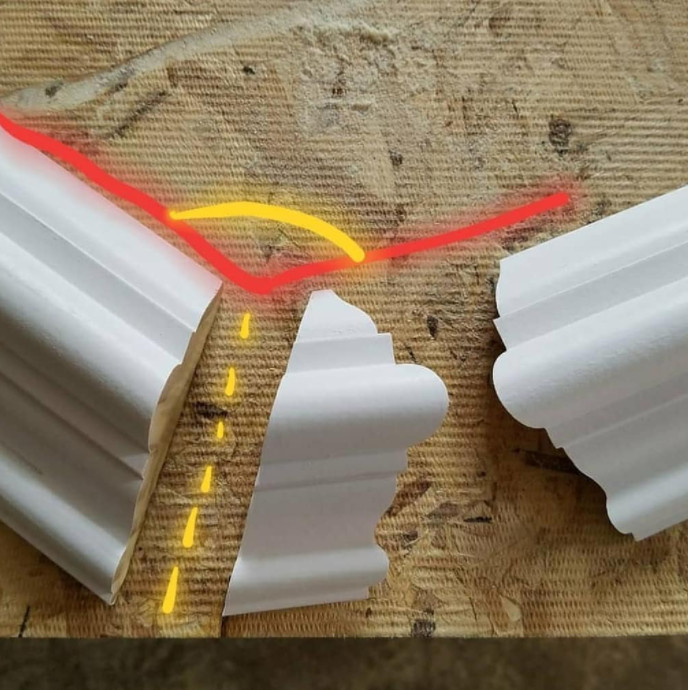
We bring together images of highly skilled carpenters that make you enjoy!
Publishing say” Hopefully in the near future I’ll be able to start building hundreds of unique furniture drawings I have and either keep em all or auction em off or something. Anyhow hopefully you guys are staying safe!! I’ll definitely have some fresh carpentry tutorials and tips as soon as I catch up with work”
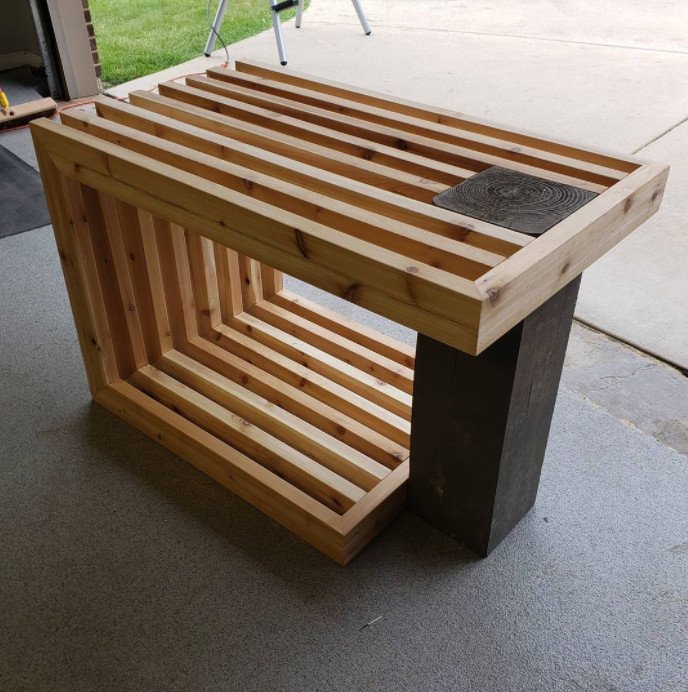
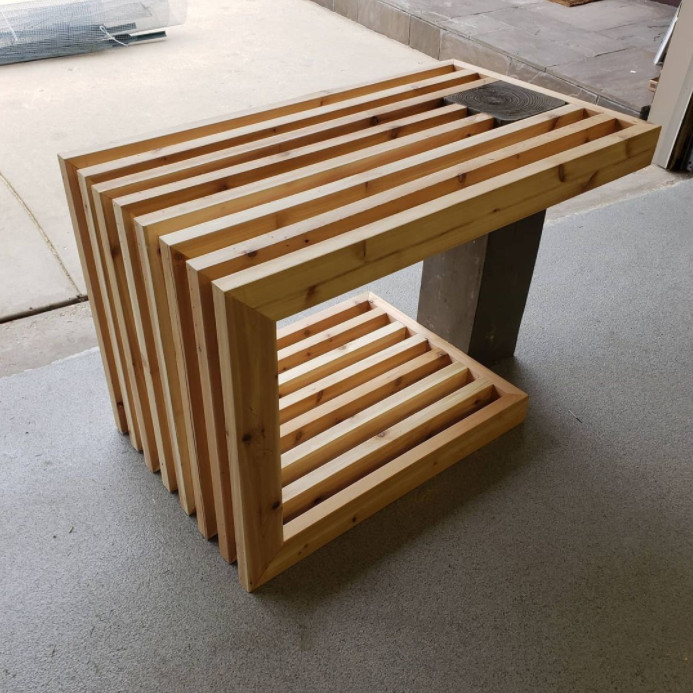
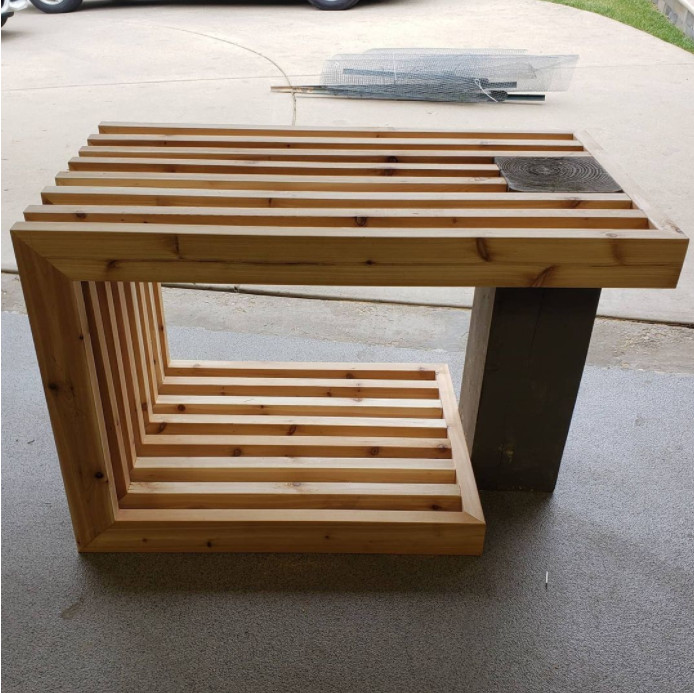
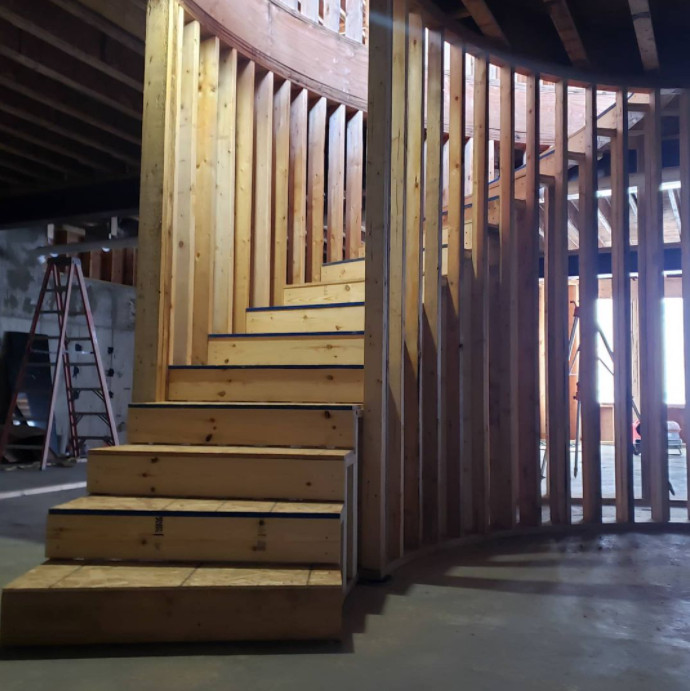
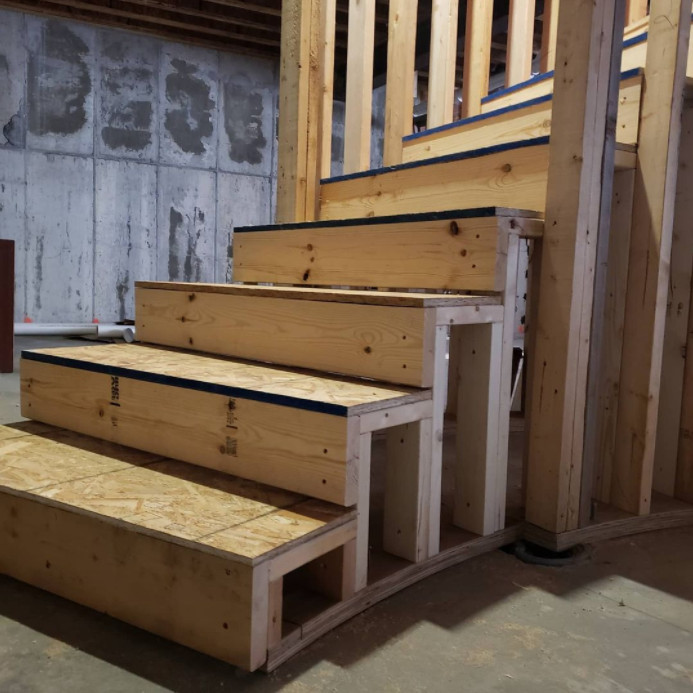
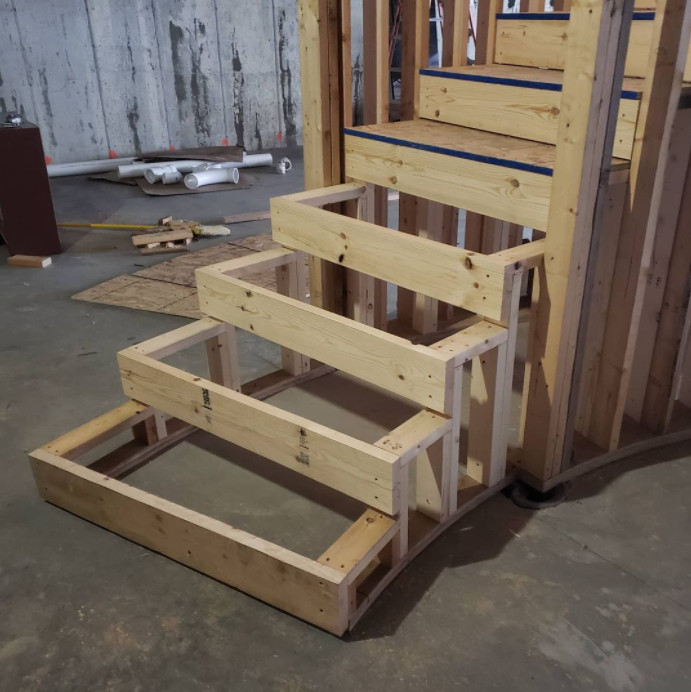
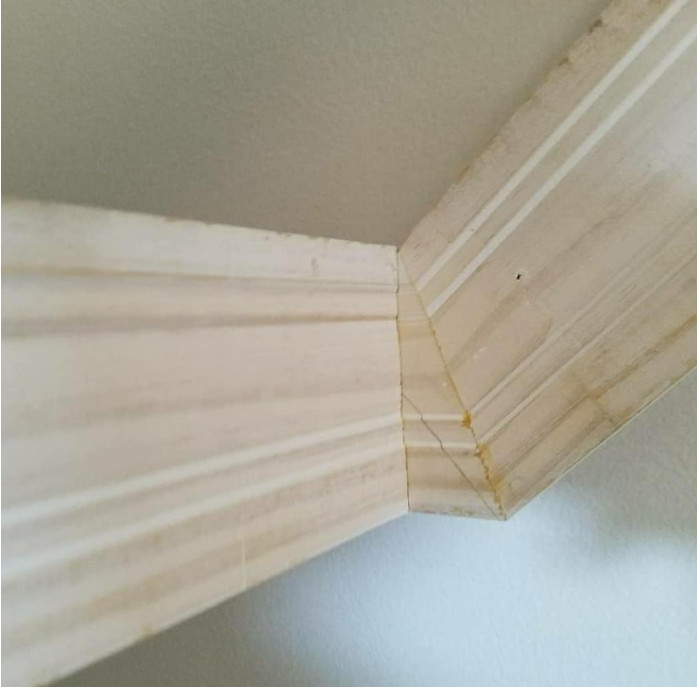
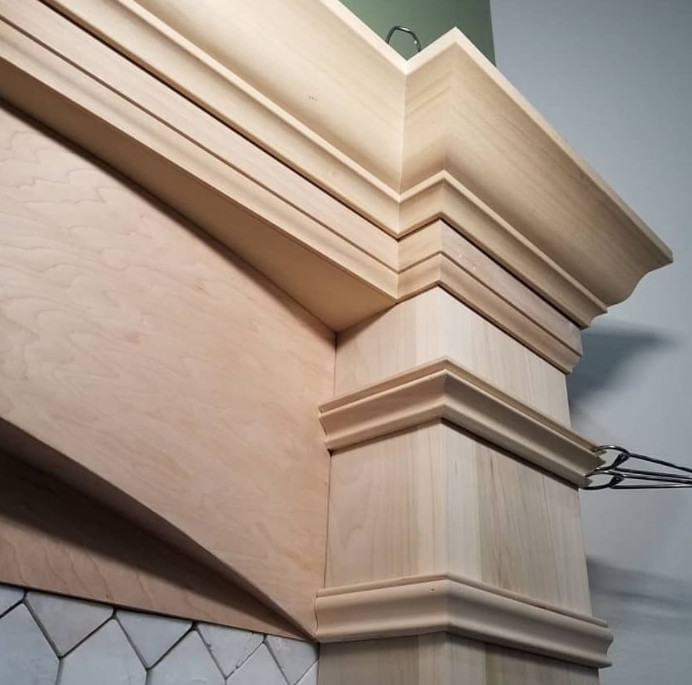
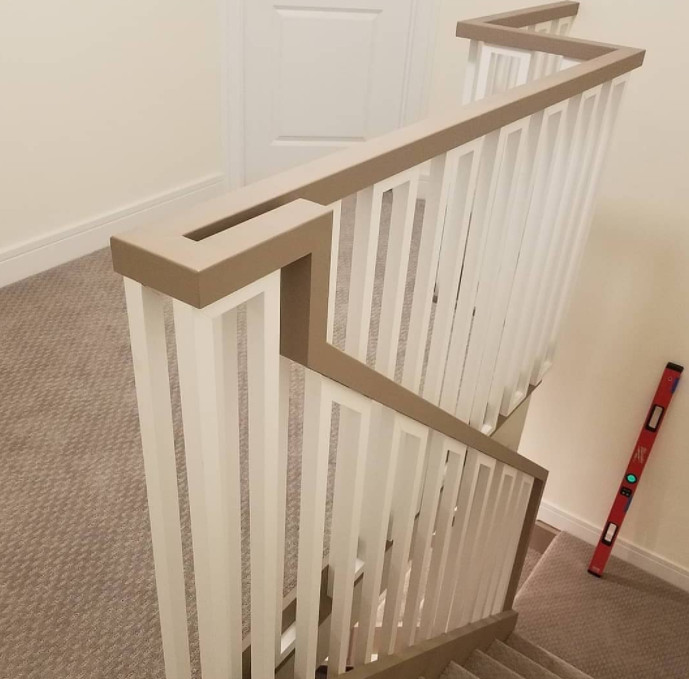
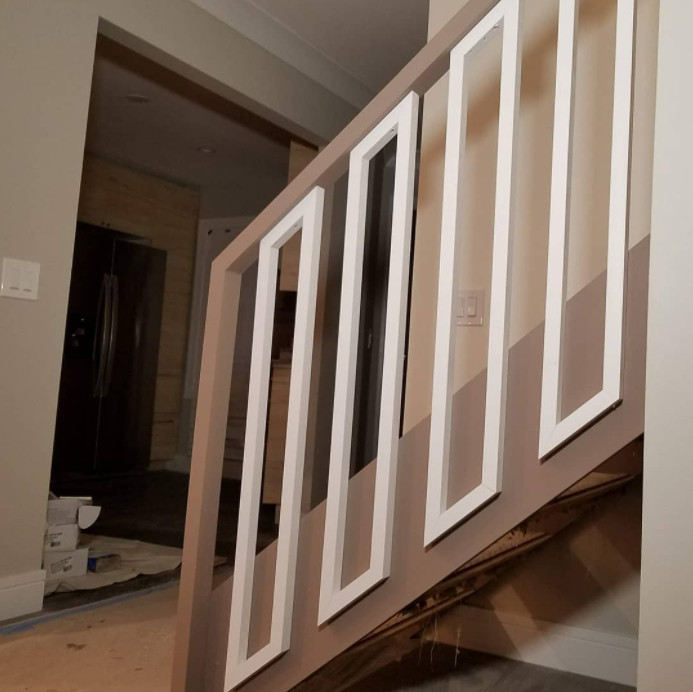
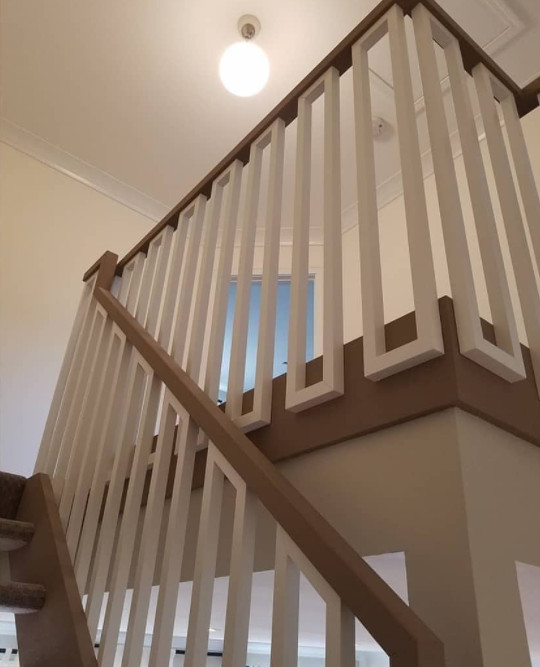
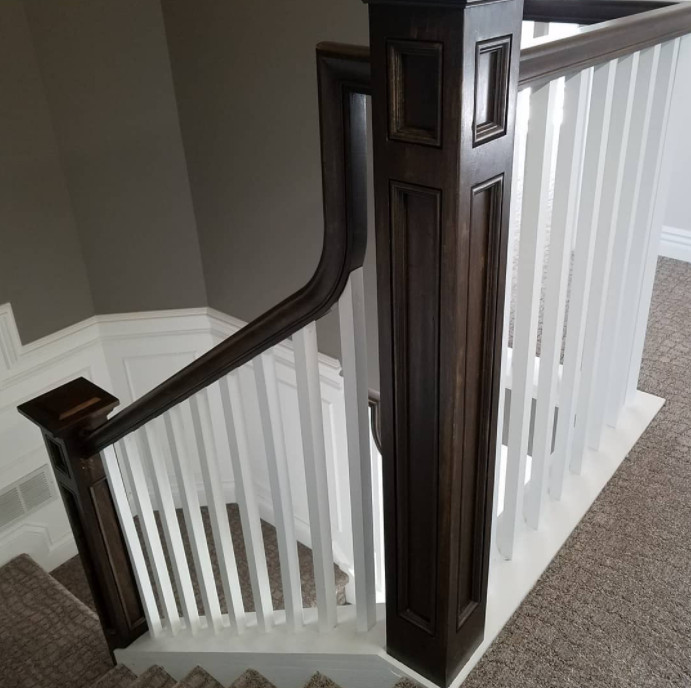
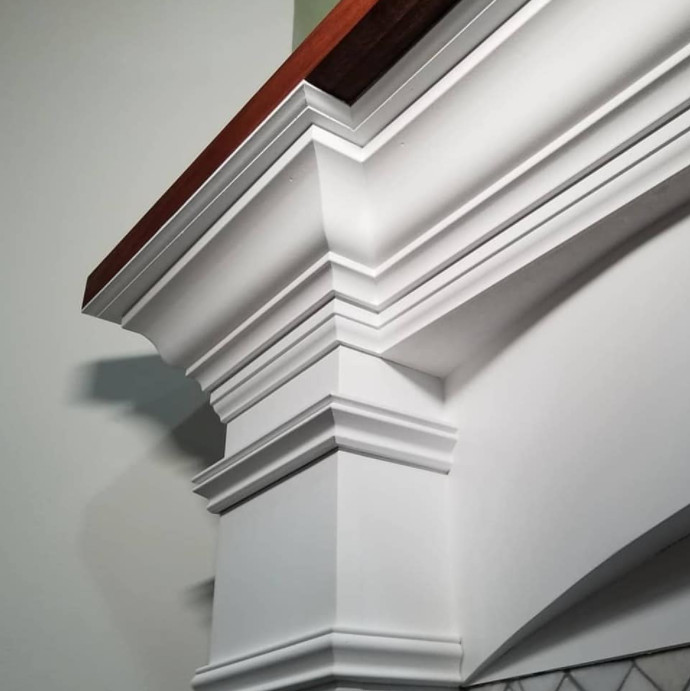
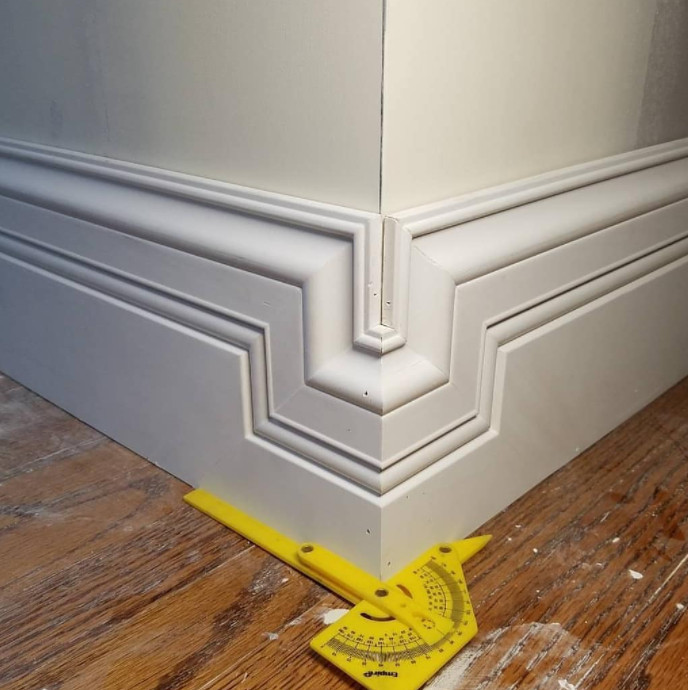
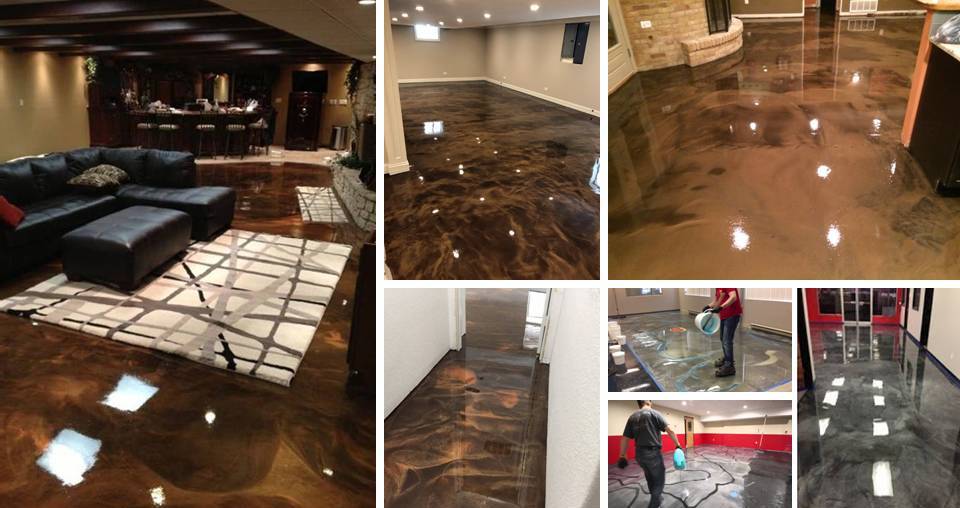
The epoxy resin floor Perfect for a different look in the house, The Stunning Decorative Floor Painting Ideas with Interesting Design Epoxy Paint For Wood Floors Decorative Floor is one of pictures of furniture ideas for your house. The resolution of Stunning Decorative Floor Painting Ideas with Interesting Design Epoxy Paint For Wood Floors Decorative Floor was 1920×1080 pixels. In addition to ideas about Flooring Furniture. You can find the other picture or post related to Decorative Floor Painting Ideas just push the gallery or if you are interested in similar pictures of Stunning Decorative Floor Painting Ideas with Interesting Design Epoxy Paint For Wood Floors Decorative Floor, you are free to browse through search feature that located on top this page. If you are pleased, please share this link to social media to make the people near you are also inspired. We hope some of the furniture design below can add to the beauty of your home.


Metallic Epoxy Floor for Shiny Moments at Home with Less Effort


Pretty & Stunning 3D Epoxy Painted Wood And Concrete Floors With Best Finishes


Pretty & Stunning 3D Epoxy Painted Wood And Concrete Floors With Best Finishes
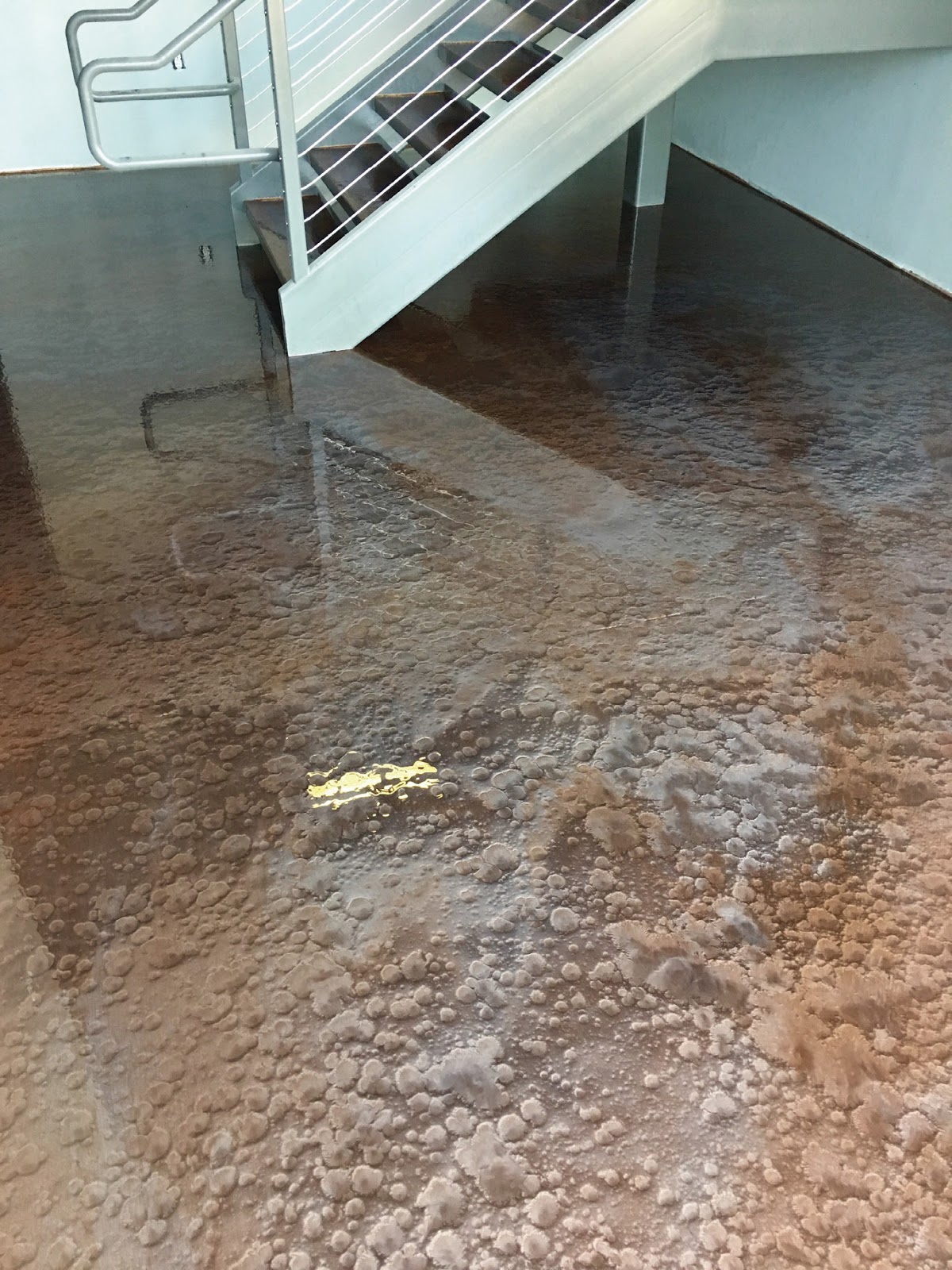
Unexpected DIY Flooring Alternatives

Employ these 3d epoxy resin floor coating designs ideas decor units to produce your floor look more lavish and trendy. Tile for extended period has popular for the durability, sophisticated appearance and versatility. Below are some inspiration layouts to generate stylish and luxurious floor style and design.


Pretty & Stunning 3D Epoxy Painted Wood And Concrete Floors With Best Finishes


Pretty & Stunning 3D Epoxy Painted Wood And Concrete Floors With Best Finishes